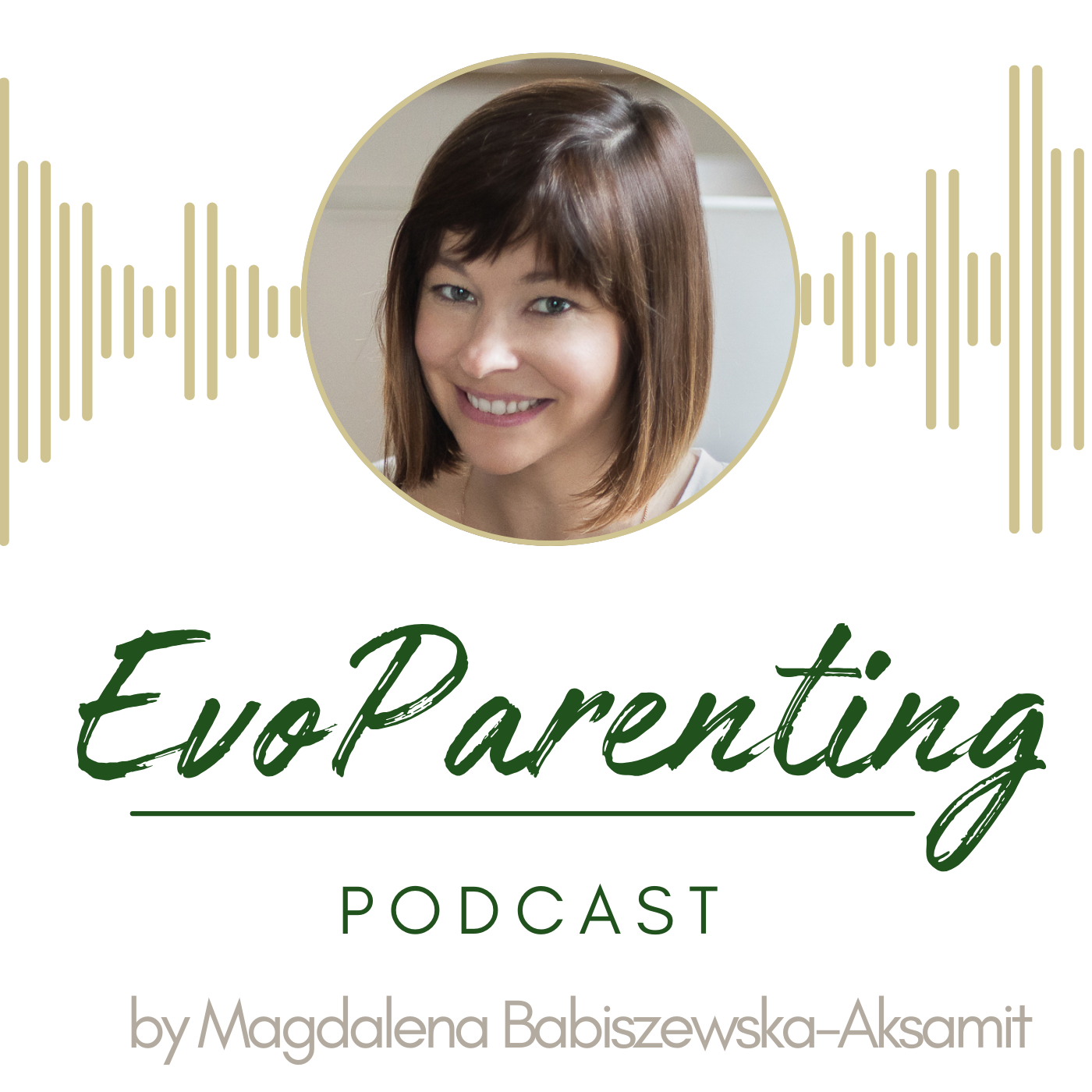
Magdalena Babiszewska-Aksamit
EvoParenting
Parenting today looks very different from what it once was. We have very little time and countless devices and products that are supposed to make parenting easier, such as strollers, baby monitors, pacifiers, and infant formula. But do they really help? Or do they sometimes create new challenges? To look for answers to these questions — and to understand how we can parent better — it may help to look back in time. Evolutionary thinking might offer an important key to understanding both our children and ourselves. By looking at the environments in which humans evolved, we may begin to understan...
Não deixe de visitar o site do podcast e apoiar quem o produz: www.evoparenting.eu
Autor
Magdalena Babiszewska-Aksamit
Categoria
Site do podcast
Último episódio
12 de mai de 2026
Onde ouvir?
Podcasts no app Replaio Radio Em breveOs podcasts estão chegando ao app. Instale agora e seja o primeiro a descobrir um jeito totalmente novo de curtir podcasts
 Instale grátis
Android 5 mi+ downloads · nota 4,8
iOS em breve
Instale grátis
Android 5 mi+ downloads · nota 4,8
iOS em breve
Episódios
Does listening to Mozart really will make my baby smarter? 12.05.2026 28:27
In this episode Magdalena Babiszewska-Aksamit explores the evolutionary roots and practical effects of music on infants and families: how melodic vocalization and shared rhythm may have supported mother–infant bonding, promoted group cohesion, and improved cooperation among children, plus what science really says about the “Mozart effect” and the cognitive benefits of early musical training. Takea...
Why Modern Parenting Feels Hard: An Evolutionary Lens 07.04.2026 10:27
Parenting has never come with more advice, more gadgets, or more expert opinions — so why does it still feel so hard? In the first episode of EvoParenting, scientist and mother Magdalena Babiszewska-Aksamit explores how evolutionary science can help explain child behavior and parenting challenges. In this episode: • why evolution became a key to understanding human behavior • how our evolutionary...
Podcasts parecidos






Ouça o podcast EvoParenting no Replaio
Rádio e podcasts em um só app - grátis e sem cadastro. Instale hoje e não perca o lançamento
O Replaio não é o publicador dos podcasts; os nomes dos programas, as capas e o áudio pertencem aos seus autores e são distribuídos por feeds RSS públicos