University of Connecticut Humanities Institute
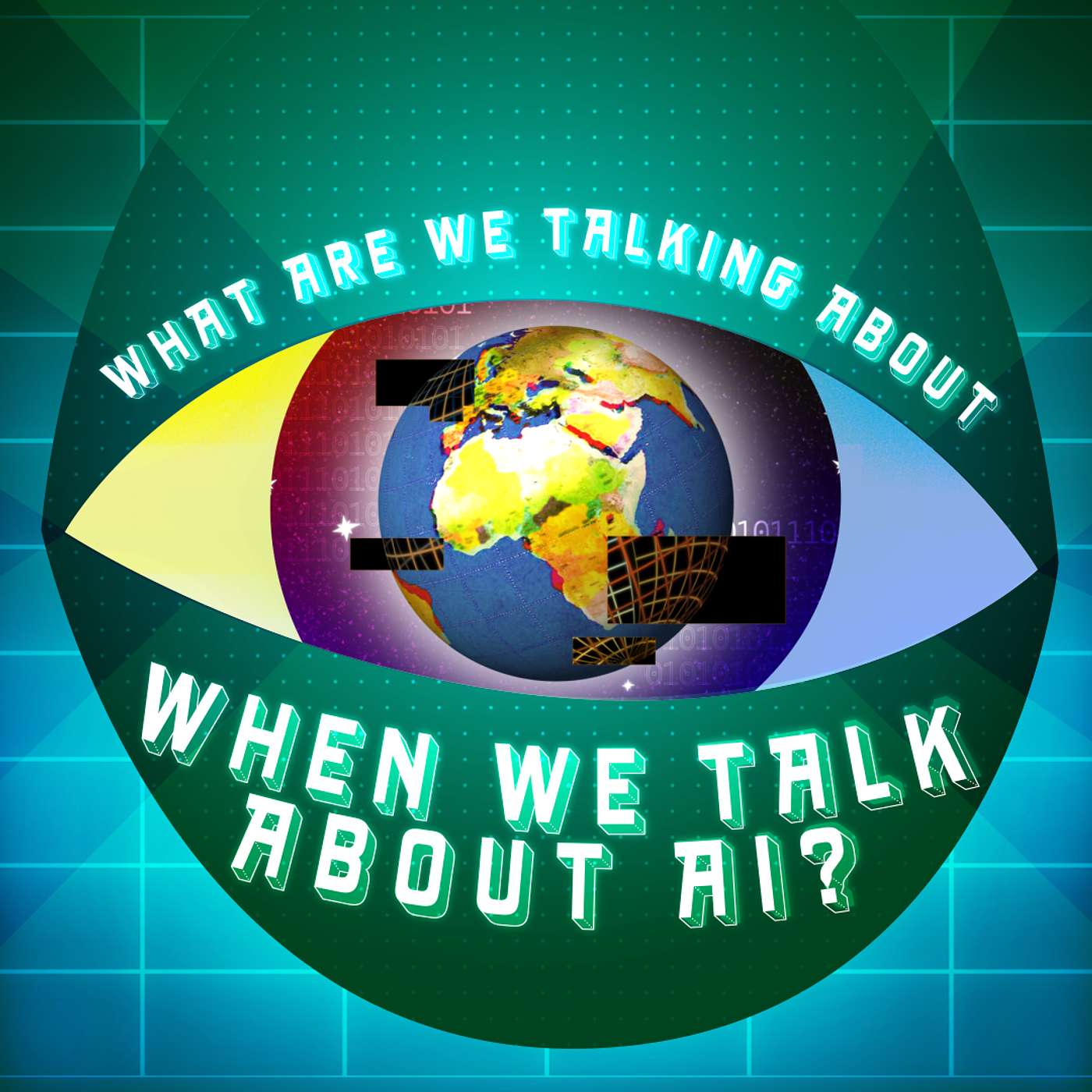
What Are We Talking About When We Talk About AI?
Ever wonder why AI conversations feel like people are talking past each other? That's because they are. Join scholars from around the world as they tackle the most important terms in AI—and discover they don't mean the same thing to everyone. From Storrs, Connecticut to Rabat, Morocco, from computer labs to philosophy seminars, we're eavesdropping on the conversations that reveal how different fields understand artificial intelligence. Spoiler alert: the differences matter more than you think. Made possible by funding from CHCI and the Mellon Foundation.
Author
University of Connecticut Humanities Institute
Category
Podcast website
Latest episode
May 19, 2026
Where to listen?
Podcasts in the app Replaio Radio Coming soonPodcasts are coming to the app soon. Install now and be the first to see a whole new take on podcasts
 Install for free
Android 5M+ downloads · 4.8 rating
iOS soon
Install for free
Android 5M+ downloads · 4.8 rating
iOS soon
Episodes
Care 19.05.2026 31:17
Can AI help us solve the crisis of care? Can a chatbot care about a person? What are the limits of technology to find solutions to problems related to care? As part of UConn's Human-Centered AI Initiative, we've brought together a roundtable of scholars from Connecticut to Morocco define “care” within their discipline and discuss what care means when over 30% of AI users turn to their chat...
The Oracle of Chatbot with Michael Lynch 05.05.2026 20:13
Michael Lynch (UConn) delivers his talk, “AI, Rights, and Epistemic Agency” at the What Are We Talking About When We Talk About AI? Symposium. October 9, 2025 at the University of Connecticut Humanities Institute. In this episode, Michael Lynch presents the philosophical tensions between what has been understood as human rights and agency and how artificial intelligence complicates that relationsh...
The Revolution Will Be Digitized with John Murphy 30.04.2026 18:10
John Murphy (UConn) delivers his talk, “The Coming AI Rights Revolution” at the What Are We Talking About When We Talk About AI? Symposium. October 9, 2025 at the University of Connecticut Humanities Institute. In this episode, John Murphy explores the possibilities of what it will mean for humans to be able to merge the analog and digital world in the age of artificial intelligence. He structures...
Human Rights in an Open-Source World with Avijit Ghosh 27.04.2026 31:55
Avijit Ghosh delivers his talk, “Our Rights in an AI Infused Society,” at the What Are We Talking About When We Talk About AI? Symposium. October 9, 2025 at the University of Connecticut Humanities Institute. In this episode, Avijit Ghosh examines how artificial intelligence has transformed human rights to the point where it’s increasingly being used to allocate goods and resources, such as decidi...
Protecting Workers in the AI Age with Meriem Regragui 30.03.2026 20:50
Meriem Regragui (Université Internationale de Rabat) delivers her talk, “How Will AI Transform Labour Rights?” at the What Are We Talking About When We Talk About AI? Symposium. October 9, 2025 at the University of Connecticut Humanities Institute. In this episode, Meriem Regragui outlines the increasingly complicated relationship between AI and labor rights, particularly around how laws should be...
Creating Content with the LLM Brain with Hakim Hafidi 16.03.2026 18:58
Hakim Hafidi (Université Internationale de Rabat) delivers his talk, “AI Literacy in the Age of Synthetic Content” at the What Are We Talking About When We Talk About AI? Symposium. October 9, 2025 at the University of Connecticut Humanities Institute. Hakim Hafidi analyzes the growing capabilities of autonomous agents within the realm of content creation and dissemination online and how to unders...
Big Human and the Sociotechnical Turn in AI with Ting-an Lin 12.03.2026 16:29
Ting-an Lin (UConn) delivers her talk, “Rethinking ‘AI Literacy’: Towards a Sociotechnical Conception” at the What Are We Talking About When We Talk About AI? Symposium. October 9, 2025 at the University of Connecticut Humanities Institute. Ting-an Lin outlines how she defines AI literacy through a socio-technical perspective which prioritizes a people-focused vision of AI as opposed to a tech-foc...
AI and the New Luddism with Arash Zaghi 09.03.2026 14:59
Arash Zaghi (UConn) delivers his talk, “The New Luddism: AI Fearmongering as a Modern Mechanism of Oppression” at the What Are We Talking About When We Talk About AI? Symposium. October 9, 2025 at the University of Connecticut Humanities Institute. Arash Zaghi examines how fearmongering from elite institutions has become weaponized against disadvantaged populations who could benefit from generativ...
Making Meaning in the Intercultural Imaginary with Anke Finger 05.03.2026 18:22
Anke Finger (UConn) delivers her talk, “AI Literacy” at the What Are We Talking About When We Talk About AI? Symposium. October 9, 2025 at the University of Connecticut Humanities Institute. Anke Finger outlines three projects she’s currently working on that engage with understanding artificial intelligence within the realm of media studies, literary studies, and cultural studies. She emphasizes t...
Disease Mapping in the Age of AI with Ouassim Karrakchou 03.03.2026 22:08
Ouassim Karrakchou (Université Internationale de Rabat, Deputy Director, TICLab) presents his paper, ”Research Focus: AI and its applications,” at the What Are We Talking About When We Talk About AI? Symposium. October 9, 2025 at the University of Connecticut Humanities Institute. In this episode, Ouassim Karrakchou walks us through the research on AI applications in the health sector currently be...
Dr. AI and the Future of Healthcare with Ihsane Hmamouchi 11.02.2026 12:33
Ihsane Hmamouchi (Rheumatologist and Epidemiologist, International University of Rabat) presents her paper “How might we understand the meaning of "care" in the age of Artificial Intelligence?” at the What Are We Talking About When We Talk About AI? Symposium. October 9, 2025 at the University of Connecticut Humanities Institute. In this episode, Ihsane Hmamouchi examines the complexities...
Care, Love, and Chatbots with Anna Mae Duane 29.01.2026 19:40
Anna Mae Duane delivers her talk, “New Love Stories: Companion Bots and the Changing Narrative of Care” at the What Are We Talking About When We Talk About AI? Symposium. October 9, 2025 at the University of Connecticut Humanities Institute. In her talk, Anna Mae Duane dares us to consider the stakes of caring for AI by examining the power of love stories and their ability to change how we underst...
Learning 02.10.2025 22:24
Do you need understanding to learn? In this episode, our scholars ruminate on the relationship between understanding and the potential of AI to actually “learn” through various methods including repetition and exposure to data. However, they also encourage us to consider the humanistic nature of learning specifically through cultural sensitivities and knowing who you’re studying. Ultimately, they...
Education 25.09.2025 27:46
What does it mean to be an educator and to educate in a world becoming reliant on artificial intelligence? This week our scholars take on the question of how AI will reshape the future of education across several disciplines including literature, law, and medicine. AI has already transformed how students learn in a world driven by efficiency. The question now becomes how educators will respond to...
Justice 17.09.2025 33:02
Can artificial intelligence one day help to mitigate systemic inequality? As part of UConn's Human-Centered AI Initiative, we've brought together a roundtable of scholars from Connecticut to Morocco define “justice” within their discipline. It's only by understanding what we mean by the word justice, that we can begin to work together to deploy AI to create a more just and equitable w...
Similar podcasts





Listen to the What Are We Talking About When We Talk About AI? podcast in Replaio
Radio and podcasts in one app - free, with no sign-up. Install today and do not miss the launch
Replaio is not a podcast publisher; show names, artwork and audio belong to their authors and are distributed through public RSS feeds.