The Verge
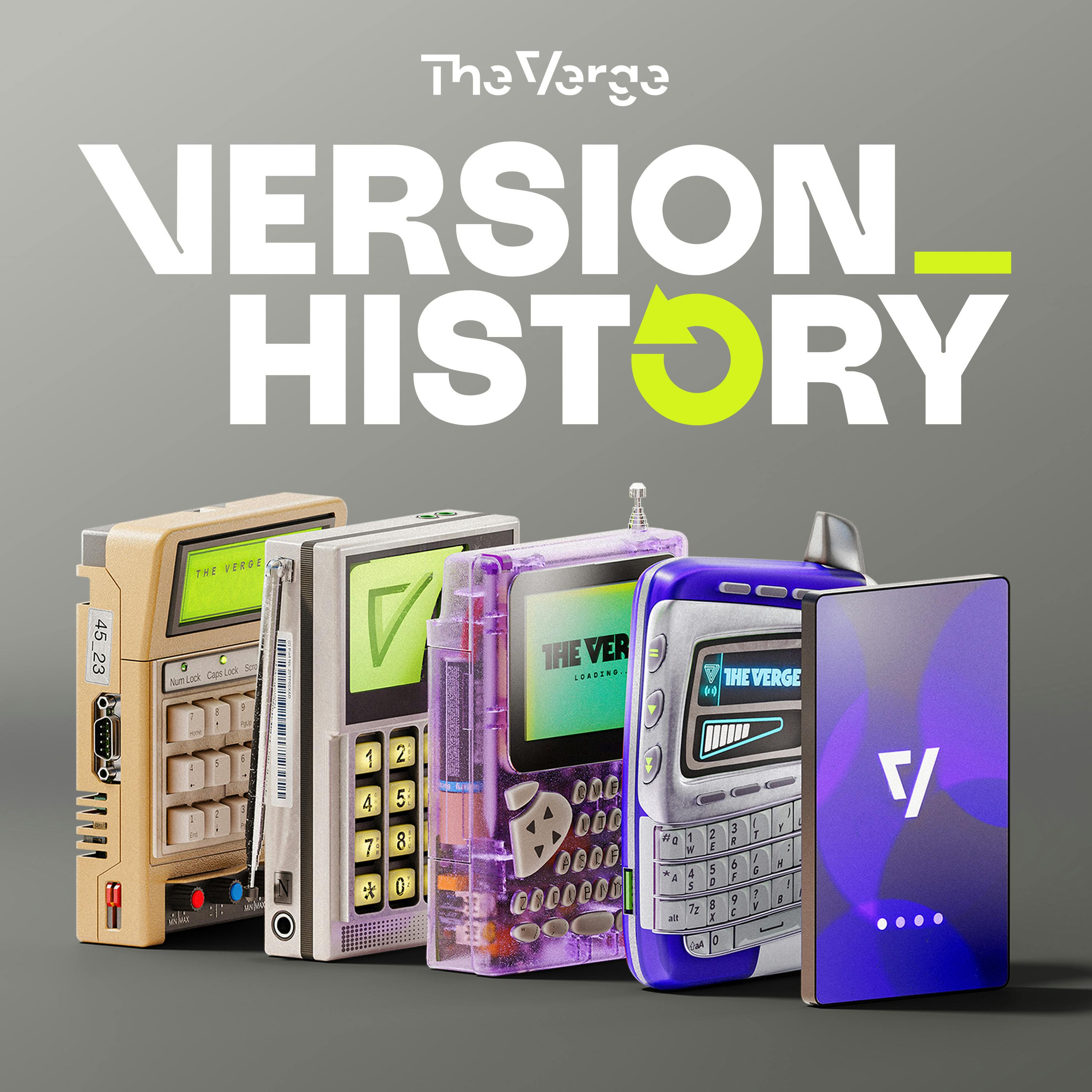
Version History
Version History is a show about the best gadgets ever. And the worst ones. And the ones that might have changed the world, if they ever actually shipped. Every week, your favorite people from The Verge and beyond hang out to tell and debate the story of a gadget, app, website, or any other tech product, and try to determine the item’s true legacy. Because not every product is a hit, but every product has a story. And the ones that really matter aren’t always the ones you think. From the Verge and the Vox Media Podcast Network.
Where to listen?
Podcasts in the app Replaio Radio Coming soonPodcasts are coming to the app soon. Install now and be the first to see a whole new take on podcasts
 Install for free
Android 5M+ downloads · 4.8 rating
iOS soon
Install for free
Android 5M+ downloads · 4.8 rating
iOS soon
Episodes
Keurig: The K-Cup invasion 05.07.2026 1:18:55
The Keurig is a simple idea – what if it was really easy to make pretty good coffee, one cup at a time? — with a wildly complicated history. David Pierce is joined by Eater editor Melissa McCart and champion barista and author Morgan Eckroth to discuss the whole history of Keurig, from its creation in a Boston apartment to its invasion of seemingly every house, doctor's office and conference room...
Nest: The iPod of thermostats 28.06.2026 1:01:49
Thermostats were ugly. Best case scenario, you never had to think about it. Then a couple of Apple legends decided they could make something better, and set out to turn changing the temperature into a high-tech experience. On this episode, David Pierce, Nilay Patel, and Jennifer Pattison Tuohy tell the full story of the Nest Learning Thermostat, from its complex development to its huge debut. The...
Roomba: Rise of the robovac 21.06.2026 1:13:39
The team of engineers and researchers that created iRobot didn’t set out to build a vacuum cleaner. They built robots — a lot of robots, with a lot of jobs — before realizing that people might actually want a robot that could help clean their house. And thus was born Roomba. The Verge’s David Pierce and Jennifer Pattison Tuohy are joined by iRobot co-founder Colin Angle to tell the whole story of...
Harmony remote: Control freak 14.06.2026 1:15:07
The Harmony Universal Remote was supposed to be the only controller you needed for all the devices in your life. So what happened? David Pierce is joined by The Verge’s Nilay Patel and John Higgins, as well as Nest co-founder (and current Harmony user) Matt Rogers, to follow the Harmony's timeline from its origins as the "Easy Zapper," through Logitech's acquisition, all the way to its slow death...
Western Electric 500: Monopoly phone 12.04.2026 1:16:20
For years, even decades, virtually everyone in the United States had the same telephone. You didn't even think about it — it was just The Phone. Well, The Phone was called the Western Electric 500, and it was the result of nearly a century of AT&T's monopoly over the US phone system. It was also a really great phone. In this episode of Version History, David Pierce, Nilay Patel, and author and pro...
Amazon Echo: Always listening 05.04.2026 1:12:53
For years, Amazon CEO Jeff Bezos knew the computer he wanted to build. He wanted it to be cheap, accessible everywhere, and controlled entirely by voice. It took Amazon a number of years, a lot of false starts, and some deeply strange focus groups, but the company eventually turned the Amazon Echo into something like the voice computer Bezos wanted, powered by an assistant called Alexa. (Even thou...
Macintosh: All in one 29.03.2026 1:19:42
The Macintosh wasn't a hit, at least not in its first incarnation. But it was still unquestionably one of the most iconic computers ever made — and it came with one of the most iconic ads ever made, too. In this episode, David Pierce, Nilay Patel, and Daring Fireball's John Gruber tell the story of the Macintosh, from its beginnings as a lark inside Apple to its dramatic unveiling to its somewhat...
Vocoder: Magic mic 22.03.2026 1:20:52
The vocoder was never meant to change the music business – it wasn’t meant for music at all. But the research that started a century ago as a way to cheaply move voices over telephone wires took on a life of its own: It turned into a crucial bit of secret military technology, and then inspired generations of musicians to play their own voices like an instrument. On this episode, with the help of S...
Clubhouse: Pivot to audio 15.03.2026 1:02:11
If you were launching a new app in 2020, it was either the worst timing (see: Quibi) or the best timing (see: Clubhouse). Clubhouse was an initially invite-only, audio-based social network that worked like an old-timey party line or radio call-in show… and it was exactly what people needed who suddenly found themselves stuck at home. Casey Newton (Hard Fork, Platformer) and Ashley Carman (Bloomber...
Furby: Talk Furbish to me 08.03.2026 1:14:34
In 1997, David Hampton and Caleb Chung took one look at a Tamagotchi and decided they could bring the virtual pet craze into the real world. Their robotic companion, Furby, packed a bunch of advanced technology into a small, adorable, often annoying package. But for all the irritation it caused (Furby famously had no on-off switch) there was a surprising amount of thoughtful philosophy in its desi...
TiVo: Press pause 11.01.2026 1:06:18
Best remote ever? Best remote ever. When TiVo first debuted, it felt like magic: You could pause live TV! You could rewind it! The concept immediately became a phenomenon — even though TiVo itself was never as big a hit as you might think. On this episode of Version History, David Pierce, Nilay Patel, and author and journalist Emily Nussbaum tell the story of TiVo’s technological and cultural revo...
Flappy Bird: Game over 04.01.2026 1:18:00
Flappy Bird was a mean game. It was extremely simple and yet punishingly difficult; if you could get 10 points, that meant you were pretty good! For a few weeks, the game became an absolute global phenomenon — and in the process, both made its creator a ton of money and kind of ruined his life. On this episode of Version History, David Pierce, Jake Kastrenakes, and Game File’s Stephen Totilo expla...
Nintendo Power Glove: I love it. It's so bad. 28.12.2025 1:15:30
In the mid-1980s, Nintendo pretty much ruled the video game industry. And somehow, a few toymakers and inventors convinced Nintendo that the controller of the future was… this big, clunky thing you wore on your right arm. (Sorry, lefties.) It wasn’t very good, but people loved it anyway. And while the Power Glove wasn’t exactly the future of anything, you could argue it helped start a revolution i...
AIM: Away message 21.12.2025 1:02:59
AOL Instant Messenger was, for years, one of the very best things on the internet. Before iMessage and WhatsApp, before Twitter and Facebook, AIM was simply how people talked to each other online. Maybe it was how you casually chatted up your crush; maybe it was how you and your banking coworkers got deals done. On this episode of Version History, David Pierce, Victoria Song, and author and journa...
iPhone 4: You're holding it wrong 14.12.2025 1:11:41
The iPhone 4 was one of the best iPhones ever — and definitely the most dramatic iPhone ever. It was lost in a bar in California, sold to Gizmodo, and published for the world to see months before its launch. The phone itself had a bunch of important new features, and one that spawned Antennagate. In this episode, David Pierce, Nilay Patel, and longtime tech columnist Walt Mossberg tell the whole s...
Google Glass: In your face 07.12.2025 1:24:01
Google didn't invent the concept of smart glasses, but it was one of the first companies to actually put them on people's faces. It was a revolution, and also a problem: Google made face computers extremely uncool, and its early user base was so off-putting they became collectively known as “Glassholes.” The Verge’s Victoria Song and Waveform’s David Imel break down why Glass failed — despite bein...
Vine: Six seconds of fame 23.11.2025 1:20:38
Vine was the original short-form video platform, and pioneered so many of the ideas we now take for granted in reels and TikToks. It was a cultural engine whose executives clashed with the creators who made it famous, before everybody decamped for other platforms. Marina Galperina, Sarah Jeong and Mia Sato join David Pierce to revisit their favorite Vines and discuss the platform's lasting impact...
LimeWire: Steal this podcast 16.11.2025 1:13:31
You wouldn't steal a car. You wouldn't steal a handbag. But plenty of people used LimeWire and other file sharing services to share music, movies and more. If Napster was the beginning of the piracy story, LimeWire may have been the final chapter. Nilay Patel and Sarah Jeong join David Pierce to chart the history of LimeWire and the legal cases that shaped U.S. copyright law and the lives of colle...
Fire Phone: Amazon’s mobile mistake 09.11.2025 1:22:32
In 2014, the tech world was abuzz with the prospect of a phone made by Amazon. When the Fire Phone arrived, it was chock full of ideas — a "dynamic perspective" feature that created 3D illusions, an image-recognition feature called "Firefly," and many, many opportunities to buy Amazon products. Allison Johnson and Sean O’Kane join David Pierce to discuss why, unlike Amazon's successful e-readers,...
Zune: The would-be iPod killer 02.11.2025 1:16:03
In 2006, Microsoft came for the iPod's throne with an innovative MP3 player called the Zune. It had a bunch of features the iPod didn't: WiFi, music sharing, a bigger screen, a beautiful UI, even an FM radio. And to hear Microsoft describe it, it was even kind of a social network. Nilay Patel and Victoria Song join David Pierce to break down why, despite all that, the Zune never really took off. A...
Guitar Hero: Everybody’s a rock star 26.10.2025 1:16:33
Millions of basements have fake plastic guitars in them thanks to the 2005 smash hit Guitar Hero. Chris Grant and Ash Parrish join David Pierce to rock out with a game created over a matter of months by a niche developer and a peripheral manufacturer, fueled by word-of-mouth and viral videos on a nascent YouTube. You probably don’t play Guitar Hero anymore, but you might still find it in surprisin...
Sony Watchman: Must-see TV 19.10.2025 1:04:57
1982's coolest gadget was the Sony Watchman portable TV. Decades before everyone was glued to YouTube on their smartphones, the Watchman popularized the concept of video on the go. In the early days of the personal-tech revolution, you’d find the Watchman antennas up everywhere from the church pew to the baseball bleacher. Victoria Song and Allison Johnson join David Pierce to dive into the engine...
BlackBerry Messenger: Texting set free 14.10.2025 1:01:25
Back when text messages cost 10 cents each, BlackBerry came up with a better way: BlackBerry Messenger, commonly known as BBM. It was the first new idea about messaging in a long time, and it was a huge hit… for a while. Nilay Patel and Joanna Stern join David Pierce to talk about a messaging service that was years ahead of WhatsApp and iMessage, but ultimately fizzled. Let us know what you think:...
Hoverboards: So hot right now 05.10.2025 1:06:19
In 2015, self-balancing scooters (which quickly became known as hoverboards) exploded in popularity, and then began literally exploding. Andrew Hawkins and Sean O’Kane join David Pierce to explore the multiple conflicting origin stories behind the hugely popular rideable, the many knockoffs, and why a device that doesn't actually hover ended up being called "hoverboard." Let us know what you think...
Introducing Version History 19.09.2025 0:47
Your favorite people from The Verge and beyond are here to explain and debate the legacy of tech's biggest, weirdest and worst ideas. We'll talk about everything from BlackBerry to Vine, from Fire Phones to hoverboard fires. And we'll induct the very best into the Version History Hall of Fame. Come hang out with us on Sundays, starting October 5. Learn more about your ad choices. Visit podcastchoi...
Similar podcasts







Listen to the Version History podcast in Replaio
Radio and podcasts in one app - free, with no sign-up. Install today and do not miss the launch
Replaio is not a podcast publisher; show names, artwork and audio belong to their authors and are distributed through public RSS feeds.