Kimberly Hollins
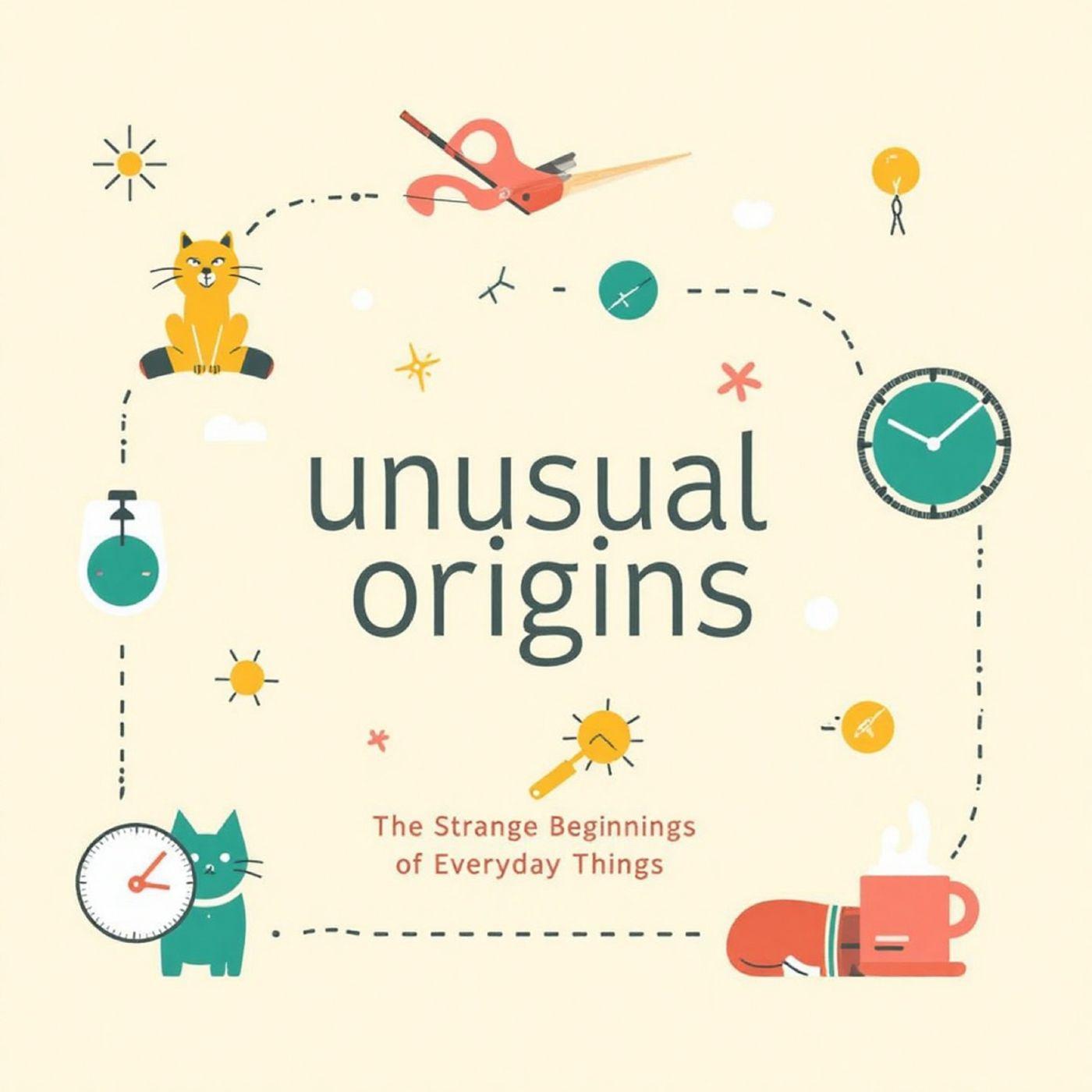
Unusual Origins – The Strange Beginnings
Have you ever wondered why things are the way they are? Why do scissors have two loops? Why does a cat say “meow” instead of “woof”? Why do we shake hands to greet people, or why are pencils yellow? Unusual Origins takes you on a journey through the odd, surprising, and often hilarious backstories behind the objects, words, habits, and ideas we take for granted. Each short episode—light, curious, and easy to listen to—dives into one everyday item or concept, uncovering its strange evolution through culture, history, and human creativity. You’ll never look at ordinary things the same way again....
Where to listen?
Podcasts in the app Replaio Radio Coming soonPodcasts are coming to the app soon. Install now and be the first to see a whole new take on podcasts
 Install for free
Android 5M+ downloads · 4.8 rating
iOS soon
Install for free
Android 5M+ downloads · 4.8 rating
iOS soon
Episodes
Why Forks Have Four Tines 16.01.2026 5:21
This episode reveals how the familiar four-tined fork emerged after centuries of cultural resistance and gradual refinement. Forks began as two-tined tools used in the Middle East and Byzantine Empire for serving food, not eating. When they reached Europe, many people — including religious leaders — rejected them, arguing that God gave humans fingers for eating. Over time, as European cuisine beca...
Why Coins Have Ridges 09.01.2026 5:36
This episode explains that ridges on coins originated as a clever defense against one of history’s oldest forms of fraud: coin clipping. In ancient and medieval times, coins were made of precious metals like gold and silver, and their value depended on weight. People secretly shaved tiny amounts of metal from coin edges, kept the filings, and spent the lighter coins at full value. Over time, this...
Why We Clap Our Hands 01.01.2026 5:09
This episode explains that clapping is one of humanity’s oldest forms of communication, existing long before spoken language. Early humans used rhythmic sounds like clapping to express excitement, approval, and unity, especially during group activities and rituals. The sharp, loud sound of hands striking together was an effective, universal signal that required no shared language. Clapping also cr...
Why We Say “Hello” 24.12.2025 5:24
This episode reveals that “hello” is a surprisingly modern greeting. Before the 19th century, it was not used as a polite welcome but as a shout to get attention or express surprise. Traditional greetings were formal phrases tied to time, religion, or social class, and there was no single universal word for everyday interaction. The rise of the telephone created a new problem: how to greet someone...
Why the Toothbrush Has Bristles 17.12.2025 6:29
This episode explores how toothbrush bristles emerged from thousands of years of human experimentation with oral hygiene. Long before modern toothbrushes, ancient people used chewed twigs whose frayed ends acted like natural brushes, proving that flexible fibers were effective at removing food and plaque. The first true toothbrush appeared in China during the Tang Dynasty, using stiff pig bristles...
Why Keys Look the Way They Do 11.12.2025 5:09
This episode explains how the modern key’s distinctive shape—its narrow shaft, jagged teeth, and rounded bow—comes from thousands of years of evolving lock design. The story begins in ancient Egypt, where the first locks used wooden pins and oversized wooden keys that lifted those pins into place. When the Romans introduced metalworking, locks became smaller, stronger, and more complex, and keys b...
Why Paper Has Standard Sizes 04.12.2025 5:55
Episode 7 explains how standardized paper sizes like A4 were created to solve centuries of confusion. The modern ISO system is based on the 1:√2 ratio, allowing each sheet to be cut in half while preserving its proportions. The largest size, A0, has an area of exactly one square meter, and all smaller sizes descend logically from it. Germany introduced this mathematically elegant system in 1922, a...
Why We Shake Hands 28.11.2025 5:52
Episode 6 explains how the handshake originated as a gesture of peace — showing that neither person carried a weapon. From ancient Greek “dexiosis” to Roman forearm grasps to Quaker egalitarian greetings, the handshake evolved into a symbol of trust, equality, and agreement. It remains one of the few nearly universal human gestures, rooted in psychology and thousands of years of human connection.
Why the Pencil Is Yellow 22.11.2025 5:25
Episode 5 uncovers why pencils are traditionally yellow. The story begins with England's monopoly on natural graphite, shifts to the prestige of Chinese graphite in the 1800s, and explains how the col
The Secret History of the Wheel’s Four Spokes 16.11.2025 6:06
Episode 4 traces the evolution of the wheels four-spoke design, revealing how ancient Egyptian engineers invented it as a balance between strength and lightness. The design also reflected spiritual s
Why Clocks Run Clockwise 13.11.2025 5:49
Episode 3 reveals that clocks run clockwise because early timekeeping was modeled after sundials in the Northern Hemisphere, where the suns shadow moved from left to right across the dial. When mecha
Why Cats Say ‘Meow’ 11.11.2025 5:55
This episode explores how the familiar meow became a language crafted specifically for humans. It reveals that adult cats rarely meow to one another the sound exists almost entirely for communicat
Why Scissors Look the Way They Do 09.11.2025 5:33
Episode 1 explores the 3,000-year evolution of scissors from ancient Egyptian spring models to Roman pivot designs still used today. It reveals how simple necessity shaped their ergonomic form, how
Similar podcasts





Listen to the Unusual Origins – The Strange Beginnings podcast in Replaio
Radio and podcasts in one app - free, with no sign-up. Install today and do not miss the launch
Replaio is not a podcast publisher; show names, artwork and audio belong to their authors and are distributed through public RSS feeds.