Isaiah Danberry
Traversing the Strange World
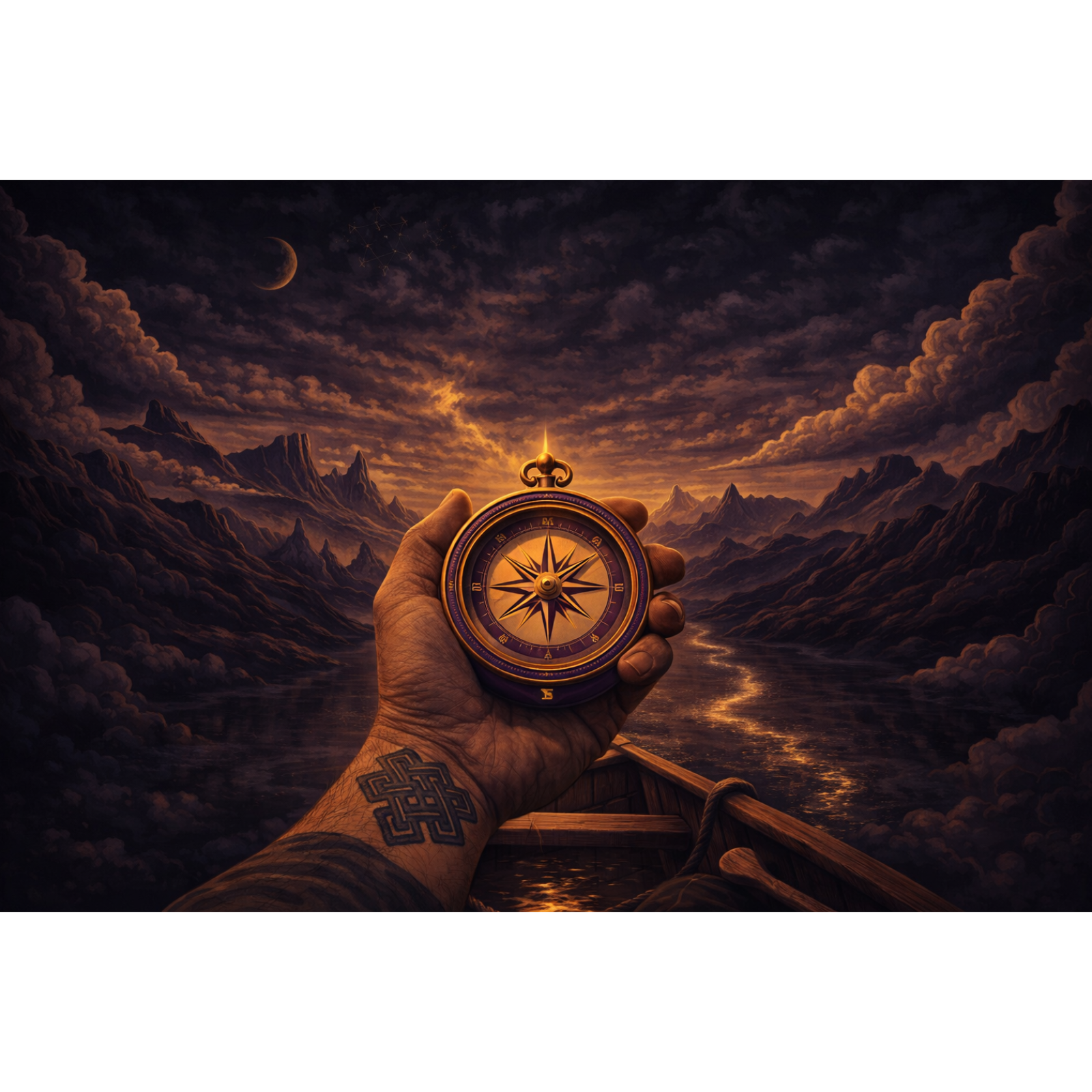
We wake up in this world without a manual. No explanation for where we are, why we’re here, or what any of this ultimately means. Because of that, life feels strange—mysterious, beautiful, cruel, symbolic, and overwhelming all at once. We are, in many ways, strangers in a strange land. Traversing the Strange World is a contemplative podcast hosted by Isaiah Danberry, dedicated to unpacking that strangeness. Through mythology, religion, philosophy, psychology, archetypes, and personal reflection, the show explores the human predicament: our search for meaning, our relationship to God or the div...
Be sure to visit the podcast's website and support the creator: www.facebook.com
Where to listen?
Podcasts in the app Replaio Radio Coming soonPodcasts are coming to the app soon. Install now and be the first to see a whole new take on podcasts
 Install for free
Android almost 10M downloads · 4.7+ rating
iOS soon
Episodes
Henry David Thoreau: Living Deliberately | The Good Life 09.11.2026 11:21
How much of your life have you actually chosen? Henry David Thoreau’s experiment at Walden Pond invites us to examine what we need, what our possessions cost in time, and whether earning a living leaves us room to live. In this Monday Mornings episode of Traversing the Strange World, Isaiah Danberry explores the good life through Thoreau’s ideas about simplicity, nature, solitude, and conscience....
The Founding Fathers on God, Jesus, and Religion 05.11.2026 14:18
What did America’s Founding Fathers believe about God—and how differently did they understand Jesus, faith, and religious freedom? In this Thursday Journal entry, Isaiah Danberry explores the beliefs of George Washington, John Adams, Thomas Jefferson, Benjamin Franklin, James Madison, Alexander Hamilton, and John Jay. Through their own words and accounts of their lives, we encounter deeply held Ch...
Dostoevsky and the Good Life: Why We Resist Change 02.11.2026 14:37
We can understand what hurts us and still struggle to change. What keeps us holding on? In this installment of The Good Life, I explore Fyodor Dostoevsky’s life and the philosophical questions within Notes from Underground, Crime and Punishment, and The Brothers Karamazov. Through his characters, we examine pride, self-deception, the difference between shame and responsibility, and the difficulty...
Faith and Power: America’s Struggle for Religious Freedom | Thursday Journal 29.10.2026 17:03
How has America struggled to protect freedom of conscience—and what happens when religious belief becomes intertwined with political authority? In this Thursday Journal, Isaiah Danberry traces a history of faith, persecution, and religious liberty. Beginning with imperial Christianity and the Reformation, we move into Roger Williams’s defense of conscience, the Founders’ constitutional protections...
Socrates and the Good Life: Are You Living Well? 26.10.2026 12:17
What makes a good life—and have we examined the things we’re living for? In this episode of Monday Mornings with Peace, we explore the philosophy of Socrates: recognizing the limits of our knowledge, questioning our assumptions, and caring for our character. Through the accounts preserved by Plato, we follow Socrates from the oracle at Delphi to conversations about courage, justice, and wisdom. We...
The Ideas That Built America: The Founders’ Philosophy of Freedom 22.10.2026 15:09
What ideas shaped the Declaration of Independence and the U.S. Constitution—and how are we continuing that conversation today? This Thursday Journal explores the philosophy behind America’s founding: John Locke’s natural rights and consent of the governed, Montesquieu’s separation of powers, and the republican tradition of civic responsibility. We follow those ideas into James Madison’s arguments...
Why Being Yourself Is So Hard: Kierkegaard on Despair and the Good Life 19.10.2026 13:27
Can you build a successful life and still become a stranger to yourself? In this episode of Monday Mornings with Peace, we explore Søren Kierkegaard’s understanding of despair, the self, and the good life. Drawing on The Sickness Unto Death, we examine how despair can hide beneath ordinary happiness, emerge as a wish to escape ourselves, or take the form of fierce self-reliance. Through questions...
Women Through History: How Roles, Rights, and Expectations Changed 15.10.2026 14:15
How have women’s roles changed throughout history? Explore the work, expectations, and opportunities that shaped women’s lives—from ancient civilizations to the modern world. Following our episode on masculinity, Traversing the Strange World examines women as providers, healers, spiritual leaders, mothers, scholars, and reformers. We explore ancient Egypt, Greece, Rome, biblical traditions, and me...
Aristotle on the Good Life: Virtue & True Friendship 12.10.2026 10:31
What makes a life good—and what kind of person are your daily choices turning you into? Aristotle understood the good life as human flourishing: living well through virtuous action, practical wisdom, and the development of character over a lifetime. This episode explores virtue between extremes—courage between cowardice and recklessness, generosity between stinginess and wastefulness—and why good...
What Makes a Man? The History of Masculinity 08.10.2026 15:03
What has history expected a man to be? This episode traces masculinity from hunter-gatherer societies and the agricultural revolution through ancient Greece, Rome, Jewish culture, Confucian thought, medieval chivalry, industrial society, and the modern political divide. We examine the strengths and failures of these traditions—and ask what men should carry forward. Perhaps men still need a code bu...
Maimonides and the Good Life: Wisdom, Balance and Purpose 05.10.2026 9:54
What does it mean to live a good life with wisdom, balance, and purpose? In this episode of Monday Mornings with Peace , we explore the philosophy of Moses Maimonides, also known as Rambam. For Maimonides, the good life required us to care for the body, discipline our appetites, develop our character, serve others, and pursue knowledge of God while remaining humble about the limits of human unders...
The Temple Fell: Rome, Revolt and the Survival of Judaism 01.10.2026 16:14
In 70 CE, the Roman army captured Jerusalem and destroyed the Second Temple—the sacred center of Jewish worship, sacrifice and national identity. This episode explores the world surrounding that catastrophe. We examine what the Temple represented, how Roman occupation shaped life in Judea, and why first-century Judaism contained competing movements such as the Pharisees, Sadducees, Essenes and rev...
The Good Life According to Epicurus: Freedom From Fear and Endless Desire 28.09.2026 14:27
Epicurus is often remembered as a philosopher of indulgence, but the life he advocated was surprisingly modest. In this episode of Monday Mornings with Peace, we follow Epicurus from his childhood on Samos and the displacement of his family to the community he eventually created in the Garden of Athens. Through his life, we explore his understanding of pleasure, friendship, desire, mortality and f...
The Jewish Jesus: Understanding His First-Century World 24.09.2026 20:29
Jesus was not born into Christianity. He emerged from the diverse and turbulent Jewish world of the first century—a world shaped by Torah, Temple, Roman occupation, competing schools of interpretation, and hopes for Israel’s restoration. In this episode of Thursday Journal, we examine Jesus within that original setting. We explore the Pharisees, Sadducees, Essenes, revolutionaries, and ordinary vi...
Why Nothing Ever Feels Like Enough: Arthur Schopenhauer and the Good Life 21.09.2026 12:22
Why does getting what we want so rarely feel like enough? In this episode of Monday Mornings with Peace , we explore the turbulent life and unsettling philosophy of Arthur Schopenhauer. From his abandoned career in commerce and nearly empty lecture hall to his solitary years in Frankfurt and eventual recognition, Schopenhauer’s story reveals the same restless force he believed governed all life: t...
America’s Divorce: When a Nation Loses Its Shared Story 17.09.2026 13:33
America increasingly resembles a marriage approaching divorce: the left and right still share the same home, but they no longer agree on the story of their relationship. In this entry of Thursday Journal , we travel from the ancient campfires that first transformed strangers into communities to the fractured political landscape of modern America. Drawing from Nietzsche, Carl Jung, James Baldwin, H...
The Good Life According to Confucius | Character, Harmony and Responsibility 14.09.2026 12:06
What does it mean to live a good life according to Confucius? This episode introduces the world and philosophy of Confucius—from the political disorder that shaped his thinking to his teachings on education, ritual, family, leadership and moral character. We explore the Confucian principles of ren, li, xiao and the junzi before bringing them together into his vision of human flourishing. For Confu...
Who Wrote the Torah? The Documentary Hypothesis 10.09.2026 14:35
Who wrote the Torah—and why does it sometimes appear to preserve more than one version of the same story? This episode explores the Documentary Hypothesis: the influential theory that the Five Books of Moses were formed by weaving together several ancient sources, traditionally known as J, E, D, and P. We examine the Torah’s repeated narratives, changing names for God, different laws, and distinct...
The Good Life According to Viktor Frankl: Meaning, Freedom and Responsibility 07.09.2026 11:32
What makes a life worth living when suffering cannot be avoided? In this episode of Monday Mornings with Peace , we take a focused look at Viktor Frankl’s philosophy of meaning and the system of psychotherapy he developed known as logotherapy. We explore freedom of will, the will to meaning, the three paths through which meaning can be discovered, and Frankl’s ideas of self-transcendence and tragi...
From the Cave to the Stars: Civilization, AI & the Future of Humanity 03.09.2026 14:13
From hunter-gatherers and the first agricultural societies to artificial intelligence, biohacking, and the possibility of becoming a space-faring species, this episode traces the strange path of human civilization. We explore the Cognitive Revolution, agriculture, the rise of cities, Rousseau and Hobbes on human nature, industrialization, and the technological world we now inhabit. The central que...
The Man Who Needed Nothing | Diogenes and the Good Life 31.08.2026 11:45
What if the good life begins by needing less from the world? In this episode of Monday Mornings with Peace, we explore the radical philosophy of Diogenes of Sinope, the ancient Greek Cynic who rejected wealth, status, luxury, social approval, and many of the conventions people around him treated as essential. We look at the original meaning of Cynicism, the famous story of Diogenes telling Alexand...
Escaping the Matrix: Freedom, Propaganda & the Patterns That Control Us 27.08.2026 12:20
What does it actually mean to be free? In this episode of Traversing the Strange World , we explore the Matrix not as a machine, but as the layers of influence that shape how we see reality: propaganda, political tribalism, family patterns, unconscious habits, identity, and inherited beliefs. Using Plato, Erich Fromm, Carl Jung, and Socrates, we ask whether freedom means escaping influence—or beco...
The Good Life According to Machiavelli | Power, Fortune & Virtù 24.08.2026 14:28
What does the good life look like through the eyes of Niccolò Machiavelli? In this episode of Monday Mornings with Peace , we explore Machiavelli beyond the stereotype of manipulation and ruthlessness. We examine his ideas of virtù, Fortuna, power, adaptability, courage, reputation, and survival —and ask what they can teach us about living well in an unpredictable world. Machiavelli believed that...
Live It Again? | Nietzsche on Will to Power, the Übermensch & Eternal Recurrence 20.08.2026 14:59
What if the real goal of life is not to escape struggle—but to become someone who would willingly choose the struggle again? In this episode of Traversing the Strange World , we explore Friedrich Nietzsche’s most powerful ideas: the Will to Power, the Übermensch, self-overcoming, ressentiment, the Last Man, the Camel, Lion and Child, amor fati, and eternal recurrence . Nietzsche saw humanity as un...
Albert Camus and the Good Life: The Absurd, Sisyphus & How to Live 17.08.2026 10:40
What does it mean to live a good life when you may never know why you’re here? In this episode of Monday Mornings with Peace , we continue our exploration of the good life through the philosophy of Albert Camus . Camus looked directly at what he called the Absurd —the collision between humanity’s hunger for meaning and a universe that may never provide us with an answer. But rather than surrenderi...
Similar podcasts





Listen to the Traversing the Strange World podcast in Replaio
Radio and podcasts in one app - free, with no sign-up. Install today and do not miss the launch
Replaio is not a podcast publisher; show names, artwork and audio belong to their authors and are distributed through public RSS feeds.