American Jewish Historical Society
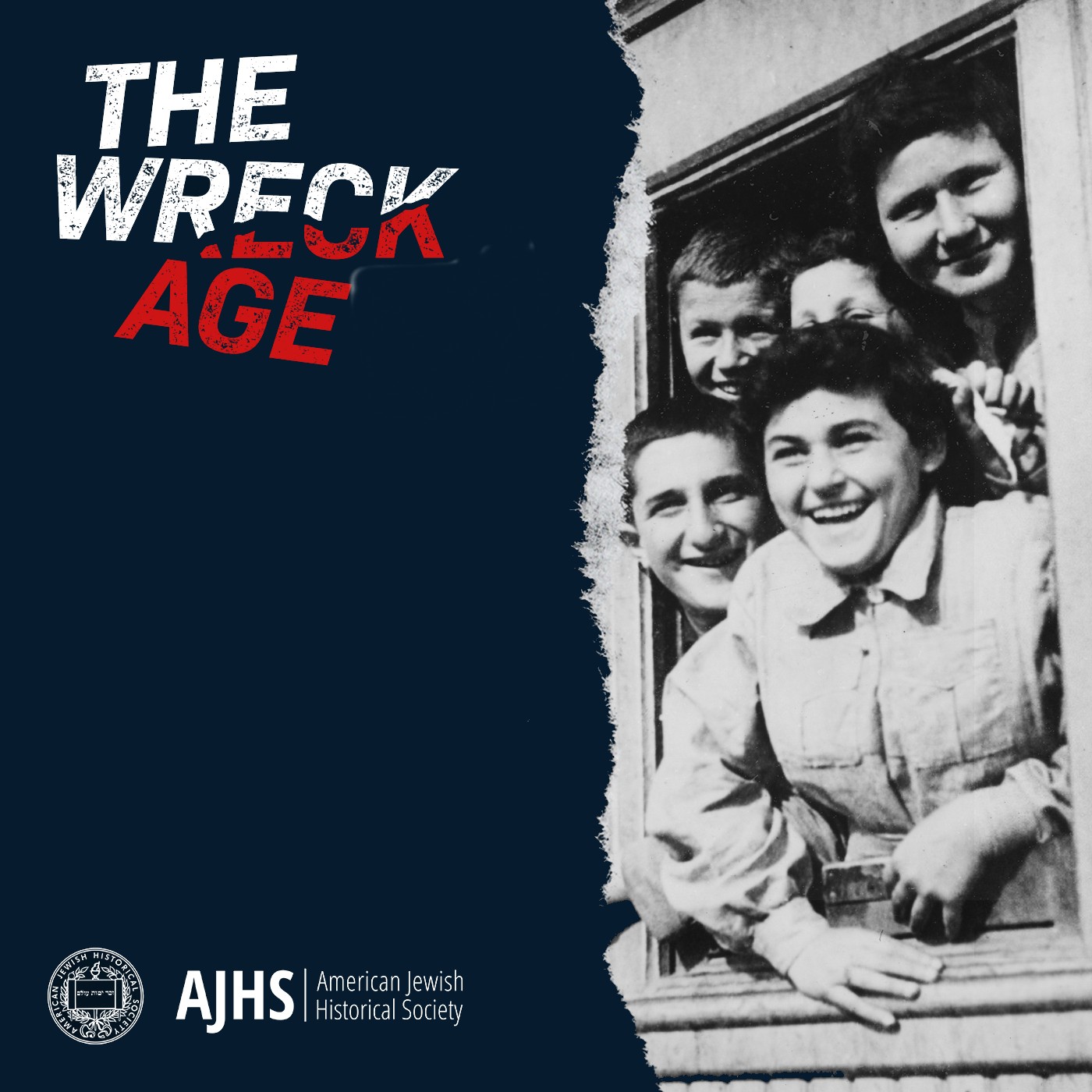
The Wreckage
The Wreckage is a narrative podcast from the American Jewish Historical Society chronicling the unique stories of Jewish Americans during the Cold War. Follow aid workers across the globe in the aftermath of World War II, listen in on Red Scare-era testimonies before Congress, and hear first-hand accounts of traveling to the Soviet Union at the height of Iron Curtain tensions. The full series is now available! The Wreckage is hosted by acclaimed singer and actress Rebecca Naomi Jones. Jones received a Drama Desk nomination for her portrayal of Laurey in Daniel Fish's Tony Award winning revival...
Where to listen?
Podcasts in the app Replaio Radio Coming soonPodcasts are coming to the app soon. Install now and be the first to see a whole new take on podcasts
 Install for free
Android 5M+ downloads · 4.8 rating
iOS soon
Install for free
Android 5M+ downloads · 4.8 rating
iOS soon
Episodes
The World in Front of Me: The Soviet Union 10.02.2026 22:59
From the American Jewish Historical Society comes a new series, The World in Front of Me, hosted by Ruth Andrew Ellenson in conversation with her lifelong friend, renowned photographer of Jewish life, Bill Aron. In this incredible episode, Bill travels to the USSR to document the lives of Refuseniks -- and encounters some KGB opposition along the way. Featuring expert commentary from The Wreckage...
The Dissolution: Bonus Episode 16.12.2025 52:37
Taped live in front of a limited studio audience at Sound Lounge in NYC, our series finale welcomes back author and critic Julie Salamon to host special guests Gal Beckerman, staff writer at The Atlantic and author of "When They Come for Us, We'll Be Gone: The Epic Struggle to Save Soviet Jewry," Shaul Kelner, professor of of Jewish Studies and sociology at Vanderbilt University and author of "A C...
The New Americans 09.12.2025 23:06
Over the course of four decades, over 500,000 Soviet Jews emigrated to the United States. Soviet Jewish families settled throughout the country, from small towns to big cities, with many joining synagogues, enrolling their children in Jewish day schools and summer camps, and celebrating milestones like bar and bat mitzvahs. For these families, life in the United States came with its own set of cha...
The Stateless 25.11.2025 22:56
Throughout the movement to free Soviet Jews, American Jewish aid organizations deployed caseworkers around the world to help resettle Jewish emigres. Beginning in the 1960s, NGOs like HIAS (the Hebrew Immigrant Aid Society) helped hundreds of thousands of Soviet Jews find new homes in the United States, Israel, Canada, and other nations, just as they had done after World War II. By the late 1980s,...
The Travelers 11.11.2025 24:04
In addition to advocacy at home, including through efforts like the twinning program, a number of activists working on behalf of Soviet Jewry traveled to the USSR, arranging meetings with Jews living behind the Iron Curtain in an effort to provide support and gain access to information to bring back to the United States. The journey was dangerous, and entailed a great deal of risk as the KGB enact...
The Coalitions 28.10.2025 25:28
The American movement for Soviet Jewry was composed of a number of organizations, both Jewish and non-Jewish, and ranging from grassroots organizations to larger, internationally established nonprofits. Established Jewish organizations dedicated significant staff time and effort to the cause, and worked to coordinate with both regional and national grassroots organizations that quickly became inst...
The Students 14.10.2025 22:11
One of the driving forces behind the American Soviet Jewry freedom movement were college students. In 1964, the activist Jacob Birnbaum arrived in New York City, and soon became inspired by the Student Nonviolent Coordinating Committee to start his own student group dedicated to the plight of Soviet Jews. Birnbaum, who had himself fled persecution as a child when the Nazis rose to power in his nat...
The Hijackers 30.09.2025 24:18
In the summer of 1970, Soviet Jewish dissidents Eduard Kuznetsov and Mark Dymshits organized a group of 16 refuseniks to take over a small, 12-seater airplane and escape from the USSR. Dubbed "Operation Wedding," the group booked their tickets on the small civilian aircraft under the guise of attending a wedding. Their plan: to board the flight, forcibly remove the pilots during a stop, and contin...
The Refuseniks 16.09.2025 19:35
As hostilities behind the Iron Curtain worsened, a large number of Soviet Jews began to apply for exit visas, most commonly to Israel. Most of these applications came from Jews living in territories in the Western part of the Soviet Union, including regions annexed during World War II. The vast majority of these applications were denied, giving rise to the plight of the Refuseniks. Narrated by Reb...
The Delegation 02.09.2025 23:24
In June 1956, a delegation of American Orthodox rabbis traveled to the Soviet Union, marking the first significant contact between U.S. Jews and the Soviet Jewish community in nearly four decades. The rabbis' mission was to bring hope to Soviet Jewry and learn first-hand of their oppression. Among the five travelers was Rabbi Herschel Schacter, a former U.S. Army chaplain who had ministered to the...
The Termination: Bonus Episode 29.04.2025 1:00:08
During this bonus episode, taped live at the Angelika Film Center in downtown Manhattan in a send-up to the Hollywood Ten, writer and critic Julie Salamon returns to The Wreckage to host New York Times editor/reporter and historian Clay Risen and AJHS executive director Gemma R. Birnbaum. Risen's new book, Red Scare: Blacklists, McCarthyism, and the Making of Modern America , provided an excellent...
The Yippies 15.04.2025 28:30
HUAC's continued targeting of activists spread to Jewish Americans and others at the forefront of the anti-Vietnam War movement. In 1967 - a year that would become one of the deadliest for U.S. military casualties as more than 11,000 American soldiers perished - counterculture activists Abbie Hoffman and Jerry Rubin were among those subpoenaed. In response, Hoffman and Rubin were openly defiant, a...
The Activists 01.04.2025 28:13
By 1957, Joseph McCarthy was dead and HUAC's power and influence was on the decline, with former President Harry Truman calling it "the most un-American thing in the country today." Increasingly, organizations and individuals alike began to speak out against the committee, but rather than back down, committee members escalated their targeting of activist groups and individuals, with particular emp...
The Army 18.03.2025 27:40
In the spring of 1954, the blustering anticommunist crusader, Senator Joseph McCarthy, set his sights on a new target: the United States Army, alleging Communist infiltration of the Army Signal Corps lab at Fort Monmouth, New Jersey - the same lab where Julius Rosenberg had once worked. In turn, the Army accused McCarthy of using his position to pressure them into giving preferential treatment to...
The Defendants 04.03.2025 22:50
On April 5, 1951, Julius and Ethel Rosenberg were sentenced to death under the Espionage Act of 1917. The couple was accused of spying for the Soviet Union and providing classified information about nuclear weapons, radar, sonar, and jet propulsion engines. The trial, which was presided over by Judge Irving Robert Kaufman, captured international attention. Narrated by Rebecca Naomi Jones and featu...
The Professors 18.02.2025 19:54
College professors and other educators were among those targeted by anti-communists, but the search for Communist Party members in the U.S. education system began much earlier. The so-called "Red-ucators" were among the first deemed subversives, and Harvard University, City College of New York, and many other schools were rocked by hundreds of subpoenas, calling them to testify in front of special...
The Hollywood Ten 04.02.2025 20:43
In November 1947, ten Hollywood writers and directors were cited for contempt of court for their refusal to testify before HUAC. Criminal charges were issued against the group that would become known as "the Hollywood Ten," and the first systematic Hollywood blacklist had begun. Of the ten, six were Jewish - John Howard Lawson, Herbert Biberman, Alvah Bessie, Albert Maltz, Samuel Ornitz, and Leste...
The Unionists 21.01.2025 18:16
The film, television, and theater industries were represented by some of the largest unions in the United States, and in the late 1940s, with the full cooperation of Screen Actors Guild President Ronald Reagan, organizations like the Motion Picture Alliance for the Preservation of American Values sought to root out what they deemed the communist threat in entertainment. Unions from other industrie...
The Committee 07.01.2025 27:06
In 1938, as fascism continued to spread across Europe and Asia, the Dies Committee was formed to investigate "subversive activities" within the United States. The committee, headed by Texas Democrat Martin Dies, was tasked with targeting Nazi sympathizers, but soon shifted its primary focus to rooting out those they believed to have communist ties, and paved the way for a second American red scare...
The Postscript: Bonus Episode 28.08.2024 47:10
World War II and the Holocaust were turning points for American Jews, shaping Jewish American identity, memory, and culture for generations. In this bonus episode, taped live with a studio audience at Sound Lounge in New York City, acclaimed writer Julie Salamon hosts a panel discussion that delves into the anxieties, cultural shifts, and reactions to global events in the postwar years. This episo...
The Soviets 13.08.2024 22:21
In a 1946 letter to Secretary of State James Byrnes, President Harry Truman proclaimed, "I'm tired of babying the Soviets." Once the United States' strongest anti-Fascist ally, the Soviet Union was rapidly becoming its greatest enemy, and fears that the Soviets would have access to atomic weapons led to an unprecedented era of paranoia and spying. Oppenheimer was not the only Jewish American to be...
The Scientist 30.07.2024 26:00
On August 6, 1945, the United States became the first, and thus far only, nation to deploy the atomic bomb in a time of war. After the war, "father of the atomic bomb" J. Robert Oppenheimer, the Jewish American theoretical physicist and director of the Manhattan Project lab at Los Alamos, joined the Atomic Energy Commission, and would soon find himself at odds with his former professional ally, Le...
The Advocates 16.07.2024 19:50
The events of World War II and its immediate aftermath had significant influence on American Jewish political identity. In the wake of the Holocaust, and as the extent of the destruction continued to be revealed, many Jewish Americans took it upon themselves on both local and national levels to tell the story of what happened, advocate for the victims, and lobby for changes to international law to...
The Survivors 02.07.2024 24:00
It is estimated that after World War II, 140,000 Holocaust survivors settled in the United States. These refugees, the majority of whom were between 20 and 40 years old, largely came to the United States due to efforts from HIAS, USNA, and other organizations. Once they arrived, these survivors worked to build new careers, start families, and find community among their neighbors. Even as they accl...
The Aid Workers 18.06.2024 21:02
After World War II, organizations like the Hebrew Immigrant Aid Society (HIAS), Hadassah, and the United Service for New Americans (USNA) provided critical resources to help evacuate and resettle survivors who were living in displaced persons camps - camps that were often the very same prisons where they were incarcerated during the Holocaust. Hundreds of thousands of refugees came to the United S...
Similar podcasts







Listen to the The Wreckage podcast in Replaio
Radio and podcasts in one app - free, with no sign-up. Install today and do not miss the launch
Replaio is not a podcast publisher; show names, artwork and audio belong to their authors and are distributed through public RSS feeds.