James Edward Mills
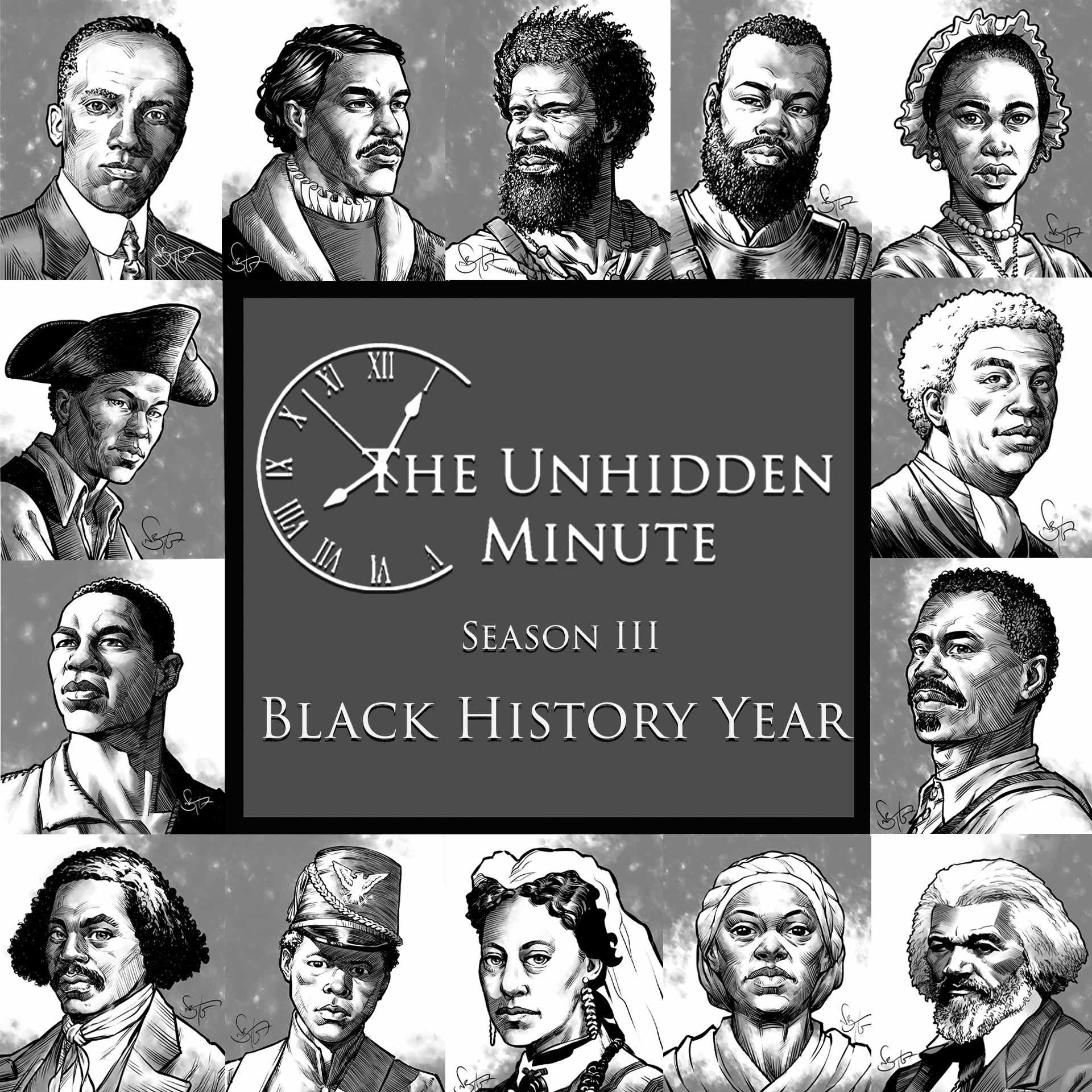
The Unhidden Minute
The Unhidden Minute is part of the Unhidden Podcast Project supported through a National Geographic Explorer Grant from the National Geographic Society. This series celebrates the untold stories of Black American history. jamesedwardmills.substack.com
Author
James Edward Mills
Category
Podcast website
Latest episode
Jul 7, 2026
Where to listen?
Podcasts in the app Replaio Radio Coming soonPodcasts are coming to the app soon. Install now and be the first to see a whole new take on podcasts
 Install for free
Android 5M+ downloads · 4.8 rating
iOS soon
Install for free
Android 5M+ downloads · 4.8 rating
iOS soon
Episodes
The Bronzeville Armory 08.07.2025 1:20
During World War I, the Bronzeville Armory in Chicago played a crucial role as a center of Black military organization and community pride. Located in the heart of the city's thriving African American neighborhood, the armory was home to the Eighth Regiment of the Illinois National Guard—the first all-Black regiment officially recognized by the U.S. Army. When the U.S. entered the war, this regime...
What to the Slave is the 4th of July 04.07.2025 1:19
On July 5, 1852, in Rochester, New York, Frederick Douglass delivered his searing speech “ What to the Slave is the Fourth of July ?” His eloquent words exposed the hypocrisy of a nation that celebrated liberty while millions remained enslaved. Invited to commemorate America’s independence, Douglass instead challenged his audience to confront the deep contradictions of a country that proclaimed fr...
Gwendolyn Brooks 01.07.2025 1:19
Gwendolyn Brooks was a groundbreaking American poet whose work captured the joys, struggles, and beauty of Black life, particularly in Chicago’s South Side community of Bronzeville. Born in 1917, she began writing poetry at a young age and published her first poem at 13. Her 1949 collection, Annie Allen , won the Pulitzer Prize for Poetry, making her the first African American to receive the honor...
The Yosemite Act of 1864 30.06.2025 1:19
The Yosemite Act of 1864 was a landmark piece of legislation signed by President Abraham Lincoln during the Civil War. Signed on June 30th the new law granted the Yosemite Valley and the Mariposa Grove of Giant Sequoias to the state of California, with the stipulation that the land be preserved for “ public use, resort, and recreation .” This act marked the first time in U.S. history that the fede...
Bronzeville 27.06.2025 1:20
Located on Chicago’s South Side, Bronzeville is one of the most historically significant Black communities in the United States. Often called the "Black Metropolis," Bronzeville thrived in the early to mid-20th century as a vibrant center of Black American culture, business, and political life. Following the Great Migration, thousands of Black families moved north from the Jim Crow South, settling...
The Buffalo Soldiers Defend Ute Indians 17.06.2025 1:20
In 1887, members of the 9th Cavalry Regiment—known as Buffalo Soldiers—intervened to protect a band of Ute Indians. These Native Americans had fled into Utah after tensions escalated with white settlers and the Colorado state militia. The Utes had left the White River Reservation in Colorado, fearing violent retribution and encroachment on their lands. In response, the Colorado militia pursued the...
The Buffalo Soldiers at Fort Douglas 10.06.2025 1:19
In 1887, Buffalo Soldiers of the 9th Cavalry were stationed at Fort Douglas , near Salt Lake City, Utah. They were part of the U.S. Army’s broader efforts to secure western territories during the post-Civil War era. These Black American troops, many of them formerly enslaved, were among the most disciplined units in the frontier army. The performed with distinction and honor. At Fort Douglas, thei...
The First Memorial Day 26.05.2025 1:22
The origins of Memorial Day are deeply rooted in Black American history, though this is often overlooked in mainstream narratives. On May 1, 1865, just weeks after the Civil War ended, over 10,000 formerly enslaved people in Charleston, South Carolina , held a procession to honor Union soldiers who had died in a Confederate prison camp and were buried in a mass grave. Black residents exhumed the b...
The Greensboro Sit-Ins 29.04.2025 1:19
The Greensboro lunch counter protests of 1960 marked a pivotal moment in the American Civil Rights Movement. On February 1, 1960, four Black American college students from North Carolina Agricultural and Technical State University — Ezell Blair Jr., David Richmond, Franklin McCain, and Joseph McNeil — sat down at a "whites-only" lunch counter at the Woolworth’s store in Greensboro, North Carolina....
Lemuel Haynes 21.04.2025 1:19
Lemuel Haynes (1753–1833) was the first Black American ordained as a minister in a mainstream Protestant denomination in the United States. Born in West Hartford, Connecticut, to a white mother and a Black father, Haynes was indentured to a Massachusetts farmer until age 21. He enlisted in the local militia as a Minuteman in 1774 and was called to arms following the outbreak of hostilities with Br...
William Still 18.04.2025 1:17
William Still (1821–1902) was a prominent Black American abolitionist, writer, and key figure in the Underground Railroad . Often referred to as the "Father of the Underground Railroad," Still helped hundreds of enslaved people escape to freedom while working as chairman of the Vigilance Committee of the Pennsylvania Anti-Slavery Society in Philadelphia . Born to formerly enslaved parents in New J...
The Assassination of Martin Luther King Jr. 04.04.2025 1:19
Dr. Martin Luther King Jr., a prominent leader in the American civil rights movement, was assassinated on April 4, 1968, in Memphis, Tennessee. He was in the city to support a strike by African American sanitation workers. While standing on the balcony of the Lorraine Motel, King was fatally shot by James Earl Ray , a fugitive from the Missouri State Penitentiary. His assassination sent shockwaves...
Shirley Chisholm 27.03.2025 1:18
Shirley Chisholm was a groundbreaking American politician, educator, and author. Born on November 30, 1924, in Brooklyn, New York, she became the first Black American woman elected to the United States Congress in 1968, representing New York's 12th congressional district for seven terms until 1983. Chisholm was a fierce advocate for racial and gender equality, education, and social justice. In 197...
The Selma To Montgomery March 24.03.2025 1:18
The march from Selma to Montgomery on March 21, 1965 , was a pivotal event in the American civil rights movement. Led by Dr. Martin Luther King Jr ., thousands of demonstrators set out from Selma, Alabama, to demand voting rights for Black Americans. This was the third attempt after previous marches were met with violent resistance from local law enforcement officers, notably on “Bloody Sunday” (M...
George Frazier Monroe 01.03.2025 1:19
George Frazier Monroe (c.1844-1886) was a renowned Black American stagecoach driver in the late 19th century. Known for his skill and daring he drove through the rugged terrain of Yosemite National Park . Born in California, Monroe became one of the most trusted stage drivers for the Wells Fargo Company , guiding visitors, including prominent figures like President Ulysses S. Grant , through the p...
General Harriet Tubman 28.02.2025 1:15
On June 2, 1863, Harriet Tubman led a daring raid along the Combahee River in South Carolina, becoming the first woman to plan and execute a military operation in U.S. history. Working alongside Union Colonel James Montgomery , Tubman and a group of Black Union soldiers used intelligence gathered from enslaved people to navigate the river and launch a surprise attack on Confederate plantations. Un...
Private Gordon 28.02.2025 1:18
Private Gordon , an enslaved man who escaped to became one of the most iconic figures of the Civil War. Photographs of his severely scarred back were published in 1863. Born into slavery in Louisiana, Gordon endured brutal treatment from his enslavers. In March 1863, he escaped a plantation, traveling ten days through treacherous terrain to reach Union lines in Baton Rouge. Once there, Gordon enli...
Susie King Taylor 26.02.2025 1:17
Susie King Taylor was the first Black American nurse in the Civil War and a pioneering educator. Born into slavery in Georgia in 1848, she defied the law by secretly learning to read and write. When Union troops occupied St. Simons Island in 1862, she escaped to freedom and joined the 1st South Carolina Volunteer Infantry , an all-Black regiment. Taylor served as a nurse, laundress, and educator,...
Major Martin Delany 25.02.2025 1:19
Major Martin Delany (1812-1885) was a pioneering Black American abolitionist, physician, and military officer. Born in 1812 in Charles Town, Virginia (now West Virginia), he became one of the first Black students admitted to Harvard Medical School, though racist opposition forced him to leave. A staunch advocate for Black self-sufficiency, he co-edited The North Star with Frederick Douglass and la...
Lewis Henry Douglass 24.02.2025 1:18
Lewis Henry Douglass (1840-1908), the eldest son of Frederick Douglass , was a sergeant in the 54th Massachusetts Infantry , the first Black American regiment raised in the North during the Civil War. On July 18, 1863, he fought in the assault on Fort Wagner , a heavily fortified Confederate stronghold in South Carolina. The 54th led the charge under intense enemy fire, suffering heavy casualties....
Dangerfield Newby 21.02.2025 1:19
Dangerfield Newby (1815–1859) was an enslaved man who joined John Brown ’s raid on Harpers Ferry in an attempt to free his wife and children from slavery. Born in Virginia to an enslaved mother and a white father, Newby was later freed, but his wife and children remained in bondage. Despite his efforts to buy their freedom, their enslaver refused. Desperate to rescue his family, Newby joined John...
Clara Brown 20.02.2025 1:19
Clara Brown (1800–1885) was a formerly enslaved woman who became a successful entrepreneur, philanthropist, and community leader in Colorado. Born into slavery in Virginia, she was separated from her family when she was sold at auction. Brown gained her freedom in 1856 upon the death of her owner who release her from bondage in his will. She traveled west during the Gold Rush, working as a cook, l...
Hercules Posey 19.02.2025 1:19
Hercules Posey was an enslaved chef for George Washington and one of the earliest influencers of American cuisine. Born around 1754, he became Washington’s head cook at Mount Vernon and later in the presidential household in Philadelphia. Known for his culinary skill, Hercules prepared elaborate meals blending European techniques with African and American ingredients, helping to shape what would b...
Oney Judge 18.02.2025 1:19
Oney Judge was an enslaved woman who served as Martha Washington’s personal maid before escaping to freedom. Born around 1773 at Mount Vernon , she was of mixed African and English ancestry. When George Washington became the first U.S. president, Oney was taken to serve in his presidential households in New York and later in Philadelphia. In 1796, upon learning she was to be given as a wedding gif...
Black Caesar 17.02.2025 1:20
In the early 18th century, a legendary African pirate who operated off the coast of Florida. They called him Black Caesar . According to folklore, he was once an African chieftain who was captured by slavers but escaped after a shipwreck near the Florida Keys. He and his crew turned to piracy, using the remote islands and hidden coves as a base for raiding passing ships around what is now Biscayan...
Similar podcasts







Listen to the The Unhidden Minute podcast in Replaio
Radio and podcasts in one app - free, with no sign-up. Install today and do not miss the launch
Replaio is not a podcast publisher; show names, artwork and audio belong to their authors and are distributed through public RSS feeds.