Project Likkutei Sichos
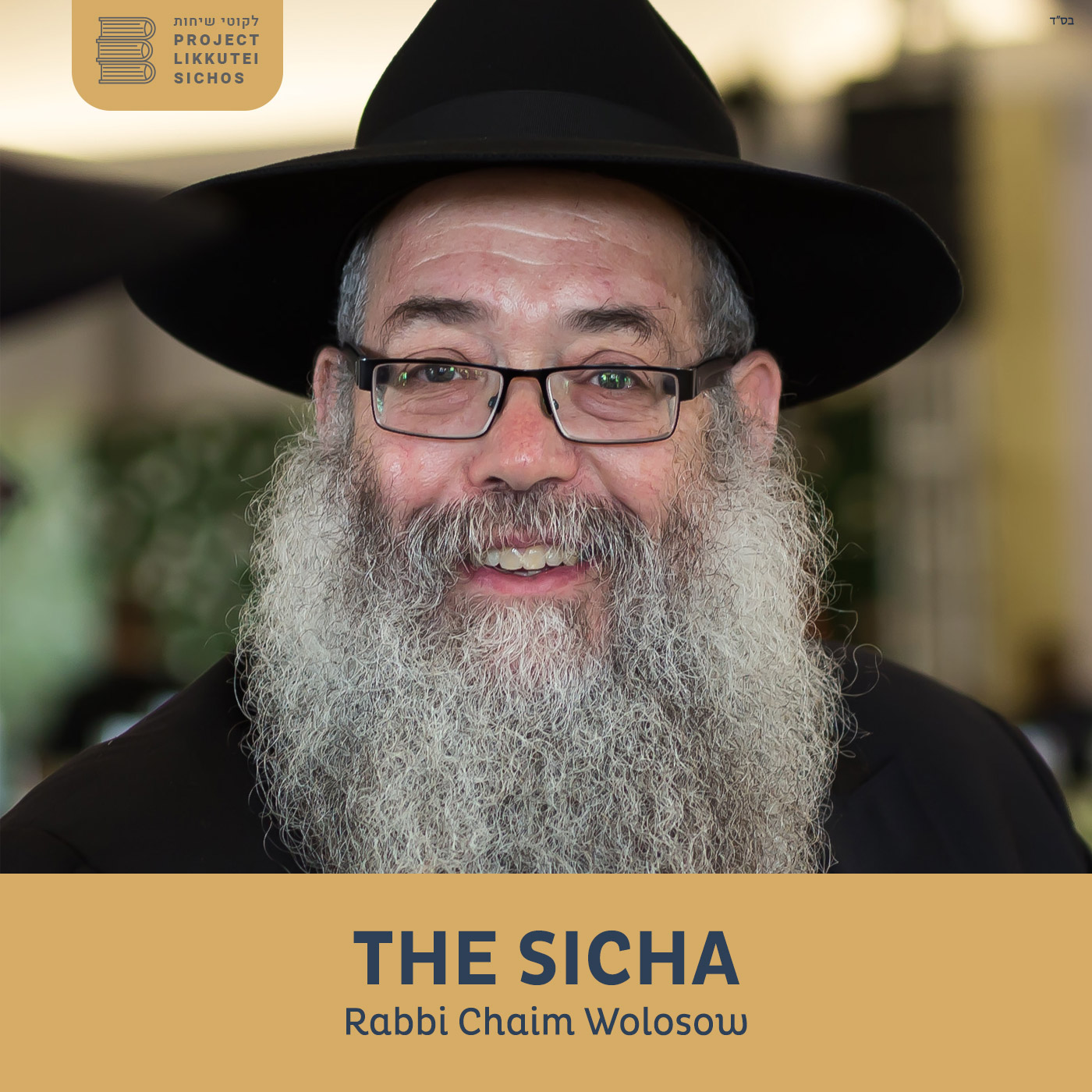
The Sicha, Rabbi Chaim Wolosow
This is the “classic” text-based shiur, covering the entire Sicha, and geared to those familiar with Likkutei Sichos. Following the learning cycle of Project Likkutei Sichos
Author
Project Likkutei Sichos
Category
Podcast website
Latest episode
Jul 8, 2026
Where to listen?
Podcasts in the app Replaio Radio Coming soonPodcasts are coming to the app soon. Install now and be the first to see a whole new take on podcasts
 Install for free
Android 5M+ downloads · 4.8 rating
iOS soon
Install for free
Android 5M+ downloads · 4.8 rating
iOS soon
Episodes
Chelek 34 - Davarim 08.07.2026 1:19:20
Rashi on 'See, I Have Set the Land Before You' – Literal Vision and Redemption This class analyzes Rashi's commentary on Devarim 1, exploring why the Torah uses the term 'see' regarding the promise of the Land of Israel, and how this relates to both the Israelites' experience at Horeb and lessons for redemption. The Rebbe explains Rashi's precise wording and its implications.
Chelek 29 - Shabbas Chazon 07.07.2026 1:15:07
Shabbos Chazon: The Parable of the Garment and the Future Beis Hamikdash This class explores why the future Beis Hamikdash is shown to every person on Shabbos Chazon through the parable of a garment. It explains how each section of the Beis Hamikdash reflects unique holiness, and how this relates to personal Divine service becoming second nature.
Chelek 28, Matos-Masei 01.07.2026 1:20:34
Why Half of Menashe Received Land East of the Jordan This class explores why Moshe gave half of the tribe of Menashe an inheritance east of the Jordan, even though they did not request it. The Rebbe explains that this act foreshadowed the future expansion of Israel's borders and reflected Menashe's unique spiritual mission.
Chelek 28, Matos 2 30.06.2026 2:00:52
Why Is the Command “Whoever Kills a Person” Mentioned Only in Parashat Matot? – Rashi’s Explanation The essay explains why the law of impurity for one who kills a person appears in Parashat Matot rather than Chukat. Rashi teaches that it is not a new law but a clarification that touching an object connected to a corpse is like touching the corpse itself, with a spiritual lesson on attachment to To...
Chelek 33, Pinchas 2 23.06.2026 1:00:08
The Sons of Korach: The Power of a Hidden Thought of Teshuvah Although Korach’s sons helped initiate the rebellion, they experienced a silent thought of repentance while still outwardly participating in it. Rashi explains that this inner teshuvah saved them from destruction, revealing the extraordinary power of even an unseen movement toward God.
Chelk 33, Pinchas 1 22.06.2026 1:12:07
Pinchas: Living Beyond Nature — The Power of a Life of Mesirus Nefesh Why does the Gemara say that one who sees Pinchas in a dream merits a “wonder”? This talk explains that Pinchas embodied a state of constant mesirus nefesh, beyond ordinary calculation. His life was one of “peleh” — living above nature — a model reflected in the Previous Rebbe’s self-sacrifice and in every Jew’s mission today.
Chelek 33, 12-13 Tamuz sicha 1 21.06.2026 1:18:55
“HaGomel LaChayavim”: Danger, Elevation, and the Mission of Yud-Beis Tammuz Birchas HaNes thanks Hashem for a miracle, while Birchas HaGomel thanks Him for deliverance from danger. Therefore HaGomel speaks of “the undeserving,” expressing humility before Hashem. Even a tzaddik's ordeal serves to elevate him to a higher level and expand his mission.
Chelek 33, Chukas 1 17.06.2026 55:30
The Eternal Power of Moshe's Red Heifer and Purification from Death This class explores why the red heifer is uniquely connected to Moshe Rabbeinu, both in its ritual and its inner meaning. It examines how Moshe's eternal qualities enable true purification from death and how this spiritual power continues in every Jew's service of G-d.
Chelek 33, Chukas 2 17.06.2026 1:22:26
Rashi on Moses and Israel: The Leader as the Entire Generation This class explores Rashi's commentary on the verses describing who sent messengers—Moses or Israel—and delves into the deeper meaning that the leader of a generation embodies and channels the entire people. The discussion highlights how all communal needs and actions are unified through the leader.
Chelek 28, Korach 3 09.06.2026 1:26:55
Kohanim and Leviim: Distinctions in Gifts and Divine Service This class explores the differences between Kohanim and Leviim regarding their gifts and roles, focusing on how Kohanim receive their portion directly from Hashem while Leviim receive tithes as compensation for service. The Rebbe analyzes scriptural language, Rashi, and Rambam to clarify these distinctions.
Chelek 28, Korach 2 08.06.2026 1:40:44
The Crown of Torah as One’s Essence The Rambam teaches that Kesser Torah is more than studying Torah. Like the enduring crowns of priesthood and kingship, Torah must become a person's very identity, transforming his essential being.
Chelek 33, Korach 3 04.06.2026 1:25:38
Giving Terumah from the Best The Sifrei and Talmud differ on whether giving Terumah from the finest produce is merely an ideal or an obligation. The Rebbe explains that the dispute hinges on whether this requirement is a general enhancement of a mitzvah or a unique law of Terumah itself.
Chelek 33, Korach 2 02.06.2026 1:48:44
Three Levels of Agency and the Limits of Independence The Rebbe explains Rav Ashi’s view that a non-Jew could theoretically serve as an agent because agency affects the object, not necessarily the sender. The Gemara rejects this, teaching that every form of agency requires a genuine connection between agent and sender.
Chelek 33, Shelach 1 31.05.2026 1:17:53
Understanding the Meraglim's Intentions and Moshe's Prayer The Rebbe explores the seeming contradiction in Rashi's commentary regarding the Meraglim's status when they were sent. Initially, they were deemed righteous, yet Moshe prayed for Yehoshua's protection from their counsel. The Rebbe clarifies that while they were righteous at the outset, Moshe foresaw potential pitfalls.
Chelek 33, Shelach 2 31.05.2026 1:56:19
The Spies’ Mistake: Seeking Spiritual Perfection Instead of Divine Purpose The Rebbe explores why the concept of a 'minyan' (quorum of ten) for sacred matters is derived from the spies, despite their sin. He explains that the spies were on a high spiritual level, desiring to remain in the desert's spiritual environment rather than engage in the physical tasks of settling the Land of Israel.
Chelek 33, Beha'alosecha 2 26.05.2026 1:37:21
This sicha explores the obligation of joy on Yom Tov, emphasizing that consuming meat is a key aspect of fulfilling this commandment. The Rebbe analyzes different opinions and the correlation between physical enjoyment and spiritual fulfillment, illustrating how joyous eating enhances both the celebration and the connectedn
Chelek 33, Beha'alosecha 1 25.05.2026 1:08:50
Spiritual Insights from Korban Pesach This sicha discusses the differing spiritual and practical aspects between the first and second Passover offerings.
Chelek 28, Sivan 12 19.05.2026 1:42:22
Bringing Festival Korbanos During the Weekday
Chelek 28, Naso 3 17.05.2026 1:52:59
Likutei Sichos Vol. 28 – Naso 3 – The Aron’s Unique Place on the Shoulder Why did the Aron specifically have to be carried on the shoulder? The Rebbe explores the Rambam’s view that the Aron’s place during travel was specifically upon the shoulders of the carriers. Through Nigleh and Chassidus, the sicha explains the unique holiness of the Aron and the Luchos within it.
Chelek 28, Erev Chag Hashavuos 11.05.2026 1:40:41
Erev Chag HaShavuos - Erev Matan Torah Building the Mizbeach in the Midbar
Chelek 28, Chag Hashavuos 11.05.2026 1:42:16
The Rebbe analyzes why the day after Shavuos became “Yom Tavo’ach,” when the Olos Re’iyah were brought. Even according to Beis Hillel, many delayed these korbanos to emphasize the unique simcha and “lachem” of Matan Torah on Shavuos itself.
Chelek 33, Bamidbar 1 05.05.2026 1:48:11
לקוטי שיחות חלק ל״ג, במדבר א׳ Likkutei Sichos, Vol. 33, Bamidbar I - Counting Beyond Number: The Unique Status of Levi The Rebbe explains Rashi’s two views on counting Levi, revealing deeper levels of Divine service—from measured mitzvos to boundless mesiras nefesh. True connection to Hashem transcends limitation, reflecting Levi’s unique role beyond number.
Chelek 33, Bamidbar 2 05.05.2026 1:52:56
לקוטי שיחות חלק ל״ג, במדבר ב׳ The Power of Influence: Good and Bad Neighbors The Rebbe analyzes “woe to the wicked and his neighbor” vs. “good for the righteous and his neighbor,” showing how influence can punish, change, or reveal. True protection from negativity is through Torah and closeness to tzaddikim, leading to unity and preparation for Matan Torah.
Chelek 27, Bechukosei 3 26.04.2026 1:23:49
Three Levels of Giving The Rebbe explains three levels of giving: measured charity, giving beyond a fifth for another’s need, and giving everything when the soul itself is at stake. These reflect stages in avodas Hashem and lead to the ultimate request—that Hashem redeem us from Golus with the complete Geulah.
Chelek 27, Behar 2 24.04.2026 1:32:06
Behar: What Will We Eat? The Wise Son and the Blessing of Shemittah Why does the Torah ask, “What will we eat?” The Rebbe explains this is not a question of doubt, but of the wise son seeking understanding. Shemittah teaches that Hashem’s blessing can transcend nature, and even a weak generation can bring the Geulah.
Similar podcasts






Listen to the The Sicha, Rabbi Chaim Wolosow podcast in Replaio
Radio and podcasts in one app - free, with no sign-up. Install today and do not miss the launch
Replaio is not a podcast publisher; show names, artwork and audio belong to their authors and are distributed through public RSS feeds.