J Shoot
The Caduceus Files
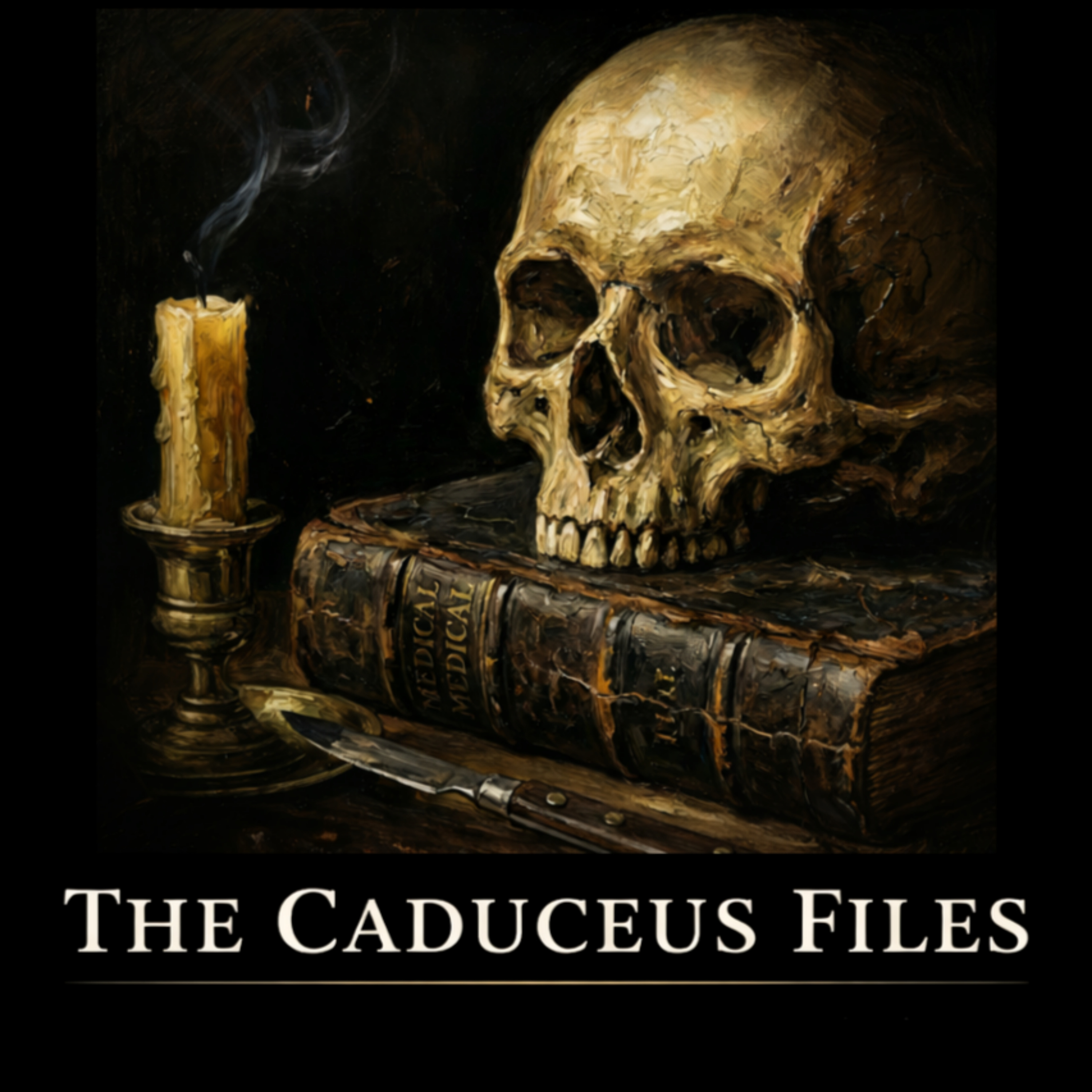
The Caduceus Files explores the forgotten and often dangerous history of medicine. Each episode is a long-form case study examining treatments, procedures, and medical beliefs once considered authoritative—many of which caused widespread harm before the rise of evidence-based science. Drawing from historical records, medical literature, and firsthand accounts, the series reconstructs how good intentions, institutional certainty, and incomplete knowledge led to catastrophic outcomes. This is not shock content. It is documentation. New episodes present one case at a time, allowing the facts
Be sure to visit the podcast's website and support the creator: podcasters.spotify.com
Author
J Shoot
Category
Podcast website
Latest episode
Jan 25, 2026
Where to listen?
Podcasts in the app Replaio Radio Coming soonPodcasts are coming to the app soon. Install now and be the first to see a whole new take on podcasts
 Install for free
Android almost 10M downloads · 4.8 rating
iOS soon
Install for free
Android almost 10M downloads · 4.8 rating
iOS soon
Episodes
Radioactive Paint Destroyed Their Lives 25.01.2026 2:12
In the early 20th century, doctors approved radium-based paint for watch dials. Young women were instructed to ingest it daily to improve precision. The company knew radium bonded permanently to bone. That research was filed. Production continued. As the women sickened, medical authorities denied the cause. Every symptom was reclassified. Every death was delayed in court. Some survivors remained r...
Thorazine Rewrote Psychiatry — at What Cost 24.01.2026 2:04
In the 1950s, psychiatry declared a revolution. Chlorpromazine—later branded as Thorazine—emptied wards, reduced agitation, and made patients cooperative. The profession celebrated. Awards were given. Hospitals reorganized around the drug. But Thorazine was not designed to heal the mind. It was designed to suppress shock. This episode examines how an accidental anesthetic became the foundation of...
Sleep Therapy: Prescribed Comas in Modern Medicine 23.01.2026 2:01
Doctors once treated mental illness by removing consciousness itself. Patients were sedated for days. Sometimes weeks. The silence was recorded as improvement. In 1979, a coroner ruled sleep therapy a direct cause of patient deaths. The practice faded quietly. No ban. No apology. This is how unconsciousness became care — and why no one could measure what was lost.
Forced Sterilization Was Legal Medicine in America 22.01.2026 2:57
For decades, U.S. courts ordered sterilization as preventive medicine. Doctors performed the procedures. Judges approved them. Thirty-two states legalized it. This is the history of forced sterilization in America—not as abuse hidden in shadows,but as law, policy, and routine medical care. No commentary. No dramatization. Just the record.
When Breast Cancer Surgery Removed Everything 21.01.2026 2:41
Acting on the belief that cancer spread outward in stages, surgeons removed entire breasts, chest muscles, and lymph nodes as routine protocol. The logic was clean. The data was incomplete. Women survived — but many lost function, mobility, and independence. Those costs were never counted. This is not a story of cruelty. It is a story of measurement.
When Seizures Were Prescribed as Treatment 20.01.2026 2:54
Doctors once injected patients with a chemical that reliably caused violent seizures. This was not a side effect. It was the treatment. Metrazol shock therapy was used throughout Europe and the United States in the 1930s and 1940s, based on the belief that seizures could interrupt mental illness. Injuries, fractures, and deaths were accepted as part of the process. Metrazol was eventually abandone...
When Infection Was Prescribed as Treatment 19.01.2026 2:57
Doctors once deliberately infected psychiatric patients with malaria as medical treatment. The resulting fevers were believed to interrupt mental illness. Temporary improvement was recorded as success. The practice was formalized, scaled, and ultimately rewarded. This is the history of malaria therapy—and how intentional infection became institutional medicine.
When Restraints Were Medical Treatment 18.01.2026 2:56
For decades, hospitals restrained patients under physician orders. Straps, cuffs, and locked positions were used not as punishment, but as prescribed care. Stillness was recorded as improvement. Compliance was mistaken for recovery. This is the history of mechanical restraint in institutional medicine—and how control was confused for treatment.
When Isolation Was Prescribed as Medicine 17.01.2026 2:59
The Rest Cure was once a widely prescribed medical treatment. Patients were isolated. Conversation was limited. Reading and writing were discouraged. Doctors believed silence would calm the nervous system. Withdrawal was recorded as improvement.
When Stillness Was Prescribed as Medicine 16.01.2026 2:45
Extreme bed rest was once prescribed as medical care. Doctors believed movement exhausted the nervous system. Stillness was thought to restore it. Weeks turned into months. Patients weakened, but compliance was recorded as progress.
When Cold Water Was Prescribed as Medicine 15.01.2026 1:54
Cold hydrotherapy was once a standard psychiatric treatment. Patients were submerged for hours. Sometimes restrained. Sometimes unable to leave. Hospitals recorded calm as improvement. Compliance as recovery.
Pre-Frontal Lobotomy — When Removal Became Treatment 14.01.2026 2:58
In the mid-20th century, doctors believed mental illness could be cured by severing connections in the brain. The results were immediate. Patients became calm. Wards grew quiet. Institutions regained control. Pre-frontal lobotomy was not hidden medicine. It was published, taught, exported, and celebrated — even awarded the highest honor in science. This short case file examines how a procedure tha...
Insulin Shock Therapy — When Coma Was Called Treatment 13.01.2026 2:34
In the mid-20th century, doctors deliberately pushed psychiatric patients into life-threatening comas. They believed extreme shock could interrupt mental illness and restore order to the brain. Insulin Shock Therapy was not fringe medicine. It was taught, endorsed, and repeated for years inside respected hospitals. This video examines how a dangerous procedure became standard care — and why it too...
Dr. Henry Cotton · When Obedience Was Called a Cure 12.01.2026 2:05
At one hospital, patients began improving after their teeth were removed. This was recorded as success. Henry Cotton was a respected psychiatrist and superintendent of a state hospital. His methods were not fringe medicine — they were endorsed, documented, and defended as effective treatment. Cotton believed mental illness was caused by hidden infections. When patients became quieter and more comp...
Twilight Sleep · When Silence Was Mistaken for Care 12.01.2026 2:01
In the early 1900s, doctors believed silence meant relief. What they were measuring was memory, not pain. Twilight Sleep was a widely endorsed medical practice used during childbirth in elite hospitals across the United States and Europe. Patients appeared calm. Records showed success. But the drugs did not remove pain — they removed the memory of it. This short documentary examines how authority,...
Dr. John Brinkley · When Medical Authority Was Enough 12.01.2026 2:38
Dr. John Brinkley was not stopped because patients died. He was stopped because he challenged the wrong authority. This short documentary examines the rise and collapse of Dr. John R. Brinkley, a licensed physician whose medical practices caused widespread harm while remaining professionally protected for years. Through court records, contemporary reporting, and institutional history, this case sh...
When Radiation Was Prescribed as Medicine 04.01.2026 7:41
In the early twentieth century, radiation was not feared. It was prescribed. Radium emitted energy continuously, without fuel, heat, or effort. To physicians trained in an era that equated health with vitality and depletion with disease, this mattered. This episode examines how radioactive substances moved from laboratory discovery to medical treatment, consumer product, and daily tonic—and how th...
Insulin Shock Therapy: When Medicine Induced Comas to Cure the Mind 28.12.2025 7:12
For decades, psychiatrists deliberately pushed patients into life-threatening comas as a medical treatment. Known as Insulin Shock Therapy, this procedure was once considered a scientific breakthrough. Practiced in leading hospitals and taught at elite universities, it was believed that inducing seizures and near-death states could “reset” the diseased mind. In this episode of The Caduceus Files ,...
Why Doctors Believed Pressure Caused Madness 26.12.2025 8:15
For most of medical history, madness wasn’t considered psychological. Doctors believed it was physical — caused by pressure, congestion, and excess force inside the skull. Hallucinations, seizures, agitation, and mania were interpreted as signs that something inside the head was building up and needed release. This belief shaped centuries of medical practice, from trepanation and bloodletting to i...
History of Bloodletting: When Doctors Bled Patients to Save Them 23.12.2025 6:18
For over 2,000 years, bloodletting was considered the gold standard of medical care. Doctors across Europe and America believed disease was caused by imbalance—and the cure was simple: drain the excess blood. From ancient Greece to George Washington’s deathbed, this practice shaped medicine, education, and authority itself. This episode of The Caduceus Files examines why bloodletting made sense to...
Trepanation: When Opening the Skull Was Medical Science 21.12.2025 7:00
Thousands of years before modern neurosurgery, physicians across the world deliberately opened the human skull as treatment. This practice, known as trepanation, appears independently across ancient cultures — from South America to Europe to Africa — and many patients survived. Archaeological evidence shows healed bone, clean cuts, and repeated procedures. This was not ritual madness. It was early...
The Corpse Trade: When Doctors Prescribed Human Remains 18.12.2025 8:32
For centuries, medicine didn’t reject cannibalism. It prescribed it. In this episode of The Caduceus Files , we examine the forgotten medical practice known as corpse medicine — a system in which human remains were legally harvested, processed, sold, and consumed as cures. From powdered Egyptian mummies sold in European apothecaries to skull-based remedies prescribed by royalty, this wasn’t fringe...
Similar podcasts







Listen to the The Caduceus Files podcast in Replaio
Radio and podcasts in one app - free, with no sign-up. Install today and do not miss the launch
Replaio is not a podcast publisher; show names, artwork and audio belong to their authors and are distributed through public RSS feeds.