Christopher Anadale
The Ancient City, by Fustel de Coulanges
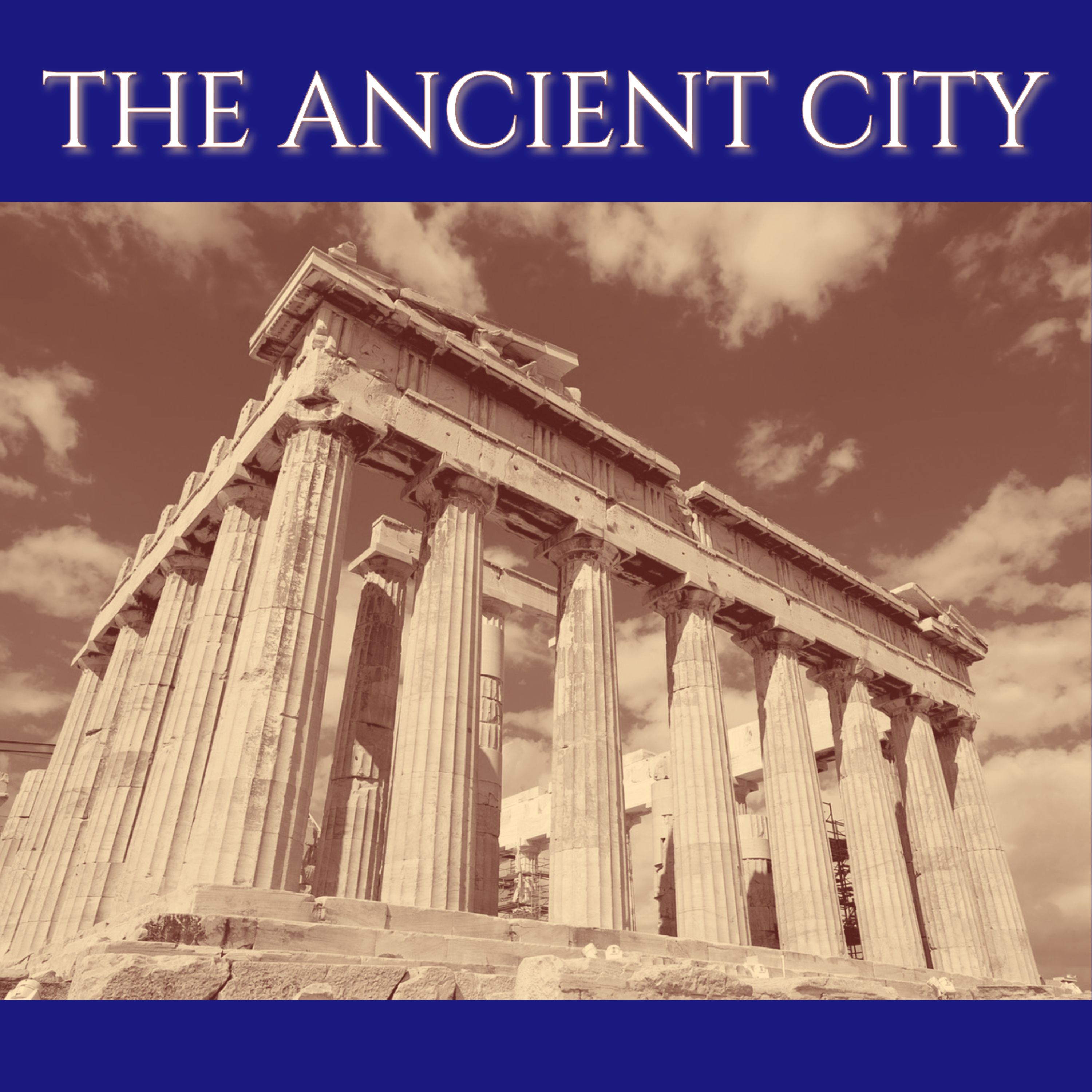
Audiobook of Fustel de Coulanges' The Ancient City (1864). Chapters read, with brief introductions, by Christopher Anadale. Adapted from videos on my YouTube channel: https://www.youtube.com/playlist?list=PLPCGA67J8M2JVoH7M4ayFTRDuLteRhL0p Music: Into Oblivion, by Darren CurtisThumbnail Image: Parthenon. Image by nonbirinonko from Pixabay, https://pixabay.com/photos/greece-parthenon-temple-ruins-1594689/
Author
Christopher Anadale
Category
Podcast website
Latest episode
Dec 22, 2025
Where to listen?
Podcasts in the app Replaio Radio Coming soonPodcasts are coming to the app soon. Install now and be the first to see a whole new take on podcasts
 Install for free
Android 5M+ downloads · 4.8 rating
iOS soon
Install for free
Android 5M+ downloads · 4.8 rating
iOS soon
Episodes
Book 5 Chapter 3: Christianity Changes the Conditions of Government 22.12.2025 21:50
The rise of Christianity completed the destruction of the social order based on the ancient religion of ancestor worship. In this final chapter of the book, Fustel catalogs the changes in politics, in worship, in law, and in self-understanding that the new religion produced. --- Based on: https://youtu.be/cEx0tT0jHb4
Book 5 Chapter 2: The Roman Conquest 19.12.2025 1:13:46
In this long chapter Fustel tells the stages of Rome's conquest of the ancient cities. In every city they conquered, the Romans destroyed whatever remained of the municipal system connected to the old religion. --- Based on: https://youtu.be/4YQKkJTnNPM https://youtu.be/U6IMsJWKbI8 https://youtu.be/mKlhPB8S7BQ https://youtu.be/s-sRs_720QI
Book 5 Chapter 1: New Beliefs. Philosophy Changes the Principles and Rules of Politics. 17.12.2025 26:31
Book 5, The Municipal Regime Disappears, begins with this chapter on the role philosophy played in social change. With Anaxagoras and others came new ideas of divinity, and new principles and rules for political life. --- Based on: https://youtu.be/78LOM37iv0s
Book 4 Chapter 13: Revolutions of Sparta 15.12.2025 21:45
Book 4 ends with Fustel's account of the path Sparta took through oligarchy and democracy. In all of Greece, Sparta was the city most torn by revolutions. --- Based on: https://youtu.be/lYR1_CsZpjM
Book 4 Chapter 12: Rich and Poor. The Democracy Falls. Popular Tyrants. 12.12.2025 22:33
Democracy and equality made the gap between wealth and poverty more noticeable, without redressing it. The conflict between rich and poor ended in the seizure of property by popular tyrants. --- Based on: https://youtu.be/X71ZKp9eGuk
Book 4 Chapter 11: Rules of Democratic Government. Examples of Athenian Democracy. 10.12.2025 19:47
In this chapter Fustel examines steps the new Athenian democracy took to protect against innovations in the law. Democracy was a very demanding and time consuming practice as well. --- Based on: https://youtu.be/1Vp1ieC6hJ8
Book 4 Chapter 10: An Aristocracy of Wealth Attempts to Establish Itself. Establishment of Democracy. Fourth Revolution. 08.12.2025 18:44
An interim stage between the old order and democracy, Fustel says, was the attempt by the wealthy class to rule the cities. Weakened by war, this new aristocracy fell to the fourth revolution and democracy. --- Based on: https://youtu.be/wIqCDqOnZ_Y
Book 4 Chapter 9: The New Principle of Government. The Public Interest and the Suffrage. 05.12.2025 15:01
Fustel relates the social reconstruction that followed the overthrow of the old religion and its laws. Religious sanction for authority was replaced by the new principle of the public interest, and the end of government changed from performing of religious duties to securing peace and order. --- Based on: https://youtu.be/dw2UIbFxkzY
Book 4 Chapter 8: Changes in Private Law. The Code of the Twelve Tables. The Code of Solon. 03.12.2025 27:09
The plebians' victory over the old religion led to changes in the definition of law itself. Law went from being a religious institution, revealed and commanded by the gods, to a human institution, serving human ends. --- Based on: https://youtu.be/aTZbHoc6fBE
Book 4 Chapter 7: Third Revolution. The Plebs Enter the City. 01.12.2025 1:38:28
This chapter about the third wave of revolutions is by far the longest chapter in the book. Fustel first tells the general history of this drive for civic recognition, and then the specific histories of Athens and of Rome. --- Based on: https://youtu.be/kW1rECKL7SQ https://youtu.be/EXPWjg8w11U https://youtu.be/kNwsLiFj0Ks
Book 4 Chapter 6: The Clients Become Free 28.11.2025 38:27
In this chapter, Fustel describes the process that led to freedom for the client classes at Athens and at Rome. When the masters ceased to see their authority as just, he says, they defended it badly, or ended by renouncing it. --- Based on: https://youtu.be/9xE8I2yLYGs
Book 4 Chapter 5: Second Revolution. Changes in the Constitution of the Family. The Right of Primogeniture Disappears. The Gens is Dismembered. 26.11.2025 12:00
Aristocrats worked a political revolution in order to prevent a social revolution, Fustel tells us. But aristocratic rule was undermined by the gradual decline of the family. --- Based on: https://youtu.be/IpA-dVFO50A
Book 4 Chapter 4: The Aristocracy Governs the Cities 24.11.2025 12:16
Political royalty was suppressed while religious royalty continued. Family chiefs ruled, drawing their power and legitimacy from the same religious source. --- Based on: https://youtu.be/rQYQQyBTg9g
Book 4 Chapter 3: First Revolution 21.11.2025 32:16
In the first wave of revolutions in ancient cities, aristocrats gradually limited and replaced their kings. Fustel walks us through this process at Sparta, Athens, and Rome. --- Based on: https://youtu.be/kE0Zne3vQIU
Book 4 Chapter 2: The Plebians 19.11.2025 14:23
In this chapter, Fustel begins to describe another inferior class that helped to advance the revolutions that eventually overturned this social and religious order of the ancient cities, the plebians. What characterizes plebeians especially is that they are completely outside of the civic and domestic religion, this religion of ancestor worship at the sacred fire. --- Based on: https://youtu.be/ac...
Book 4 Chapter 1: Patricians and Clients 17.11.2025 15:54
Having described the ancient religion and how it structured family and political life, Fustel turns in Book 4 to describing the revolutions that over a period of centuries overturned and destroyed this civic order. In this first chapter, he notes the two causes of revolution: the natural progression of ideas, and the emergence of a social group who were hostile to the existing social order, the cl...
Book 3 Chapter 17: The Omnipotence of the State. The Ancients Knew Nothing of Individual Liberty. 14.11.2025 10:47
Individual liberty was unknown in the ancient cities. The religious roots of the state gave it absolute authority over all areas of life. --- Based on: https://youtu.be/9SgQR6dBURs
Book 3 Chapter 16: The Roman. The Athenian. 12.11.2025 23:54
Fustel walks us through the daily religious life of a Roman and of an Athenian. Both lived lives permeated by religious ceremony and duty at every moment. --- Based on: https://youtu.be/y0AMSKcyC_w
Book 3 Chapter 15: Relations Between the Cities. War. Peace. The Alliance of the Gods. 10.11.2025 15:02
The ancient religion meant that war between cities was always religious war, war between the gods. And so peace treaties were religious ceremonies as well. --- Based on: https://youtu.be/Q0bGveGsc5w
Book 3 Chapter 14: The Municipal Spirit 07.11.2025 11:37
Religion separated cities absolutely, and made a union of cities not merely difficult but impossible. Conquered cities might face enslavement or extermination, but never annexation. --- Based on: https://youtu.be/WNOX11ngxA4
Book 3 Chapter 13: Patriotism. Exile. 05.11.2025 8:38
The ancient man's country was his sacred fatherland, Fustel tells us, and so his patriotism reflected his total devotion to his religion. Exile was the interdiction of worship, and involved far greater loss than just physical exclusion. --- Based on: https://youtu.be/8buzXg-y9Z4
Book 3 Chapter 12: The Citizen and the Stranger 03.11.2025 10:45
Citizenship was defined by participation in the religion of the city. All political and civil rights followed from this religious practice, and those outside the religion could not claim its rights. --- Based on: https://youtu.be/oMxM5bREmos
Book 3 Chapter 11: The Law 31.10.2025 19:56
For the ancients, Fustel says, the institution of law was part of religion, and of divine origin. Thus, law was sacred and immutable, and governed relations only between co-religionists. --- Based on: https://youtu.be/RP-UgVVniPY
Book 3 Chapter 10: The Magistracy 29.10.2025 13:47
The union of political authority and religious priesthood was reflected in the office of magistrate as well. Recounting this institution's history, Fustel warns us not to suspect insincerity or manipulation on the part of the aristocrats. --- Based on: https://youtu.be/wlULQbE3FIQ
Book 3 Chapter 9: Government of the City. The King. 27.10.2025 16:42
Ancient political authority flowed from religion, not material force. The king's power and authority came from his sacred role as high priest. --- Based on: https://youtu.be/pFSmWZnlfMw
Similar podcasts








Listen to the The Ancient City, by Fustel de Coulanges podcast in Replaio
Radio and podcasts in one app - free, with no sign-up. Install today and do not miss the launch
Replaio is not a podcast publisher; show names, artwork and audio belong to their authors and are distributed through public RSS feeds.