Ryigit
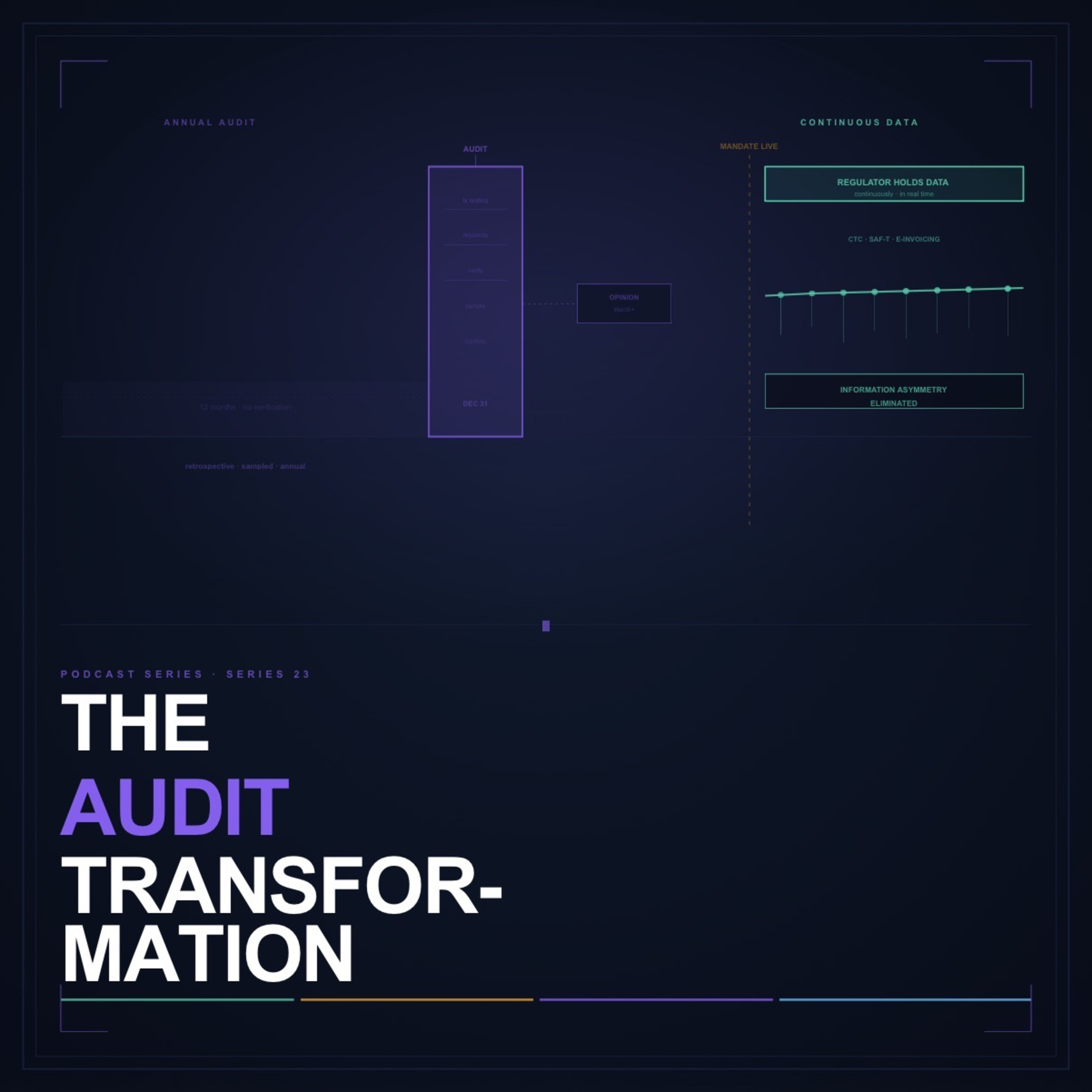
Series 23 - The Audit Transformation: When Real-Time Data Makes Annual Audits Obsolete
The annual audit was designed for a world where financial data existed in ledgers, assembled periodically, and verified only after the fact. That world no longer exists. When tax authorities hold continuous transaction data and governments receive financial reports as they are generated, the annual audit does not become more rigorous — it becomes redundant. Hosted by Rıdvan Yiğit | Founder & CEO, RTC Suitertcsuite.com · ridvan.yigit@rtcsuite.com · linkedin.com/in/yigitridvan
Where to listen?
Podcasts in the app Replaio Radio Coming soonPodcasts are coming to the app soon. Install now and be the first to see a whole new take on podcasts
 Install for free
Android 5M+ downloads · 4.8 rating
iOS soon
Install for free
Android 5M+ downloads · 4.8 rating
iOS soon
Episodes
Series 23 - The Deep Dive: Real-Time Data Ends the Traditional Audit 14.04.2026 19:37
The traditional audit ends — not as a regulatory event but as an organisational reality — when the cost of producing the annual audit opinion exceeds the marginal assurance value it delivers beyond what the continuous reporting infrastructure already provides. For an increasing number of organisations, that calculation is shifting. This deep dive builds the complete picture of what the transformat...
Series 23 - The Debate: Real-Time Data Makes Traditional Audits Obsolete 14.04.2026 20:49
The debate about whether real-time data makes traditional audits obsolete has a specific structure that makes it harder to resolve than it first appears. Both sides agree that real-time transaction data changes the audit. The disagreement is about whether the change is incremental — a better-informed audit that uses continuous data to do what annual audits have always done, more efficiently — or s...
Series 23 - The Critique: Real-Time Government Reporting Ends Traditional Auditing 14.04.2026 19:36
The traditional audit has a structural dependency that most audit professionals have not fully reckoned with: it depends on the auditor having information that the client's other stakeholders do not have. The auditor has access to the books. The auditor can trace transactions. The auditor can verify that the financial statements reflect what actually happened. That access is the foundation of...
Series 23 - The Brief: Real-Time Reporting Ends the Annual Audit 14.04.2026 1:39
The annual audit exists because somebody needed to check. When financial statements were produced from ledgers that nobody outside the organisation could see, an independent reviewer needed to examine the records, verify the balances, and confirm that the numbers presented to shareholders and regulators were a faithful representation of the underlying transactions. The audit was the mechanism by w...
Similar podcasts






Listen to the Series 23 - The Audit Transformation: When Real-Time Data Makes Annual Audits Obsolete podcast in Replaio
Radio and podcasts in one app - free, with no sign-up. Install today and do not miss the launch
Replaio is not a podcast publisher; show names, artwork and audio belong to their authors and are distributed through public RSS feeds.