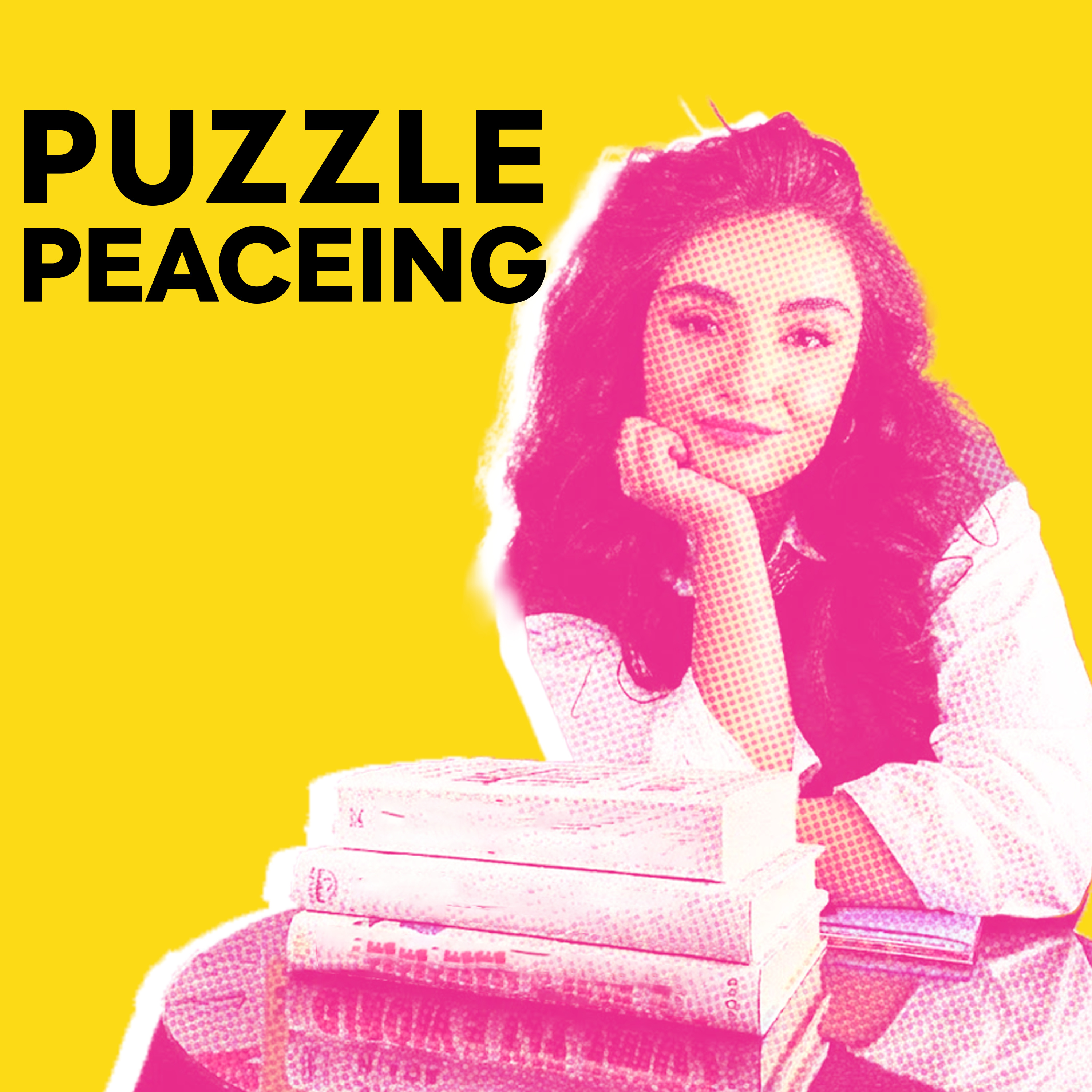
Camila Rios
Puzzle Peaceing
Puzzle Peaceing challenges the idea that you must be a shark to navigate global conflict. As a researcher, paralegal, and student of international law, I distill and reframe the world's hardest questions through neuroscience, international law, and lived experience. We don't just read treaties. We examine the language of crisis, the psychology of inaction, and why empathy is a more rigorous political strategy than most people are willing to admit. Reaction is biology. Peace is rigorous.
Author
Camila Rios
Category
Podcast website
Latest episode
Jul 8, 2026
Where to listen?
Podcasts in the app Replaio Radio Coming soonPodcasts are coming to the app soon. Install now and be the first to see a whole new take on podcasts
 Install for free
Android 5M+ downloads · 4.8 rating
iOS soon
Install for free
Android 5M+ downloads · 4.8 rating
iOS soon
Episodes
A Note From the Host 08.07.2026 8:37
This was filmed on August 5, 2025. There wasn't a firm launch date yet, there was still so much to work through. But this is the most honest take on what this podcast means to me. It's raw, it's honest, and it's the central part of me as a thinker, a host, and a person. Cheers to it almost being a year since I filmed this.
Inside the Peace Palace: Changing the Narrative on International Law 04.07.2026 8:06
As we close out Season 1, we are laying the groundwork for a massive operational shift. In just 48 hours, I am boarding a flight to the Netherlands to study public and private international law directly at the Peace Palace in The Hague. In this finale, I pull back the curtain on why this podcast is evolving from theoretical deep-dives into an active, on-the-ground blueprint. Speaking as a legal pr...
Immigration Enforcement has a Strait of Hormuz Problem 17.06.2026 9:44
The medical and psychological research on immigration detention uses a phrase that sits flat on the page: chronic uncertainty . In a clinical paper, it sounds like a neutral variable. But in your body, if you have ever lived with long-term anxiety, or waited weeks for a phone call that would decide your future, it is a texture you already know intimately. This episode is a direct reading of my la...
Can Peace Be Practiced? (Not the Way You Think) 11.05.2026 21:16
Last week we asked why disagreement is so hard. This week we ask what to do about it. In Part 2 of this conversation, I sit with John Paul Lederach's The Moral Imagination , John Brewer's writing on Northern Ireland after thirty-plus years of the Troubles, and a small moment in my own life when I almost built a barrier with a stranger I had never spoken to. If you came up in last week'...
The Argument Before the Argument 29.04.2026 19:05
We think we reason our way to moral conclusions. Jonathan Haidt says we don't. The gut decides first. The brain catches up after, building a case for a verdict that's already been reached. In this episode, I walk through The Righteous Mind , the book quietly reshaping how I think about peace work, public discourse, and how international law actually holds up under pressure. This is Part 1...
The World Saw It Happen: The Bystander Effect in International Law 08.04.2026 26:31
Why do people who know something is wrong still not move? This episode traces that question across three decades and three continents, from a UN peacekeeping compound to the Security Council floor to a 2026 legislative vote that may reshape how an entire country defines childhood. The psychology behind inaction doesn't just explain history. It explains you. **Please take care of yourself while lis...
The Liability of Empathy 22.03.2026 18:43
What does a word cost and who pays when the wrong one is chosen? In this Sort, host and legal researcher Camila maps the gap between what the law says and what the body carries. From the staggering liability a single word can trigger in international law, to a prosecutor describing the abduction of thousands of children as "sustenance," to indigenous Peruvian women who, when asked what h...
Why Your Brain Wants Violence (And How to Pause) 08.03.2026 7:43
Why are we biologically wired to click on the violence? In the inaugural episode of Puzzle Peaceing, host and legal researcher Camila breaks down the "biological glitch" that makes our brains mistake shock for high-value information. From a dark neurological study at the University of Amsterdam to the archival violence of the 18th century Caribbean, we explore how the human craving for f...
Similar podcasts






Listen to the Puzzle Peaceing podcast in Replaio
Radio and podcasts in one app - free, with no sign-up. Install today and do not miss the launch
Replaio is not a podcast publisher; show names, artwork and audio belong to their authors and are distributed through public RSS feeds.