Jason
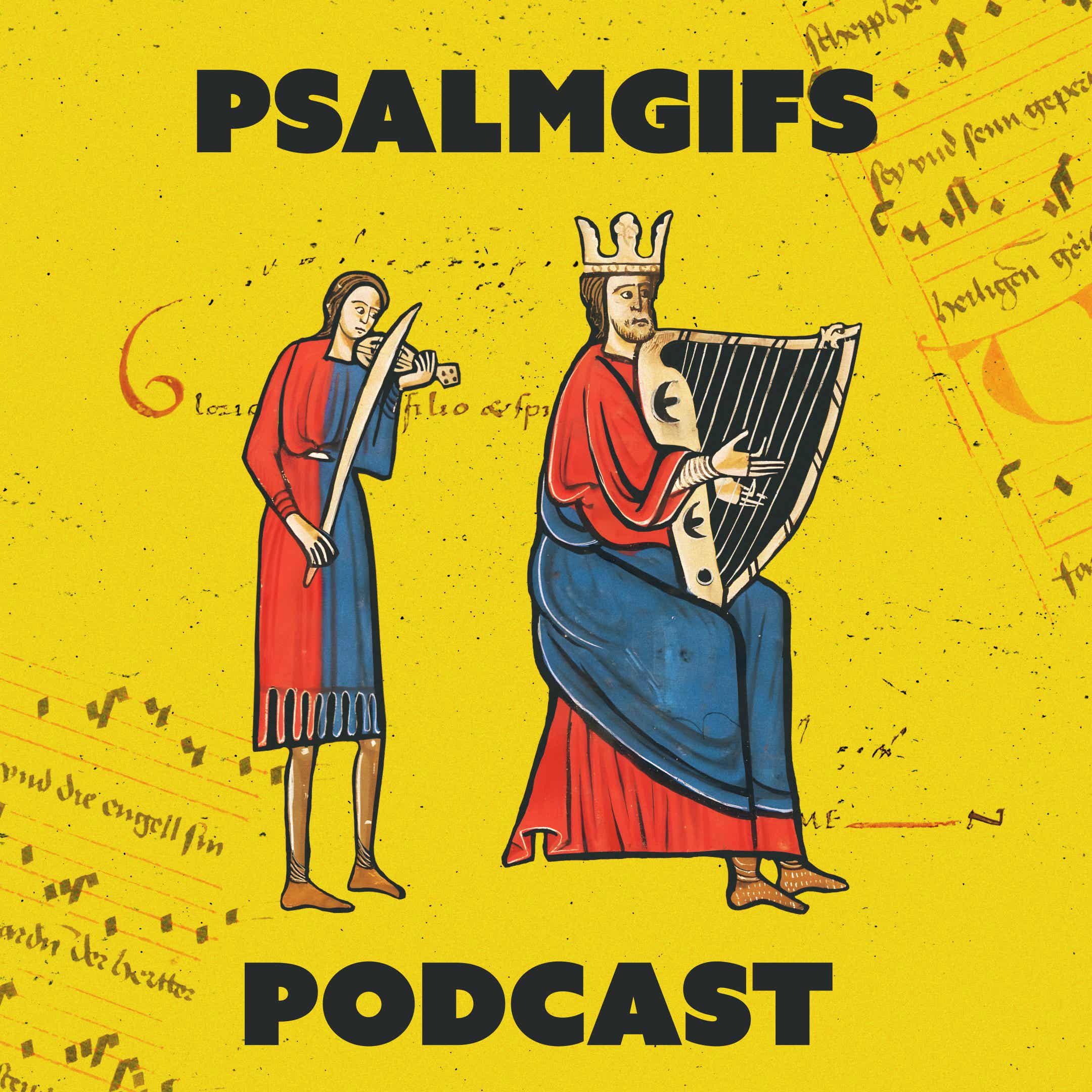
PsalmGifs Podcast
Through the Psalms, one .gif at a time. psalmgifs.substack.com
Be sure to visit the podcast's website and support the creator: psalmgifs.substack.com
Where to listen?
Podcasts in the app Replaio Radio Coming soonPodcasts are coming to the app soon. Install now and be the first to see a whole new take on podcasts
 Install for free
Android almost 10M downloads · 4.8 rating
iOS soon
Install for free
Android almost 10M downloads · 4.8 rating
iOS soon
Episodes
Psalm 52:1 03.04.2025 16:04
Psalm 52:1, "The fool said in his heart: There is no God," is interpreted in the provided text not solely as a declaration of atheism, but more broadly as a description of those who live contrary to their created purpose and God's law. This "practical atheism" encompasses individuals who, through their actions and desires, effectively deny God by disregarding their ultimate end, which is union wit...
Psalm 81:8 31.03.2025 10:52
Psalm 81:8 speaks of God arising to judge the earth, stating that through this judgment, He will inherit among all nations. This inheritance is not a need for God, who already owns all, but rather an analogical reference to Christ's mystical body, the Church, inheriting with Him. The parable of the Prodigal Son illustrates this concept. The son, desiring his inheritance prematurely, effectively wi...
Psalm 81:7 25.03.2025 8:07
Psalm 81:7 delivers a stark message of eventual downfall to those who, despite being called "gods" and "children of the Most High," fail to uphold justice. The verse, "But you like men shall die: and shall fall like one of the princes," serves as a divine indictment against those who abuse their power, judging unjustly and essentially making their own rules. This echoes the ancient temptation of p...
Psalm 81:6 24.03.2025 7:23
Psalm 81:6 proclaims, "I have said: You are gods and all of you the sons of the most High." This powerful statement, as illuminated by the provided text, signifies a divine appointment and elevation for certain individuals, particularly those in positions of authority and judgment. These individuals are designated as "gods" not in an absolute sense, but as representatives of God's justice on earth...
Psalm 81:5 20.03.2025 12:44
Psalm 81:5 describes the characteristics of sinners: they lack knowledge and understanding, and consequently, they live in spiritual darkness. This ignorance and sin have a profound consequence, as it is stated that "all the foundations of the earth shall be moved." This phrase is interpreted on both a literal and spiritual level. Literally, it is seen in the context of the crucifixion of Jesus by...
Psalm 81:4 18.03.2025 6:35
Psalm 81:4 commands to "Rescue the poor; and deliver the needy out of the hand of the sinner." This verse calls for active intervention to protect the vulnerable from the oppression of the wicked. It is interpreted as a directive primarily for judges to administer justice by ensuring the powerful make restitution to the poor and needy. However, its message extends beyond legal contexts, urging eve...
Psalm 81:3 17.03.2025 7:40
Psalm 81:3 calls for judges to deliver justice to the needy and fatherless, emphasizing impartiality and protection for the vulnerable. St. Robert Bellarmine clarifies that this doesn't mean automatic favor but ensuring the poor receive just and swift rulings, especially when facing oppression. The story of Naboth's vineyard exemplifies the injustice that can occur when the powerful exploit the we...
Psalm 81:2 14.03.2025 7:52
The Psalmist laments the unjust judgment of the wicked, who prioritize personal gain and favoritism over justice. This behavior is seen as a rejection of God's law and an attempt to usurp His authority. The Psalmist warns that such actions will ultimately lead to divine judgment. This theme is echoed in Jesus' parable of the vineyard tenants, who mistreat and kill the landowner's servants and ulti...
Psalm 81:1 13.03.2025 9:36
Psalm 81:1, "God hath stood in the congregation of gods: and being in the midst of them he judgeth gods," is explored in this reflection. The author connects this verse to the Rosary's fifth Joyful Mystery, the Finding of Jesus in the Temple, noting how those in the Temple, like the "gods" in the Psalm, missed recognizing Jesus even as He spoke with divine wisdom. The term "gods" is interpreted th...
Psalm 34:28 11.03.2025 5:58
Psalm 34:28, "And my tongue shall meditate thy justice, thy praise all the day long," describes a concept of meditation distinct from modern silent contemplation. In ancient times, "meditate" often involved active, vocal rehearsal and proclamation, as reflected in the Psalmist's declaration to speak God's justice and praise aloud, even amidst adversity, echoing the older understanding where prayer...
Psalm 34:27 10.03.2025 7:59
This reflection explores Psalm 34:27, which speaks of the rejoicing and gladness of the righteous who are pleased with God's justice and eternally magnify the Lord. The author connects this verse to the unending worship described in Revelation 4, particularly the living creatures' ceaseless praise of "Holy, Holy, Holy." Initially finding the idea of eternal worship potentially tiresome, the author...
Psalm 34:26 07.03.2025 4:27
Psalm 34:26 is the Psalmist's plea that his wicked persecutors would feel shame ("blush") for rejoicing in his suffering and speaking arrogantly against him. The request for them to "blush" implies a desire that they recognize and feel compunction for their evil actions. Cassiodorus interprets this "blushing" in conjunction with "reverence" (based on a nuanced reading of the Latin). He sees the Ps...
Psalm 34:25 06.03.2025 11:24
Psalm 34:25 cautions against the wicked's internal self-congratulatory pronouncements of "it is well" and their presumptuous claim of having "swallowed up" the righteous. This verse, mirroring a previous outward boast in the psalm, highlights a shift to an inward, self-satisfied delight in their perceived victory, which Christian interpreters like St. Augustine connect to the enemies of Christ fal...
Psalm 34:24 05.03.2025 4:09
Psalm 34:24 is a plea for divine judgment rooted in confidence in God's justice. The Psalmist, facing enemies who wrongly rejoice over him and hate him without cause, asks God to "judge me... according to thy justice." This isn't a boast of self-righteousness, but a declaration that his cause is aligned with God's righteousness, having suffered for it. He trusts that God's just judgment will overt...
Psalm 34:23 04.03.2025 9:33
Psalm 34:23 is a plea for divine intervention, where the Psalmist calls upon God to "arise and be attentive" to his judgment and cause amidst persecution. The verse, as elaborated upon, is not merely a cry to escape suffering, but a request for God to recognize and act upon the righteousness of the Psalmist’s position. St. Augustine emphasizes that the merit lies not in suffering itself, which is...
Psalm 34:22 03.03.2025 6:21
Psalm 34:22 serves as a pivotal verse, bridging the Psalmist's lament over the injustices inflicted by his enemies with an earnest appeal for divine intervention. This verse encapsulates a profound trust in God's omniscience, imploring Him, "Thou hast seen, O Lord," acknowledging divine awareness of the Psalmist's plight. It proceeds with a dual petition: "be not thou silent," urging God to manife...
Psalm 34:21 27.02.2025 7:26
Psalm 34:21 depicts the Psalmist's enemies openly and maliciously celebrating their perceived victory. It highlights: Open Hostility: The enemies "opened their mouth wide," signifying a shift from hidden malice to overt aggression. Mocking Triumph: Their "Well done, well done, our eyes have seen it" is interpreted as either: A cruel mockery of the Psalmist's (or, in a Christian interpretation, Jes...
Psalm 34:20 26.02.2025 8:59
Psalm 34:20 describes the duplicitous actions of the Psalmist's enemies. They spoke words of peace, concealing their malicious intent. This calculated deception stemmed from a deep, earthly anger, driving them to devise cunning traps. Their actions mirrored those who plunder the land, seeking to destroy and harm. This "anger of the earth" signifies a base, violent rage, far removed from righteous...
Psalm 34:19 25.02.2025 6:44
Psalm 34:19 expresses the Psalmist's desperate plea to God for protection and vindication against his enemies, who are gloating over his apparent defeat or misfortune. These enemies hate him without any justifiable reason, and their "winking with the eyes" suggests a calculated and malicious deception, as if they are sharing a cruel inside joke at his expense, further compounding his suffering by...
Psalm 34:18 24.02.2025 9:26
Psalm 34:18 expresses the Psalmist's intention to thank and praise God publicly. The verse is part of a larger structure in the Psalm, moving from supplication to a declaration of innocence and finally to praise and thanksgiving. The "great church" and "strong people" are interpreted by commentators like Cassiodorus and Augustine as representing the Christian community. Cassiodorus emphasizes the...
Psalm 34:17 21.02.2025 5:55
Psalm 34:17 expresses the Psalmist's plea to God for intervention against his enemies. He asks, "Lord, when wilt thou look upon me?" expressing a feeling of being overlooked in his suffering. He then asks God to "rescue my soul from their malice," highlighting the spiritual danger posed by his persecutors. Finally, he pleads for his "only one from the lions," a metaphorical reference to the fierce...
Psalm 34:16 20.02.2025 8:32
Psalm 34:16 describes the wicked who persecute the righteous. They are "separated" (from God and the Church) and "repented not." Instead, they continue their sinful behavior, "tempting," "scoffing," and "gnashing their teeth" in anger. The verse highlights the obduracy of the wicked, their refusal to acknowledge their sin and turn back to God, even in the face of evidence of His power and mercy. T...
Psalm 34:15 19.02.2025 7:34
This podcast episode explores Psalm 34:15, focusing on the theme of ignorance and its various forms. It contrasts the malicious ignorance of those who persecute the righteous, who deliberately ignore the truth, with the virtuous ignorance of the righteous, who refuse to engage with evil. The Psalm describes the Psalmist's unjust persecution, highlighting the enemies' calculated and joyful malice....
Psalm 34:14 18.02.2025 11:48
This reflection on Psalm 34:14 explores the complex relationship between joy and sorrow, and how the Psalmist's actions demonstrate both. The speaker begins by noting how easily humans shift between these emotional states, highlighting the sweetness of delight after experiencing longing and sacrifice. The Psalmist describes pleasing others as a neighbor and brother, emphasizing his unprovoked pers...
Psalm 34:13 17.02.2025 10:57
This reflection on Psalm 34:13 explores penance, humility, and the symbolism of haircloth and fasting. Using an anecdote from the movie Becket , it illustrates penance as an act of humility, mirroring Christ's sacrifice. The Psalmist's haircloth symbolizes Christ's incarnation – His human flesh becoming the "haircloth" of His humility. We should clothe ourselves in this humility, prioritizing eter...
Similar podcasts








Listen to the PsalmGifs Podcast podcast in Replaio
Radio and podcasts in one app - free, with no sign-up. Install today and do not miss the launch
Replaio is not a podcast publisher; show names, artwork and audio belong to their authors and are distributed through public RSS feeds.