Jason
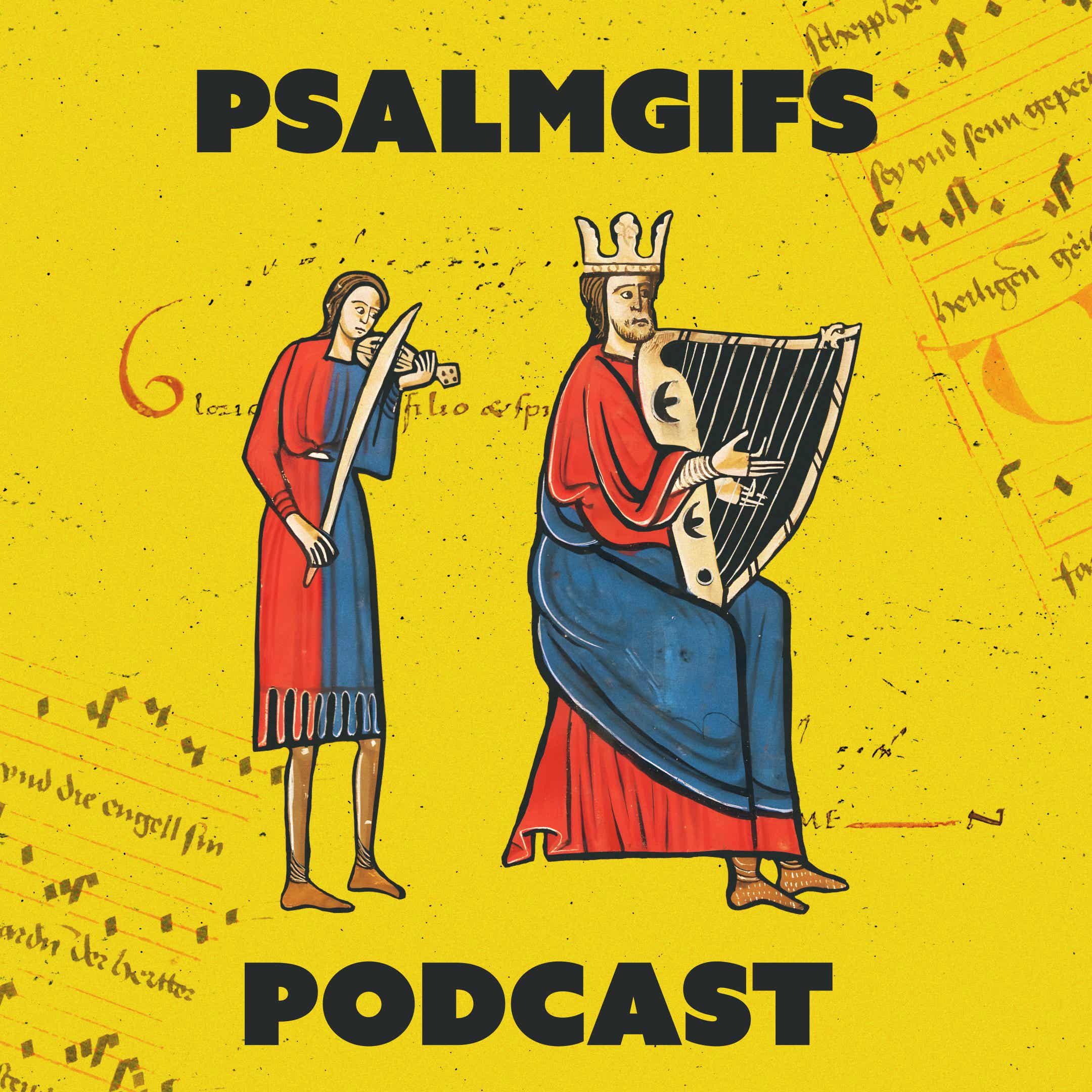
PsalmGifs Podcast
Through the Psalms, one .gif at a time. psalmgifs.substack.com
Be sure to visit the podcast's website and support the creator: psalmgifs.substack.com
Where to listen?
Podcasts in the app Replaio Radio Coming soonPodcasts are coming to the app soon. Install now and be the first to see a whole new take on podcasts
 Install for free
Android almost 10M downloads · 4.8 rating
iOS soon
Install for free
Android almost 10M downloads · 4.8 rating
iOS soon
Episodes
Psalm 141:2 27.05.2025 8:56
Psalm 141:2 describes a profound form of prayer, emphasizing the distinction between a mere vocal outcry and a heartfelt supplication. The Psalmist's repetition of "with my voice" highlights that true prayer isn't just about uttering words, but about an interior intention where the soul's desires align with the spoken prayer. This "my voice" signifies a prayer originating from deep within, a perfe...
Psalm 141:1 26.05.2025 9:51
Psalm 141:1 is inscribed, "Of understanding for David. A prayer when he was in the cave," referring to David's time hiding from King Saul in a cave, as recounted in 1 Samuel 24. This inscription highlights a period of profound distress and metaphorical darkness for David, where he was physically trapped and uncertain of his fate. The "cave" not only represents a literal hiding place but also symbo...
Psalm 53:9 16.05.2025 8:05
This text explores Psalm 53:9, "For thou hast delivered me out of all trouble: and my eye hath looked down upon my enemies," by emphasizing that human growth, whether physical, intellectual, or spiritual, inevitably involves overcoming challenges and enduring suffering. We may understand this principle, but often hesitate when faced with the actual effort and sacrifice required. The author uses ex...
Psalm 53:8 15.05.2025 9:48
The provided text explores Psalm 53:8, "I will freely sacrifice to thee, and will give praise, O God, to thy name: because it is good," arguing that it corrects a potential misunderstanding that trust in God is based on the benefits received. Drawing a parallel with the story of Job, the author highlights the idea of loving God not for His blessings or protection, but simply because of His inheren...
Psalm 53:7 14.05.2025 8:52
The provided text explores Psalm 53:7, "Turn back the evils upon my enemies; and cut them off in thy truth," interpreting it through the lens of the self-destructive nature of sin. Using the analogy of a computer game where powerful weapons launched into the wind could return upon the player, the author suggests that the wickedness directed at others often boomerangs back upon the perpetrator. Thi...
Psalm 53:6 13.05.2025 8:46
This passage delves into the profound meaning of Psalm 53:6, "For behold God is my helper: and the Lord is the protector of my soul." It contrasts external worldly pressures with the more significant internal disquietudes of the soul. While external challenges can be managed or detached from, internal turmoil, like a troubled conscience, fundamentally undermines any external comforts. The Psalmist...
Psalm 53:5 12.05.2025 10:51
This commentary explores Psalm 53:5, "For strangers have risen up against me; and the mighty have sought after my soul: and they have not set God before their eyes." It delves into the paradox of how those closest to us, like David's kinsmen from Ziph who betrayed him to King Saul, can become "strangers." This transformation occurs through betrayal, where the intimate knowledge possessed by kinsme...
Psalm 53:4 07.05.2025 7:51
The passage explores the seeming paradox of the Psalmist pleading "O God, hear my prayer: give ear to the words of my mouth" (Psalm 53:4), given that Jesus taught God knows our needs before we ask. Drawing on St. Hilary of Poitiers, the text suggests that this demand for prayer to be heard, while inappropriate for weak human beings, is a prophetic expression of Christ's perfect confidence and uniq...
Psalm 53:3 06.05.2025 8:16
This passage explores Psalm 53:3, "Save me, O God, by thy name, and judge me in thy strength," delving into its deeper prophetic meaning through the lens of Christ. The first part of the verse, "Save me, O God, by thy name," is highlighted as significant because the Psalmist asks to be saved by God's name rather than His strength. This is interpreted as a prophetic voice for Christ, who in His hum...
Psalm 53:2 05.05.2025 11:32
This passage examines Psalm 53:2, which recalls the incident when the men of Ziph betrayed David's location to King Saul while David was hiding from him in the desert of Ziph. Historically, David, seen as a traitor by Saul and even some countrymen, sought refuge in Ziph after saving the city of Ceila. However, the Ziphites informed Saul, turning David's sanctuary into a place of danger. Saul, obse...
Psalm 53:1 02.05.2025 6:49
Psalm 53:1 begins with the title, "Unto the end, In verses, understanding for David." According to the provided text, the Church Fathers considered these inscriptions as vital interpretive guides, revealing deeper meanings within the Psalms. St. Gregory of Nyssa interpreted "Unto the end" as a spiritual discipline, preparing the soul for the struggles of life by focusing on the ultimate goal of vi...
Psalm 10:8 30.04.2025 6:40
Psalm 10:8 highlights the Psalmist's unwavering trust in God's justice, despite the apparent prosperity of the wicked and the suffering of the righteous in the world. The verse, "For the Lord is just, and hath loved justice: his countenance hath beheld righteousness," provides the foundation for this trust. It starkly contrasts God's inherent justice and love for it with the wicked person's love f...
Psalm 10:7 29.04.2025 11:44
Psalm 10:7, stating that God "shall rain snares upon sinners: fire and brimstone and storms of winds shall be the portion of their cup," is interpreted as a vivid depiction of divine judgment upon those who persist in wickedness. The passage connects the love of iniquity with a hatred for one's own soul, suggesting that the sinner's destructive path is a form of self-inflicted harm that ultimately...
Psalm 10:6 28.04.2025 8:14
Psalm 10:6 states that the Lord tests both the just and the wicked, but he who loves iniquity hates his own soul. According to the text, this verse highlights a judgment rendered by God. While both righteous and wicked individuals are subject to God's scrutiny and will be judged according to their works, the just are justified through their trust in God despite trials and temptations. In contrast,...
Psalm 10:5 25.04.2025 14:57
Psalm 10:5, "The Lord is in his holy temple, the Lord's throne is in heaven. His eyes look on the poor man: his eyelids examine the sons of men," marks a crucial turning point in the Psalm. Following the Psalmist's laments about the wicked's efforts to shake his trust in God and induce apostasy or despair, this verse reasserts God's supreme and eternal authority. The imagery of God's "holy temple"...
Psalm 10:4 24.04.2025 8:09
Psalm 10:4, as interpreted in the provided text, articulates a profound and often perplexing problem for the faithful: the apparent success and destructive actions of the wicked in contrast to the suffering endured by the just. The verse, stating that "they have destroyed the things which thou hast made: but what has the just man done?", highlights the injustice of those who actively work against...
Psalm 10:3 23.04.2025 13:21
Psalm 10:3, as interpreted in the provided text, describes the malicious intent and calculated actions of the wicked against the upright in heart. The imagery of the wicked bending their bow and preparing their arrows signifies their premeditated and deliberate plan to harm those who trust in the Lord. Shooting "in the dark" or "in the obscure moon" highlights their deceptive methods, suggesting t...
Psalm 10:2 22.04.2025 13:18
Psalm 10:2 presents the Psalmist's unwavering declaration, "In the Lord I put my trust," immediately followed by a questioning of those who urge him to "Get thee away from hence to the mountain like a sparrow." The accompanying text explores this verse as a reflection on the human tendency towards extremes when facing temptation. It highlights the danger of either presuming upon God's grace by del...
Psalm 10:1 21.04.2025 8:00
Cassiodorus, in his Explanation of the Psalms, emphasizes the singular authorship of the Psalms by King David, viewing this as theologically significant because David prefigures Christ, the prophesied Son of David. This perspective provides a crucial interpretive framework for understanding the Psalms through Christ and His mystical body, the Church. Cassiodorus argues that the psalm titles, far f...
Psalm 52:7 11.04.2025 5:16
Psalm 52:7 asks who will bring salvation to Israel out of Zion when God brings back his people from captivity, leading to rejoicing. The provided text explains that the initial reading of this question highlights humanity's corrupted state, where "there is none that doth good, no not one." The literal fulfillment of this promise is found in Jesus Christ, who, as both God and a man of Israel, is wi...
Psalm 52:6 10.04.2025 11:52
Psalm 52:6 highlights the fundamental flaw of the wicked: their failure to call upon God. This absence of a relationship with God leads them to tremble with fear in situations where there is no true cause for fear. Their anxieties are rooted in the ephemeral nature of worldly possessions and the opinions of men, which they prioritize above all else. This fear is ultimately unfounded because it foc...
Psalm 52:5 09.04.2025 7:30
Psalm 52:5 rhetorically questions whether those who habitually commit iniquity, devouring God's people as easily and regularly as they eat bread, will not eventually face the consequences of their actions. The provided text emphasizes the habitual nature of sin, drawing a parallel between the daily necessity of eating bread and the ingrained wickedness of those who persecute the righteous. This ha...
Psalm 52:4 08.04.2025 17:09
Psalm 52:4 states that all have gone aside, become unprofitable, and that there is none who does good, not even one. This verse, as interpreted in the provided text, describes the condition of humanity under Original Sin, where individuals, without divine grace, are limited in their capacity for perfect righteousness and truly good works. While people may perform objectively good actions, the pass...
Psalm 52:3 07.04.2025 12:44
Psalm 52:3 depicts God looking down from heaven to observe humanity, specifically to see if anyone understands or seeks Him. This verse marks a shift in the Psalm's focus from the description of the fool who denies God to God's own perspective. The preceding verses highlighted the corruption of the fool's mind and will, leading to a practical denial of God. Now, the Psalmist presents God's inquiry...
Psalm 52:2 04.04.2025 15:19
Psalm 52:2, "They are corrupted, and become abominable in iniquities: there is none that doth good," describes a state of profound moral decay. The provided text explains that this corruption isn't an absolute absence of good, but rather a privation or sickness of the soul that darkens the intellect and weakens the will. This means that while humans are not entirely devoid of good, their inherent...
Similar podcasts








Listen to the PsalmGifs Podcast podcast in Replaio
Radio and podcasts in one app - free, with no sign-up. Install today and do not miss the launch
Replaio is not a podcast publisher; show names, artwork and audio belong to their authors and are distributed through public RSS feeds.