Professor Daniel Ludwinski
Oxford College Principles of Microeconomics Course
This is a collection of curated podcast episodes around the topic of economics, to expose the students of Oxford College of Emory's Principles of Economics course to podcasts that touch on economics and economic adjacent topics.
Author
Professor Daniel Ludwinski
Category
Podcast website
Latest episode
Dec 10, 2025
Where to listen?
Podcasts in the app Replaio Radio Coming soonPodcasts are coming to the app soon. Install now and be the first to see a whole new take on podcasts
 Install for free
Android 5M+ downloads · 4.8 rating
iOS soon
Install for free
Android 5M+ downloads · 4.8 rating
iOS soon
Episodes
Hidden Brain: Theory Vs. Reality: Why Our Economic Behavior Isn't Always Rational 10.12.2025 50:24
From Hidden Brain: We don't always behave the way economic models say we will. We don't save enough for retirement. We order dessert when we're supposed to be dieting. We give donations when we could keep our money for ourselves. Again and again, we fail to act rationally and selfishly — the way traditional economics expects us to. We've seen this during the coronavirus crisis: People selflessly m...
Econtalk: Robert Frank on Inequality 03.12.2025 1:01:37
From Econtalk: Robert Frank of Cornell University talks with EconTalk host Russ Roberts about inequality. Is there a role for public policy in mitigating income inequality? Is such intervention justified or effective? The conversation delves into both the philosophical and empirical evidence behind differing answers to these questions. Ultimately, Frank argues for a steeply rising tax rate on cons...
Throughline: Lives Of The Great Depression 26.11.2025 47:37
From Throughline: The Great Depression was a revolutionary spark for all kinds of things — health insurance, social safety nets, big government — all of which were in response to a national crisis. Through the personal accounts of four people who lived during the Great Depression, we look back at what life was like back then and what those stories can teach us about the last time the U.S. went thr...
Vox Talks: Climate shock: the economic consequences of a hotter planet 19.11.2025 9:19
From Vox Talks: At the heart of policy debates about our collective responses to climate change is the issue of risk and uncertainty - ‘unknown unknowns’ about the impact of global warming. In this Vox Talk, Gernot Wagner - co-author with Harvard’s Martin L. Weitzman of 'Climate Shock: The Economic Consequences of a Hotter Planet’ - argues for Pigovian taxes and carbon pricing, against geoengineer...
Planet Money: Quit Threat 12.11.2025 22:37
From Planet Money: On today's show, we ask: What does full employment really look like? NPR sent reporters across the country, including to Ames, Iowa, the city with the lowest unemployment rate, to find out. The unemployment rate is just 3.6% in the U.S., a 50-year low. People think we are at, or near, full employment. That's the lowest the unemployment rate can go without triggering inflation. A...
Econtalk: Noah Smith on Worker Compensation, Co-determination, and Market Power 05.11.2025 1:15:17
From Econtalk: Bloomberg Opinion columnist and economist Noah Smith talks with EconTalk host Russ Roberts about corporate control, wages, and monopoly power. Smith discusses the costs and benefits of co-determination--the idea of putting workers on corporate boards. The conversation then moves to a lively discussion of wages and monopoly power and how the American worker has been doing in recent y...
Freakonomics radio: The Most Interesting Fruit in the World (Ep. 375) 22.10.2025 41:22
From Freakonomics radio: The banana used to be a luxury good. Now it’s the most popular fruit in the U.S. and elsewhere. But the production efficiencies that made it so cheap have also made it vulnerable to a deadly fungus that may wipe out the one variety most of us eat. Scientists do have a way to save it — but will Big Banana let them?
Freakonomics radio: Why Rent Control Doesn’t Work (Ep. 373) 08.10.2025 51:55
From Freakonomics radio: As cities become ever-more expensive, politicians and housing advocates keep calling for rent control. Economists think that’s a terrible idea. They say it helps a small (albeit noisy) group of renters, but keeps overall rents artificially high by disincentivizing new construction. So what happens next?
Planet Money: A Bet On The Future Of Humanity (Ep508) 01.10.2025 20:31
From Planet Money: A famous biologist, Paul Ehrlich, predicts that overpopulation will lead to global catastrophe. He writes a bestselling book — The Population Bomb — and goes on the Tonight Show to make his case. An economist, Julian Simon, disagrees. He thinks Ehrlich isn't accounting for how clever people can be, and how shortages can lead to new, more efficient ways of doing things. So Simon...
WSJ - The Journal: The World Has Too Much Oil 24.09.2025 15:06
From WSJ - The Journal: Demand for oil has plummeted as the coronavirus has shut down much of the world, but most producers are still pumping. WSJ's Russell Gold explains the global game of chicken inside the oil industry.
Planet Money: Why The Price of Coke Didn't Change For 70 years 17.09.2025 20:34
From Planet Money: Prices go up. Occasionally, prices go down. But for 70 years, the price of a bottle of Coca-Cola didn't change. From 1886 until the late 1950s, a bottle of coke cost just a nickel. On today's show, we find out why. The answer includes a half a million vending machines, a 7.5 cent coin, and a company president who just wanted to get a couple of lawyers out of his office
Today in Focus (The Guardian): The global race for face masks 10.09.2025 27:07
From Today in Focus (The Guardian): The world economy may have dramatically dipped and the price of oil crashed, but one commodity is seeing an unprecedented boom: the face mask. Samanth Subramanian explores the newly distorted marketplace for masks and the lengths some will go to get them When the coronavirus began spreading beyond China in January, the race to buy up any available protective fac...
Planet Money: The Pickle Problem 03.09.2025 31:19
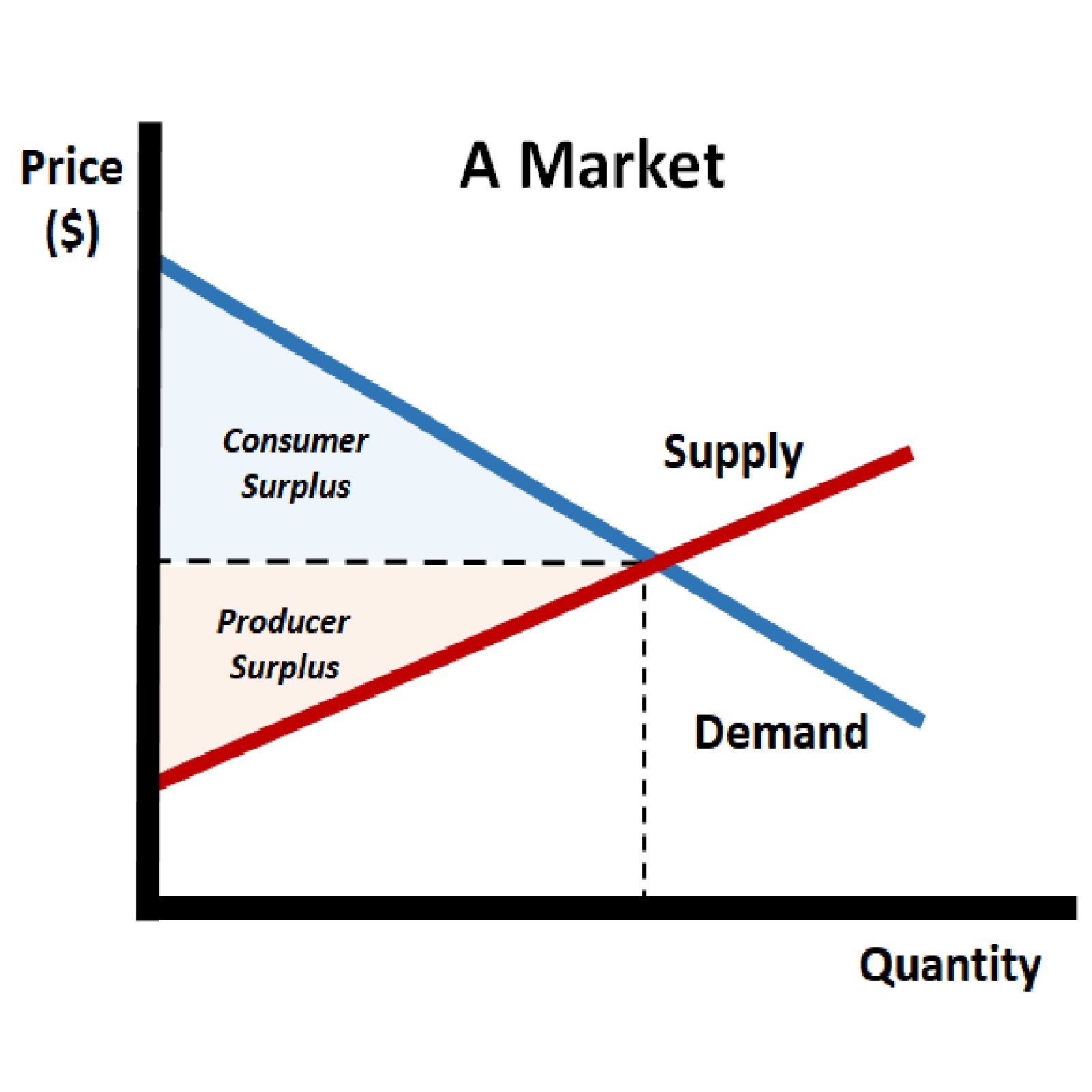
From Planet Money: In our second class, we find markets everywhere and discuss what makes them work and when they fail. We start off with the basic tools to understand a market: supply and demand. We find that the price of an item isn't just about money; a price reflects all the information inside a market, from a buyer's willingness to pay to a supplier's cost to make that item. Then, we put the...
Planet Money: Big Government Cheese 27.08.2025 20:14
From Planet Money: In 1976, Jimmy Carter made a campaign promise: I'm giving dairy farmers a break. And after he won, he set out to raise the price of milk. But that's easier said than done. The government couldn't just buy milk. They had to buy something storable that used a lot of milk. So the government started buying up as much cheese as people wanted to sell at the new price. The government w...
Similar podcasts






Listen to the Oxford College Principles of Microeconomics Course podcast in Replaio
Radio and podcasts in one app - free, with no sign-up. Install today and do not miss the launch
Replaio is not a podcast publisher; show names, artwork and audio belong to their authors and are distributed through public RSS feeds.