Atween Studios
Outsider Visions: How the Marginalized Imagined Tomorrow
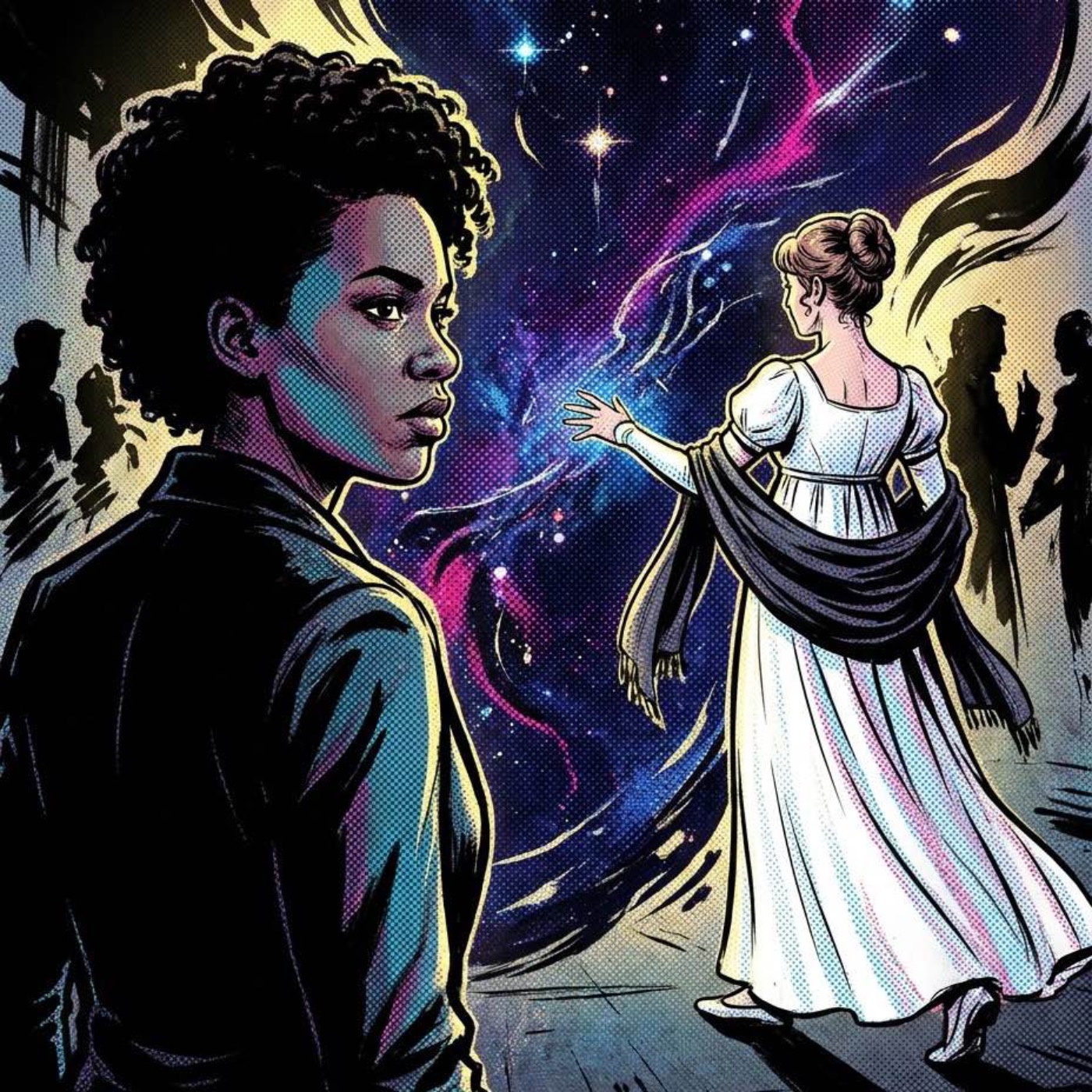
A history of science fiction podcast that centers the voices of those who used the genre to imagine liberation - from Mary Shelley's warning about unchecked power to Octavia Butler's visions of survival, revealing how outsiders have always used sci-fi to challenge the present by reimagining the future. Hosted on Acast. See acast.com/privacy for more information.
Where to listen?
Podcasts in the app Replaio Radio Coming soonPodcasts are coming to the app soon. Install now and be the first to see a whole new take on podcasts
 Install for free
Android 5M+ downloads · 4.8 rating
iOS soon
Install for free
Android 5M+ downloads · 4.8 rating
iOS soon
Episodes
The Left Hand of Darkness: Le Guin's Ambisexual Planet 10.07.2026 18:56
Ursula K. Le Guin's The Left Hand of Darkness (1969) imagines Gethen, a planet whose inhabitants are ambisexual — they have no fixed gender, entering a brief fertile period (kemmer) during which they may become either male or female. An envoy from a gendered society must navigate this world, and the novel traces his failure to truly understand what he is seeing. Le Guin was the daughter of anthrop...
Kindred: Butler's Plantation Time Travel 07.07.2026 20:17
Octavia Butler's Kindred (1979) is not comfortable time travel. Dana, a modern Black woman, is repeatedly dragged back to an antebellum Maryland plantation whenever her white ancestor Rufus Weylin's life is in danger — and she must keep him alive because he is her ancestor, which means she must protect the man who will rape her great-great-grandmother. The novel is an unflinching examination of sl...
Herland: Gilman's All-Female Utopia 03.07.2026 17:05
Published serially in Gilman's own magazine The Forerunner in 1915, 'Herland' imagines a hidden country that has been entirely female for 2,000 years after a catastrophe killed all the men. The women reproduce through parthenogenesis — virgin birth — and have built a society organized around cooperation, education, and the care of children, without war, competition, or crime. The novel's satirical...
Dhalgren's Fluid City: Delany's Queer Ruins 30.06.2026 20:18
Samuel R. Delany's Dhalgren (1975) is 800 pages long, has sold over a million copies, and has never been out of print — despite being formally experimental, sexually explicit, and radically queer. The novel follows Kid, a bisexual, possibly Native American young man with memory loss, through Bellona, a city cut off from the rest of America where the sun sometimes rises twice and gangs wear hologra...
The Iron Heel's Oligarchy: Jack London's Fascism Prophecy 26.06.2026 20:58
Jack London's The Iron Heel (1908) is arguably the most prescient political novel of the 20th century: a socialist working-class writer predicting the rise of a fascist corporate oligarchy — the Iron Heel — that crushes labor movements, builds fortified enclaves for the wealthy, and rules through terror. London was the most widely read American author of his era (E.L. Doctorow called him 'the most...
The Yellow Wallpaper: Gilman's Domestic Imprisonment 23.06.2026 23:13
Published in January 1892, Charlotte Perkins Gilman's 'The Yellow Wallpaper' is one of the founding texts of feminist speculative fiction. Written after Gilman herself was subjected to Dr. Silas Weir Mitchell's infamous 'rest cure' in 1887 — which prescribed enforced bed rest, isolation from family and friends, overfeeding, and a complete ban on intellectual activity (Mitchell told Gilman to 'have...
The Sheep Look Up: Brunner's Pollution Apocalypse 19.06.2026 21:43
John Brunner's The Sheep Look Up (1972) is one of the most technically detailed environmental disaster novels ever written. Set in a near-future America where air and water pollution have reached catastrophic levels — everyone wears filter masks, food is contaminated, water is undrinkable, and a corporation-captured government does nothing — the novel follows dozens of characters as the system col...
Fahrenheit 451's Burning Libraries: Bradbury's Anti-Censorship Manifesto 16.06.2026 19:58
Ray Bradbury wrote Fahrenheit 451 (1953) in a UCLA library basement, on a rented typewriter, during the height of McCarthyism and the Hollywood blacklist. The novel imagines a future America where books are burned not by government decree but by popular demand — people chose television walls over literature, and the firemen simply serve the public will. The architecture of the novel is the archite...
The Handmaid's Tale's Gilead: Atwood's Theocratic Architecture 12.06.2026 21:51
Margaret Atwood's The Handmaid's Tale (1985) was written in West Berlin while the Wall still stood, at a time when Reagan-era religious conservatism was reshaping American politics. Atwood's rule: nothing in the novel that hasn't happened in history. The handmaid system draws on the Bible (Rachel and Leah), the Lebensborn program, Romanian forced reproduction policy, and the history of American sl...
The Monster's Mother: Frankenstein and Female Creation 09.06.2026 20:33
Mary Shelley wrote Frankenstein at 18, grieving the death of her infant, excluded from formal education, the daughter of feminist Mary Wollstonecraft and anarchist William Godwin. The novel is not a horror story — it is a political manifesto about what happens when men play God without accountability. The laboratory is a masculine space of creation that bypasses the female body; the creature is ex...
Similar podcasts








Listen to the Outsider Visions: How the Marginalized Imagined Tomorrow podcast in Replaio
Radio and podcasts in one app - free, with no sign-up. Install today and do not miss the launch
Replaio is not a podcast publisher; show names, artwork and audio belong to their authors and are distributed through public RSS feeds.