DW
On The Green Fence
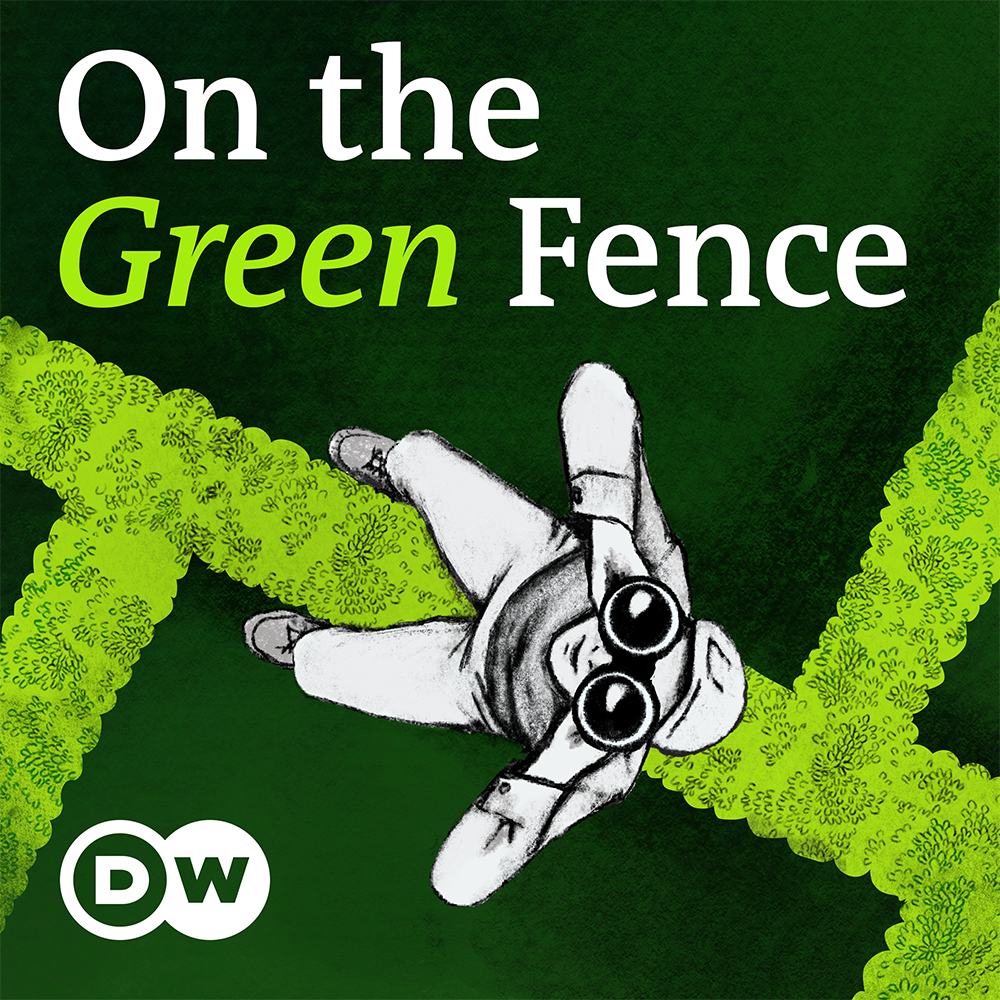
On the Green Fence lives up to its name in looking at complex, often divisive environmental issues from multiple angles. It’s not about greenism, but about delving into the major concerns of our time in an engaging and human way. DW reporter Neil King sits on the fence and explores the role business, society and science play in our transition to a more environmentally friendly world. In so doing, he aims to make sense of issues that affect us all, but which are often over-simplified or convoluted by ideology and lobbyism. On the Green Fence stands for an open-minded, relevant and entertaining...
Be sure to visit the podcast's website and support the creator: www.dw.com
Where to listen?
Podcasts in the app Replaio Radio Coming soonPodcasts are coming to the app soon. Install now and be the first to see a whole new take on podcasts
 Install for free
Android almost 10M downloads · 4.8 rating
iOS soon
Install for free
Android almost 10M downloads · 4.8 rating
iOS soon
Episodes
Introducing: Delayland – Germany and the Missing Magic 20.11.2025 2:22
Once dubbed an "economic miracle”, things don't run like they used to in Germany. This new DW original podcast endeavors to find out how Germany lost its magic and who’s got it now? Traveling beyond Germany — to India, France, Switzerland, and Denmark — the show explores how others are getting things right, and what Europe's former Wunderkind might learn from them. Wherever you get podcasts.
Energy crisis: The comeback of coal in Germany? 26.08.2024 58:42
Germany is firing up old coal plants to ensure energy supply this winter. What does this mean for the country's coal phaseout and climate targets?
Farewell and new beginnings 05.06.2024 1:43
After a great run, the On the Green Fence podcast is coming to a close. But we also have some good news for you.
Can we recycle our way out of the plastic crisis? 21.07.2023 43:35
Globally only 9% of all plastic waste is recycled. But why are mechanical recycling rates so low? And could chemical recycling help achieve our targets or is this the wrong approach to the plastic waste problem?
Why don't we use more bioplastics? 14.07.2023 35:05
Substituting fossil-based plastics with compostable ones could help address plastic pollution. But not all bioplastics are eco-friendly or biodegradable. A startup from the UK says seaweed is the answer.
Could plastic-eating enzymes help curb pollution? 07.07.2023 35:25
Each year, millions of tons of plastic waste ends up in the environment where it can last for centuries. But the discovery of plastic-gobbling enzymes has raised hopes of solving this mounting problem. Some scientists have called these tiny plastic eaters a game changer. But is this really a scalable solution? And does it make economic sense?
The growing microplastics problem: risks and solutions 30.06.2023 37:03
Microplastics have been found everywhere — from the deepest parts of the ocean to the heights of Mount Everest. A problem that is set to intensify as we produce over 400 million tons of new plastics every year. But just how dangerous are microplastics? And what can we do about them?
The plastics age: How did we get here? 23.06.2023 42:19
Each year, the world produces 430 million tons of plastics – and that figure is set to triple by 2060. How did plastics become such a big part of our lives? And what needs to be done to limit their environmental impact?
Trailer: The global plastics crisis, new podcast series 02.06.2023 1:55
Global plastics production has doubled over the past two decades. Despite rising consumer awareness, there is more single-use plastic waste than ever before. Pollutive plastic waste is set to triple by 2060. Microplastics are in our food and water and even entering our bodies. How did we get here and what can we do about it? This series launches in June.
More allergies due to climate change? 25.05.2023 24:49
By 2050, half the world's population could be affected by at least one allergy. Is global warming to blame? Find out more about rising pollen levels and one of the most allergenic plants in the world that is now also spreading in Germany. (This episode has been republished and updated).
How lab-grown meat could help the climate 19.05.2023 40:39
Global demand for meat is growing, but animal agriculture has a significant carbon footprint. Could cultivating steaks, nuggets and sushi in a lab be a solution? (This episode has been republished and updated).
Climate crisis: Is cli-fi counterproductive? 12.05.2023 26:33
Climate fiction has become a significant cultural phenomenon, reflecting the urgency of the climate crisis and the need for creative responses to this global challenge. But how does it affect the consumer and is it doing more harm than good?
The rise of climate fiction 05.05.2023 30:20
Cli-fi is growing increasingly popular as the climate crisis deepens. But could this mainly dystopian genre play a constructive role in tackling the challenge of global warming?
Why more 'edible cities' are a good idea 28.04.2023 32:20
The German town of Andernach uses its public spaces to grow fruit, vegetables and herbs that anyone can pick free of charge. It's also a social project that has given some residents a new purpose in life. So what would it take to turn your home town into an edible one? (This episode has been republished and updated)
Understanding our food choices 21.04.2023 33:28
Supermarkets stock thousands of food products flown in from all over the world. And we've become used to this bounty of choice, often at the cost of the environment. But what is driving this excessive food consumption and how can we make better food choices? (This episode has been republished and updated).
AI: 'It will be a wild ride' 14.04.2023 39:10
Machines that can outsmart humans are the stuff of sci-fi novels. But some in the tech industry believe that if rapid advances in AI continue, there could someday be systems that attain — or surpass — human intelligence. Philosopher Nick Bostrom shares his thoughts on what that would mean for our species and some of the ethical questions that should be settled before we reach that threshold.
AI: What are the downsides for the environment? 06.04.2023 30:14
Artificial intelligence has tremendous potential to help us reduce our greenhouse gas emissions. At the same time, the technology itself has a big carbon footprint, and in some cases it's being used to accelerate activities that make climate change worse.
How AI can help us protect the planet 31.03.2023 31:46
The field of artificial intelligence is growing fast. Not only is it bringing profound changes to the way we live and work, it's also proving to be a powerful tool in the fight against climate change.
Climate change: The biggest health threat to humanity 24.03.2023 18:34
The impacts of climate change are making us sick and claiming the lives of 13 million people every year. According to the World Health Organization, climate change is the single biggest health threat humanity faces. So what does it mean for our health if we fail to meet our climate goals and what can we do about it? (This episode has been republished and updated).
The Rhine: Protecting a precious water source 17.03.2023 30:52
Ahead of World Water Day, we look at how the Rhine was transformed from a heavily polluted and stinking river into a clean waterway. Today, it supplies over 30 million people with high quality drinking water. But new threats are emerging for Germany's longest artery. (This episode has been republished and updated).
The benefits of a four-day work week 10.03.2023 22:06
Imagine your work week is reduced from five to four days without a pay cut. That's precisely what some companies in the UK did over a six-month trial period. Apparently, this is good for workers, business and the environment. Is the four-day work week overdue?
Human composting: The push for greener burials 03.03.2023 26:20
Most Germans choose to be cremated when they die. But this process has many environmental downsides. A green funeral startup from Berlin wants to make human composting the new normal. But just how eco-friendly is this and why hasn't it taken off in Germany yet?
Rationing carbon: A fairer way to fight global warming? 24.02.2023 30:50
Rationing could be an effective way of reducing carbon emissions rapidly and fairly, according to a recent study by UK scientists. But just how would this work and would people really go along with it?
Europe's appetite for frogs' legs puts species at risk 17.02.2023 26:05
The trade in frogs legs is thriving. Every year, millions of tons of the delicacy are exported from Asia to the European Union, the world’s biggest customer by far. But scientists warn the trade is unsustainable, and that Europe’s insatiable taste for the amphibian’s limbs could cause some species to die out altogether.
Civil disobedience in environmentalism: past, present, future 10.02.2023 34:18
From the suffragettes to US civil rights campaigners, there are many examples from history of social movements using direct action to push for change. It's a tactic climate activists in the West are increasingly resorting to today. But do radical acts still work with a challenge as immense as climate change? And how are such protests viewed in other parts of the world?
Similar podcasts








Listen to the On The Green Fence podcast in Replaio
Radio and podcasts in one app - free, with no sign-up. Install today and do not miss the launch
Replaio is not a podcast publisher; show names, artwork and audio belong to their authors and are distributed through public RSS feeds.