Saul J. Weiner and Stefan Kertesz
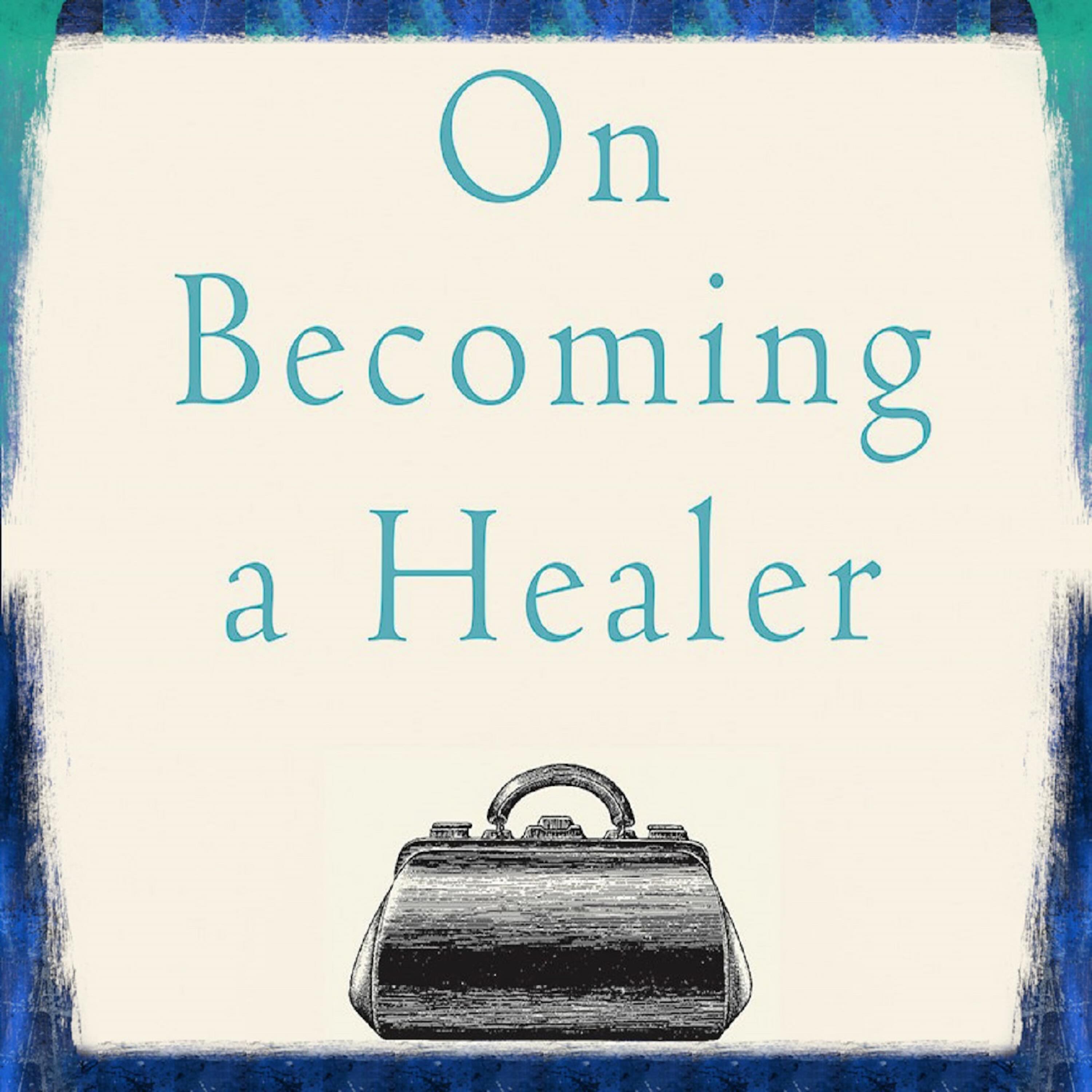
On Becoming a Healer
Doctors and other health care professionals are too often socialized and pressured to become "efficient task completers" rather than healers, which leads to unengaged and unimaginative medical practice, burnout, and diminished quality of care. It doesn't have to be that way. With a range of thoughtful guests, co-hosts Saul Weiner MD and Stefan Kertesz MD MS, interrogate the culture and context in which clinicians are trained and practice for their implications for patient care and clinician well-being. The podcast builds on Dr. Weiner's 2020 book, On Becoming a Healer: The Journey from Patient...
Be sure to visit the podcast's website and support the creator: www.contextualizingcare.org
Author
Saul J. Weiner and Stefan Kertesz
Category
Podcast website
Latest episode
Nov 17, 2026
Where to listen?
Podcasts in the app Replaio Radio Coming soonPodcasts are coming to the app soon. Install now and be the first to see a whole new take on podcasts
 Install for free
Android 10M+ downloads · 4.7+ rating
iOS soon
Episodes
Contextualizing Care in a Nutshell (and a New Study) 24.10.2022 27:29
Today, Stefan talks with Saul about his favorite topic (and life's work), contextualizing care. We're re-releasing this conversation (from January of last year) because Saul's research team has just published a new study -- an RCT, titled " Effect of Electronic Health Record Clinical Decision Support on Contextualization of Care: A Randomized Clinical Trial ," which is open access, so you can read...
Medical Gaslighting: Why Are We A--holes? 19.09.2022 35:29
Recent articles in mainstream media about "medical gaslighting" have struck a nerve with thousands of comments on social media platforms. People are complaining about how their doctors are treating them, with women and underrepresented minorities disproportionately telling some of the worst stories. Meanwhile physicians are responding, mostly on the defensive. They're saying their jobs are too to...
Urine Drug Screening: How it can traumatize patients and undermine the physician-patient relationship without helping anyone 11.08.2022 38:02
Urine drug screening (UDS) is used in the care of patients with opioid use disorder, and for patients receiving opioids for chronic pain. There's no strong evidence that testing helps patients, however, and no consensus on what to do with the results anyway. These tests, often mandated, may cause serious harm when physicians don't realize how often there are false positives or react punitively by ...
Pursuing a Medical Career While Black: What it Takes and Why it Matters 14.07.2022 55:43
Making it into and through medical school is tough even for those who have all the advantages: excellent schools starting at a young age, well-educated parents who may be doctors themselves, lots of role models and…white skin. In this episode we hear from two pre-meds and one newly minted physician, all Black, about their journeys with few of these advantages. Despite their remarkable optimism,...
Rescuing medical professionalism: Could "cup-of-coffee conversations" do more good than committees and letters-to-the-file? 26.05.2022 42:06
Medical students may be subject to professionalism review by committees, most commonly for "unreliability" such as not responding to emails, falling behind on compliance requirements, showing up late for assignments and so on. Then they hit the wards, and frequently experience mistreatment by residents and attendings (many of whom also don't answer their emails etc…), most commonly in the form of...
Why Residents Unionize 21.04.2022 36:35
Many residents are not doing well, psychologically, and sometimes physically -- and with good reason. High levels of mistreatment and harassment, patient care that some experience as moral injury, and a lack of voice in the workplace, contribute to burnout and can adversely affect the kind of physicians people become. A growing path to empowerment is unionization. What are resident and fellow uni...
Opioids and the physician-patient relationship: What are we getting wrong? 15.03.2022 41:32
The opioid crisis was precipitated by physicians overprescribing opioid pain medication, egged on by the pharmaceutical industry, contributing to suffering and death from addiction and overdose. Now, many physicians are forcibly cutting patients off of opioids and refusing to prescribe in the setting of a backlash, contributing to suffering from pain, and death from suicide. Saul and Stefan consid...
False Positives Traumatize Patients...If Clinicians Aren't Careful 19.01.2022 30:16
On January 1st, the New York Times ran a story about prenatal genetic tests that are "usually wrong" -- but they got it wrong. These are actually just tests to tell if someone is high risk. The real story is that clinicians are not communicating with patients about what these tests mean, causing confusion and trauma. This happens across medicine and we discuss how to avoid it.
Healing Interactions: What are they made of? 26.12.2021 27:57
There are two qualities we may experience in others who comfort and ground us when we feel vulnerable and lost. First that they engage with us, meaning that they are fully present with a sense of shared humanity. Second, that they respect our personal boundaries and know their own. Such boundary clarity makes them a safe sounding board. In this episode, first aired last May, we explore the interd...
Kind People on Airplanes 24.11.2021 19:35
Lately we've been hearing about bad behavior on airplanes. Here we discuss an incident in which a passenger unselfconsiously stepped up at an inconvenient time to assist a group of passengers in a tough spot. Saul and Stefan reflect on the qualities of people who go through life making the world a better place in small ways. As millions travel during Thanksgiving, we thought this episode (origina...
When an attending yells at a resident 28.10.2021 25:51
Our guest, a physician a few years out of residency, describes an experience from her training when an attending yelled at her and hung up the phone when they were discussing a patient. We talk about resident abuse, its impact on patient care, and what can be done about it.
When your patient has a Swastika tattoo 09.09.2021 38:57
Our guest, a resident physician, describes her reaction and what followed, when she discovered a symbol of hate tattooed on her hospitalized patient's leg. Most of us appreciate that as physicians we don't get to choose who are patients are, and that all deserve good care. But is there more to it than that? Can one grow as a physician and person, and even feel privileged when caring for patients...
About me being racist: A conversation that follows an apology 28.07.2021 42:49
Saul reached out to a former colleague whom he worked with closely so that he could apologize for something he did many years ago that he now sees as racist. Saul is a white man and his former colleague, a subordinate at the time, is a black woman. Because of his apology, along with their longstanding relationship, they are able to have an open and honest conversation about how it affected her lif...
The Dartmouth Debacle: Why the culture of medical education needs to change 21.06.2021 43:13
In a widely reported incident, Dartmouth Geisel School of Medicine accused, suspended and expelled medical students for cheating based on faulty data -- and then retracted the decision amidst a large public backlash. During the episode students were allegedly given only 2 minutes to defend themselves and were encouraged to plead guilty. When they complained about the administration online, the sch...
Vaccine Hesitancy and the Doctor-Patient Relationship 17.05.2021 23:30
A primary care doctor in solo practice in a small mid-west city who is deeply trusted by his patients talks about talking about vaccine hesitancy.
Engagement and Boundary Clarity: 09.05.2021 27:57
We feel safe and can open up in conversations when there is full and open engagement combined with a clear, respectful sense of personal boundaries. Why are such exchanges so rare and yet so important to medical practice and to the good life?
Judgementalism 22.03.2021 25:38
Physicians are neither judges nor God, and yet we seem prone to judge our patients...and ourselves. Saul and Stefan discuss.
Contextualizing Care: What it means and why it matters 19.01.2021 27:14
Saul and his research team have listened to and analyzed thousands of audio recordings of medical encounters for clinician attention to the life context of each patient when planning their care. Here is what they've learned.
Part 2: International Medicine 03.01.2021 25:16
In Part 2 of our interview with Dr. Bhalla, hear what makes for a good fit for a long term career practicing medicine and leading projects in international settings
Part 1. International Medicine 03.01.2021 40:16
A physician describes what attracted her to international medicine where she's worked for Doctors Without Borders in many challenging places. Guest: Naina Bhalla MD, MPH Intro and Outro are Prelude by J.S Bach, arranged by Sophocles Papas, with permission from Carl Fischer. Also, Largo from Four Seasons by Vivaldi, arranged Per-Olov Kindgren. Guitar played by Saul Weiner.
My Learning Disability 29.11.2020 21:47
Stefan interviews Saul about his experiences becoming a doctor with a learning disability, leading to questions such as: Does struggling with multiple choice tests mean you won't be a good doctor? How do grades shape our self image and the culture of medicine?
Asking patients "Why?" 10.11.2020 16:11
What should a doctor do when a patient behaves in a way that doesn't seem to make sense? Saul and Stefan discuss a case.
Part 2: "This is what I trained for." 31.10.2020 28:12
In Part 2 of our interview with Dr. John Scala, hear how an experienced primary care physician in solo practice responds to the pandemic, particularly as he thinks about the physician-patient relationship, the well being of his staff, and personal risk.
Part 1: Meaning and Joy in Solo Practice 31.10.2020 55:59
A primary care physician describes why he's loved being a solo doctor, mostly avoiding corporate medicine. His patients love him too. Learn how and why this kind of practice is still possible.
Part 2: Hope and Healing for Those Who Follow 19.10.2020 36:30
Dr. Conway responds to violence and hopelessness in her community, traumatized by systemic racism, by establishing the I Am Abel Foundation as a haven and resource for young people aspiring to careers in medicine.
Similar podcasts








Listen to the On Becoming a Healer podcast in Replaio
Radio and podcasts in one app - free, with no sign-up. Install today and do not miss the launch
Replaio is not a podcast publisher; show names, artwork and audio belong to their authors and are distributed through public RSS feeds.