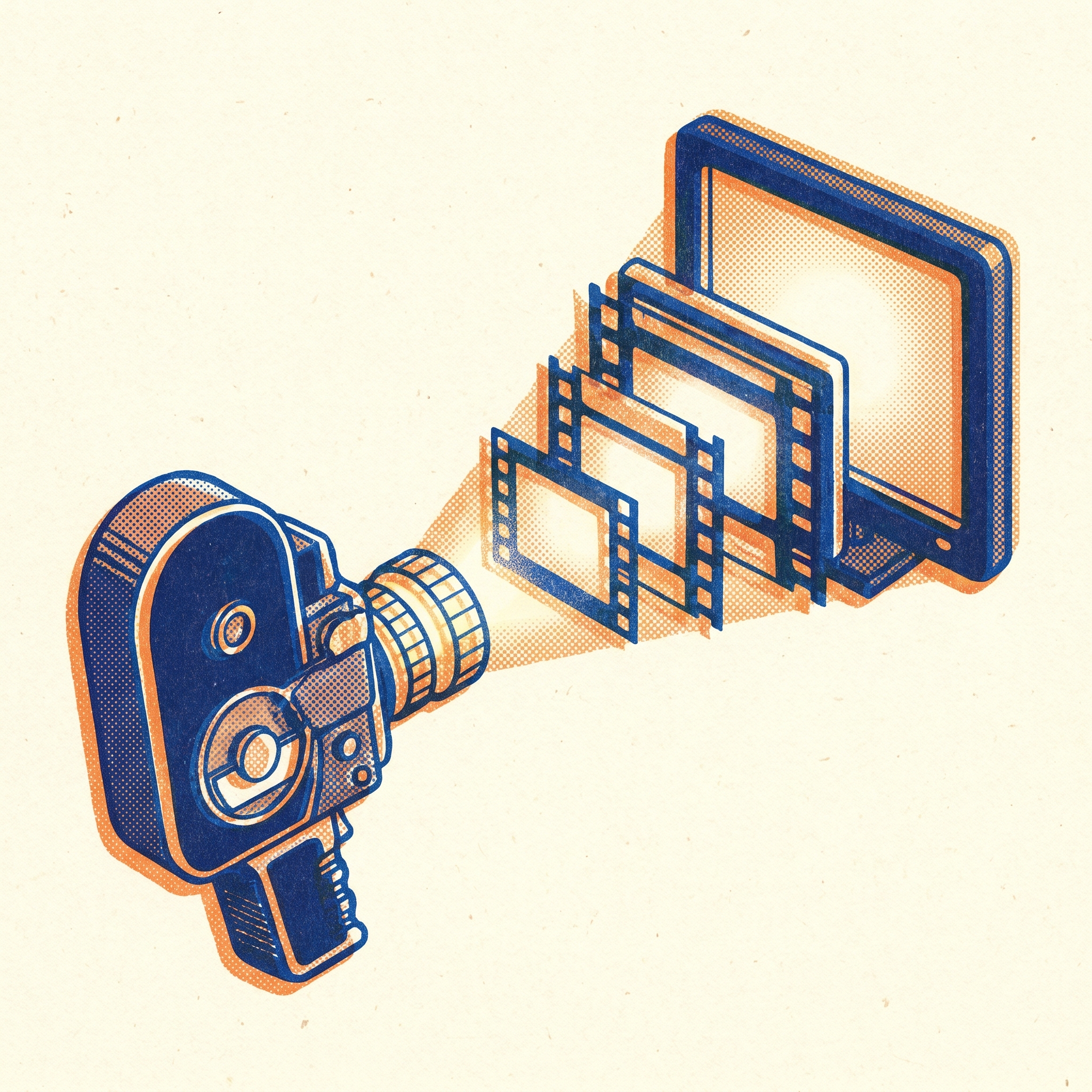
OCDevel AI Video Generation Podcast
OCDevel AI Video Generation Podcast
Make finished, professional video with AI - not just one-off clips. Every episode pairs a fast news rundown on the AI video generation landscape with a hands-on tutorial that takes you from prompting a website to running a one-person studio. The news tracks what moves a producer's week: the fast-shifting model leaderboard - Veo, Sora, Kling, Seedance, Gemini Omni, Runway and whoever's leading this week — plus the capability changes (native audio, image-to-video, character consistency, price-per-second) that change how you shoot. Then the tutorial climbs a single ladder across the series: from...
Be sure to visit the podcast's website and support the creator: ocdevel.com
Author
OCDevel AI Video Generation Podcast
Category
Podcast website
Latest episode
Oct 4, 2026
Where to listen?
Podcasts in the app Replaio Radio Coming soonPodcasts are coming to the app soon. Install now and be the first to see a whole new take on podcasts
 Install for free
Android almost 10M downloads · 4.8 rating
iOS soon
Install for free
Android almost 10M downloads · 4.8 rating
iOS soon
Episodes
5. Planning the Scene Before You Generate It 04.10.2026
A courier's simple parcel drop becomes a short scene with a want, an obstacle and a change, then a nine-shot list tested as a Shotcut animatic and priced by counting every take. It ends with a flat-lit turnaround method for keeping Mara consistent across new shots. This episode is narrated by AI-generated synthetic voices. Episode page & show notes Visit website From an action to a scene...
Steering a Shot From Both Ends 27.09.2026
## Planning the cut before you generate The accepted crouch clip is three seconds long. Mara crouches and sets the parcel down on the bakery step,… Episode page & show notes Visit website Planning the cut before you generate The accepted crouch clip is three seconds long. Mara crouches and sets the parcel down on the bakery step, and the light holds steady from start to end. Watched alo...
Starting From a Still 20.09.2026
Why three takes of the same courier shot produced three different women, and how supplying a still as the first frame fixes face, wardrobe, composition and light. Covers Gen-4.5 image-to-video setup and costs, two typical failures with the five available repairs, why regenerating proves nothing about cause, and a cheaper way to conform frame rates. Episode page & show notes Visit website Why t...
Cutting Your First Clip Into a Sequence 19.09.2026
A hands-on chapter on turning a single generated clip into a short watchable sequence in Shotcut: project setup and Video Mode, trimming two shots into one readable action, adding a title and ambience, licensing the assets you bring in, exporting and checking the result. It closes with Runway's new Premiere Pro and After Effects plugins, which generate straight onto the timeline. Episode page...
Your First Usable Shot 10.09.2026
An illustrative three-take exercise uses Runway Gen-4.5 text-to-video to make and critique a five-second courier shot. It teaches prompt structure, model-specific prerequisites, deliberate visual checks and keeping useful production notes; no listener completion is assumed. Episode page & show notes Visit website A first shot and a repeatable review The chapter demonstrates a five-second wides...
The Assembly Edit: Cutting Mismatched AI Shots Together in DaVinci Resolve 21 (Conform, Trims, J/L-Cuts, Optical Flow, Export) 11.07.2026
AI generators hand you clips at clashing resolutions and frame rates, so set your timeline's frame rate before you import a single clip, because it locks the moment media hits the pool, and let Resolve conform the rest with Input Scaling and Optical Flow. Then hide the seams the way real editors do: cut on action, ripple off the soft decelerating tails, and lean on J and L split edits so mism...
Dialogue and Lip-Sync (Act II): Native-Audio Video Models vs. the Decoupled Voiceover-and-Lip-Sync Pipeline, ElevenLabs Voice Cloning, Sync.so, Hedra, Runway Act-Two, and Fixing the Sync That Won't Lock 06.07.2026
Two roads make a character talk: let one model generate picture and voice together, or make the voice separately and run a dedicated lip-sync pass that reshapes only the mouth. The moment a client or an exact script is involved, you fall back to the decoupled pipeline for control. Episode page & show notes Try a walking desk - stay healthy & sharp while you learn & code This is Act II...
Storyboarding Multi-Shot AI Video: From Shot List to Scene Builder (Plus Runway's Ship Train and Seedance 2.5) 01.07.2026
The multi-shot problem isn't a model problem, it's a planning problem: because generative video is stateless, the cheapest edit you'll ever make is a shot list and a storyboard built before you spend a single credit. Learn the end-to-end workflow from brief to beats to board to animatic, and the continuity rules that make independently generated clips actually cut together. Episode...
Style Consistency: Look-Locking So Every Shot Matches Across Generators 23.06.2026
Every clip you generate re-invents the palette, lighting, and grain from scratch, so shot two reads like a different movie. This episode shows you how to lock one look across a whole sequence with style references, frozen prompt blocks, and a finishing grade that makes mismatched generators sit in the same world. Episode page & show notes Try a walking desk - stay healthy & sharp while you...
Chaining Keyframes Into Continuous Multi-Shot Scenes: Last-Frame Seeding and First/Last-Frame Interpolation 19.06.2026
A single clip caps out around five to ten seconds, so you build longer scenes by harvesting the last frame, seeding the next clip, and using first/last-frame interpolation to keep motion flowing across the seam. The catch is the join: generators decelerate the camera at clip ends, so naive concatenation reads as a freeze unless you match momentum and trim the deceleration tail. Episode page &...
Character Consistency: Sheets, References, and When Multi-Reference Beats a LoRA 15.06.2026
In mid-2026, native multi-reference inside the major video tools does what a custom character LoRA used to for most one-off and short-series jobs. Train a LoRA only when you'll reuse the same face hundreds of times, need exact lock, and control a clean dataset. Episode page & show notes Try a walking desk - stay healthy & sharp while you learn & code This tutorial climbs the next...
Cost Per Finished Clip: AI Video Economics, Take Ratios, and How to Stop Torching Credits 11.06.2026
The price you see is cost-per-generation; the price you pay is cost-per-finished-clip, and the gap is your real take ratio of three to five rolls per keeper. Draft cheap to lock the shot, cap your rerolls, and spend the premium render once on the approved hero. Episode page & show notes Try a walking desk - stay healthy & sharp while you learn & code The closer of Act One. We tie the s...
Prompt Dialects: Why One Video Prompt Gets Different Results Across Models, and How to Read a New Model's Style 09.06.2026
The same prompt lands differently on Veo, Sora, Runway, and Kling because each model learned the writing style of its training captions, and many platforms quietly rewrite your words before the model sees them. Learn a five-step method to read any model's dialect from its own docs and a controlled bench instead of memorizing one syntax that breaks on the next tool. Episode page & show not...
Minting Keyframes: Using Image Models to Build a Start Frame Your Video Stage Can Actually Animate 07.06.2026
A still you approve beats gambling on text-to-video, so this episode shows you how to mint a start frame in an image model and hand it to the video stage for motion. We cover the snapshot roster, prompting a frame with somewhere to go, matching aspect ratio and resolution, the full round trip, and the pitfalls you will actually hit. Episode page & show notes Try a walking desk - stay healthy &...
Native Audio vs Silent Clips, and Editing a Shot by Conversation 03.06.2026
Whether a model hands you sound baked in or a silent clip reshapes your whole edit, and there's a cleaner move than re-rolling: tell the model, in plain words, to change one thing about a clip you already like. Episode page & show notes Try a walking desk - stay healthy & sharp while you learn & code The last stop in Act I, and two ideas about what happens after you generate, whic...
Seeds, Negative Prompts, and the Failure Modes You Will Actually Hit 03.06.2026
Stop feeding the slot machine. How a fixed seed gets a look back instead of getting lucky, why telling a model what to avoid usually backfires, and how to name the way a clip broke so you know whether to tweak the prompt, change the shot, or stop rolling. Episode page & show notes Try a walking desk - stay healthy & sharp while you learn & code Episode five of the single-shot ladder, a...
Aspect Ratio, Duration, Resolution, and FPS: The Constraints That Bite 03.06.2026
Four boring numbers quietly wreck good clips, and they only bite when you decide them late. How to set the frame's shape, plan around short duration caps, draft cheap and finish sharp, and pick a frame rate, all before you spend a single credit. Episode page & show notes Try a walking desk - stay healthy & sharp while you learn & code Episode four of the single-shot ladder, and th...
Image-to-Video vs Text-to-Video: Why a Start Frame Wins Control 03.06.2026
There are two front doors into every video model, and most beginners pick the wrong one. Why handing the model a still you already approved beats rolling the dice on pure text, how the prompt changes when the image carries the scene, and when text-to-video is still the right call. Episode page & show notes Try a walking desk - stay healthy & sharp while you learn & code Episode three o...
The Anatomy of a Video Prompt: Subject, Action, Camera, and Light 03.06.2026
An image prompt describes a frozen moment; a video prompt has to describe change over time. We break a shot into eight parts you can fill like a checklist, hand you a copyable template, and finish on the one contradiction that wrecks more clips than anything else. Episode page & show notes Try a walking desk - stay healthy & sharp while you learn & code Episode 2 of Act I. Last time yo...
Pick Your First AI Video Tool, and Learn to Read the Leaderboard 03.06.2026
Episode one, the first rung of the ladder: choose a hosted AI video generator without overthinking it, get a clip out fast, and learn the one durable skill, reading the live leaderboard and benching the top tools on your own shot instead of chasing this month's number one. Episode page & show notes Try a walking desk - stay healthy & sharp while you learn & code First episode of t...
Similar podcasts






Listen to the OCDevel AI Video Generation Podcast podcast in Replaio
Radio and podcasts in one app - free, with no sign-up. Install today and do not miss the launch
Replaio is not a podcast publisher; show names, artwork and audio belong to their authors and are distributed through public RSS feeds.