Savant
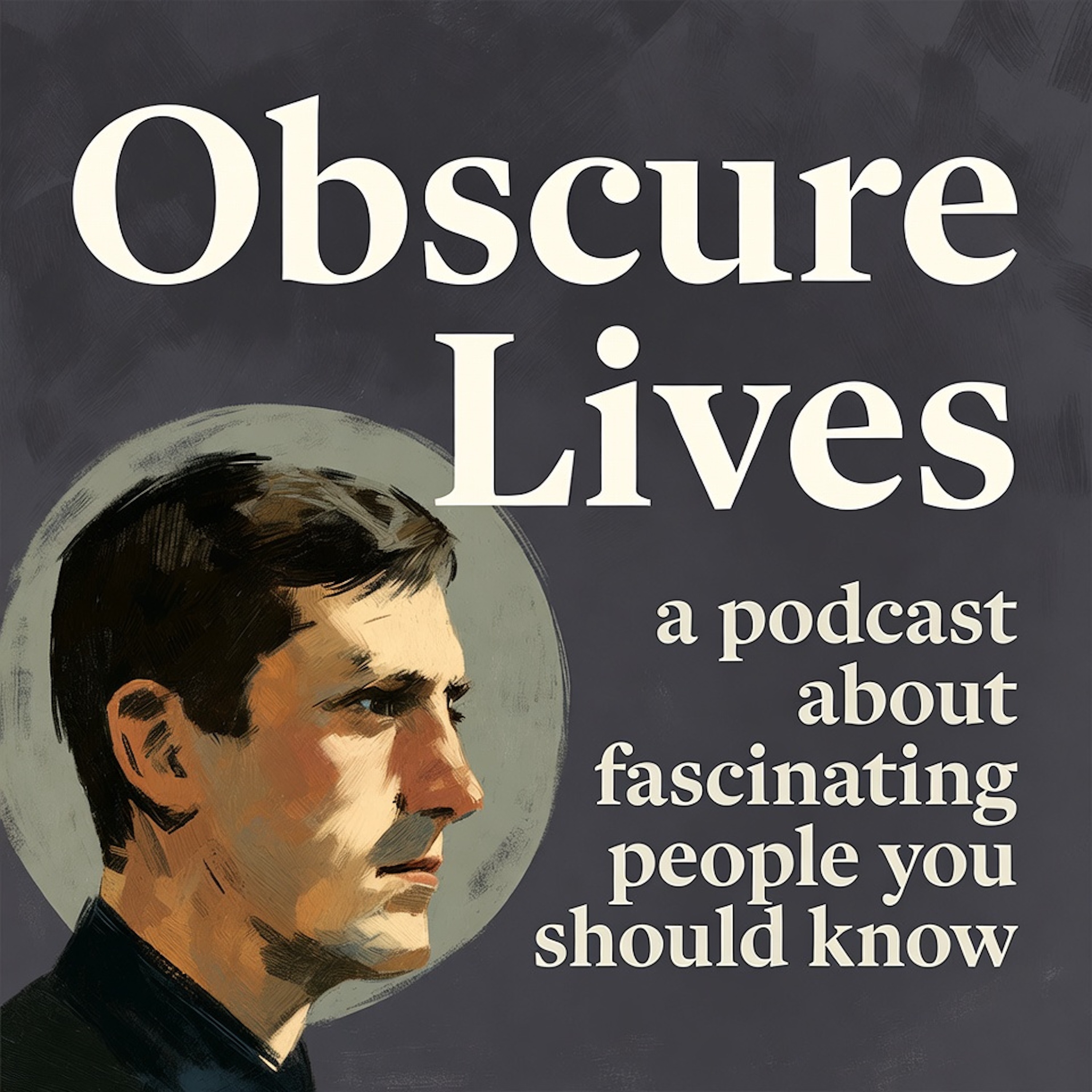
Obscure Lives Podcast
Obscure Lives Podcast Long-form narrative biographies of history’s most genuinely overlooked people — the ones whose documented stories deserve thousands of words, not a footnote. History remembers the loudest voices. It forgets the Polish cavalry officer who volunteered to be sent to Auschwitz so he could organize resistance from inside the camp. It forgets the one-legged American woman the Gestapo called “the most dangerous of all Allied spies.” It forgets the pirate queen who commanded the largest fleet in history, the medieval “nun shogun” who ruled Japan from behind a screen, the housemai...
Be sure to visit the podcast's website and support the creator: rss.com
Where to listen?
Podcasts in the app Replaio Radio Coming soonPodcasts are coming to the app soon. Install now and be the first to see a whole new take on podcasts
 Install for free
Android almost 10M downloads · 4.8 rating
iOS soon
Episodes
Pytheas of Massalia: The Greek Who Sailed Off the Map c. 350–c. 285 BCE 30.10.2026 27:07
Around 325 BCE, Pytheas of Massalia sailed out of the Mediterranean, through the Pillars of Heracles, and turned north into waters no Greek had ever explored. He reached Britain, recorded the midnight sun, and described the frozen northern sea—then returned to be branded a liar for two thousand years. This episode uncovers how one explorer’s truth was dismissed until science finally caught up.
Timothy Dexter 1747–1806: The Fool Who Could Not Stop Winning 29.10.2026 27:56
Timothy Dexter was a barely educated leather-worker who somehow turned every foolish business decision into spectacular wealth. His career is a comic masterpiece of luck and audacity triumphing over common sense, culminating in a self-written book with no punctuation and a staged funeral where he tested how much his family would mourn him.
The Princess Who Could Not Be Thrown: Khutulun, c. 1260–1306 29.10.2026 27:05
In the grasslands of thirteenth-century Central Asia, a Mongol princess named Khutulun stunned suitors and chroniclers alike by defeating every man who tried to throw her in a wrestling match—while also fighting in battle and advising her father, the khan. Her real story, recorded by Marco Polo and Rashid al-Din, was later twisted into the legend of Turandot, obscuring the extraordinary life of th...
The Surgeon Whose Secret Outlived the Surgery: James Barry c. 1789–1865 28.10.2026 27:16
In July 1865, London was stunned when the body of celebrated army surgeon Dr. James Barry was revealed to be anatomically female—an astonishing discovery that threatened to eclipse a lifetime of extraordinary medical achievement and imperial service. This episode traces Barry’s journey from Cork-born Margaret Ann Bulkley to one of the highest-ranking military doctors of the nineteenth century, unc...
The Monk Who Traveled the Wrong Way: Rabban Bar Sauma c. 1220–1294 28.10.2026 27:30
In the 1280s, while Marco Polo was returning from Asia to Europe, an East Asian Christian monk named Rabban Bar Sauma was making the same journey in reverse, crossing the entire continent to visit Constantinople, Rome, Paris, and London. Born near modern Beijing around 1220, Bar Sauma left behind the only first-hand account of medieval Europe written by an Eastern traveler, yet his remarkable stor...
Claudette Colvin 1955: The Teen Who Said No First Before Rosa Parks 27.10.2026 27:39
Nine months before Rosa Parks refused to give up her seat on a Montgomery bus, 15-year-old Claudette Colvin did the same thing—and was promptly erased from the history books. This episode traces how a studious Black teenager, steeped in constitutional lessons and NAACP Youth Council meetings, became the first to challenge bus segregation, only to be sidelined by movement leaders who deemed her an...
The Viking of Sixth Avenue: Moondog (Louis Thomas Hardin), 1916–1999 27.10.2026 27:45
From the late 1940s into the 1970s, a blind, bearded man in a horned Viking helmet stood on Sixth Avenue in Manhattan, selling poetry and music to passersby. What New Yorkers dismissed as a harmless street eccentric was actually Louis Thomas Hardin—better known as Moondog—one of the most original composers of the twentieth century, admired by Toscanini, Charlie Parker, Philip Glass, and Steve Reic...
Bessie Coleman 1892–1926: The Woman Who Crossed an Ocean to Fly 26.10.2026 26:28
In 1921, Bessie Coleman became the first African American woman to earn a pilot's license by crossing the Atlantic to France after U.S. schools refused her. This episode follows her from a Texas sharecropping cabin to the skies above 1920s America, where she earned the nickname "Queen Bess" as a daring barnstorming stunt pilot.
Yaa Asantewaa 1840–1921: The Queen Who Led Ashanti Women Against the British Empire 26.10.2026 27:04
In the spring of 1900, elderly queen mother Yaa Asantewaa shamed hesitant Ashanti chiefs into war against the British Empire rather than surrender the sacred Golden Stool—the soul of their nation. This episode traces her life from privileged Ashanti noblewoman to the only woman ever chosen to command an Ashanti army, showing how a grandmother and farmer became a symbol of unyielding resistance whe...
The Man Who Invented an Army of Spies – Juan Pujol García, 1912–1988 25.10.2026 28:16
In the spring of 1944, as the Allies prepared for the greatest amphibious invasion in history, the success of D-Day hinged on a deception so audacious that its success rested on one man: a Spanish chicken farmer named Juan Pujol García who had invented an entire network of fictional spies that fooled Nazi Germany’s intelligence service.
Al-Jazari 1136–1206: Medieval Robotics & Forgotten Engineering Genius 25.10.2026 28:54
In 1206, a palace engineer in southeastern Turkey finished the Book of Knowledge of Ingenious Mechanical Devices, a manual describing fifty machines that would not appear in Europe for centuries. Al-Jazari’s water clocks, programmable automata, and precision mechanisms—built for the Artuqid court—establish him as the father of robotics and a towering figure in medieval Islamic engineering.
Noor Inayat Khan 1914–1944: The Pacifist Princess Who Spied for Britain 24.10.2026 28:36
In the autumn of 1943, Noor Inayat Khan, a gentle Sufi princess and writer of children’s stories, became the last wireless link between London and the shattered French Resistance, transmitting from safe house to safe house until the Gestapo closed in. Born in 1914 into a pacifist household steeped in mysticism, she volunteered for one of the most perilous roles of the Second World War and paid wit...
The Widow Who Built: Sarah Winchester c. 1839–1922 24.10.2026 29:14
Behind the famous staircases to nowhere and doors that open onto nothing lies the real story of Sarah Winchester, the widow whose decades-long construction project became one of America’s most misunderstood ghost legends. The episode dismantles the myth of the guilt-crazed heiress appeasing vengeful spirits and reveals instead a private, grieving woman who turned her vast fortune and empty years i...
Chiune Sugihara 1900–1986: The Man Who Defied Orders and Saved 6,000 Jews 23.10.2026 28:00
In the summer of 1940, Japanese consul Chiune Sugihara disobeyed his government and wrote thousands of transit visas by hand, saving an estimated 6,000 Polish Jews from the advancing Nazi and Soviet armies. Over one frantic month in Kaunas, Lithuania, Sugihara and his wife signed visas until his hand seized, then continued signing from his hotel and even the departing train window—acts that cost h...
The First Author: Enheduanna, c. 2300 BCE – 1,500 Years Before Homer 23.10.2026 28:38
Long before Homer, a Mesopotamian princess named Enheduanna became the first author known to history by signing her own poems around 2300 BCE. As the daughter of Sargon the Great and high priestess of the moon god at Ur, she bridged conquered Sumer and the new Akkadian empire while inventing the very idea of literary authorship.
Werner Forssmann: The Doctor Who Catheterized His Own Heart 1929 22.10.2026 28:10
In 1929, twenty-five-year-old Werner Forssmann defied medical orthodoxy by threading a catheter into his own heart, proving the unthinkable was possible. His self-experiment laid the foundation for modern cardiology and eventually earned him the 1956 Nobel Prize in Medicine, yet he was ridiculed and exiled from the field for decades.
Sister Rosetta Tharpe 1915–1973: The Godmother of Rock and Roll 22.10.2026 28:15
Before Elvis, Chuck Berry, or Little Richard, a Black woman from Arkansas was already fusing gospel fire with electric guitar swagger—Sister Rosetta Tharpe, the true pioneer who invented rock and roll more than a decade before the men credited with its birth.
Hilma af Klint 1862–1944: The Painter Who Hid Abstract Art’s Future 13.07.2026 29:50
In 2018 the Guggenheim unveiled over a thousand hidden canvases proving that Swedish artist Hilma af Klint had created fully abstract paintings years before Kandinsky or Mondrian. This episode traces how a respected academic painter secretly produced visionary geometric works, then locked them away for a future she believed would finally understand them.
The Chemist Who Was Erased - Alice Ball, 1892–1916 10.07.2026 29:53
In the early twentieth century, a diagnosis of leprosy in Hawaii meant lifelong exile to the remote Kalaupapa peninsula. Alice Ball, a brilliant young Black chemist, cracked the chemical problem that had defeated doctors for decades, turning chaulmoogra oil into the first effective treatment for Hansen’s disease. Tragically, she died at twenty-four before she could publish her work, and a senior c...
The Architect in the Shadows: Bayard Rustin 1912–1987 10.07.2026 30:22
On August 28, 1963, a quarter-million people marched on Washington—an event that changed the course of civil rights legislation—yet the man who made it happen remained largely invisible. Bayard Rustin, the openly gay, pacifist, ex-Communist organizer whose logistical brilliance delivered the March on Washington, spent decades in the shadows because of who he was. This episode recovers his story an...
The Doctor Who Begged Them to Wash Their Hands: Ignaz Semmelweis, 1818–1865 09.07.2026 31:35
In the 1840s, Vienna General Hospital ran two maternity wards with identical patients but wildly different death rates. One young doctor, Ignaz Semmelweis, discovered that a simple hand-washing routine slashed mortality from childbed fever, yet the medical establishment spent decades rejecting him. His story is both a triumph of evidence-based medicine and a haunting reminder of how hard truth can...
Henrietta Swan Leavitt 1868–1921: The Woman Who Measured the Universe 09.07.2026 30:41
In this episode of Obscure Lives Podcast, we uncover the remarkable story of Henrietta Swan Leavitt, a deaf woman working at Harvard Observatory who discovered the key to measuring cosmic distances and unlocked the true scale of the universe.
The Great Impostor: Ferdinand Waldo Demara 1921–1982 08.07.2026 31:51
In 1951, aboard a Canadian destroyer off Korea, a man claiming to be surgeon-lieutenant Joseph Cyr performed life-saving surgery on wounded soldiers—despite having no medical training. That man was Ferdinand Waldo Demara, the most audacious impostor of the twentieth century, who had already posed as a monk, college dean, psychologist, prison warden, and teacher. This episode traces how Demara repe...
Episode 8: The Man Who Tried to End Hunger- Nikolai Vavilov, 1887–1943 23.06.2026 30:56
# Episode 8: The Man Who Tried to End Hunger- Nikolai Vavilov, 1887–1943
The Emperor of San Francisco: Joshua Norton 1818–1880 21.06.2026 30:32
In 1880, thousands of San Franciscans—businessmen, laborers, and society figures—turned out to mourn Joshua Norton, a penniless eccentric who had declared himself Emperor of the United States twenty-one years earlier. This episode traces Norton’s improbable rise from Gold Rush merchant to beloved monarch of a city that chose to play along with his fantasy, revealing how one man’s delusions became...
Similar podcasts






Listen to the Obscure Lives Podcast podcast in Replaio
Radio and podcasts in one app - free, with no sign-up. Install today and do not miss the launch
Replaio is not a podcast publisher; show names, artwork and audio belong to their authors and are distributed through public RSS feeds.