Circle Of Insight Productions
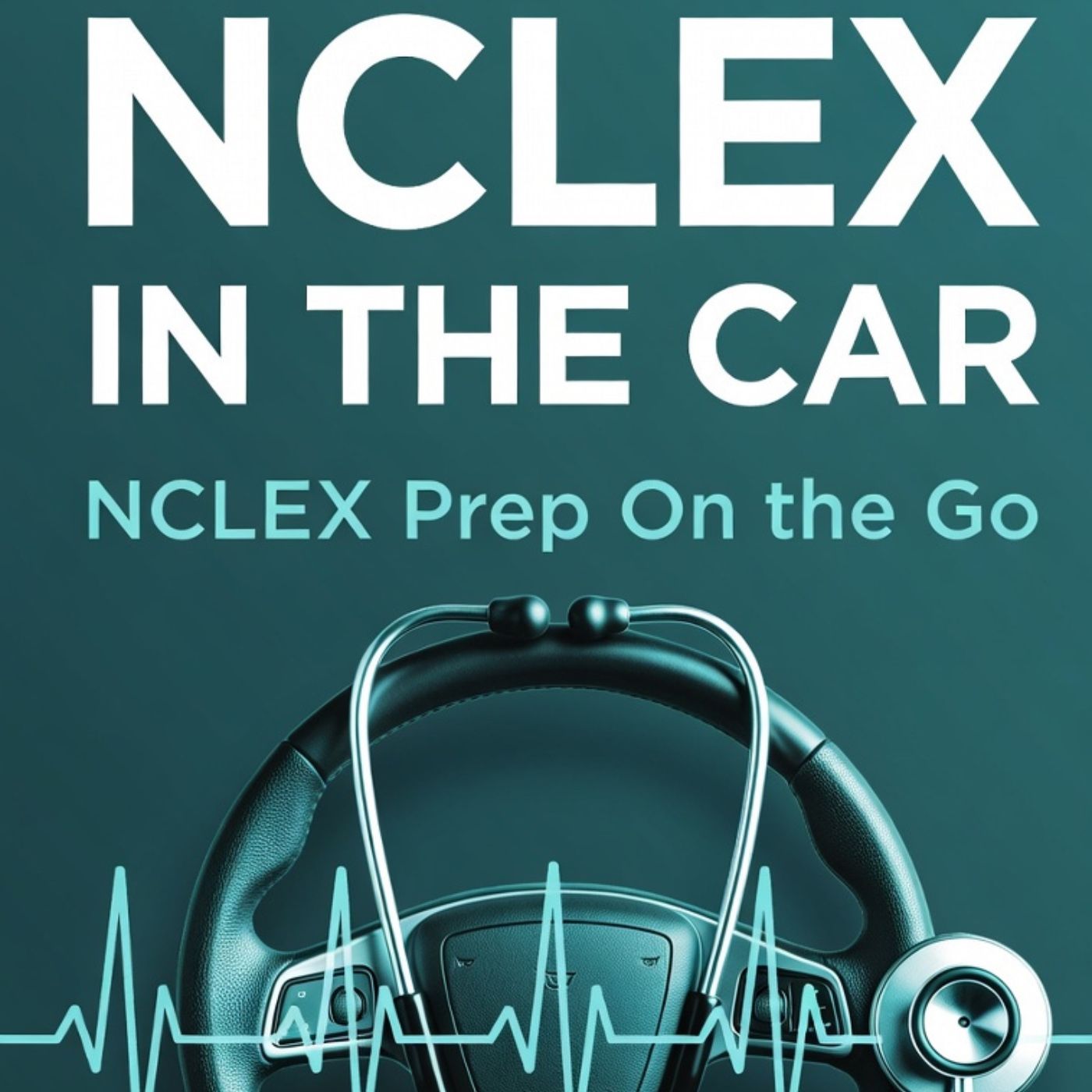
NCLEX in The Car
NCLEX in the Car is your essential on-the-go prep for the NCLEX-RN and NCLEX-PN. Transform your commute, workouts, or errands into powerful study sessions with focused reviews of key nursing concepts, prioritization strategies, pharmacology, lab values, SATA questions, case studies, test-taking tips, and real-world clinical scenarios from experienced nurses and recent passers. Whether you’re a nursing student juggling clinicals or a graduate racing the clock, we make NCLEX prep efficient, memorable, and less stressful — one mile at a time. Pass the NCLEX and launch your nursing career without...
Be sure to visit the podcast's website and support the creator: www.spreaker.com
Author
Circle Of Insight Productions
Category
Podcast website
Latest episode
Nov 22, 2026
Where to listen?
Podcasts in the app Replaio Radio Coming soonPodcasts are coming to the app soon. Install now and be the first to see a whole new take on podcasts
 Install for free
Android 10M+ downloads · 4.7+ rating
iOS soon
Episodes
Psychiatric Medication Emergencies: Serotonin Syndrome, NMS, and Lithium Toxicity 22.11.2026 4:07
Recognizing dangerous medication reactions is an essential nursing responsibility and a high-yield NCLEX topic. This episode examines the warning signs of serotonin syndrome, neuroleptic malignant syndrome, and lithium toxicity, emphasizing assessment findings, immediate nursing priorities, and patient safety. We also discuss extrapyramidal symptoms and important monitoring considerations for comm...
Therapeutic Communication: What Should the Nurse Say Next? — NCLEX Questions and Nursing Strategies 17.11.2026 2:45
Therapeutic communication is an essential nursing skill and a frequently tested concept within the NCLEX Psychosocial Integrity category. In this episode of NCLEX in the Car, we examine how nurses use active listening, empathy, reflection, clarification, and open-ended questions to support patients experiencing anxiety, grief, anger, and emotional distress. We also identify common communication mi...
Preeclampsia vs. Eclampsia: Warning Signs, Magnesium Sulfate, and Nursing Priorities — NCLEX Review 16.11.2026 2:51
Preeclampsia and eclampsia are potentially life-threatening pregnancy complications that require rapid recognition and appropriate nursing intervention. In this episode of NCLEX in the Car, we examine the differences between preeclampsia, preeclampsia with severe features, and eclampsia, including hypertension, neurological symptoms, seizures, and organ dysfunction. We also explore magnesium sulfa...
Potassium, Magnesium, and Calcium: Which Electrolyte Imbalance Is Most Dangerous? — NCLEX Nursing Priorities 15.11.2026 3:20
Electrolyte imbalances can produce life-threatening cardiac arrhythmias, seizures, muscle weakness, and respiratory complications, making them essential topics for NCLEX preparation. In this episode of NCLEX in the Car, we compare potassium, magnesium, and calcium abnormalities, explaining their effects on cardiac conduction, neuromuscular function, and patient stability. We examine the warning si...
NCLEX in the Car: Urinary Catheters and CAUTI Prevention — The Nursing Mistakes That Cause Infections 10.11.2026 2:18
Catheter-associated urinary tract infections, commonly called CAUTIs, are among the most important preventable healthcare-associated infections, making catheter care a high-yield topic for the NCLEX. In this episode of NCLEX in the Car, we examine appropriate indications for urinary catheterization, sterile insertion technique, maintenance of a closed drainage system, and the nursing practices tha...
NCLEX in the Car: C. Difficile vs. MRSA vs. Tuberculosis — Which Isolation Precautions Do You Use? 09.11.2026 2:44
Choosing the correct isolation precautions is essential for preventing healthcare-associated infections and answering NCLEX patient-safety questions. In this episode of NCLEX in the Car, we compare Clostridioides difficile, methicillin-resistant Staphylococcus aureus, and tuberculosis, explaining how each infection spreads and which protective measures nurses must implement. We examine contact pre...
NCLEX in the Car: Restraints and Patient Safety — When Can a Nurse Legally Use Them? 08.11.2026 3:10
Physical restraints present one of the most challenging patient-safety and ethical situations nurses encounter, particularly when patients are confused, agitated, or at risk of injury. In this episode of NCLEX in the Car, we examine when restraints may be appropriate, which alternatives should be considered first, and the legal and clinical responsibilities involved in their use. We explore provid...
NCLEX in the Car: Blood Transfusion Reactions — When to Stop the Transfusion Immediately 03.11.2026 3:25
Blood transfusion reactions can develop within minutes and range from mild allergic symptoms to life-threatening hemolysis, respiratory failure, and shock. In this episode of NCLEX in the Car, we examine the major types of transfusion reactions, their distinguishing symptoms, and the nursing interventions that must occur immediately when complications are suspected. Through realistic clinical scen...
NCLEX in the Car: Delegation Made Easy — What Can an RN, LPN/LVN, or UAP Actually Do? 02.11.2026 2:47
Delegation questions are among the most challenging on the NCLEX because they require nurses to distinguish between patient assessment, clinical judgment, and routine care. In this episode of NCLEX in the Car, we examine the responsibilities of registered nurses, licensed practical or vocational nurses, and unlicensed assistive personnel, with special attention to patient stability and scope of pr...
NCLEX in the Car: Hyponatremia vs. Hypernatremia — Confusion, Seizures, and Nursing Emergencies 01.11.2026 3:08
Sodium imbalances can quickly become life-threatening, particularly when neurological symptoms such as confusion, seizures, and altered consciousness develop. In this episode of NCLEX in the Car, we compare hyponatremia and hypernatremia, explain how each affects brain cells, and identify the nursing assessments and interventions that take priority. Through clinical examples and NCLEX-style questi...
NCLEX in the Car: Who Do You See First? Patient Prioritization and the Unstable Patient 27.10.2026 3:39
When four patients need attention simultaneously, how does a nurse determine who should be assessed first? This episode explores one of the most heavily emphasized skills on the NCLEX-RN examination: clinical prioritization. We examine airway, breathing, circulation, acute versus chronic conditions, unexpected findings, and the difference between stable and unstable patients. Through realistic nur...
NCLEX in the Car: Electrolyte Emergencies — Hyperkalemia, Hypokalemia, and Nursing Priorities 26.10.2026 3:51
Potassium imbalances can rapidly become life-threatening, making them essential topics for the NCLEX-RN examination. This episode examines hyperkalemia and hypokalemia, including their causes, clinical manifestations, electrocardiogram changes, and nursing interventions. Learn why elevated potassium can cause fatal cardiac arrhythmias, how potassium replacement must be administered safely, and whi...
Tube Feeding vs. TPN: Nursing Priorities, Aspiration Risk, and Refeeding Syndrome 25.10.2026 4:10
Review nursing responsibilities for enteral and parenteral nutrition, including tube placement verification, aspiration precautions, central-line infection prevention, blood glucose monitoring, and electrolyte assessment. Explain how to recognize complications and prioritize nursing interventions.
Fall Prevention and Patient Safety: Who Is Most at Risk? 19.10.2026 4:12
Patient falls are among the most common preventable safety events in healthcare, and understanding how to identify high-risk patients is essential for NCLEX success. In this episode of NCLEX in the Car, we examine the major risk factors for falls, including medications, impaired mobility, cognitive changes, and environmental hazards. Through realistic clinical scenarios, you’ll learn which nursing...
Breaking the Chain of Infection: Six Links Every Nurse Must Know 18.10.2026 3:17
Every infection follows a chain of events, and nurses play a critical role in breaking that chain before patients become ill. In this episode of NCLEX in the Car, we examine the six links in the chain of infection, including infectious agents, reservoirs, portals of exit, modes of transmission, portals of entry, and susceptible hosts. Through realistic clinical scenarios, we explore hand hygiene,...
Sterile vs. Clean Technique: The Difference That Could Save a Patient’s Life 12.10.2026 3:57
What is the difference between clean and sterile technique, and when does the NCLEX expect nurses to use each one? This episode explores medical asepsis, surgical asepsis, sterile fields, wound care, catheter insertion, and the most common mistakes that compromise infection prevention. Learn how to recognize contamination, choose the correct technique, and answer nursing exam questions with confid...
How the Body Digests Fat: What Every Nurse Should Know 11.10.2026 4:39
What happens when the body cannot properly digest dietary fat? This episode explores the roles of the liver, gallbladder, pancreas, and small intestine in fat digestion and absorption. Learn why patients with pancreatic insufficiency or impaired bile delivery may develop fatty stools and nutritional deficiencies. We connect digestive physiology with important nursing assessment and patient educati...
Informed Consent, Advance Directives, and Patient Rights: What NCLEX Wants You to Know 06.10.2026 3:20
Informed consent, advance directives, and patient rights are high-yield NCLEX concepts because they test whether you understand both nursing responsibilities and patient autonomy. In this episode, we break down who is responsible for obtaining informed consent, what the nurse should do when a patient has questions, and when consent may not be valid. We’ll also review living wills, healthcare proxi...
PPE for the NCLEX: What Goes On and Comes Off First? 04.10.2026 2:44
Putting on personal protective equipment is only half the challenge—the NCLEX may also ask you which item should come off first. In this episode, we simplify PPE sequencing by focusing on contamination rather than pure memorization. Learn the basic order for gowns, masks, eye protection, and gloves, plus an easy way to reason through exam questions.
Standard, Contact, Droplet, and Airborne Precautions: Know the Difference 01.10.2026 3:06
Infection-control questions on the NCLEX often require you to determine which precautions a patient needs and what protective equipment the nurse should use. In this episode, we break down standard, contact, droplet, and airborne precautions using simple rules and high-yield examples. By the end, you should be able to recognize the correct precaution quickly when you see an infection in an NCLEX q...
The High-Alert Drug Ledger: Toxicity, Antidotes, and Critical Nursing Implications 27.09.2026 5:11
Some medications leave very little room between an effective dose and a dangerous one. This study guide reviews four high-yield medication groups—digoxin, lithium, anticoagulants, and insulin—with an emphasis on toxicity, laboratory monitoring, antidotes, and immediate nursing priorities. Learn the warning signs that should make a nurse hold a medication, assess the patient, and notify the appropr...
"The First 24 Hours: Burn Resuscitation & NCLEX Priority Setting" 20.09.2026 6:41
The first 24 hours after a major burn are dominated by threats to airway, breathing, circulation, temperature regulation, and tissue perfusion. For the NCLEX, knowing the facts is not enough—you must recognize which finding requires action first. This guide focuses on inhalation injury, carbon-monoxide exposure, fluid resuscitation, burn depth, hypothermia, pain control, compartment syndrome, and...
Everybody's Anemic Until Proven Otherwise 13.09.2026 3:21
Your patient is tired, pale, and short of breath, and three different attendings have already blamed anxiety. They are all wrong. The blood is lying to you in six different ways at once, and if you cannot tell a sickle cell crisis from a clotting factory that has gone rogue, someone dies of something that had a checklist. This is the blood unit. Pay attention or don't, but somebody's oxygen delive...
Burns and Trauma: The First 24 Hours 06.09.2026 5:36
Prioritize airway injury, carbon-monoxide exposure, fluid resuscitation, burn-depth assessment, hypothermia prevention, pain management, compartment syndrome, and infection risk.
NCLEX GI Crises: Bleeding, Cirrhosis Complications & Post-Op Surgical Emergencies 23.08.2026 4:16
This high-yield NCLEX episode covers the critical gastrointestinal emergencies under Physiological Adaptation and Basic Care and Comfort. Master upper versus lower GI bleed management including NG tubes, octreotide, and blood products; cirrhosis complications such as ascites, varices, and hepatic encephalopathy; and the differences between post-op ileus and mechanical obstruction plus essential NG...
Similar podcasts








Listen to the NCLEX in The Car podcast in Replaio
Radio and podcasts in one app - free, with no sign-up. Install today and do not miss the launch
Replaio is not a podcast publisher; show names, artwork and audio belong to their authors and are distributed through public RSS feeds.