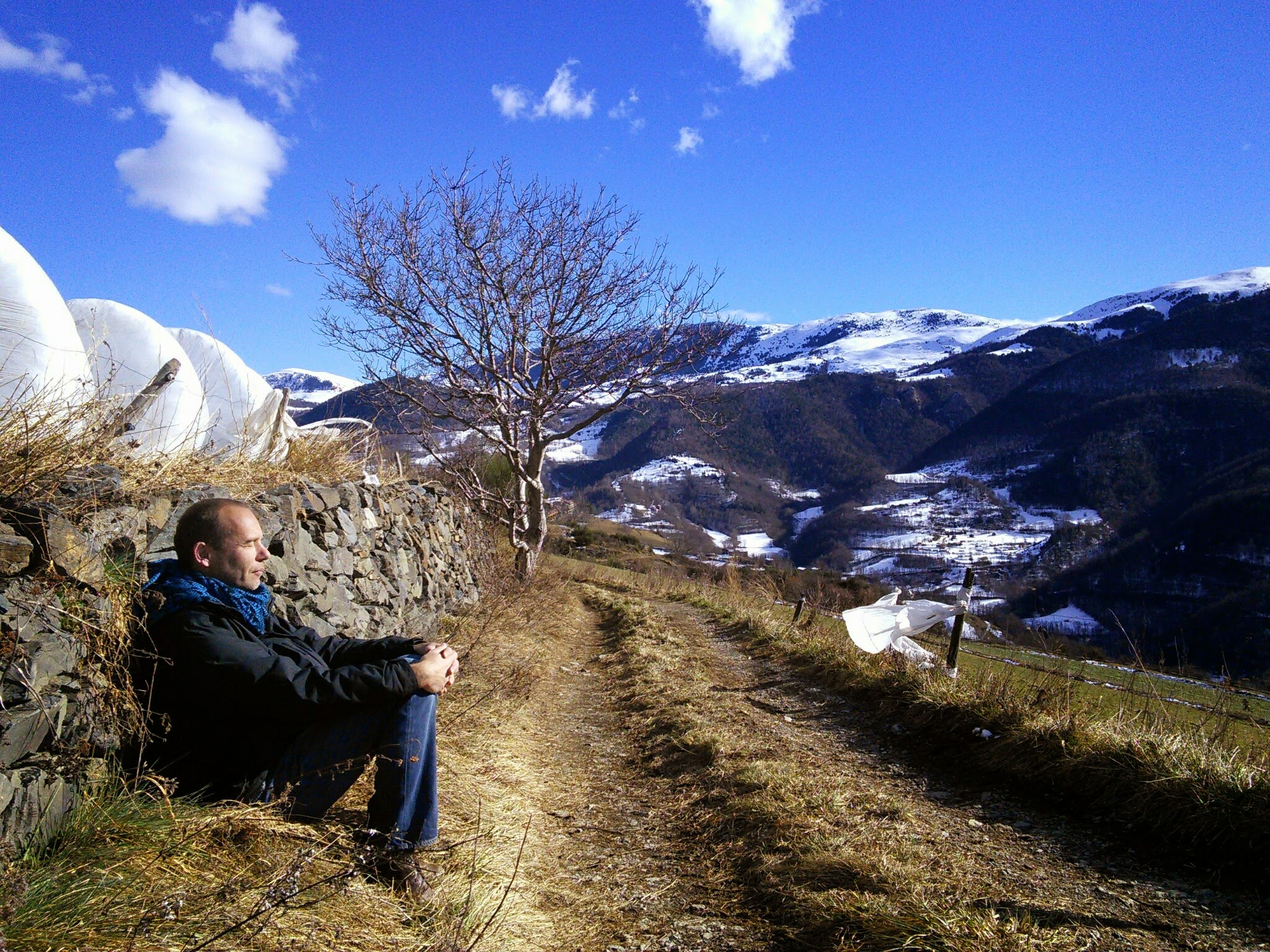
Stephan Pende Wormland
Natural Meditation podcast
Stephan Wormland, MA in clinical psychology and trained in Gestalt therapy. He has studied and practiced meditation in multiple Buddhist traditions for over 30 years and spent altogether 5 years in meditation retreats. Stephan was a monk in the Tibetan tradition for 11 years and teaches meditation in Buddhist centers in Europe.
Author
Stephan Pende Wormland
Category
Podcast website
Latest episode
Apr 2, 2026
Where to listen?
Podcasts in the app Replaio Radio Coming soonPodcasts are coming to the app soon. Install now and be the first to see a whole new take on podcasts
 Install for free
Android 5M+ downloads · 4.8 rating
iOS soon
Install for free
Android 5M+ downloads · 4.8 rating
iOS soon
Episodes
Transforming problems and increasing joy 2 27.09.2017 52:03
Tonglen practice, also known as “taking and sending,” reverses our usual logic of avoiding suffering and seeking pleasure. In tonglen practice, we visualize taking in the pain of others with every in-breath and sending out whatever will benefit them on the out-breath. In the process, we become liberated from age- old patterns of selfishness. We begin to feel love for both ourselves and others; we...
Transforming problems and increasing joy 1 25.09.2017 49:30
We base our lives on seeking happiness and avoiding suffering, but the best thing we can do for ourselves — and for the planet — is to turn this whole way of thinking upside down. If we’re ready to try staying present with our pain, one of the greatest supports we could ever find is to cultivate the warmth and simplicity of bodhichitta. The word bodhichitta has many translations, but probably the...
Already Free - Meditation on Selflessness 12.09.2017 1:28:17
We insist on being Someone, with a capital S. We get security from defining ourselves as worthless or worthy, superior or inferior. We waste precious time exaggerating or romanticizing or belittling ourselves with a complacent surety that yes, that’s who we are. We mistake the openness of our being - the inherent wonder and surprise of each moment - for a solid, irrefutable self. Because of this m...
Emptiness - Realizing Openness and Connectedness 29.08.2017 40:27
Phenomena do exist, but they don't exist in the manner in which they appear. They don't exist in a independent, absolute way. They are empty of inherent existence. The view of emptiness is not a negation of phenomena, it is a negation of a specific manner of existence. The object of negation must be understood.
Bodhicitta - The Essence of Awakening 25.08.2017 1:35:54
Chitta means “mind” and also “heart” or “attitude.” Bodhi means “awake,” “enlightened,” or “completely open.” Sometimes the completely open heart and mind of bodhichitta is called the soft spot, a place as vulnerable and tender as an open wound. It is equated, in part, with our ability to love. Even the cruelest people have this soft spot. Even the most vicious animals love their offspring. As Chö...
Stay close and do nothing 13.08.2017 48:04
“Stay close” is an invitation to become intimate with the energy of your emotions, to befriend them and to trust their natural evolution. “Do nothing” points to the practice of giving space, allowing and letting be as a valid response to a difficult moment. Wouldn’t it be wonderful if “Doing nothing” was more encouraged in our world and in our spiritual practices? Not as a resignation but as an ex...
Medicine Buddha 23.07.2017 1:15:54
Stephan Pende gives an introduction to Medicine Buddha and then leads a short practice. The practice connects you with your innate healing powers to bring healing to yourself and others.
Acceptance and rituals in daily practice 17.07.2017 35:55
Stephan Pende explains how to work with discomfort in your meditation practice. He also explores how to benefit from traditional rituals in your daily practice without them becoming a straight jacket.
Structure of a daily meditation practice 06.07.2017 1:19:43
It is important to have a structure for your daily meditation practice which is inspiring and wholesome. Stephan Pende helps you to find your own style in your practice. Our meditation practice can be effortless and joyful.
Establishing a daily practice 02.07.2017 35:55
Establishing a daily meditation practice might be the best gift you can give to yourself and the people you meet every day. Stephan Pende encourages you to honour your preferences and your discomfort in your daily sitting.
Honour your Rebel 21.06.2017 59:19
Jesus was a Rebel, Buddha was a Rebel. What about you? Stephan Pende invites you to rely on your inner Rebel to protect you from bullshit in the traditional approaches to meditation. How can you cultivate a wholesome meditation practice without putting on a straightjacket?
Finding a way to live - Tonglen 09.06.2017 45:13
This is a practice that you can do for a real-life situation you meet in daily life. Whenever you meet a situation that awakens your compassion or that is painful and difficult for you, you can stop for a moment, breathe in any suffering that you see, and breathe out a sense of relief. It is a simple and direct process. Unlike the formal practice, it does not involve any visualizations or steps. I...
The Diamond in your heart - tonglen with another person 08.06.2017 39:02
Tonglen, or the practice of sending and taking, reverses the process of hardening and shutting down by cultivating love and compassion. In tonglen practice, instead of running from pain and discomfort, we acknowledge them and own them fully. Instead of dwelling on our own problems, we put ourselves in other people's shoes and appreciate our shared humanity. Then the barriers start to dissolve, our...
Befriending difficult emotions - Tonglen with yourself 07.06.2017 32:29
Practicing Tonglen is a powerful way to connect with yourself and all of humanity. We all experience sadness and other "negative" emotions at different times, yet when we do, we often feel very alone in it. This practice reminds us that we're not alone when we are in pain. If we have the courage to break the habitual pattern of pushing away the pain, we can experience deep compassion for ourselves...
Standing meditation 06.06.2017 25:06
The standing posture makes it possible to incorporate meditation into our daily lives. It requires practice, but once we get used to it, we can do it almost anywhere — standing on line, at the crosswalk, and in elevators. With our physical body aligned in a particular way chi or prana - life-force energy - is encouraged to find its natural rhythm as it flows through the meridian system, gently dis...
Tonglen Meditation 2 - Connecting with Buddha Nature 03.06.2017 39:18
Stephan Pende gives a short introduction into the four steps of tonglen and then leads a meditation helping you to connect with your resource, your refuge. This is the first important step in the practice of tonglen.
Tonglen - Questions and answers 30.05.2017 20:16
Tonglen can be translated as "taking in and sending out." It is a Buddhist practice that can assist us in countering the human tendency to resist emotional discomfort. Instead of engaging in the habitual response of pushing away pain, the practice of tonglen invites us to bring the discomfort close. It is totally counter-intuitive, yet it is a profound way to cultivate inner peace and compassion.
Tonglen Meditation 1 29.05.2017 23:38
Tonglen reverses the usual logic of avoiding suffering and seeking pleasure and, in the process, we become liberated from a very ancient prison of selfishness. We begin to feel love both for ourselves and others and also we begin to take care of ourselves and others. It awakens our compassion and it also introduces us to a far larger view of reality. It introduces us to the unlimited spaciousness...
Tonglen - Transforming the Heart of Suffering 26.05.2017 57:24
The tonglen practice is a method for connecting with suffering - ours and that which is all around us - everywhere we go. It is a method for overcoming fear of suffering and for dissolving the tightness of our heart. Primarily it is a method for awakening the compassion that is inherent in all of us. -Pema Chodron
Already home - part 4 17.05.2017 25:59
After you have identified the natural face of innermost awareness through ascertaining it in yourself, once it is experienced as underneath you like your own bed, your experiential floor, no matter what sort of conceptuality occurs, whether thoughts spread out or withdraw and cease, it is not necessary to intentionally work at stopping those conceptions. Rather, when good or bad conceptions dawn,...
Already home - part 3 13.05.2017 42:40
To practice self-inquiry, we can quiet the mind and ask “Who am I?” or “Who is aware right now?” or “Who is listening?” Then we can look gently back into awareness to see what is true. Ultimately, we find that there is no way for the mind to answer the question - there is no “thing” to actually see or feel. The point is simply to look, then to let go into the no-thing-ness that is here. The questi...
Already home - part 2 10.05.2017 1:08:25
No matter what kind of consciousness we might consider, the clear light of innermost awareness pervades it. Ice, even when it is solid and very hard, does not pass beyond the nature of water. In the same way, no matter how gross, tough, or coarse conceptions might be, the place from which they dawn and the place into which they vanish when we no longer think them does not pass beyond innermost awa...
Already home - part 1 07.05.2017 1:21:00
The whole point of meditation or prayer or whatever we are trying to do is to discover the fundamental principle of human nature, to go into this deep nature, to touch our mind, the fundamental principle of totality, nonduality. The moment we reach this experience there is no room for heavy concepts, heavy emotions or sentimentality. Just be! At the moment of this experience, there are no concepts...
Widening the Circle of Love - part 4 05.05.2017 1:03:53
Our fundamental awareness, Vajrayana asserts, prior to all patterns of self-centered clinging, is essentially unconditioned, pure and undefiled. Our basic awareness is a limitless expanse of emptiness and cognizance, like boundless space pervaded by sunlight, already endowed with all-encompassing wisdom and compassion.
Widening the Circle of Love - part 3 04.05.2017 59:52
The traditional image of equanimity is a banquet to which everyone is invited. Training in equanimity is learning to open the door to all, welcoming all beings, inviting life to come visit. Of course, as certain guests arrive, we’ll feel fear and aversion. We allow ourselves to open the door just a crack if that’s all that we can presently do, and we allow ourselves to shut the door when necessary...
Similar podcasts








Listen to the Natural Meditation podcast podcast in Replaio
Radio and podcasts in one app - free, with no sign-up. Install today and do not miss the launch
Replaio is not a podcast publisher; show names, artwork and audio belong to their authors and are distributed through public RSS feeds.