Christopher Michael Patton
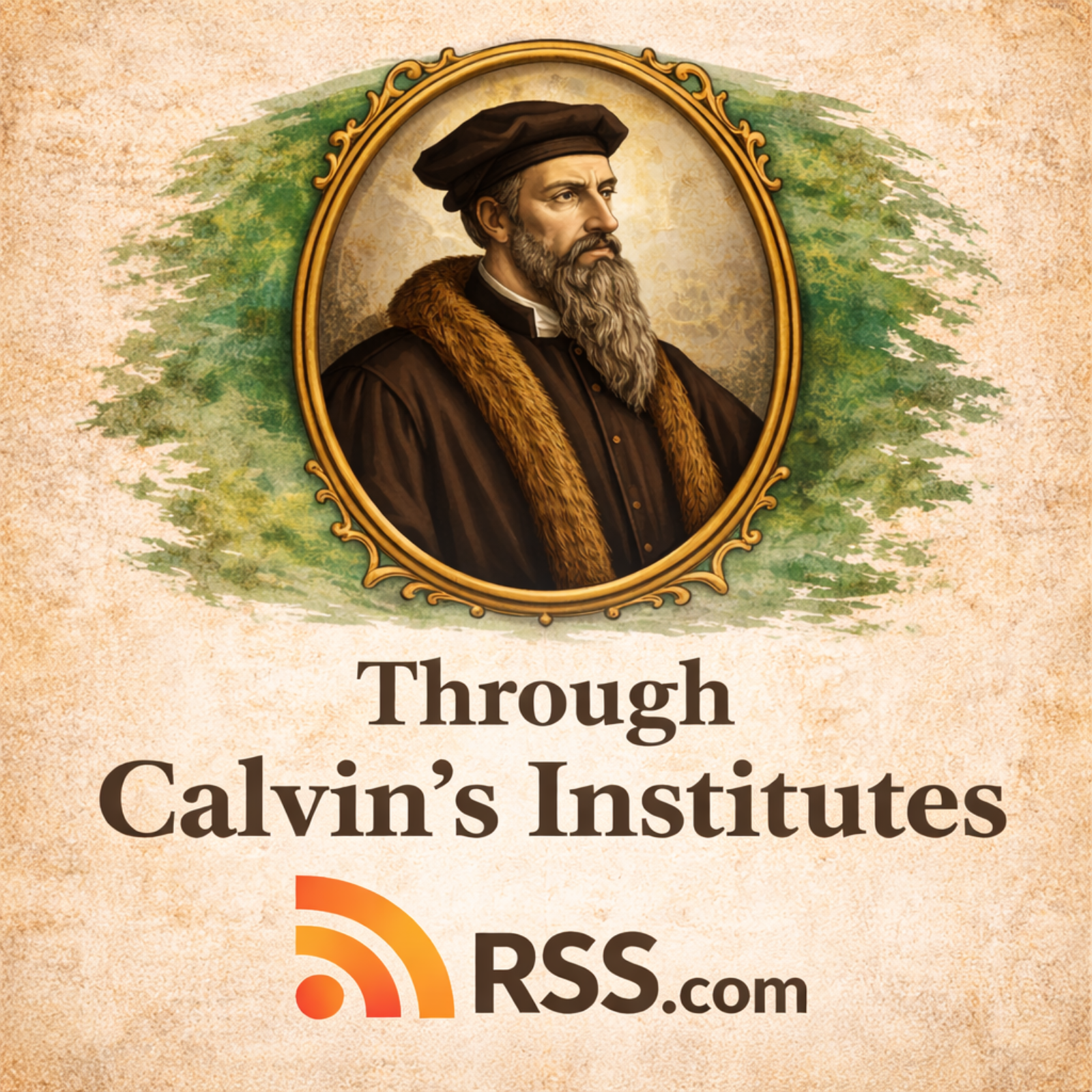
John Calvin's Institutes in a Year
Ever stared at John Calvin’s Institutes of the Christian Religion on your shelf and thought, “One day I’ll finally read that… but where would I even start?” This podcast is for that moment. Calvin’s Institutes in a Year is a guided, day-by-day journey through one of the most influential works in Christian theology. Together, we read through the entire Institutes over the course of a full year—one manageable section at a time—so that a book many admire from a distance finally becomes something you actually finish. Each daily episode is short, focused, and intentional. We keep the pace steady, t...
Be sure to visit the podcast's website and support the creator: rss.com
Where to listen?
Podcasts in the app Replaio Radio Coming soonPodcasts are coming to the app soon. Install now and be the first to see a whole new take on podcasts
 Install for free
Android almost 10M downloads · 4.8 rating
iOS soon
Install for free
Android almost 10M downloads · 4.8 rating
iOS soon
Episodes
Calvin's Institutes: March 6 06.03.2026 14:41
The Law can feel like a list of commands until you realize what Calvin is pressing on us here: God gave the Law to uncover who he is, expose who we are, and drive us—empty-handed—toward mercy. The Law teaches us that God is Father and Master, that obedience is not optional, and that righteousness is not something we invent; it is what God commands. But then the Law turns its light inward and shows...
Calvin's Institutes: March 5 05.03.2026 13:05
The Law is not the enemy of grace—it is the instrument that drives us to it, restrains us from ruin, and then trains us in holiness. In this episode, we continue John Calvin’s Institutes of the Christian Religion , Book 2, Chapter 7 (Sections 11–17), where he explains the Law as schoolmaster leading sinners to Christ (Gal. 3:24), as a bridle restraining corruption (1 Tim. 1:9–10), and as the endur...
Calvin's Institutes: March 4 04.03.2026 11:59
A law that commands what we cannot perform and promises what we cannot secure—why would God speak that way? In this episode, we continue through John Calvin’s Institutes of the Christian Religion , Book 2, Chapter 7, Sections 6–10, where he confronts the claim that divine commands prove human ability. Calvin argues that the precepts of Scripture do not measure our strength; they expose our weaknes...
Calvin's Institutes: March 3 03.03.2026 11:48
If the will is bound, are we puppets—or still responsible? In this reading from Institutes of the Christian Religion , Book 2, Chapter 5, Sections 1–5, John Calvin takes up the strongest objections raised against the doctrine of the bondage of the will. He answers the charge that necessity destroys guilt by insisting that sin remains voluntary even when the will is enslaved by corruption. He disma...
Through the Church Fathers: March 2 02.03.2026 7:36
When we speak about God’s providence, do we really mean that nothing—not even the human will—escapes his hand? In this reading from Institutes of the Christian Religion , Book 1, Chapter 18, Sections 5–8, John Calvin presses the question further than most of us are comfortable going. He argues that even Satan’s activity, human decisions, and the seemingly neutral choices of daily life unfold under...
Calvin's Institutes: March 1 01.03.2026 10:22
Human sin is voluntary, yet never autonomous—and Calvin refuses to let that tension be softened or resolved away. In Book 2, Chapter 4, Sections 1–4, he confronts the uncomfortable reality that the human will, enslaved to sin, does not merely drift into evil but is actively governed under judgment, even while remaining morally responsible. Drawing on Scripture and Augustine, Calvin carefully disti...
Calvin's Institues: February 28 28.02.2026 12:31
In these sections, the argument presses directly into the heart of the controversy over human will and divine grace, showing that Scripture consistently locates the beginning, continuation, and completion of every good work in God alone. By tracing the testimony of Jeremiah, Ezekiel, the Psalms, the Gospels, and the Apostle Paul, the case is made that a right will does not arise from human capacit...
Calvin's Institues: February 28 28.02.2026 11:32
Grace does not merely assist the human will once it has begun to move—it creates the movement itself, governs it, and preserves it to the end. In Sections 11–14, Calvin follows Augustine closely to deny that grace is a reward for human effort or a supplement to an already-willing heart, insisting instead that grace precedes, transforms, strengthens, and sustains the will entirely by God’s free mer...
Calvin's Institutes: February 26 26.02.2026 11:06
Here Calvin presses to the breaking point the question of human freedom, insisting that the will is not merely weak but enslaved, acting voluntarily yet necessarily toward evil until God intervenes. In Sections 5–7, he argues that conversion is not a cooperative project between grace and the will, but a divine re-creation in which God both breaks the bondage of sin and produces a new will altogeth...
Calvin's Institutes: February 25 25.02.2026 14:24
The opening movements of this chapter press the reader into an uncomfortable but necessary clarity: Scripture leaves no corner of the human soul untouched by corruption, neither intellect nor will, neither desire nor judgment. Calvin walks carefully but relentlessly through the biblical witness, showing that what Scripture calls “flesh” is not merely bodily appetite but the whole unregenerate pers...
Calvin's Institutes: February 24 24.02.2026 14:58
In today’s reading from Institutes of the Christian Religion , John Calvin pushes his argument about human inability to its breaking point. He rejects the idea that sin is merely ignorance or that the will retains even a small native power to move toward God. Human reason, Calvin argues, is not simply weak but fundamentally disordered—capable of flashes of moral insight yet unable to sustain obedi...
Calvin's Institutes: February 23 23.02.2026 11:51
Human reason longs to know God, to trust His favor, and to live rightly—but Calvin refuses to let us flatter ourselves about how far that reason can truly go. In these sections, he presses the reader into humility by showing that even our brightest insights into God remain flashes in the dark unless the Spirit Himself gives sight. Scripture, conscience, moral instinct, even Christ preached openly—...
Calvin's Institutes: February 22 22.02.2026 12:24
Human reason is not erased by the Fall, but neither is it trustworthy ground for hope, and Calvin presses us to hold both truths without flinching. In these sections, he shows how the human mind still shines in earthly matters—law, art, science, governance—yet collapses when it tries to rise toward God apart from grace. Whatever clarity remains is a gift, unevenly distributed, intentionally humbli...
Calvin's Institues: February 21 21.02.2026 11:55
Self-knowledge can either drive a person inward toward pride or outward toward God, and today’s readings press that tension to its breaking point. Calvin insists that the deepest knowledge of self comes not from measuring what remains after the Fall, but from being stripped bare until nothing is left but dependence on grace, exposing how even our best instincts toward truth falter into vanity with...
Calvin's Institutes: February 20 20.02.2026 9:40
In this reading from Calvin’s Institutes , Book 2, Chapter 2, Sections 5–8, Calvin turns from philosophers to theologians—and finds that many Christian writers fared little better when speaking about free will. Surveying the Schoolmen and earlier Fathers, Calvin shows how careful distinctions about grace and freedom often collapsed into confusion, ambiguity, or misplaced confidence in human abilit...
Calvin's Institutes: February 19 19.02.2026 14:23
What happens to human freedom after the Fall? In today’s reading from Calvin’s Institutes , Book 2, Chapter 2, Calvin presses directly into one of the most uncomfortable questions in Christian theology: whether anything resembling free will truly remains once sin has done its work. Moving carefully between sloth and pride, Calvin critiques both pagan philosophers and well-meaning Christian theolog...
Calvin's Institutes: February 18 18.02.2026 14:15
In these closing sections, Calvin presses the doctrine of original sin to its deepest and most uncomfortable conclusion: corruption does not merely touch the surface of human desire but penetrates the very center of the soul—mind, heart, and will alike. Sin has seized not only our appetites but the “citadel” of reason itself, blinding understanding and twisting judgment so thoroughly that nothing...
Calvin's Institutes: February 17 17.02.2026 12:11
In today’s reading, Calvin presses us into a kind of self-knowledge that is painful but necessary, dismantling every form of pride so that grace alone can stand. He insists that to know ourselves rightly is not to flatter our dignity but to confront our ruin—measuring ourselves not by human judgment but by divine justice, where all confidence in our own powers collapses. From there, he traces the...
Calvin's Institutes: February 16 16.02.2026 9:08
Today we reach the sobering and fitting conclusion of the First Book of Calvin’s Institutes , where divine providence is defended against its most serious objections—not by speculation, but by Scripture itself. Calvin confronts the claim that God must either have contradictory wills or be the author of sin, insisting that such objections are ultimately aimed at the Holy Spirit, who openly declares...
Calvin's Institutes: February 15 15.02.2026 9:51
Today’s reading brings us to one of the most demanding—and clarifying—chapters of Calvin’s Institutes , where the doctrine of providence is pressed to its furthest edge and refuses to retreat. In Book 1, Chapter 18, Sections 1–2, Calvin confronts the uneasy question of how God can sovereignly govern even Satan and the wicked without becoming the author of sin, rejecting the comforting but unbiblic...
Calvin's Institutes: February 14 14.02.2026 7:18
Life without providence is a life haunted by fear—but life under God’s providence is marked by unshakable peace. In Book 1, Chapter 17, Sections 10–14, Calvin contrasts the misery of imagining a world ruled by chance with the deep consolation of knowing that every danger, delay, and deliverance is held within the wise and steady hand of God (Psalm 91:2–6; Psalm 31:15). He shows that Scripture’s la...
Calvin's Institutes: February 13 13.02.2026 8:37
God’s providence does not excuse sin, erase responsibility, or render human action meaningless—it orders all things without becoming the author of evil. In Book 1, Chapter 17, Sections 5–9, Calvin presses this balance with pastoral force, insisting that while God sovereignly governs even wicked acts for righteous ends, guilt remains wholly with the sinner, not with God (Genesis 50:20). Properly un...
Calvin's Institutes: February 12 12.02.2026 10:16
God’s providence does not cancel human responsibility—it grounds it. In the opening sections of Book 1, Chapter 17, Calvin explains that Scripture teaches divine providence not to satisfy curiosity but to form wisdom, humility, and trust. God governs past and future, working through means, without means, and even against means, yet always with special care for humanity and especially for the Churc...
Calvin's Institutes: February 11 11.02.2026 7:23
Providence does not mean blind fate or an impersonal chain of causes, and Calvin will not allow it to be reduced to either. In these closing sections of Chapter 16, he carefully dismantles the charge that Christian providence is merely Stoic fatalism, insisting instead that God actively governs all things by wise decree, not by necessity embedded in nature itself. Drawing on Basil and Augustine, C...
Calvin's Institutes: February 10 10.02.2026 12:27
Providence is not a passive awareness of events after the fact, nor a vague divine impulse that leaves the world to run on its own—it is God actively governing all things, directing every moment, judgment, blessing, storm, success, and sorrow according to his wise and deliberate counsel. In these sections of Calvin’s Institutes , we are pressed to abandon the comfortable fiction of chance and to c...
Similar podcasts






Listen to the John Calvin's Institutes in a Year podcast in Replaio
Radio and podcasts in one app - free, with no sign-up. Install today and do not miss the launch
Replaio is not a podcast publisher; show names, artwork and audio belong to their authors and are distributed through public RSS feeds.