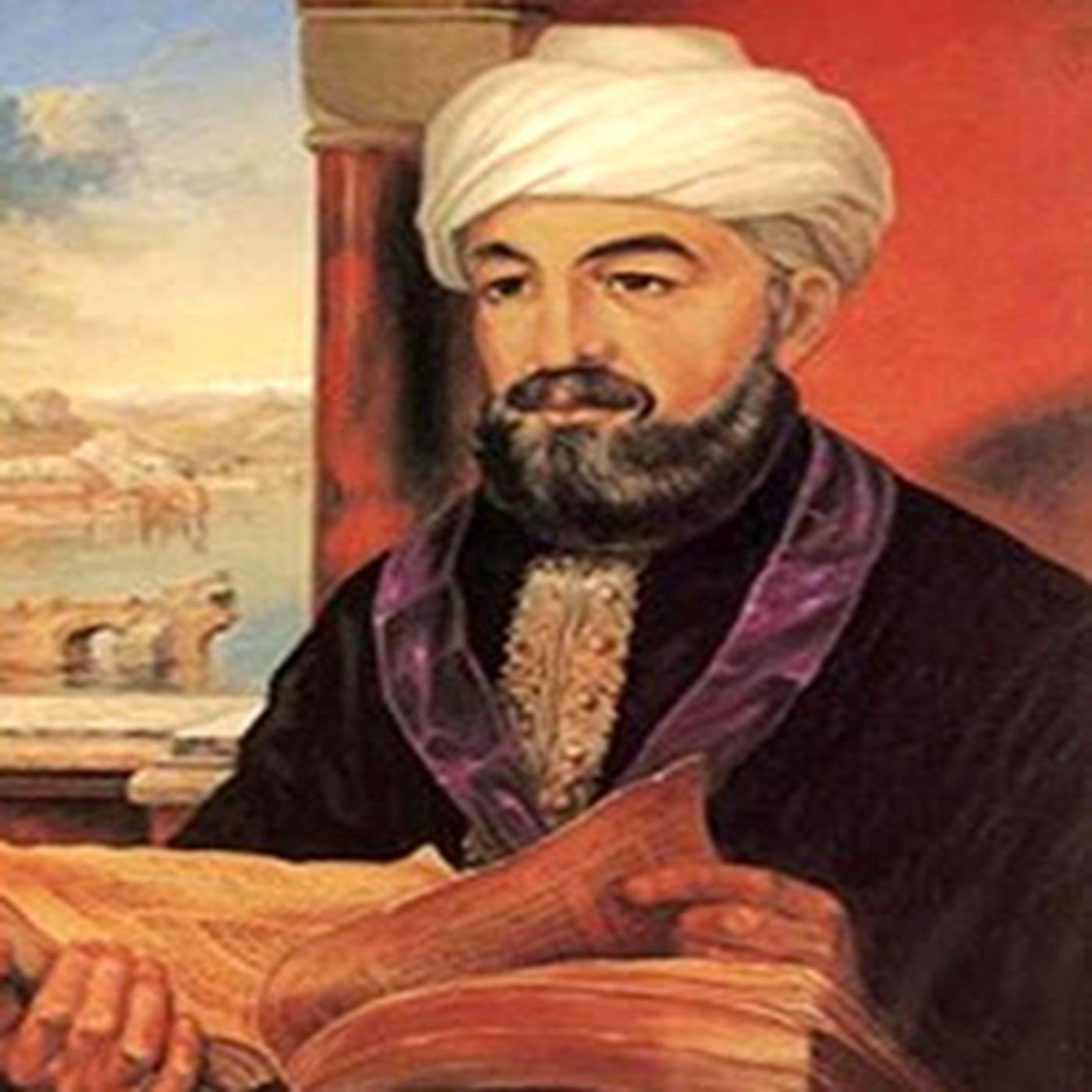
SAUL J WEINREB
Guiding the Perplexed
Join us as we study the monumental work of Maimonides, The Guide of the Perplexed. Let Maimonides speak to us in a language that we can understand, about issues that continue to perplex us in the 21st century. Learn how to approach those difficult times when what we believe seems to conflict with what the Holy writings say.
Be sure to visit the podcast's website and support the creator: www.podserve.fm
Where to listen?
Podcasts in the app Replaio Radio Coming soonPodcasts are coming to the app soon. Install now and be the first to see a whole new take on podcasts
 Install for free
Android almost 10M downloads · 4.8 rating
iOS soon
Install for free
Android almost 10M downloads · 4.8 rating
iOS soon
Episodes
Guide For the Perplexed - Lecture 114: Part 3 Chapters 27 & 28 09.07.2026 52:37
In 27, Rambam describes that the purpose of the Torah's commandments is first to perfect our society so that our needs are taken care of. This allows us to achieve our primary purpose which is spiritual and intellectual perfection. In 28 Rambam describes how every teaching of the Torah teaches us one of three things; a true idea, a prohibition against actions that cause strife, or a commandment th...
Guide For the Perplexed - Lecture 113: Part 3 Chapter 26 06.07.2026 53:55
Rambam describes that just as every part of creation has a purpose and is important, so to all the Mitzvot (God's commandments) each has a logical and useful purpose.
Guide For the Perplexed - Lecture 112: Part 3 Chapter 25 02.07.2026 52:06
Rambam describes the meaning of the goodness of God and His creation. Everything He created is for a meaningful purpose, as an end in itself. Nothing is just a whim or fancy.
Guide For the Perplexed - Lecture 111: Part 3 Chapter 24b 29.06.2026 51:43
We complete Rambam's discussion of the meaning of "tests" with our continued discussion of the meaning of the story of the binding of Isaac. We also read excerpts from Rambam's "Letter on Apostasy" and the limits of what the love and fear of God calls upon us to sacrifice.
Guide For the Perplexed - Lecture 110: Part 3 Chapter 24a 25.06.2026 56:45
Rambam explains what the Torah means when it says that God is "testing" us. We begin to explain the extremely difficult chapter of the Akeidat Yizchak (The Binding of Isaac) according to Maimonidean thought.
Guide For the Perplexed - Lecture 109: Part 3 Chapter 23b 22.06.2026 53:51
Rambam describes how knowledge of God's truth leads to love, and thru love one achieves true happiness no matter what he or she must endure.
Guide For the Perplexed - Lecture 108: Part 3 Chapter 23a 18.06.2026 1:04:08
Rambam begins his explanation of the Book of Job with his understanding of the debate between Job (Iyov) and the first three friends Eliphaz, Bildad and Tzofar.
Guide For the Perplexed - Lecture 107: Part 3 Chapter 22b 15.06.2026 51:18
Rambam describes the nature of the Satan, what the concept means in the context of the story of Job and in general.
Guide For the Perplexed - Lecture 106: Part 3 Chapter 22a 11.06.2026 1:05:38
Rambam begins his analysis of the Book of Job and the lessons to learn regarding God's providence.
Guide For the Perplexed - Lecture 105: Part 3 Chapters 20 & 21 08.06.2026 1:01:27
Rambam describes in chapter 20 the difference between God's "knowledge" and ours makes it impossible to ask questions about God's knowledge of future events and how that might conflict with free choice. In 21 he further explains this concept with a comparison between the knowledge a craftsman has of his craft and the knowledge of the user of the device he crafted.
Guide For the Perplexed - Lecture 104: Part 3 Chapters 19 & 20a 04.06.2026 51:31
In 19, Rambam describes why people conclude that God doesn't know or care what we do; because we have the arrogant idea that when things don't conform to the way we think they should be, we assume that they are not right. In 20, we begin Rambam's discussion of how God's "knowledge" is not the same as our human "knowledge".
Guide For the Perplexed - Lecture 103: Part 3 Chapters 18 and 19a 01.06.2026 53:53
Rambam describes in Chapter 18 how God's providence is commensurate with a person's intellect and how one chooses to live. Chapter 19 begins with the reason so many people conclude that God doesn't know or care what happens in this world.
Guide For the Perplexed - Lecture 102: Part 3 Chapter 17c 28.05.2026 50:02
Rambam describes his opinion regarding God's providence. Providence is for humans only as it works through our intellect and only humans have intellect.
Guide For the Perplexed - Lecture 101: Part 3 Chapter 17b 25.05.2026 56:41
Rambam describes the fourth and fifth possible understandings of how God's providence works, the fifth one being the simple meaning of the Torah. He reviews the flaws of all the possibilities, and leads us toward his own understanding of God's providence, which he will describe next.
Guide For the Perplexed - Lecture 100: Part 3 Chapter 17a 21.05.2026 50:49
Rambam describes various opinions regarding God's providence. In this lecture we cover the first three approaches.
Guide For the Perplexed - Lecture 99: Part 3 Chapter 16 18.05.2026
Rambam begins his discussion of the difficult question of theodicy by describing what led many philosophers to conclude that God doesn't know what is happening in His universe.
Guide For the Perplexed - Lecture 98: Part 3 Chapters 14 & 15 14.05.2026 59:57
In chapter 14, Rambam describes why it is unreasonable to think that God created the world for the sake of human beings, as we are but a tiny speck within the vast universe. He also explains that the sages were only competent in scientific matters according to their time. In 15 Rambam describes why God cannot do the impossible.
Guide For the Perplexed - Lecture 97: Part 3 Chapter 13b 11.05.2026 51:18
Rambam discusses the idea that every creation was created for its' own significance, not for the purpose of serving something else. All of creation, every creature, every being, every moment, is significant for itself. The question of the purpose or end of creation is not a proper question.
Guide For the Perplexed - Lecture 96: Part 3 Chapters 12b & 13a 07.05.2026 1:00:47
In 12b Rambam describes how the quest for unnecessary luxuries is often the cause of our suffering the loss of even necessities. In 13b we learn of the futility in searching for the ultimate purpose of our existence. Rambam emphasizes the special significance of every created being and object, each of which is important, human beings are not the purpose of the universe.
Guide For the Perplexed - Lecture 95: Part 3 Chapter 12a 04.05.2026 31:02
Rambam describes how most evil in the world does not come from God but from our own selfishness.
Guide For the Perplexed - Lecture 94: Part 3 Chapters 10 & 11 30.04.2026 31:02
Rambam describes how evil is the absence of good, and that everything God does is good.
Guide For the Perplexed - Lecture 93: Part 3 Chapters 8b & 9 27.04.2026 50:50
Rambam describes in chapter 8 how the human form is defined by its intelligence and ability to understand and comprehend, while the matter of which we are made brings us base and vulgar physical desires. It is our job to perfect our form and stay away from our physical failings. He also discusses the nature of holiness. In Chapter 9 Rambam teaches us about the cloudy dark veil of matter that divid...
Guide For the Perplexed - Lecture 92: Part 3 Chapters 6,7 & 8a 23.04.2026 51:44
In 6 and 7, Rambam continues to explain Ezekiel's vision of the chariot. in 8a, Rambam begins a discussion of form and matter, and how the destructive forces all come from matter.
Guide For the Perplexed - Lecture 91: Part 3 Chapters 2b - 5 20.04.2026 56:18
Rambam continues his commentary on Ezekiel's vision of the chariot. Rambam explains the meaning using Aristotelian Physics.
Guide For the Perplexed - Lecture 90: Part 3 Chapters 1 and 2a 16.04.2026 57:27
Rambam begins his commentary of Ezekiel's vision of the chariot.
Similar podcasts







Listen to the Guiding the Perplexed podcast in Replaio
Radio and podcasts in one app - free, with no sign-up. Install today and do not miss the launch
Replaio is not a podcast publisher; show names, artwork and audio belong to their authors and are distributed through public RSS feeds.