QuickAndDirtyTips.com
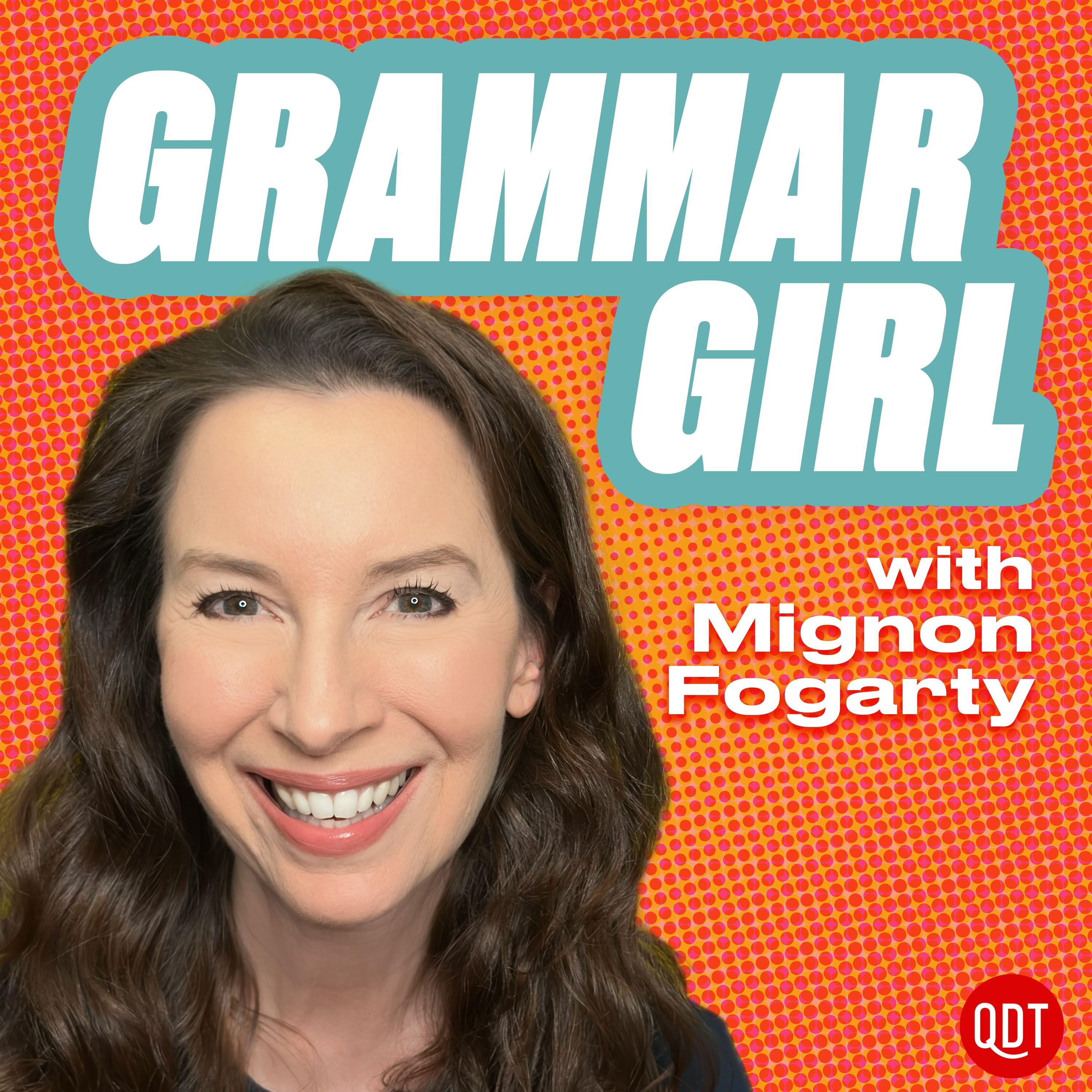
Grammar Girl: For Writers and Language Lovers.
Five-time winner of Best Education Podcast in the Podcast Awards. Grammar Girl provides short, friendly tips to improve your writing and feed your love of the English language. Whether English is your first language or your second language, these grammar, punctuation, style, and business tips will make you a better and more successful writer. Grammar Girl is a Quick and Dirty Tips podcast. Hosted on Acast. See acast.com/privacy for more information.
Author
QuickAndDirtyTips.com
Category
Podcast website
Latest episode
Jul 9, 2026
Where to listen?
Podcasts in the app Replaio Radio Coming soonPodcasts are coming to the app soon. Install now and be the first to see a whole new take on podcasts
 Install for free
Android 5M+ downloads · 4.8 rating
iOS soon
Install for free
Android 5M+ downloads · 4.8 rating
iOS soon
Episodes
Saving Canadian lexicography, with John Chew 09.07.2026 37:15
1201. In this bonus discussion from January, we look at why Canada has been without a current homegrown dictionary for twenty years and how John Chew is leading the charge to fix it. We look at how John got the job and the unique challenges of funding a dictionary in a bilingual country. John also shares how his aphantasia — the inability to visualize imagery — actually makes him a better data org...
Snowclones: fill-in-the-blank phrases we can’t stop remixing. Plus, is it 'RBIs' or 'RBI'? 07.07.2026 9:42
1200. This week, we look at snowclones like “X is the new Y,” including where the name came from and why we find them so satisfying. Then, we look at how to make abbreviations like “RBI” plural, including questions about apostrophes, single letters, and periods. The snowclones segment was written by Karen Lunde. Find her on igofirst.org . 🔗 Join the Grammar Girl Patreon. 🔗 Share your...
Building a beloved resource for word lovers, with Doug Harper 02.07.2026 27:10
1199. In this bonus episode first released to Grammarpaloozians in January, we look at what it means to turn a "channeled obsession" into a resource used by millions of language fans. Doug Harper shares how he built Etymonline as a solo act, fueled by late-night shifts and "ink in his blood." We also look at the "Nimrod" mystery — from a biblical king to a Bugs Bunny insult — and the obsessive sid...
How to answer the question 'What's your book about?' 30.06.2026 10:24
1198. This week, we look at how to answer the question every author dreads: "So, what's your book about?" with workplace communications coach Joel Schwartzberg. We look at the difference between describing a book and selling it, how nonfiction authors can craft point-driven responses, and how fiction writers can distill their stories into a compelling pitch. Joel Schwartzberg is a workplace commun...
Fossil words, eponyms, and a miscellany of weird facts, with Jess Zafarris and Shannon Miller 25.06.2026 38:07
1197. This week, guest host Valerie Fridland steps in for Mignon and talks to Jess Zafarris and Shannon Miller about their new book, "A Miscellany of Weird and Wonderful Facts for Curious Humans." They look at fossil words, eponyms, and the surprising origin of the word "electric." They also look at mountweazels, the medieval roots of modern romance, and why emoji has nothing to do with emotion.&n...
Why 'love' means 'zero' in tennis 23.06.2026 8:15
1196. This week, we look at why "love" means "zero" in tennis, from egg-shaped zeros to playing for the love of the game, and how the sport's quirky 15-30-40 scoring system came to be. 🔗 Join the Grammar Girl Patreon. 🔗 Share your familect recording in Speakpipe or by leaving a voicemail at 833-214-GIRL (833-214-4475) 🔗 Watch my LinkedIn Learning writ...
Tomi Adeyemi: The writing life 20.06.2026 42:15
874. With her book "Children of Blood and Bone" spending 120 weeks on the New York Times bestseller list, Tomi Adeyemi knows what it takes to write a great book. Listen in on my conversation with this charming writer about her thoughts on the writing life and the craft of storytelling. Encore Episode: This episode originally aired in May of 2022. We also discuss a writing masterclass Tomi was offe...
The bouba-kiki effect in baby chicks, with Dr. Maria Loconsole 18.06.2026 17:08
1195. This week, we talk to Dr. Maria Loconsole from the University of Padua about her research into the bouba-kiki effect, the near-universal tendency to associate round shapes with "bouba" sounds and spiky shapes with "kiki" sounds. We look at what her experiments with newly hatched chicks reveal about whether this association predates language entirely. " Matching sounds to shapes: Eviden...
The secret code of weather forecasts 16.06.2026 9:35
1194. This week, we look at weather forecast terminology, including why "mostly sunny" and "partly cloudy" aren't the same thing, what "oktas" are, and how terms like "breezy," "scattered," and "likely" are officially standardized by the National Weather Service — even if your favorite TV meteorologists adds their own spin. 🔗 Join the Grammar Girl Patreon. 🔗 Share your familect recor...
Randall Munroe of xkcd: Language chat and weird bee laws. 13.06.2026 36:06
898. Randall Munroe joined me back in October 2022 to talk about his language-themed xkcd cartoons, his simple-language project Up Goer V, his biggest pet peeve, his favorite words, and his new book "What If? 2." But I have to confess that my favorite part was his tidbits about the bee laws. Encore Episode: This episode originally aired in October of 2022. This summer, I'm bringing back a few fan...
What it really takes to translate Shakespeare, with Daniel Hahn 11.06.2026 34:44
1193. Today, we talk to award-winning translator Daniel Hahn, author of "If This Be Magic," about what it really takes to translate Shakespeare, starting with the philosophical paradox at the heart of all translation: changing every single word while changing nothing at all. We look at the special challenges Shakespeare poses, including preserving rhyme and meter in languages that work completely...
How to get started as a freelance writer 09.06.2026 14:59
1192. How do you get your first writing jobs when you don’t have much experience? Grammar Girl shares stories from her own early career and offers advice on finding a niche, spotting opportunities, making industry connections, timing your outreach, and building a reputation as a reliable hire. Expert advice for navigating life after graduation — for new grads and the people cheering them on....
The case for language clarity, with Iva Cheung 04.06.2026 28:57
1191. This week, we talk to Iva Cheung, a plain language expert and editor who has helped shape Canada's accessibility standards. We look at what plain language actually means (it's more than just short words and simple sentences) and why it matters for healthcare, legal rights, and everyday communication. Then we explore cognitive load theory, the expertise reversal effect, and why user testing i...
Does Yoda speak 'real' English? Is it 'a real trouper' or 'a real trooper'? 02.06.2026 13:06
1190. This week, we look at what makes Yoda's English special, and we look at the difference between “trooper” and “trouper,” including whether singular “troop” may be short for “trooper” and why “a real trouper” is the traditional spelling. 🔗 Join the Grammar Girl Patreon. 🔗 Share your familect recording in Speakpipe or by leaving a voicemail at 833-214-GIRL (833-...
Everyone has a story to tell, and why your memoir matters, with Grant Faulkner 28.05.2026 26:03
1189. This week, we talk to Grant Faulkner, co-founder of Memoir Nation and former executive director of NaNoWriMo, about what makes writing a memoir different from writing fiction. We look at why memory is more story than recording, how trauma fragments the way people use language and narrative structure, and why you don't need an extraordinary life to write a compelling memoir. Grant also explai...
How ‘bee’s knees’ became high praise, and why do recipes sound so bossy? 26.05.2026 16:47
1188. This week, we look at how “the bee's knees” went from meaning something tiny to the cheeriest slang of the 1920s — and why it outlasted the cat's pajamas and the clam's overshoes. Then, we look at why recipes boss you around with phrases like “fold in cheese” and how cookbook language evolved from chatty medieval notes into clipped, no-nonsense commands. The "recipe" segment was by Karen Lun...
Why your topic isn't a point (and how to fix it), with Joel Schwartzberg 21.05.2026 22:23
1187. Today, we talk to workplace communications coach and author Joel Schwartzberg about how to clearly and effectively get to the point, and he outlines how his clients use AI as a communication tool without losing their authentic voice. Joel Schwartzberg's website . 🔗 Join the Grammar Girl Patreon. 🔗 Share your familect recording in Speakpipe or by leaving a voic...
How many people is a 'troop'? Why spelling bees are called 'bees.' 19.05.2026 14:51
1186. This week, we look at why the word "troops" is surprisingly ambiguous and what style guides say about using it to refer to individual service members. Then, we look at why spelling bees are called "bees" and explore fun bee-related phrases like "a bee in your bonnet," "make a beeline," and "put the bee on someone." 🔗 Join the Grammar Girl Patreon. 🔗 Share your familect re...
The hidden logic of English spelling, with Colin Gorrie 14.05.2026 24:13
1185. Today, we look at why English spelling is secretly optimized for readers. Colin Gorrie, linguist and creator of the Dead Language Society newsletter, shared the real history of silent letters, why medieval scribes weren't bothered by inconsistent spelling, and how the printing press and social ambition drove standardization. We also look at the surprisingly dramatic origin of "went" — a past...
How the Crusades gave us 'lingua franca.' 'That' or 'who' for animals? Doot doot doot 12.05.2026 15:11
1184. This week, we look at the history of lingua francas, from the original mix of Italian, French, Spanish, Arabic, and Turkish used during the Crusades to today's global English. Plus, we look at whether it's wrong to use "who" for animals, "that" instead of "who" for people, and "whose" for inanimate objects. The lingua franca segment was written by Alexandra Aikhenvald , a Professor and Austr...
Meeting the new editor, with AP Stylebook's Anna Jo Bratton 07.05.2026 24:09
1183. This week, we talk to Anna Jo Bratton about leading the committee that decides the rules for the "journalism bible." We look at how the team "pressure-tests" new rules and why the process isn't a democracy. Then we look at major updates for 2026, including the new AI chapter and the decision to make "healthcare" one word. 58th Edition of the Associated Press Stylebook , out May 27 Join...
Decoding the colon: AP vs. MLA style. Plus, words with no known origin. 05.05.2026 17:14
1182. This week, we solve the mystery of the colon: when do you actually need to capitalize the next word? We compare AP, Chicago, and MLA styles to give you a clear answer. Then, we look at common words with surprisingly "shadowy" histories — from the sudden appearance of the word "dog" to the apocryphal origin of "quiz." The words with no origins segment was written by Karen Lunde. Find her on i...
The hidden superpower of verbs, with Sarah L. Kaufman 30.04.2026 27:29
1181. This week, we talk to Sarah L. Kaufman about verbs. We look at why English is a "manner verb" superpower and why babies often learn prepositions before actions. Then, we look at how choosing strong, dynamic verbs can actually save lives during a disaster and how specific words like "smash" can physically alter a witness's memory. Find Sarah L. Kaufman at sarahlkaufman.com Get Sarah’s books,...
Why English creates so many words spelled the same. Why we say 'ye olde' instead of 'the old.' 28.04.2026 15:55
1180. Why does "Ye Olde Shoppe" look old-fashioned? This week, we look at the vanished letters of English — thorn, eth, and yogh — and at why English has so many words that are spelled the same but have different meanings, such as "compact" (an agreement) and "compact" (to press together). The homographs segment was written by Samantha Enslen who runs Dragonfly Editorial. You can find her at...
'Why We Talk Funny.' The reasons behind our accents, with Valerie Fridland 23.04.2026 33:00
1179. This week, we talk to Valerie Fridland, a linguist and professor who grew up in Memphis surrounded by Southern accents and now researches the history and social power of speech. We look at her new book, "Why We Talk Funny: The Real Story Behind Our Accents," which explores the history of how American speech developed and how colonial settlement patterns shaped regional identities. Then we lo...
Similar podcasts






Listen to the Grammar Girl: For Writers and Language Lovers. podcast in Replaio
Radio and podcasts in one app - free, with no sign-up. Install today and do not miss the launch
Replaio is not a podcast publisher; show names, artwork and audio belong to their authors and are distributed through public RSS feeds.