Learn About Islam
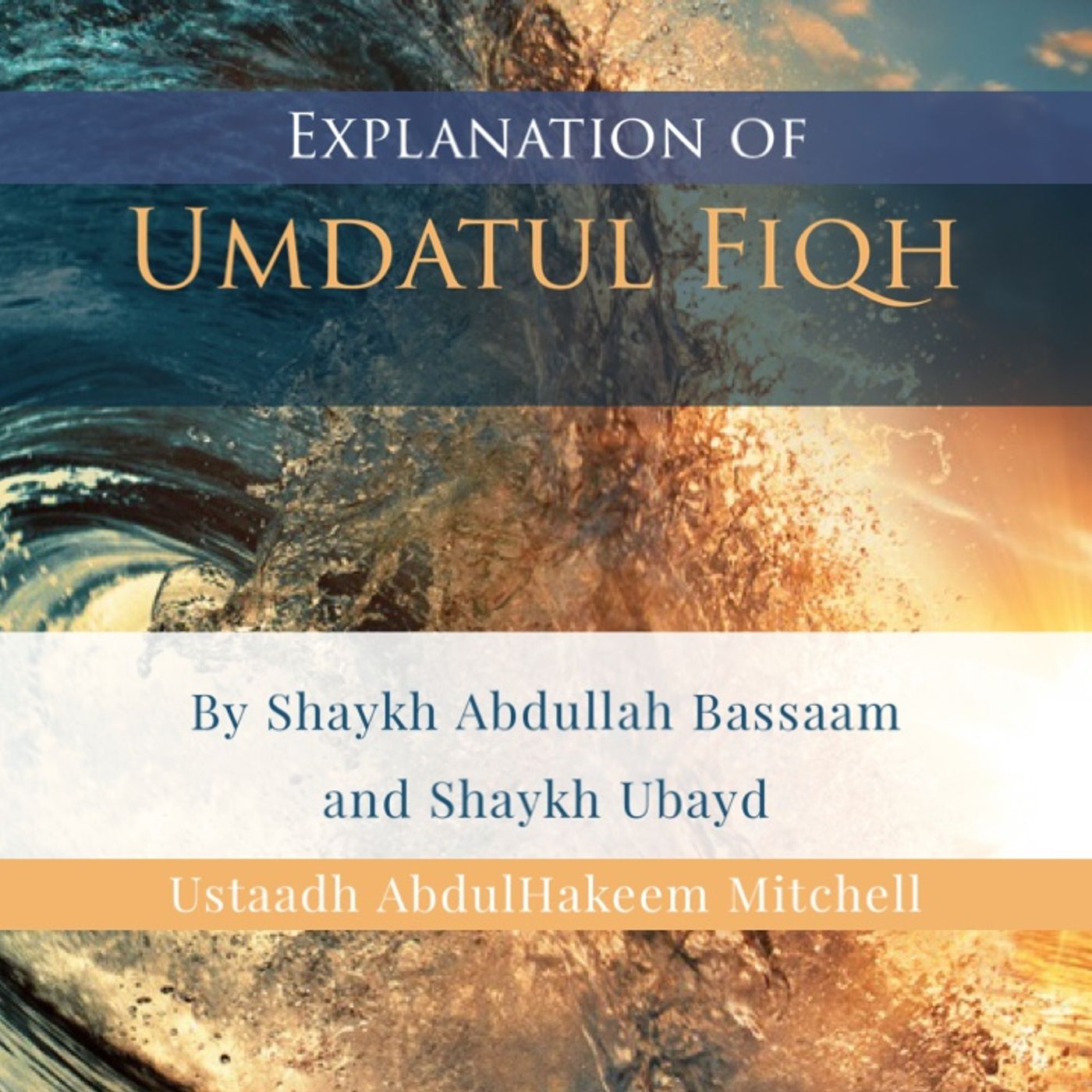
Explanation of Umdatul Fiqh - Abdul Hakeem
ʿUmdatul Fiqh (by Ibn Qudāmah al-Maqdisī (raḥimahullāh), with the explanation of Shaykh ʿAbdullāh al-Bassām and Shaykh ʿUbayd al-Jābirī (raḥimahullāh)), taught by Ustādh Abdul Hakeem Mitchell (hafidhahullāh), from Learn About Islam – The Salafi Centre of Manchester.
Be sure to visit the podcast's website and support the creator: www.spreaker.com
Author
Learn About Islam
Category
Podcast website
Latest episode
Oct 17, 2026
Where to listen?
Podcasts in the app Replaio Radio Coming soonPodcasts are coming to the app soon. Install now and be the first to see a whole new take on podcasts
 Install for free
Android 10M+ downloads · 4.7+ rating
iOS soon
Episodes
Lesson 94 – ʿUmdatul Fiqh – Book of Foods 4 – Ustādh Abdul Hakeem Mitchell – Chapter of Hunting and Dire Necessity 17.10.2026 1:10:29
ʿUmdatul Fiqh by Ibn Qudāmah al-Maqdisī (raḥimahullāh), with the explanation of Shaykh ʿAbdullāh al-Bassām and Shaykh ʿUbayd al-Jābirī (raḥimahumallāh), taught by Ustādh Abdul Hakeem Mitchell (hafidhahullāh) • What can be slaughtered must be slaughtered, and game that cannot be caught is lawful when wounded, with six conditions • A hunting dog must be trained and sent by the hunter, and the virtue...
Lesson 93 – ʿUmdatul Fiqh – Book of Foods 3 – Ustādh Abdul Hakeem Mitchell – Slaughtering: Revision and Its Conditions 17.10.2026 23:20
ʿUmdatul Fiqh by Ibn Qudāmah al-Maqdisī (raḥimahullāh), with the explanation of Shaykh ʿAbdullāh al-Bassām and Shaykh ʿUbayd al-Jābirī (raḥimahumallāh), taught by Ustādh Abdul Hakeem Mitchell (hafidhahullāh) • Recap of the three types of slaughter and which animal each is recommended for • Slaughtering a cow by naḥr or a camel by dhabḥ is still valid, as the distinction is only what is recommended...
Lesson 92 – ʿUmdatul Fiqh – Book of Foods 2 – Ustādh Abdul Hakeem Mitchell – Chapter of Slaughtering (Dhakāh) 17.10.2026 1:06:31
ʿUmdatul Fiqh by Ibn Qudāmah al-Maqdisī (raḥimahullāh), with the explanation of Shaykh ʿAbdullāh al-Bassām and Shaykh ʿUbayd al-Jābirī (raḥimahumallāh), taught by Ustādh Abdul Hakeem Mitchell (hafidhahullāh) • Sea creatures are lawful without slaughter, unless they live on land, and crabs are mentioned specifically • The two dead animals (fish and locusts) and the two bloods (liver and spleen) are...
Lesson 91 – ʿUmdatul Fiqh – Book of Foods 1 – Ustādh Abdul Hakeem Mitchell – Its Two Types, Intoxicants and Forbidden Animals 17.10.2026 1:03:44
ʿUmdatul Fiqh by Ibn Qudāmah al-Maqdisī (raḥimahullāh), with the explanation of Shaykh ʿAbdullāh al-Bassām and Shaykh ʿUbayd al-Jābirī (raḥimahumallāh), taught by Ustādh Abdul Hakeem Mitchell (hafidhahullāh) • The start of Kitāb al-Aṭʿimah after the Book of Divorce: food is either from animals or from other than animals • The default for food is that it is permissible, except what is impure or har...
Lesson 90 – ʿUmdatul Fiqh – Book of Divorce 10 – Ustādh Abdul Hakeem Mitchell – Maintenance (Nafaqah) and the Walīmah 17.10.2026 42:13
ʿUmdatul Fiqh by Ibn Qudāmah al-Maqdisī (raḥimahullāh), with the explanation of Shaykh ʿAbdullāh al-Bassām and Shaykh ʿUbayd al-Jābirī (raḥimahumallāh), taught by Ustādh Abdul Hakeem Mitchell (hafidhahullāh) • The final topics, concluding the discussion of marriage and divorce: maintenance (nafaqah) of relatives and of what one owns • Maintenance follows an order: a person must provide for his par...
Lesson 89 – ʿUmdatul Fiqh – Book of Divorce 9 – Ustādh Abdul Hakeem Mitchell – Lineage of the Child and Custody (Ḥaḍānah) 17.10.2026 32:36
ʿUmdatul Fiqh by Ibn Qudāmah al-Maqdisī (raḥimahullāh), with the explanation of Shaykh ʿAbdullāh al-Bassām and Shaykh ʿUbayd al-Jābirī (raḥimahumallāh), taught by Ustādh Abdul Hakeem Mitchell (hafidhahullāh) • Continuing from liʿān: a child born to a man's wife or slave woman, with relations established, is ascribed to him: "The child belongs to the bed, and for the fornicator is the stone" • A hu...
Lesson 87 – ʿUmdatul Fiqh – Book of Divorce 7 – Ustādh Abdul Hakeem Mitchell – Chapter of Ẓihār 16.10.2026 51:21
ʿUmdatul Fiqh by Ibn Qudāmah al-Maqdisī (raḥimahullāh), with the explanation of Shaykh ʿAbdullāh al-Bassām and Shaykh ʿUbayd al-Jābirī (raḥimahumallāh), taught by Ustādh Abdul Hakeem Mitchell (hafidhahullāh) • Ẓihār: saying "you are to me like the back of my mother", and why it is named after the back (ẓahr) • Comparing the wife to one's mother goes back to the intention: whether he meant to make...
Lesson 86 – ʿUmdatul Fiqh – Book of Divorce 6 – Ustādh Abdul Hakeem Mitchell – Chapter of Iḥdād (Mourning) 16.10.2026 47:54
ʿUmdatul Fiqh by Ibn Qudāmah al-Maqdisī (raḥimahullāh), with the explanation of Shaykh ʿAbdullāh al-Bassām and Shaykh ʿUbayd al-Jābirī (raḥimahumallāh), taught by Ustādh Abdul Hakeem Mitchell (hafidhahullāh) • Continuing from the ʿiddah: the mourning of the woman whose husband has died • She stays in her home and avoids perfume, adornment, fine clothing and jewellery • Mourning is obligatory for t...
Lesson 85 – ʿUmdatul Fiqh – Book of Divorce 5 – Ustādh Abdul Hakeem Mitchell – Chapter of the ʿIddah 16.10.2026 1:03:06
ʿUmdatul Fiqh by Ibn Qudāmah al-Maqdisī (raḥimahullāh), with the explanation of Shaykh ʿAbdullāh al-Bassām and Shaykh ʿUbayd al-Jābirī (raḥimahumallāh), taught by Ustādh Abdul Hakeem Mitchell (hafidhahullāh) • Seclusion (khalwah) after the contract takes the ruling of consummation, so there is no ʿiddah without one of them • The four types of women in ʿiddah, beginning with the woman who does not...
Lesson 84 – ʿUmdatul Fiqh – Book of Divorce 4 – Ustādh Abdul Hakeem Mitchell – The Number of Divorces and Doubt in Divorce 16.10.2026 37:06
ʿUmdatul Fiqh by Ibn Qudāmah al-Maqdisī (raḥimahullāh), with the explanation of Shaykh ʿAbdullāh al-Bassām and Shaykh ʿUbayd al-Jābirī (raḥimahumallāh), taught by Ustādh Abdul Hakeem Mitchell (hafidhahullāh) • One divorce ends a marriage that was not consummated, and that woman has no ʿiddah • Saying the divorce three times in one sitting, and the role of intention when the repetition is for empha...
Lesson 83 – ʿUmdatul Fiqh – Book of Divorce 3 – Ustādh Abdul Hakeem Mitchell – Conditional Divorce 16.10.2026 46:19
ʿUmdatul Fiqh by Ibn Qudāmah al-Maqdisī (raḥimahullāh), with the explanation of Shaykh ʿAbdullāh al-Bassām and Shaykh ʿUbayd al-Jābirī (raḥimahumallāh), taught by Ustādh Abdul Hakeem Mitchell (hafidhahullāh) • A divorce made conditional before the marriage contract does not count, as she is not yet his wife • The six words used to make a divorce conditional • With "every time" (kullamā) the divorc...
Lesson 82 – ʿUmdatul Fiqh – Book of Divorce 2 – Ustādh Abdul Hakeem Mitchell – Explicit and Implicit Wording 16.10.2026 44:36
ʿUmdatul Fiqh by Ibn Qudāmah al-Maqdisī (raḥimahullāh), with the explanation of Shaykh ʿAbdullāh al-Bassām and Shaykh ʿUbayd al-Jābirī (raḥimahumallāh), taught by Ustādh Abdul Hakeem Mitchell (hafidhahullāh) • Explicit (ṣarīḥ) wording: words that cannot be understood as anything other than divorce • The word "divorce" in English or any other language is explicit; it does not have to be said in Ara...
Lesson 81 – ʿUmdatul Fiqh – Book of Divorce 1 – Ustādh Abdul Hakeem Mitchell – Who May Divorce 16.10.2026 54:42
ʿUmdatul Fiqh by Ibn Qudāmah al-Maqdisī (raḥimahullāh), with the explanation of Shaykh ʿAbdullāh al-Bassām and Shaykh ʿUbayd al-Jābirī (raḥimahumallāh), taught by Ustādh Abdul Hakeem Mitchell (hafidhahullāh) • Recap of the Book of Marriage and the start of the Book of Divorce • The conditions for a valid divorce: it comes from the husband himself, who is accountable (adult and sane) and acting by...
Lesson 80 – ʿUmdatul Fiqh – Book of Marriage 12 – Ustādh Abdul Hakeem Mitchell – Chapter of Khulʿ 16.10.2026 40:09
ʿUmdatul Fiqh by Ibn Qudāmah al-Maqdisī (raḥimahullāh), with the explanation of Shaykh ʿAbdullāh al-Bassām and Shaykh ʿUbayd al-Jābirī (raḥimahumallāh), taught by Ustādh Abdul Hakeem Mitchell (hafidhahullāh) • When khulʿ is allowed: the wife dislikes her husband and fears she cannot fulfil Allāh's rights in obeying him, so she ransoms herself • What she gives for the khulʿ must be something permis...
Lesson 79 – ʿUmdatul Fiqh – Book of Marriage 11 – Ustādh Abdul Hakeem Mitchell – Dividing Time between Wives and Nushūz 16.10.2026 1:03:21
ʿUmdatul Fiqh by Ibn Qudāmah al-Maqdisī (raḥimahullāh), with the explanation of Shaykh ʿAbdullāh al-Bassām and Shaykh ʿUbayd al-Jābirī (raḥimahumallāh), taught by Ustādh Abdul Hakeem Mitchell (hafidhahullāh) • Dividing time between wives, from the practice of the Prophet ﷺ • A man is not taken to account for the inclination of his heart, but he must be just with his time • Drawing lots to decide w...
Lesson 78 – ʿUmdatul Fiqh – Book of Marriage 10 – Ustādh Abdul Hakeem Mitchell – The Rights of the Spouses 16.10.2026 46:12
ʿUmdatul Fiqh by Ibn Qudāmah al-Maqdisī (raḥimahullāh), with the explanation of Shaykh ʿAbdullāh al-Bassām and Shaykh ʿUbayd al-Jābirī (raḥimahumallāh), taught by Ustādh Abdul Hakeem Mitchell (hafidhahullāh) • The wife fulfilling her husband's rights willingly, not with a heavy heart • The husband's continuing obligation to provide for her, connected to the mahr discussed previously • If he cannot...
Lesson 77 – ʿUmdatul Fiqh – Book of Marriage 9 – Ustādh Abdul Hakeem Mitchell – The Mahr When the Marriage Ends 16.10.2026 51:05
ʿUmdatul Fiqh by Ibn Qudāmah al-Maqdisī (raḥimahullāh), with the explanation of Shaykh ʿAbdullāh al-Bassām and Shaykh ʿUbayd al-Jābirī (raḥimahumallāh), taught by Ustādh Abdul Hakeem Mitchell (hafidhahullāh) • When the promised mahr cannot be given, such as a slave whose owner refuses to sell him • If the marriage ends because of the woman, she is not owed the mahr nor anything in its place • If i...
Lesson 76 – ʿUmdatul Fiqh – Book of Marriage 8 – Ustādh Abdul Hakeem Mitchell – Chapter of the Mahr 16.10.2026 34:10
ʿUmdatul Fiqh by Ibn Qudāmah al-Maqdisī (raḥimahullāh), with the explanation of Shaykh ʿAbdullāh al-Bassām and Shaykh ʿUbayd al-Jābirī (raḥimahumallāh), taught by Ustādh Abdul Hakeem Mitchell (hafidhahullāh) • The mahr can be anything of value, small or large, "even a ring of iron" • If the mahr turns out to be defective, such as perishable goods that cannot be eaten, she may take its value instea...
Lesson 68 – ʿUmdatul Fiqh – Book of Transactions 16 – Ustādh Abdul Hakeem Mitchell – Chapter of Usurpation (Ghaṣb) 16.10.2026 36:46
ʿUmdatul Fiqh by Ibn Qudāmah al-Maqdisī (raḥimahullāh), with the explanation of Shaykh ʿAbdullāh al-Bassām and Shaykh ʿUbayd al-Jābirī (raḥimahumallāh), taught by Ustādh Abdul Hakeem Mitchell (hafidhahullāh) • Bāb al-Ghaṣb: taking another's property without right, and how it differs from theft • The usurper must return it, and pay a fair rent for the time he held it • Returning it with any increas...
Lesson 67 – ʿUmdatul Fiqh – Book of Transactions 15 – Ustādh Abdul Hakeem Mitchell – Hiring and Renting (Ijārah) 16.10.2026 49:19
ʿUmdatul Fiqh by Ibn Qudāmah al-Maqdisī (raḥimahullāh), with the explanation of Shaykh ʿAbdullāh al-Bassām and Shaykh ʿUbayd al-Jābirī (raḥimahumallāh), taught by Ustādh Abdul Hakeem Mitchell (hafidhahullāh) • Kitāb al-Ijārah as an appendix to the Book of Sales: hiring a benefit rather than owning the thing • A binding contract that ends when the thing hired is destroyed or its benefit is cut off,...
Lesson 66 – ʿUmdatul Fiqh – Book of Transactions 14 – Ustādh Abdul Hakeem Mitchell – Competitions, Deposits and Borrowed Items 16.10.2026 46:05
ʿUmdatul Fiqh by Ibn Qudāmah al-Maqdisī (raḥimahullāh), with the explanation of Shaykh ʿAbdullāh al-Bassām and Shaykh ʿUbayd al-Jābirī (raḥimahumallāh), taught by Ustādh Abdul Hakeem Mitchell (hafidhahullāh) • Bāb as-Sabq: competing is allowed, but a prize only in horse racing, camel racing and archery • The ḥadīth of Ibn ʿUmar on the Prophet (ṣallallāhu ʿalayhi wa sallam) racing horses, and the ḥ...
Lesson 65 – ʿUmdatul Fiqh – Book of Transactions 13 – Ustādh Abdul Hakeem Mitchell – Rewards (Juʿālah), Lost Property and the Foundling 16.10.2026 59:45
ʿUmdatul Fiqh by Ibn Qudāmah al-Maqdisī (raḥimahullāh), with the explanation of Shaykh ʿAbdullāh al-Bassām and Shaykh ʿUbayd al-Jābirī (raḥimahumallāh), taught by Ustādh Abdul Hakeem Mitchell (hafidhahullāh) • Bāb al-Juʿālah: a reward for a task, such as "whoever returns what I lost, or builds this wall, gets such-and-such" • The ḥadīth of Abū Saʿīd al-Khudrī and the ruqyah with al-Fātiḥah for a f...
Lesson 64 – ʿUmdatul Fiqh – Book of Transactions 12 – Ustādh Abdul Hakeem Mitchell – Musāqāh, Muzāraʿah and Reviving Dead Land 16.10.2026 49:10
ʿUmdatul Fiqh by Ibn Qudāmah al-Maqdisī (raḥimahullāh), with the explanation of Shaykh ʿAbdullāh al-Bassām and Shaykh ʿUbayd al-Jābirī (raḥimahumallāh), taught by Ustādh Abdul Hakeem Mitchell (hafidhahullāh) • Musāqāh and muzāraʿah: working trees or land for a share of the fruit or crop, following on from partnership • The share must be a known proportion, such as a third, and when a fixed amount...
Lesson 63 – ʿUmdatul Fiqh – Book of Transactions 11 – Ustādh Abdul Hakeem Mitchell – Chapter of Partnership (Sharikah) 16.10.2026 53:37
ʿUmdatul Fiqh by Ibn Qudāmah al-Maqdisī (raḥimahullāh), with the explanation of Shaykh ʿAbdullāh al-Bassām and Shaykh ʿUbayd al-Jābirī (raḥimahumallāh), taught by Ustādh Abdul Hakeem Mitchell (hafidhahullāh) • A recap of agency: the kafīl for a debt versus the wakīl in general, and the wakīl in marriage • Agency known by custom (ʿurf), general and specific • Bāb ash-Sharikah and its four types: ʿi...
Lesson 62 – ʿUmdatul Fiqh – Book of Transactions 10 – Ustādh Abdul Hakeem Mitchell – Chapter of Agency (Wakālah) 16.10.2026 1:08:06
ʿUmdatul Fiqh by Ibn Qudāmah al-Maqdisī (raḥimahullāh), with the explanation of Shaykh ʿAbdullāh al-Bassām and Shaykh ʿUbayd al-Jābirī (raḥimahumallāh), taught by Ustādh Abdul Hakeem Mitchell (hafidhahullāh) • A recap of loans, debts, bankruptcy and ḥajr, the guarantor and the kafīl • A recap of rahn (collateral), where a pledged animal may only be used to maintain it, and of ṣulḥ (settling or wai...
Similar podcasts







Listen to the Explanation of Umdatul Fiqh - Abdul Hakeem podcast in Replaio
Radio and podcasts in one app - free, with no sign-up. Install today and do not miss the launch
Replaio is not a podcast publisher; show names, artwork and audio belong to their authors and are distributed through public RSS feeds.