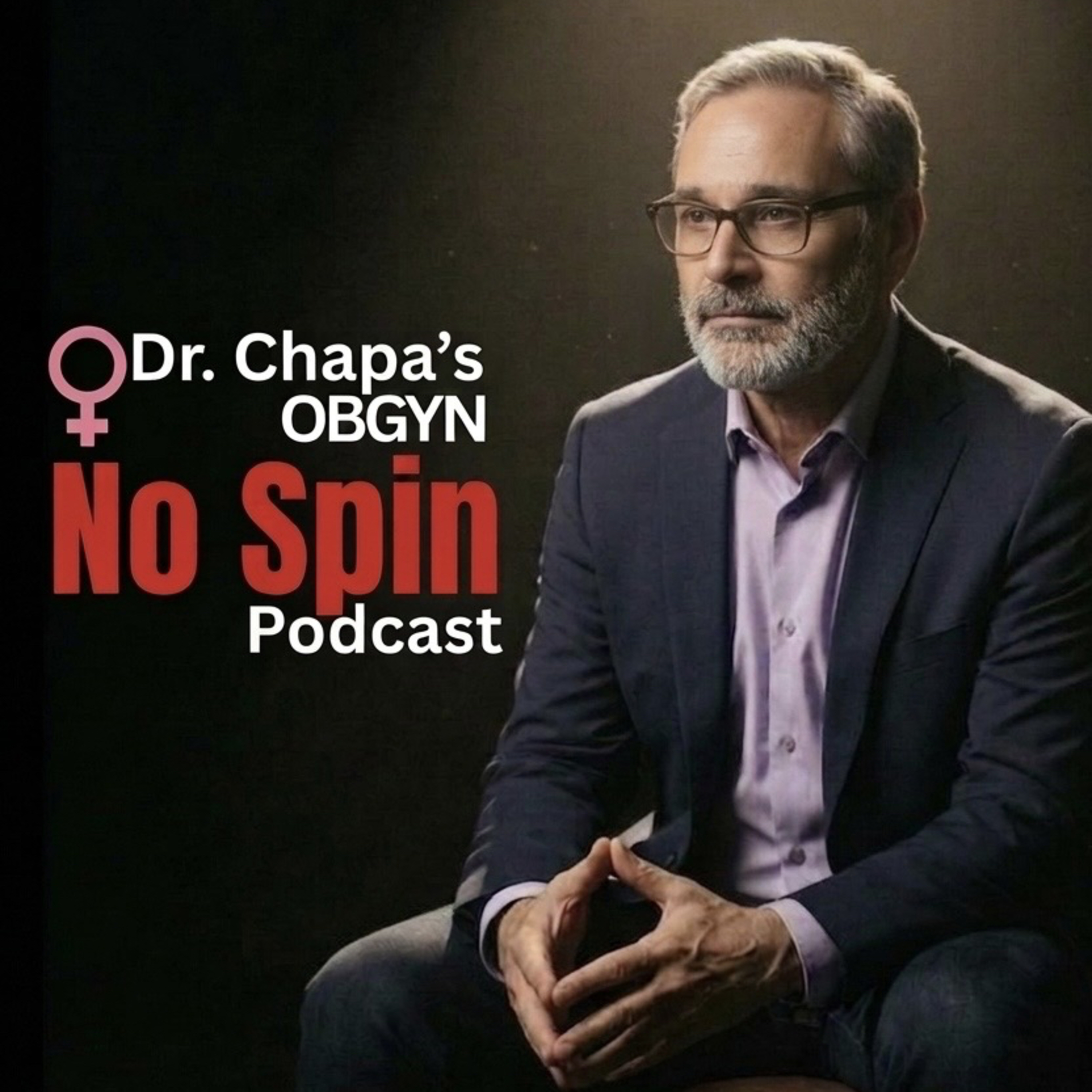
Dr. Chapa’s Clinical Pearls
Dr. Chapa’s OBGYN Clinical Pearls
Relevant, evidence based, and practical information for medical students, residents, and practicing healthcare providers regarding all things women’s healthcare! This podcast is intended to be clinically relevant, engaging, and FUN, because medical education should NOT be boring! Welcome...to Clinical Pearls.
Author
Dr. Chapa’s Clinical Pearls
Category
Podcast website
Latest episode
Jul 9, 2026
Where to listen?
Podcasts in the app Replaio Radio Coming soonPodcasts are coming to the app soon. Install now and be the first to see a whole new take on podcasts
 Install for free
Android 5M+ downloads · 4.8 rating
iOS soon
Install for free
Android 5M+ downloads · 4.8 rating
iOS soon
Episodes
Staging for OVFTP malignancies: FIGO’s Revised Ovarian CA System 03.10.2019 15:58
The lifetime risk of a woman in the USA developing ovarian cancer is approximately 1 in 70. Malignant tumors of the ovaries occur at all ages with variation in histologic subtype by age. For example, in women younger than 20 years of age, germ cell tumors predominate, while borderline tumors typically occur in women in their 30s and 40s—10 or more years younger than in women with invasive epitheli...
Endometrial CA (Part2): Adjuvant Therapy 01.10.2019 16:33
In this session, we will review adjuvant therapy for endometrial carcinoma. What is the role of radiation therapy? What about chemotherapy? Is progestin therapy advised? We will end the podcast with a quick review of one of the most dreaded pathological findings: endometrial cancer AFTER hysterectomy was performed for presumed benign disease.
Endometrial CA: (Part1) FIGO 2018 Update 30.09.2019 13:18
Endometrial carcinoma is the most common type of all the gynecological malignancies. The most common symptom is abnormal vaginal bleeding, especially in postmenopausal women. In 2018, the FIGO released it’s updated report on endometrial carcinoma. In the session, we will review the pathophysiology, local invasion, work up, and surgical staging of this malignancy. We will leave therapeutic options...
Cervical CA (Part 2):Management, 2018 FIGO Guidelines 28.09.2019 13:39
In this Part 2, we will review the pathological reports which may influence cervical cancer clinical staging. We will also summarize the 2018 FIGO treatment guidelines. In brief: For stage 1A1-1B1: surgery is recommended; Stage 1B2-IIA1: surgery or radiation may be used; Stage 1B3-IVA: concurrent chemoradiation is standard; Stage IVA may need an exenteration; and Stage IVA is managed with chemorad...
Cervical CA 2018 FIGO Update (Part1): Revised Staging system. 27.09.2019 16:54
Recent developments in imaging and increased use of minimally invasive surgery have changed the paradigm for diagnosis and management of cervical cancer. The FIGO Gynecologic Oncology Committee, in 2018, revised the Cervical Ca staging system based on these advances. Imaging evaluation may now be used in addition to clinical examination where resources permit. The revised staging permits the use o...
Over-the-Counter Birth Control? A summary of ACOG’s UPCOMING Committee Opinion. 26.09.2019 13:17
While offering OTC birth control may be controversial here in the U.S., it is a non-issue in many other countries. China, India, Greece, Turkey, Mexico, Brail, Portugal, South Africa, Korea and Russia are a few of the countries where women can get birth control pills without a prescription. Is that safe? What about the risk of VTE? Should there be an age restriction? In this episode, we will highl...
💉💉Flu Vaccine 101! 💉💉💉 25.09.2019 16:28
We all recommend it! The influenza vaccine. However, when asked specific questions about the vaccination, a fair number of healthcare providers will not know the answers. Is personal egg-allergy a contraindication? Can everybody receive the intranasal vaccine? What about pregnant women? In this podcast, we will cover the Advisory Committee on Immunization Practice (ACIP) guidelines for vaccination...
PreEclampsia Symptoms: Reliable or Not? 23.09.2019 13:35
Eclampsia is a life-threatening pregnancy complication, defined as the new onset of seizures during pregnancy with a concomitant diagnosis of preeclampsia. Clinicians often ask patients with suspected preeclampsia about headaches, visual changes, or epigastric pain. Are the symptoms predictive of eclampsia? In this session, we will review the soon to be published (systematic review) evaluating the...
Do Negative Pressure Wound Systems Prevent Wound Infection? A new RCT gives an answer! 21.09.2019 13:28
The prevalence of obesity is at an all-time high in the United States, and the obesity rate among women is 40%, with 9.8% of women having class III obesity (BMI 40 or higher). As a result, obesity is a frequent and severe comorbidity of pregnancy. Whether or not incisional negative pressure wound therapy reduces wound morbidity is an important question for obstetricians and patients. In this podca...
Why are SCRUBS/O.R. Gowns Green (or Blue)? A Historical Review. 20.09.2019 7:28
Are green scrubs just a fashion statement? What’s behind the choice of green (or sometimes blue) scrubs? Well, there actually is some science to that… In addition to just interesting history. Let’s take a look at that, now.
Breast CA Medical Risk Reduction: USPSTF Sept 2019 Guidelines 18.09.2019 15:28
In Sept 2019, the USPTF revised and updated its 2013 recommendations on medications for risk reduction of primary breast cancer. Who qualifies for medical strategies? Which meds are recommended? In this session we will highlight the new USPSTF Guidelines, review the use of Prediction Models, and compare Tamoxifen, Raloxifene, and Aromatase Inhibitors.
“Backdoor” Activity? Ask,Screen,Treat: Nongenital STIs. 16.09.2019 16:35
Once taboo, anal sex has slowly been slipping into the mainstream. A recent study found that 37% of women reported having anal sex with the opposite sex in their lifetime, and over 60% reported providing oral sex. However, the CDC does not specifically mention routine screening of extragenital sites for STIs. In this podcast, we will review the most up-to-date data on extragenital infection and ma...
IC/Painful Bladder Syndrome (Part2): Treatment options 15.09.2019 16:51
Treatment strategies for IC should proceed using more conservative therapies first with less conservative therapies employed if symptom control is inadequate for acceptable quality of life. Multiple, concurrent treatments may be considered if it is in the best interests of the patient. In this session, we will review the AUA clinical guidelines regarding management of IC with a review of the 1st-l...
IC/Painful Bladder Syndrome: New AUA Guidelines 14.09.2019 16:56
The effects of IC/BPS on psychosocial functioning and QoL are pervasive, damaging work life, psychological well-being, personal relationships and general health. There’s been a lot of new data regarding this condition and some historic information has been deleted. For example, potassium installation into the bladder is no longer recommended. That diagnostic test, occasionally still found in some...
Funisitis 12.09.2019 13:27
In 2017, the ACOG defined 3 classes of intraamniotic infection. Although most research/data has been on inflammation/infection of the placenta/membranes itself (chorioamnionitis), only recently has data on inflammation of the umbilical cord (funisitis) been forthcoming. Is inflammation of the umbilical cord directly related to microbial invasion? Does this have any neonatal implications? In this p...
OB Forceps’ Strange History 11.09.2019 7:49
Obstetrical forceps have a strange history: considered by historians to have been created by William Chamberlain, a French surgeon, the tool was kept a close family “secret” for well over a century! Eventually, the device and concept was sold by a destitute Chamberlain family member. William Smellie would then take this device to the masses. In this podcast, we provide a brief historical perspecti...
9.1.1. 11.09.2019 2:46
Never. Forget.
Female Athlete Triad 11.09.2019 11:27
Exercise in the young female adolescent is wonderful! But like everything else, too much can be dangerous. The Female Athlete Triad is marked by: 1. low energy availability, 2. menstrual dysfunction, and 3. low bone density. However, all 3 do not have to be present for the issue to be a concern. This condition is a spectrum! In this session, we will review committee opinion 702 from the ACOG, and...
Beyond Gardnerella: BV Biofilm New Data. 08.09.2019 13:39
Garderella Vaginalis may not be the only pathogen causing BV like symptoms. New data has linked BV with a vaginal BIOFILM ecosystem. It also increases the possible acquisition of other STIs, including HIV. In this session, we will review the pathophysiology, clinical symptoms, diagnostic methods, and of course treatment options for this common- and significant- vaginal condition. The recently FDA...
Desquamative Inflammatory Vaginitis: An Old/New Awareness 07.09.2019 13:25
The human vaginal ecosystem is highly dynamic. The vaginal microbiome can affect host physiology, and vice versa. In 1965, Desquamative Inflammatory Vaginitis was 1st described, but the condition fell out of the spotlight. Recently, new data has brought this condition back into the light. How is this diagnosis made? Is vaginal culture recommended? That answer may surprise you. In this episode, we...
BARE DOWN There? New data on STIs and going bare. 05.09.2019 9:02
Pubic hair grooming is a highly prevalent practice with self-reported rates between 75 to 99% of women. Does this increase STI risk? In this podcast, we will review a recent September 2019 open access publication by Luster et al. There may be more to the story than what’s presented in that study. Let’s look at that...now.
Best Vaginal Prep PreCS? A new systematic review & meta-analysis. 05.09.2019 10:52
Post CS endometritis is thought to be linked to ascending vaginal bacteria. In 2016, the CSOAP trial concluded that adding ZMAX to standard antibiotic prophylaxis before non-elective CS helps reduce infection. But what about vaginal prep? What’s the best solution and concentration? In this session, we will summarize a new systematic review/meta-analysis from September 2019 published in AJOG.
Mycoplasma genitalium: An Overlooked STI. 03.09.2019 11:49
Mycoplasma genitalium is a facultative anaerobic organism which has been associated with cervicitis, endometritis, PID, infertility, susceptibility to HIV, and adverse birth outcomes, indicating a consistent relationship with female genital tract pathology. In 2015, the CDC listed it as an important, yet overlooked, STI. Now, a recently FDA approved test for the bacterium has increased awareness o...
Adolescent BC leads to Depression? Let’s see. 02.09.2019 10:56
Previous evidence suggests that use of oral contraceptives, especially during adolescence, may increase women’s vulnerability to depression in the short term. On August 28, 2019, a new publication by Canadian researchers in the Journal of Child Psychology and Psychiatry restated this association. Does this prove causation? Is it time to stop prescribing birth control to adolescents? Let’s take a c...
⚠️ Labor 2nd Stage: Too Long? 01.09.2019 13:49
In 2014, the ACOG released a consensus statement, “Safe Prevention of the Primary Cesarean”. This extended the 2nd stage of labor by 1 hour. Was this evidence-based? New data suggest it was not, and may be harmful. In 2016, Leveno et al (Parkland Hospital) issued the first clinical commentary as a rebuttal to these changes citing lack of evidence to support the prolongation. In this session, we wi...
Similar podcasts







Listen to the Dr. Chapa’s OBGYN Clinical Pearls podcast in Replaio
Radio and podcasts in one app - free, with no sign-up. Install today and do not miss the launch
Replaio is not a podcast publisher; show names, artwork and audio belong to their authors and are distributed through public RSS feeds.