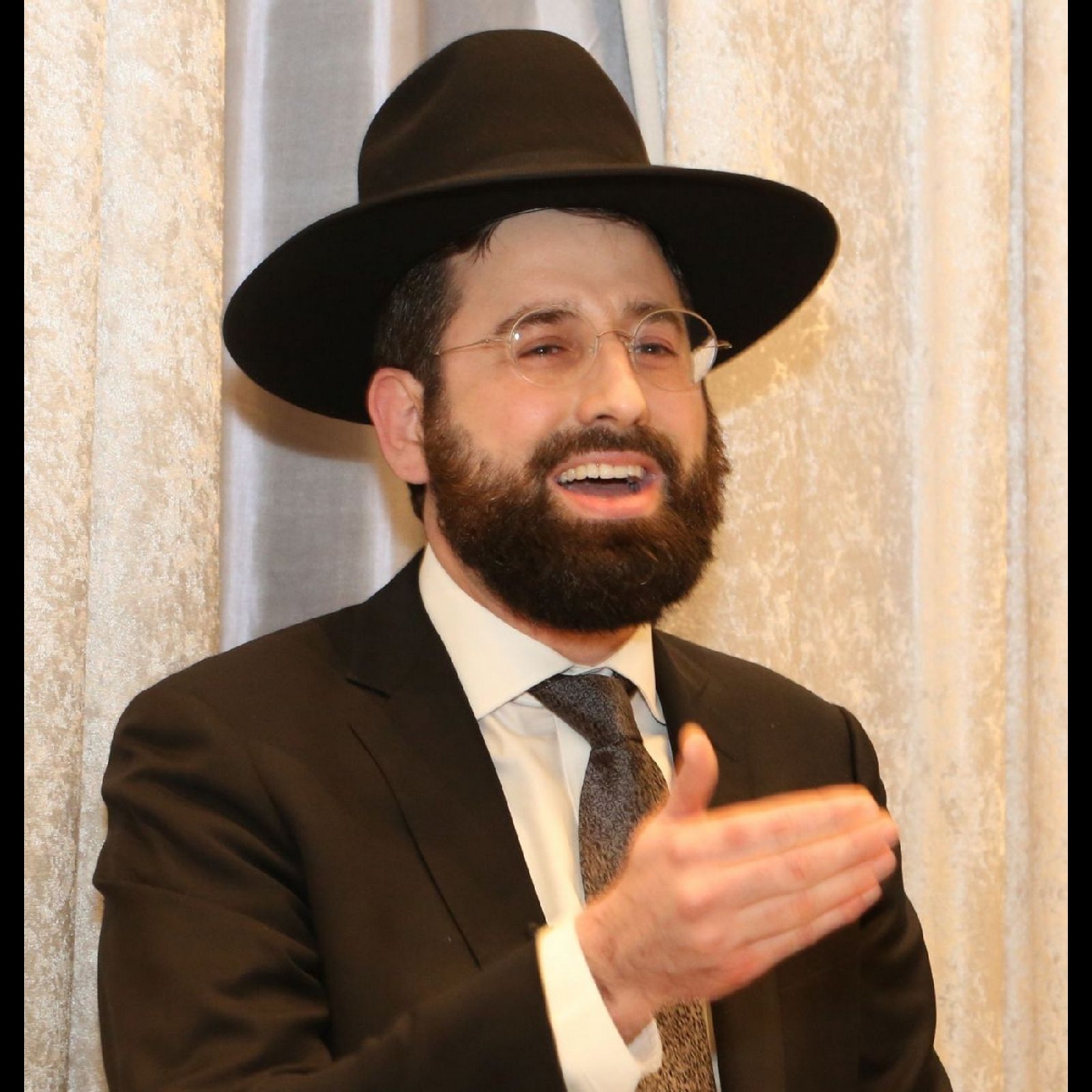
Mrs. Tsyrl Turen
Daily Tanya
Daily Tanya recordings by Master Tanya Teacher, Mrs. Tsyrl Turen. Spiritual growth through mindful meditations and G-dly awareness. Tap into your G-dly soul every day and emerge as a transformed person. This is L'iluy Nishmas Chana Tzivia Bas YBLT Yosef Yitzchak, a dear friend who was consistent with Chitas all of her short life. May this bring her soul much needed comfort and a great Aliyah.
Where to listen?
Podcasts in the app Replaio Radio Coming soonPodcasts are coming to the app soon. Install now and be the first to see a whole new take on podcasts
 Install for free
Android 5M+ downloads · 4.8 rating
iOS soon
Install for free
Android 5M+ downloads · 4.8 rating
iOS soon
Episodes
Tanya for the 21st of Tevet 13.01.2023 3:30
Everyone should be aspiring to be a Beinoni. The one demand: That the mind should control the heart, and all three soul garments: Thought speech, and actions. A tzaddik may be born that way and is an unattainable level for most.
Tanya for the 20th of Tevet 13.01.2023 4:05
Is there a difference in the prayers of a Beinoni and that of a Tzaddik? The Alter Rebbe argues that the love of G-d felt by a Beinoni is not constant, deeming it "untrue", vs. that of a Tzaddik, which is constant and unstoppable. However, there are differences in degrees of truth. When one awakens and serves G-d, that is their truth. While it may not reach the level of Tzaddikim, or their ultimat...
Tanya for the 19th of Tevet, י''ט טבת 13.01.2023 4:12
The Beinoni is always "on guard" so as not to become complacent. There are those however who busy themselves with Torah all day, and some may even walk around feeling a love for G-d all day. Those should still never feel sure or let down their guard. Just like Rava, who because he was always learning Torah thought that perhaps his constant love for G-d was due to his constant study of Torah.
Tanya for the 18th of Teves י''ח טבת 12.01.2023 5:44
A Beinoni has to always be on guard, knowing that he is capable of falling to his desires.
Tanya for the 17th of Teves י''ז טבת 12.01.2023 3:28
So how does one become a Beinoni? When the mind has dominion over the heart. How is this done? During prayer, when done properly, even the Beinoni's animal soul is incapacitated. Once prayers are done, the animal soul awakens. The residual effect of this powerful prayer remains with the person throughout the day, empowering him to control himself. The Beinoni is capable of being victorious in his...
Tanya for the 15th of Tevet ט''ו טבת 12.01.2023 3:52
The Beinoni never succumbs to the animal soul. We learned that the G-dly soul is in the mind. The rule: The mind controls the heart. This is the basic definition of a human being and distinguishes the human from other mammals. An animal is a slave to its impulses and desires. Man has the power to control his emotions. This muscle, however, must get practice.
Tanya for the 16th of Teves ט''ז טבת 12.01.2023 2:44
The Beinoni and Tzaddik both have impeccable garments in thought speech and action. Inside however, the Beinoni is similar to the Rasha, with desires and raging passions to contend with. The Beinoni however, unlike the Tzadik is constantly in control.
Tanya for the 14th of Tevet י''ד טבת 02.01.2023 2:39
In this, the twelfth chapter, the term beinoni —the “intermediate man’’ who is neither tzaddik nor rasha —will be defined. The beinoni , the Alter Rebbe explains, is one whose practical conduct in thought, speech, and action is dictated solely by the divine soul; it has the upper hand over the animal soul. The beinoni accomplishes this by not allowing himself to be dominated in any way by the anim...
Tanya for the 13th of Tevet י''ג טבת 02.01.2023 3:01
the Alter Rebbe now addresses himself to the definition of the rank that is the antithesis of the tzaddik —that of the wicked person, the rasha . In direct contrast to the tzaddik , whose divine soul overpowers his animal soul, the rasha is one whose animal soul overwhelms his divine soul.
Tanya for the 12th of Tevet י''ב טבת 02.01.2023 4:20
In one tzaddik , the vestigial evil may be such that the proportion of good to evil could be described as 60:1; the evil in another tzaddik may be more minute so that it is overwhelmed by a proportion of good that is 1000:1; and so on. The divine service of tzaddikim of lower levels may indeed be for the purpose of stilling their thirst for G-d and their desire to cleave to Him, for indeed, the fu...
Tanya for the 11th of Tevet י''א טבת 02.01.2023 4:13
The Alter Rebbe now proceeds to explain that one who vanquishes his animal soul and transforms its evil into good is a tzaddik .
Tanya for the 10th of Tevet י' טבת 02.01.2023 2:22
each soul wishes to direct the city’s inhabitants according to its will
Tanya for the 8th of Tevet, ח' טבת 02.01.2023 10:59
Something prohibited even by Rabbinic enactment remains attached to the three unclean kelipot and cannot be elevated to holiness, even when it is used unwittingly and for the sake of heaven
Tanya for the 9th of Tevet, ט' טבת 02.01.2023 1:22
The Alter Rebbe will discuss the battle fought within the Jew between the two souls.
Tanya for the 7th of Teves ז' טבת 26.12.2022 3:53
He who never derived pleasure from this world all his life need not undergo the “Purgatory of the Grave.” However, anyone who has not attained this level must undergo this punishment to purify his body of the uncleanness received from the enjoyment of mundane pleasures.
Tanya for the 6th of Teves ו' טבת 26.12.2022 3:26
Since the sin of wasteful emission of semen can be rectified even without “repentance out of love,” the Torah does not include this sin with the related sins of forbidden coition. Concerning this sin, all that is necessary to elevate the degraded vitality to holiness is proper repentance with true intent and devotion during the recitation of the bedtime Shema .
Tanya for the 5th of Teves ה' טבת 26.12.2022 5:53
As explained in the first chapter, all evil characteristics come from the four evil elements of the animal soul, with the appetite for pleasures emanating from the element of Water,
Tanya for the 4th of Teves ד' טבת 26.12.2022 4:45
When a humorous remark is made with this intent, the vitality of the words, which originates in kelipat nogah , is extracted from the evil of kelipat nogah and is absorbed in Sanctity.
Tanya for the 3rd of Teves ג' טבת 26.12.2022 2:08
All that is not surrendered to G-d but considers itself separate from Him receives its vitality from the achorayim of G-dliness by way of numerous descents and various contractions. The Divine life-force is concealed within it in a state of exile; thus, it belongs to the realm of kelipah .
Tanya for the 2nd of Teves ב' טבת 26.12.2022 3:33
When one engages in Torah study, his surrender to G-dliness emerges to affect him on a revealed, external level, since such study entails setting aside one’s own notions and presumptions in order to understand and accept G-d’s wisdom and will as expressed in Torah. It is this surrender to G-dliness that causes the Divine Presence to rest upon the Torah student.
Tanya for the 1st of Teves א' טבת 26.12.2022 3:47
The precept of Torah study may be performed by reciting passages of Scripture, even if one is ignorant of their meaning. Such study, however, lacks the infinitely superior quality of comprehending Torah, namely:
Tanya for the 30th of Kislev ל' כסלו 20.12.2022 2:02
This chapter aims to show how Torah study is superior to all other mitzvot ; not only is one encompassed by G-d’s will when he studies the Torah, as when he performs any mitzvah, but furthermore, he “embraces” G-d by understanding His wisdom as set forth in Torah.
Tanya for the 28th of Kislev כ''ח כסלו 20.12.2022 4:25
The Alter Rebbe now goes on to state that, unlike physical garments, which are less important than their wearer, the garments of the divine soul are even loftier than the soul which “wears” them. Thus, “wearing” its garments—i.e., thinking and speaking words of Torah and acting in performance of the commandments—elevates the soul to a higher level.
Tanya for the 27th of Kislev כ''ז כסלו 20.12.2022 4:29
The soul possesses three auxiliary powers, which are its instruments of expression. Like garments, they can be donned or shed at will. When the soul utilizes any of these three powers, it is “clothed” in them; when it does not use them, it is “divested” of them. Also, just as garments give expression to their wearer’s beauty and importance, so, too, when the soul dons and utilizes these “garments,...
Tanya for the 29th of Kislev כ''ט כסלו 20.12.2022 4:33
The Alter Rebbe now goes on to state that, unlike physical garments, which are less important than their wearer, the garments of the divine soul are even loftier than the soul which “wears” them. Thus, “wearing” its garments—i.e., thinking and speaking words of Torah and acting in performance of the commandments—elevates the soul to a higher level.
Similar podcasts







Listen to the Daily Tanya podcast in Replaio
Radio and podcasts in one app - free, with no sign-up. Install today and do not miss the launch
Replaio is not a podcast publisher; show names, artwork and audio belong to their authors and are distributed through public RSS feeds.