
Michelle Cohen Farber
Daf Yomi for Women - Hadran
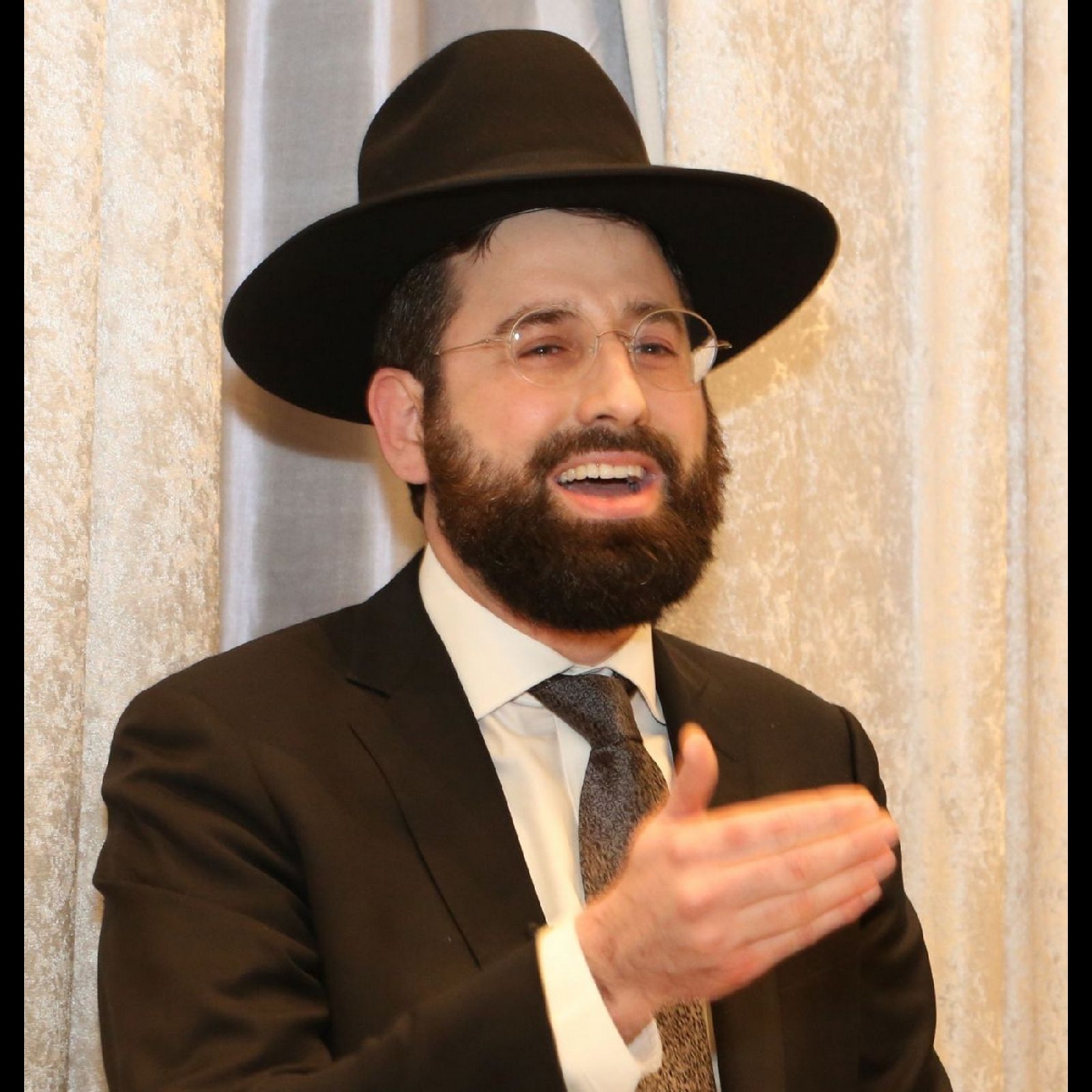
Hadran.org.il is the portal for Daf Yomi studies for women. Hadran.org.il is the first and only site where one can hear a daily Talmud class taught by a woman. The classes are taught in Israel by Rabbanit Michelle Cohen Farber, a graduate of Midreshet Lindenbaum's scholars program with a BA in Talmud and Tanach from Bar-Ilan University. Michelle has taught Talmud and Halacha at Midreshet Lindenbaum, Pelech high school and MATAN. She lives in Ra'anana with her husband and their five children. Each morning the daf yomi class is delivered via ZOOM and then immediately uploaded and available for p...
Author
Michelle Cohen Farber
Category
Podcast website
Latest episode
Jul 10, 2026
Where to listen?
Podcasts in the app Replaio Radio Coming soonPodcasts are coming to the app soon. Install now and be the first to see a whole new take on podcasts
 Install for free
Android 5M+ downloads · 4.8 rating
iOS soon
Install for free
Android 5M+ downloads · 4.8 rating
iOS soon
Episodes
Bava Batra 155 - November 27, 26 Cheshvan 27.11.2024 46:51
Even though the Gemara concluded that Reish Lakish and Rabbi Yochanan hold positions that were originally attributed to each other, the difficulty that Rabbi Yochanan raised against Reish Lakish can still be explained as such and does not need to be reversed. At what age can one sell one's father's possessions? There is a debate about whether one can sell at eighteen or twenty. Rabbi Zeira tries t...
Bava Batra 154 - November 26, 25 Chevshan 26.11.2024 47:33
When a gift document lacks language indicating either a deathbed or healthy status of the giver, and there is a dispute between the giver claiming it was written while dying and the recipients claiming otherwise, who bears the burden of proof? Rabbi Meir holds that we presume the person was healthy until proven otherwise. The rabbis, however, rule that the gift remains with the giver until proven...
Bava Batra 153 - November 25, 24 Cheshvan 25.11.2024 45:29
Rav and Shmuel disagreed regarding a case where one promised a gift using the phrase "in life and in death." Rav held that this language indicated a deathbed gift, with "in life" being mentioned merely as an expression of hope. Shmuel, however, interpreted it as a gift from a healthy person. In Nehardea, they followed Rav's ruling. Later, Rava introduced a distinction: he argued that Rav would agr...
Bava Batra 152 - November 24, 23 Cheshvan 24.11.2024 30:27
This week's learning is sponsored in honor of Elana Storch on her birthday. With love from her kids - Ruth, Ira, Elsa, Julianna, Reuben, Elia, Adele, Emanuel and Arianne. "We are inspired by the example you continue to set for us in your commitment to your learning." Rav and Shmuel disagree on a few different situations regarding a gift given on one's deathbed. If there was a document in which it...
Bava Batra 151 - Shabbat November 23, 22 Cheshvan 22.11.2024 41:02
What else does the word "possessions" include? Some stories are brought of women on their deathbeds who promised their property to one person and then changed their minds and promised it to someone else. The rabbis debated what the ruling should be - if one's word on one's deathbed and as if they were already acquired, is one not able to change one's mind? A case is brought of a woman who gave her...
Bava Batra 150 - November 22, 21 Cheshvan 22.11.2024 47:15
Abaye questions Rav Yosef's difficulty with Rav Yehuda and Rav Yirmia's interpretation of the Mishna by showing that sometimes the Mishna uses the word " karka (land)" to include movable items ( metaltelin ) and " kol shehu (any amount)" can refer to a particular size (larger than just any amount). One Mishna is in Peah 3:8 regarding the language used to free a slave. The other is in Chulin 11:2 r...
Bava Batra 149 - November 21, 20 Cheshvan 21.11.2024 38:59
Study Guide Bava Batra 149 What language must be used for a gift stated on one's deathbed to be valid? If one sells all of one's property on one's deathbed, is it a valid sale if one recovers from one's illness? If one admits on one's deathbed that one owes money, do we believe the admission or is it possible the person is lying and just wants to show they don't have a lot of money? A story is bro...
Bava Batra 148 - November 20, 19 Cheshvan 20.11.2024 46:59
Rav Nachman ruled that one cannot transfer intangible items, like the right to live in a house or the right to future fruits from a tree even on one's deathbed. By doing this, he equates a gift on one's deathbed to a regular gift. However, he ruled elsewhere that the rights to collect a loan with an oral agreement can be transferred to another on one's deathbed, even though this right can't be tra...
Bava Batra 147 - November 19, 18 Cheshvan 19.11.2024 45:23
Study Guide Bava Batra 147 Today's daf is sponsored by Esther Kremer in loving memory of Manny Gross on his 2nd yahrzeit. "May his memory forever be a blessing." Today's daf is sponsored by Marc and Debbie Pershan in loving memory of Marc's mother, Perel Bayla bat Simcha, on the occasion of the shloshim. From where do we learn that a declaration of a person on their deathbed is effective as if an...
Bava Batra 146 - November 18, 17 Cheshvan 18.11.2024 46:18
Today's daf is sponsored by Diana Bloom in loving memory of her Zayde, Israel (Ignacio) Marmurek on his 41st yahrzeit. Today's daf is sponsored by Rhona Fink in honor of our fellow Daf learner Elana Weinberg and her husband Rabbi Brahm Weinberg on the occasion of the Bar Mitzvah of their son Joseph Asher in Silver Spring, Maryland, Parshat Vayera, this past Shabbat. "Joseph is already following i...
Bava Batra 145 - November 17, 16 Cheshvan 17.11.2024 50:16
A contradiction was brought from a braita against the Mishna regarding returning reciprocal gifts for a wedding ( shushbinim ). There were three resolutions. The third established the case of the Mishna of one when the groom died and left a yabam , a brother to perform levirate marriage. When the gifts are given to the yabam , he must share them with his brothers. To raise a difficulty against thi...
Bava Batra 144 - Shabbat November 16, 15 Cheshvan 15.11.2024 43:17
How are estate profits divided if only some or one of the heirs invested either time or money in improving it? What are the factors that affect the law? When are some exceptions to the rules? It was customary that a father who married off his oldest son in a house adjacent to his own house, would give that house to the son as a gift. Since this was the generally accepted practice, even if the fath...
Bava Batra 143 - November 15, 14 Cheshvan 15.11.2024 48:02
Today's daf is sponsored by Audrey Levant in honor of Geri Goldstein Geudalia's grandson, Moshe, on his bar mitzvah in Ottawa, Canada this Shabbat. In explaining why the commitment of the father to his son, "I will give you a portion with all your yet-to-be-born children" is ineffective, it is compared to one who says "Acquire it like a donkey." If one says to another, "You and a donkey shall acq...
Bava Batra 142 - November 14, 13 Cheshvan 14.11.2024 48:09
If one gives a gift to an unborn child, while it is a fetus, Rav Huna rules that the gift is not acquired. Rav Nachman holds that one can give a gift if they say, "I am giving this gift when the baby is born." Rav Sheshet holds that a fetus can acquire items in all cases and brings a braita to support his position. Abaye and Rava each provide different explanations for the ruling in braita to show...
Bava Batra 141 - November 13, 12 Cheshvan 13.11.2024 45:13
Abaye and Rava disagreed on their understanding of the Mishna regarding the ruling of a tumtum who tries to collect money form a father's estate. A difficulty is raised against Abaye's explanation from a braita, but is resolved. Why in the case of the Mishna did the husband commit 200 zuzim to his unborn child if she is a girl and 100 if he is a boy - wasn't there a preference in those days for ma...
Bava Batra 140 - November 12, 11 Cheshvan 12.11.2024 42:17
The Mishna established the division of the father's possession when there is a lot of money and when there is not a lot of money. What if the financial status of the estate changes after the father's death? Does the distribution change as well? After the Gemara had discussed how the amount in the estate is determined, Rabbi Yirmiya asked if other things enter into the calculation - do we deduct th...
Bava Batra 139 - November 11, 10 Cheshvan 11.11.2024 47:14
Study Guide Bava Batra 139 Today's daf is sponsored by Judith Shapiro in loving memory of her brother David Tychman z"l on his eleventh yahrzeit. "He was a passionate Zionist and a wonderful uncle to my children." If a father gives their land as a gift to one son "from today and after death," the father has exclusive rights to all the produce detached from the ground throughout his lifetime. Upon...
Bava Batra 138 - November 10, 9 Cheshvan 10.11.2024 44:58
If one receives a gift and doesn't immediately say, "I don't want it," the gift is acquired by that person, even if they later scream that they don't want it. However, if someone else accepted the gift on their behalf and they were in the room and did not protest, there is a debate between Rabban Shimon ben Gamliel and the rabbis about whether or not the gift is acquired. If on one's deathbed, one...
Bava Batra 137 - Shabbat November 9, 8 Cheshvan 08.11.2024 35:40
In resolving a contradiction between two braitot, the Gemara answers that there is a tannaitic debate (between Rebbi and Rabban Shimon ben Gamliel) regarding the same issue that Rabbi Yochanan and Reish Lakish were debating - when one acquires the produce do they acquire rights to the property itself, meaning do they have rights to sell it? The case where they disagree is one who promised one's po...
Bava Batra 136 - November 8, 7 Cheshvan 08.11.2024 44:42
What is the language in a document that makes it clear that the document itself only served to strengthen the commitment of the person on their deathbed, and was not meant as a document necessary for affected the transaction? What wording must be used to designate one's property to others in his lifetime when he is healthy? Rabbi Yehuda holds that one must write "From today and after my death." Ra...
Bava Batra 135 - November 7, 6 Cheshvan 07.11.2024 45:31
Two statements in the name of Rabbi Yochanan contradicted each other. In one he ruled that a husband is believed to say he divorced his wife and in the other, he is not believed. The resolution was that the former meant that we accept his statement regarding her status from this moment forward and the latter is retroactive. Despite this resolution, Rava was unwilling to rule using this principle i...
Bava Batra 134 - November 6, 5 Cheshvan 06.11.2024 46:42
A story is told of one who bypassed his sons and passed his inheritance to Yonatan ben Uziel who returned a third of it to the sons. Shamai attacks him for doing it but he proves to Shamai that he was correct. Yonatan ben Uziel was considered the greatest of Hillel the Elder's students. Rabban Yochanan ben Zakai was on the opposite end of the students. And yet, he was well versed in all areas of T...
Bava Batra 134 - November 6, 5 Cheshvan 06.11.2024 46:42
A story is told of one who bypassed his sons and passed his inheritance to Yonatan ben Uziel who returned a third of it to the sons. Shamai attacks him for doing it but he proves to Shamai that he was correct. Yonatan ben Uziel was considered the greatest of Hillel the Elder's students. Rabban Yochanan ben Zakai was on the opposite end of the students. And yet, he was well versed in all areas of T...
Bava Batra 133 - November 5, 4 Cheshvan 05.11.2024 47:33
Some cases are brought, with different circumstances, where the wife received property from the husband with her children and the rabbis deliberated whether she was able to also demand her ketuba money . Rav Huna explained that if a person on their deathbed wrote all of his property to another without specifying a language of inheritance or gift, we see whether the heir was a relative or not. If t...
Bava Batra 132 - November 4, 3 Cheshvan 04.11.2024 44:33
If one wrote all of his possessions to his wife it assumed that the man intended only to appoint her as a steward and wrote it in that manner so that the recipients of the will would respect the executor. Would this be the case only if he wrote it on his deathbed or would it apply even if it was written when the husband was healthy? The answer to this question is brought from a braita relating to...
Similar podcasts







Listen to the Daf Yomi for Women - Hadran podcast in Replaio
Radio and podcasts in one app - free, with no sign-up. Install today and do not miss the launch
Replaio is not a podcast publisher; show names, artwork and audio belong to their authors and are distributed through public RSS feeds.
