Ken Barrett
BRAINLAND
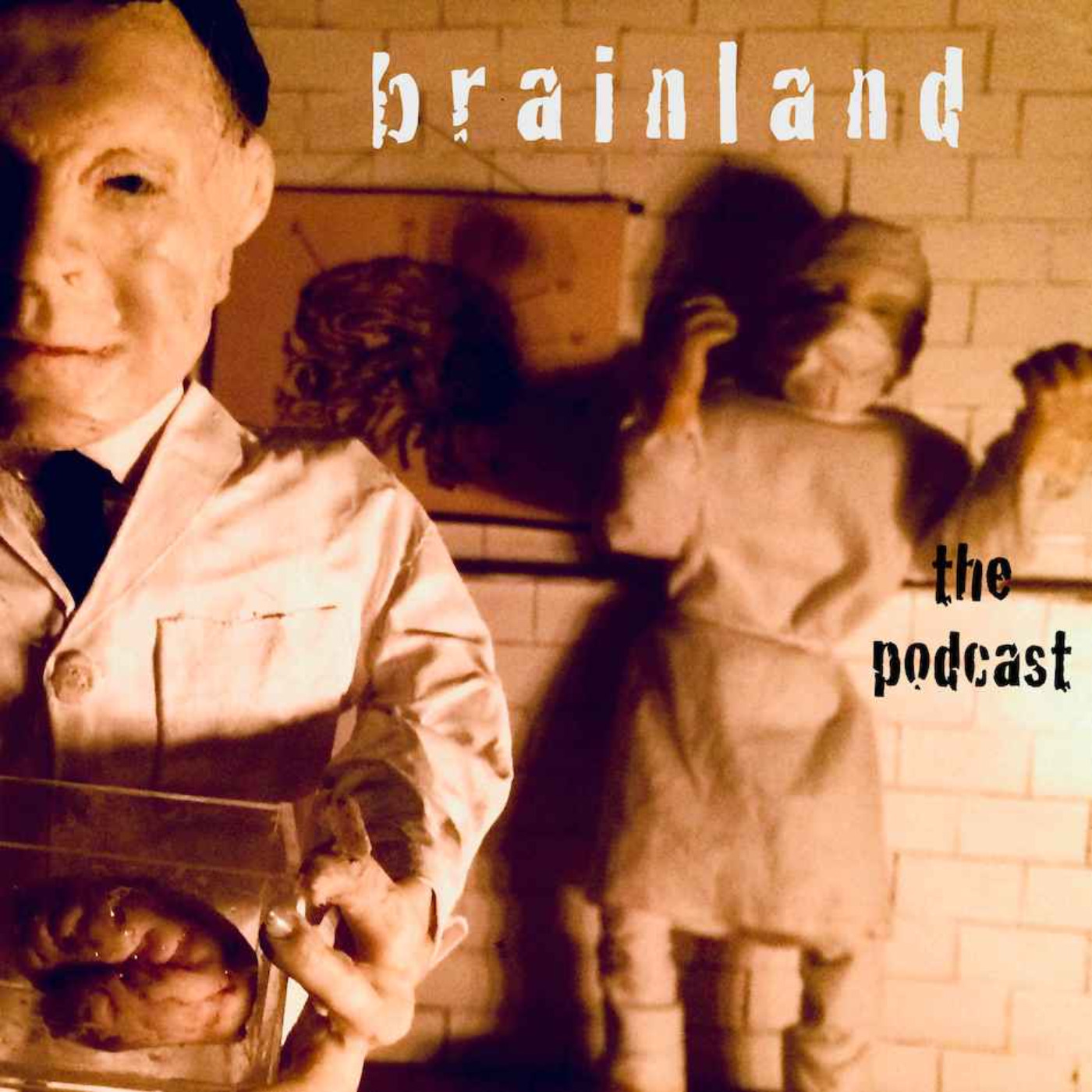
Brainland the podcast navigates the boundary between neuroscience, the arts and humanities with the occasional wander off piste. It began as a neuro-historical exploration of the background to the Brainland the opera but quickly spread its wings. A Brainland Collective production. Hosted on Acast. See acast.com/privacy for more information.
Be sure to visit the podcast's website and support the creator: shows.acast.com
Where to listen?
Podcasts in the app Replaio Radio Coming soonPodcasts are coming to the app soon. Install now and be the first to see a whole new take on podcasts
 Install for free
Android almost 10M downloads · 4.8 rating
iOS soon
Install for free
Android almost 10M downloads · 4.8 rating
iOS soon
Episodes
THE PROTO-PSYCHOLOGY OF MICHEL DE MONTAIGNE 13.10.2026 52:05
In this essay, sorry, podcast, Neil Kenny, specialist in French literature and society in the 16th and 17th centuries opens us the period in which Montaigne composed his 'essais', first published in 1580, before talking about the man himself, including his education (he only spoke Latin for the first six years of his life - an educational experiment of his dad). Neil had suggested a number...
WIREHEADS: An unatural history of technology and the brain. 06.10.2026 44:25
In this episode cultural historian Mike Jay shares some of the stories in his new book 'Wireheads'. Our conversation ranges from an eighteenth century Bedlam patient to Elon Musk's 'Neuralink' along the way taking in Havana syndrome and direct energy weapons, the shifting notion of delusion, hoped for effects of electricity on child intelligence, and a variety of doctors who, o...
PATTERN SEEKING: Autism, evolution and us. 16.09.2026 52:33
In his book 'The Pattern Seekers' Sir Simon proposes that what has made us successful as a species is our ability to see patterns, 'systemise' and create 'if, then, and' sequences that have enabled us to invent and experiment also and how this ability relates to autism. Our conversation travels from a 40 thousand year old tuned bone flute to creating 'neuro-affirmative' environments in schools and...
NEUROMANCER: Cyberpunk at 40. 03.09.2026 53:59
It is 42 years since the publication of William Gibson's game changing science fiction novel 'Neuromancer' and in 2027 Apple TV's much heralded 10 part adaptation of the novel is being released. In this episode academic Curtis Runstedler references the novel's antecedents, including Burgess's 'A Clockwork Orange' and Ballard's 'The Atrocity Exhibition', but especially Ridley Scott's 1982 film 'Bla...
THE RATIO CLUB: UK cybernetics powerhouse. 28.08.2026 1:31:12
In this special 100th episode of Brainland sometime co-host Andy Platman and Ken talk with Phil Husbands about the 'Ratio Club', a dining club of medics, mathematicians, engineers and physiologists that met regularly between 1949 and 1955 to talk cybernetics. Phil's definitive history of the group is in its final edit. The most well known member was, at the time, Grey Walter, who we talked about i...
WHAT HAS GREEK TRAGEDY EVER DONE FOR US? 13.08.2026 1:18:35
Did anyone write about human psychology long before there was such a term? Yes and this season we are going to discuss five of them, beginning with three Greek tragedians. 32 of their plays have survived, written almost two and a half thousand years ago and a small sample of a thousand or so performed in the 'golden age' of Greek democracy. After talking though their historical and social context,...
HUMANISH: The many faces of anthropomorphism 06.08.2026 33:13
In this conversation, animal behaviourist Justin Gregg talk through the many facets of our species' tendency to attribute human qualities to animals and things, as well as the opposite, to deny human qualities to classes of fellow humans. Our conversation ranges over enthusiasm for dolphin midwives, cuddly sharks and alligators and the difference between dogs and wolves. We talk about the possible...
EXPLORING THE AUTISTIC BRAIN 31.07.2026 48:49
In another wide ranging conversation, Prof Rajesh Kana, author of the recent book 'The Neuroscience of Autism' walks us through this potentially complex subject. After definitions we talk about overlaps with other conditions, especially ADHD, and how this is worked with in brain imaging studies. We talk about competing causal hypotheses the varied use of the MRI brain scanner to image structures,...
SPEAK! On the neuroscience of language... 24.07.2026 43:54
In this conversation Jonathan Peelle, language researcher and author of the a recent book on the subject, ranges over many aspects of the brain origins of language. We begin by discussing nineteenth century luminaries Broca and Wernicke and the effect of the First World War on simplistic notions of localisation, revived in modified form by Penfield and Geschwind in the '50s and '60s. We talk about...
CHESS MASTERY AND THE ART OF THINKING SIDEWAYS 19.07.2026 48:58
In this episode expert chess player Jennifer Shahade talks about the world of competitive chess and her motivation for writing her recent book 'Thinking Sideways'. In a wide ranging conversation, we discuss the changes in chess since the events depicted in the TV series 'Queen's Gambit', especially the greater involvement of children, now learning from the age of 4, and also women. We touch on dis...
THE VISIONARY FICTION OF KAREL ČAPEK 15.07.2026 44:45
In this episode John Rieder, a leading authority on early science fiction and its critique of colonialism and more talks about Czech writer Karel Čapek, whose play 'RUR', 'Rossums Universal Robots', introduced the word 'robot' to the world. We discuss the way early sci fi, such as Well's 'War of the Worlds', offered a subtle critique of colonialism and uncontrolled profit/capitalism. John outlines...
CHESS HEAD: Could regular chess playing remodel your brain? 07.07.2026 1:05:13
In this episode we discuss the history and evolution of chess and how chess competence, up to grand master, is rated, including how this would stand up in a scientific research setting. We talk through the range of brain investigation studies included in their recent review and some of the technical background to those tests and limitations of their methods before moving on to the areas of differe...
CHALLENGING THE BOUNDARIES OF THE HUMAN: Post-humanism in literature and film 26.06.2026 54:00
In this episode we explore how post-humanist ideas and perspectives, discussed in the earlier episode with Christine Daigle (season 2, episode 7), are reflected in literature and film. Fresh from teaching a course on post-humanist literature and film, Russ Kilbourn chooses three novels and five films, the former including Mary Shelley's 'Frankenstein' (also discussed in detail at the end of season...
FOUND IN TRANSLATION: Linguistic shape-shifting. 11.06.2026 44:51
In this episode we talk to linguist and academic Nicoletta Asciuto about her York university module 'Found in Translation' and four of her former students. Nicoletta talks about her move from monolingual upbringing to knowledge of ten languages, her decision to teach a module about translating to English from whatever home language. She discusses the often powerful emotional effect of translation...
DERRIDA'S CAT: Exploring the boundaries of the human. 08.06.2026 44:08
In this episode French philosophy specialist Judith Still talks about Jacque Derrida and in particular his late preoccupation with the animal-human boundary. After surveying philosophical writing on animals going back two millennia, including related views on indigenous peoples, the enslaved and women, Judith talks about the challenges of reading Derrida. We discuss his early life, as a Jewish boy...
DOPPELGANGER: Doubles in psychiatry, neurology and fiction. 19.05.2026 1:02:00
In this extraordinarily wide ranging podcast, we talk about doubles from the point of view of psychopathology, neuroscience, and what they tell us about the nature of self. Our neuroscience discussion includes the work of Head, Schilder, Damasio (around the idea of body schema/representations in the brain and their implication - a kind of neural double) followed by a fascinating deviation into Mel...
BIOETHICS AND THE NEW WORLD ORDER 12.05.2026 58:02
Leading ethicist/philosopher Jonathan D. Moreno makes a welcome return to Brainland to discuss his recently published and compelling book 'ABSOLUTELY ESSENTIAL: Bioethics and the Rules-based Order'. We talk about the history of clinical and bioethic and outline their main components in application to humans. Topics discussed include the Nuremberg trials and why it took 20 years before a consensus...
POSTHUMANIST VULNERABILITY 07.05.2026 48:55
In this episode Christine Daigle, a leading figure in posthumanist philosophy and material feminism, begins by defining those terms before unpacking some of the ideas in her recent book 'Posthumanist Vulnerability: An affirmative ethics'. The humanist and Christian traditions both privilege the human, particularly the male human, in the sense of having 'dominion' over the rest of nature and, too o...
FREUD AND THE NEUROSCIENCE OF MENTAL HEALING 30.04.2026 1:08:42
Mark Solms is a neuroscientist and psychoanalyst fluent in German, which is why in the 1990s, he agreed to take on the daunting task of collating and translating Freud's 23 years of writing on the brain and neurology pre-psychoanalysis. In this episode Marks talks in detail about Freud's early work in neuroscience, and explains how this transitioned into his theories of the mind and how to help th...
PROTO: Uncovering the shared origin of the world's most spoken languages. 21.04.2026 42:13
In this episode Laura Spinney talks about the background to her book 'Proto', an extraordinarily wide ranging and engaging account of the origin and archeology of Indo-European languages. We discuss the source of ancient DNA that is uncovering the extraordinary migration west of nomads from the Ukranian and Russian steppe along with their language, the ancestor of the most spoken languages in the...
GEORGE SAND: The life, times and shifting reputation of an early feminist writer and thinker. 02.04.2026 59:19
In this podcast we discuss 19th century French novelist, dramatist and memoirist George Sand. In a wide-ranging conversation, based on Fiona's very readable and recent biography, we talk about Sand's great literary success in an era in which she was a political progressive abolitionist, early feminist and even ecologist. Her unusual origins, unhappy marriage, rapid literary success and famous rela...
TRANSHUMANISM: Humanity's great hope or the devil's work? 24.03.2026 50:09
In this episode Stefan Sorgner, a leading academic in the growing field of transhumanist philosophy defines and talks about his route to the subject before drawing a distinction, elaborated in his upcoming book, on the difference between 'classical' and 'Euro' varieties. He stresses that, in a sense, we have been augmented humans ('cyborgs'), since we acquired the ability to create and use languag...
THE MATCHBOX GIRL: Recreating Hans Asperger's world in fiction 19.03.2026 47:21
In this episode novelist and playwright Alice Jolly talks about her latest novel, 'The Matchbox Girl'' about a neurodiverse girl and then young woman who is referred to Asperger's clinic in Vienna in the 1930s. Alice talks about her decision to use a female patient/narrator and how the book 'felt like a radio you couldn't properly tune in' until she found Adelheid, her narrator's voice. We discuss...
HANS ASPERGER AND THE AUTISTIC SPECTRUM: Reflections on the past, present and future 06.03.2026 42:38
For the first episode of season 3 your host travelled to North London to record a conversation with Dame Uta Frith whose translation of Hans Asperger’s now famous paper was published 35 years ago. After discussing her reasons for moving to the UK, Uta talks about Lorna Wing’s work and influence before discussing the innovative and multidisciplinary clinic in which Asperger...
SEASON 2 FINALE: Surfing Brainland 07.02.2026 30:33
The final episode of season 2 is a compilation of 10 male and 10 female voices from season two, chosen more or less at random, about 90 seconds from each episode sampled at or around 20 minutes in. Thanks to all guests for a fascinating season and see you in season 3. The key to the episodes and timings is below: 1.10. Kimberly Campanello.(26) DANTE, DOPAMINE AND ME: Neuro-poetic and other explora...
Similar podcasts








Listen to the BRAINLAND podcast in Replaio
Radio and podcasts in one app - free, with no sign-up. Install today and do not miss the launch
Replaio is not a podcast publisher; show names, artwork and audio belong to their authors and are distributed through public RSS feeds.