David Pires CA(SA)
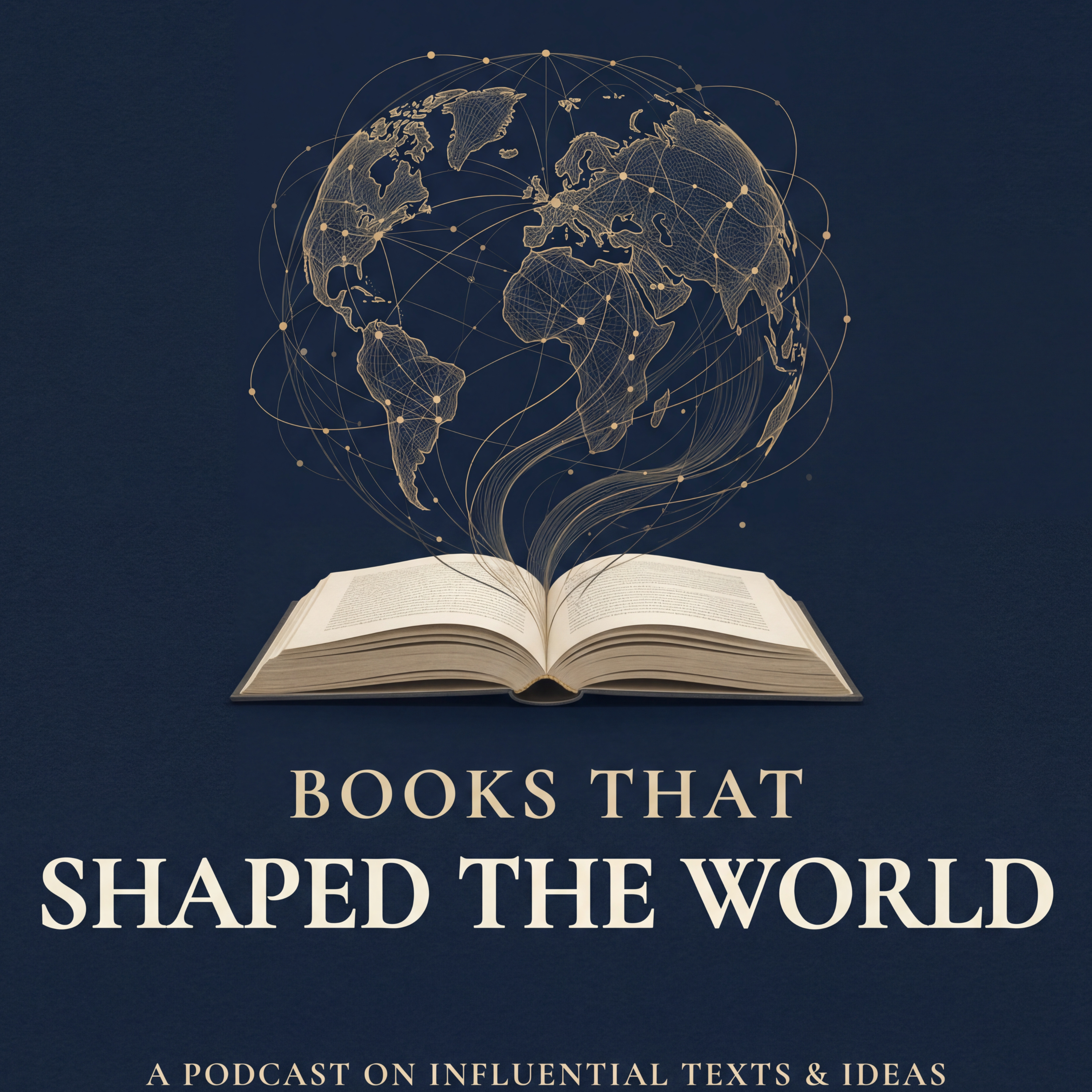
Books that Shaped the World
This is not a book summary podcast. Books That Shaped the World explores the ideas that have influenced how we think, lead, and make decisions. Each episode takes one influential book and examines it with clarity and critique, focusing on what the author really meant, where the ideas still hold up, and where they fall short. From philosophy and psychology to business, politics, and human behaviour, the goal is simple: to help you think more clearly, make better decisions, and apply timeless ideas to modern life.
Be sure to visit the podcast's website and support the creator: podcasters.spotify.com
Author
David Pires CA(SA)
Category
Podcast website
Latest episode
Jun 17, 2026
Where to listen?
Podcasts in the app Replaio Radio Coming soonPodcasts are coming to the app soon. Install now and be the first to see a whole new take on podcasts
 Install for free
Android almost 10M downloads · 4.8 rating
iOS soon
Install for free
Android almost 10M downloads · 4.8 rating
iOS soon
Episodes
The Wealth of Nations by Adam Smith 17.06.2026 43:37
What actually creates wealth in a society? In this episode, we unpack The Wealth of Nations by Adam Smith, a book that fundamentally changed how the world understands economics, markets, and human behaviour. Rather than focusing on money itself, Smith explored something deeper: how productivity, incentives, and self-interest interact to shape entire economies. His ideas introduced concepts like th...
The Confessions by Augustine of Hippo 14.06.2026 29:18
What if the real problem is not that we do not know the truth, but that we resist the truth we already know? In this episode of Books that Shaped the World, we explore Augustine of Hippo’s The Confessions, one of the most influential works in Christian thought, philosophy, and spiritual autobiography. Written in the late fourth century, The Confessions is far more than the story of Augustine’s con...
Discourse on Method by René Descartes 11.06.2026 32:00
What does it mean to truly think for yourself? In this episode, we explore Discourse on the Method by René Descartes, a foundational work that reshaped how we approach knowledge, truth, and reasoning. Written at the dawn of the modern scientific era, Descartes’ argument is simple but profound: before we can know anything, we must first question everything. We unpack his method of systematic doubt,...
The Archetypes and the Collective Unconscious by Carl Jung 11.06.2026 36:21
What if your thoughts aren’t entirely your own? In this episode, we explore Carl Jung’s The Archetypes and the Collective Unconscious, a work that challenges the idea of individual psychology and introduces a deeper, shared layer of the human mind. We break down Jung’s concept of archetypes, the hidden patterns that shape behaviour, belief, and identity across cultures and generations. From the “s...
On the Origin of Species by Charles Darwin 09.06.2026 35:53
What does it really mean for something to adapt and change over time? In this episode, we explore On the Origin of Species by Charles Darwin, a landmark work that reshaped our understanding of how life evolves through natural processes. We break down Darwin’s theory of natural selection in clear, practical terms, examining how variation, environment, and time interact to shape living systems. Rath...
Thus Spoke Zarathustra by Friedrich Nietzsche 07.06.2026 41:14
What happens when the foundations of meaning disappear? In this episode, we explore Thus Spoke Zarathustra by Friedrich Nietzsche, one of the most provocative and misunderstood works in modern philosophy. Rather than offering a traditional argument, Nietzsche delivers a philosophical narrative that challenges religion, morality, and the way we construct meaning. At the centre is a radical idea: if...
The Structure of Scientific Revolutions by Thomas Kuhn 04.06.2026 45:22
What if scientific progress isn’t a steady march forward, but a series of intellectual upheavals? In this episode, we explore The Structure of Scientific Revolutions by Thomas S. Kuhn, a book that fundamentally changed how we understand knowledge, truth, and progress. Kuhn introduces the idea of “paradigm shifts”, moments when established frameworks break down and are replaced by entirely new ways...
A Brief History of Time by Stephen Hawking 02.06.2026 37:32
What if we could understand the entire universe, and what would that actually change? In this episode, we explore A Brief History of Time by Stephen Hawking, a book that set out to answer the biggest questions imaginable. Where did the universe come from? Does time have a beginning? Can everything be explained by a single set of laws? This conversation goes beyond cosmology. It examines how Hawkin...
Critique of Pure Reason by Immanuel Kant 31.05.2026 40:21
What if you’ve never actually experienced reality as it truly is? In this episode, we explore Immanuel Kant’s Critique of Pure Reason, one of the most challenging and influential works in philosophy. Written during the Enlightenment, Kant’s project was radical: to define the limits of human knowledge and explain how the mind shapes everything we perceive. We unpack his central claim that the world...
Being and Nothingness by Jean-Paul Sartre 28.05.2026 25:25
What does it really mean to be free, and why does that idea make so many people uncomfortable? In this episode, we explore Being and Nothingness by Jean-Paul Sartre, one of the most challenging and influential works of 20th-century philosophy. Written during the turmoil of World War II, Sartre’s book confronts a radical idea: that human beings are entirely responsible for who they become. We unpac...
The Odyssey by Homer 26.05.2026 28:45
In this episode of Books that Shaped the World, we explore Homer’s The Odyssey, one of the most influential works ever composed and one of the great stories of return, endurance, and identity. Often remembered as an epic adventure filled with monsters, gods, shipwrecks, and strange islands, The Odyssey is also a profound study of human resilience. Odysseus is not simply trying to get back to Ithac...
Nicomachean Ethics by Aristotle 24.05.2026 36:18
What does it actually mean to live a good life, and why do so many modern definitions of success feel incomplete? In this episode, we explore Aristotle’s Nicomachean Ethics, one of the most influential works in the history of philosophy. Rather than offering rules for right and wrong, Aristotle takes a different approach: he asks what kind of person you need to become in order to live well. We unp...
The Art of War by Sun Tzu 21.05.2026 30:12
This episode explores The Art of War, one of the most enduring texts on strategy ever written. Often misunderstood as a book about combat, it is in fact a guide to thinking clearly in situations of conflict, uncertainty, and competition. We break down Sun Tzu’s core argument , that the highest form of victory is to win without fighting , and examine what that means in modern life. The episode expl...
Leviathan by Thomas Hobbes 21.05.2026 34:49
What keeps society from falling apart? In this episode, we explore Leviathan by Thomas Hobbes, one of the most influential and unsettling works in political philosophy. Written in the shadow of civil war, Hobbes confronts a timeless question: what happens when there is no authority to maintain order? We unpack his concept of the “state of nature,” the logic behind the social contract, and his cont...
The Genealogy of Morals by Friedrich Nietzsche 21.05.2026 41:47
What if your sense of right and wrong isn’t as objective as you think? In this episode, we explore Friedrich Nietzsche’s On the Genealogy of Morals, a provocative and deeply unsettling examination of where morality actually comes from. Rather than treating values like “good” and “evil” as fixed truths, Nietzsche traces them back to historical conflicts, psychological needs, and struggles for power...
Brave New World by Aldous Huxley 19.05.2026 33:00
What if the greatest threat to freedom isn’t oppression, but comfort? In this episode, we explore Brave New World by Aldous Huxley, one of the most unsettling and prescient works of modern literature. Unlike traditional dystopias built on fear and surveillance, Huxley presents a society that maintains control through pleasure, distraction, and engineered satisfaction. We unpack the novel’s core ar...
King Lear by William Shakespeare 18.05.2026 28:10
What happens when you can no longer tell the difference between loyalty and performance? In this episode, we explore King Lear by William Shakespeare, a tragedy that cuts deeply into questions of power, perception, and human error. At the centre is a leader who demands public declarations of love and rewards those who perform best. What follows is not just a personal downfall, but a collapse drive...
Meditations by Marcus Aurelius 17.05.2026 32:15
What does it mean to stay calm, focused, and principled when everything around you is uncertain? In this episode, we explore Meditations, the private writings of a Roman emperor trying to make sense of power, pressure, and human behaviour. Far from a polished philosophical treatise, this is a working document of self-discipline: a man reminding himself how to think. We break down the core Stoic id...
The Republic by Plato 14.05.2026 33:58
What is justice? Who should lead? And why do people so often mistake illusion for reality? In this episode, we explore The Republic by Plato, one of the most influential and controversial works in Western thought. Far more than a political theory, this book examines how human thinking works, why it fails, and what it takes to build both a just society and a disciplined mind. We break down Plato’s...
Summa Theologica by Thomas Aquinas 13.05.2026 33:37
What does it mean to live an ordered life in a disordered world? In this episode of Books that Shaped the World, we explore Thomas Aquinas’s monumental Summa Theologica, one of the most influential works in Christian theology, philosophy, ethics, and Western thought. Written in the thirteenth century, the Summa attempts something extraordinary: to bring together faith, reason, human nature, morali...
Beyond Good and Evil by Friedrich Nietzsche 12.05.2026 36:58
What if “good” and “evil” aren’t objective truths, but human inventions? In this episode, we explore Beyond Good and Evil by Friedrich Nietzsche, one of the most provocative works in modern philosophy. Nietzsche dismantles the idea that morality is fixed or universal, arguing instead that our values are shaped by psychology, power, and cultural history. We examine his critique of traditional moral...
The Interpretation of Dreams by Sigmund Freud 11.05.2026 46:27
What if your mind is hiding things from you? In this episode, we explore The Interpretation of Dreams by Sigmund Freud, a book that fundamentally changed how we understand human thinking. Freud’s claim was bold: dreams are not random, but meaningful expressions of unconscious desires and conflicts. We break down his core ideas, including the unconscious mind, dream symbolism, and the concept of wi...
Man's Search for Meaning by Viktor Frankl 10.05.2026 28:56
What does it take to endure the worst conditions imaginable, and still find purpose? In this episode, we explore Man’s Search for Meaning by Viktor Frankl, a psychiatrist who survived Nazi concentration camps and emerged with a powerful insight: the fundamental human drive is not pleasure or success, but meaning. We unpack Frankl’s theory of logotherapy, his idea of the “existential vacuum,” and t...
The Aeneid by Virgil 07.05.2026 36:02
What does it really take to build something that lasts? In this episode, we explore The Aeneid by Virgil, one of the most influential works in Western literature, and a foundational story about leadership, sacrifice, and destiny. Far from a simple heroic tale, The Aeneid presents a deeply human portrait of Aeneas, a leader driven not by glory but by duty. As he journeys from the ruins of Troy to t...
Moby-Dick by Herman Melville 06.05.2026 47:44
What happens when a man turns his deepest wound into a mission that consumes everyone around him? In this episode of Books that Shaped the World, we explore Herman Melville’s Moby-Dick, one of the most ambitious and unsettling novels ever written. On the surface, it is the story of Captain Ahab’s pursuit of the white whale. Beneath that surface, it is a profound examination of obsession, leadershi...
Similar podcasts







Listen to the Books that Shaped the World podcast in Replaio
Radio and podcasts in one app - free, with no sign-up. Install today and do not miss the launch
Replaio is not a podcast publisher; show names, artwork and audio belong to their authors and are distributed through public RSS feeds.