
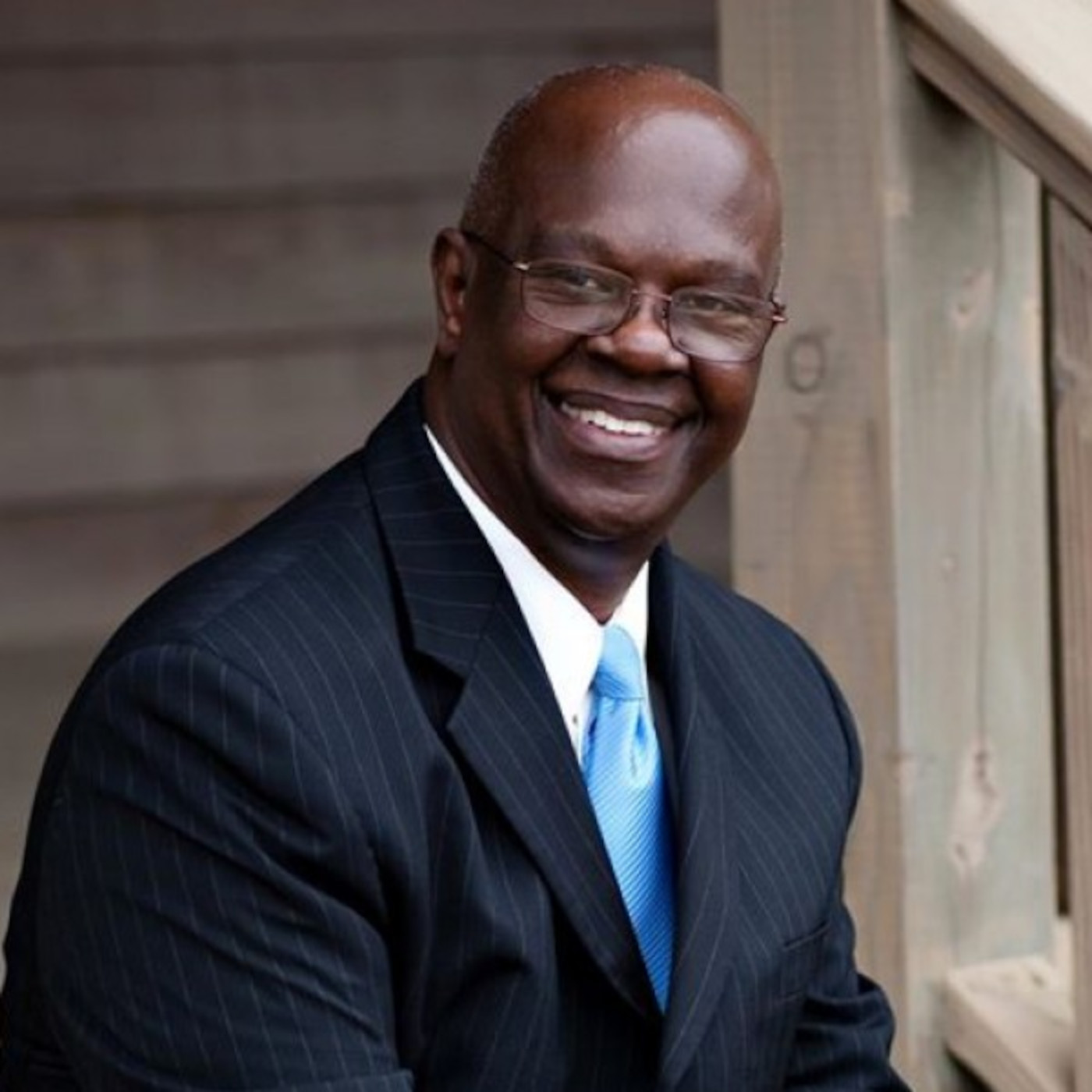
Dr. Thomas Constable, Plano Bible Chapel SonicLight.com
Bible Study with Dr. Thomas Constable
These are extremely informative and entertaining bible study lectures that have blessed many seekers of knowledge and faith over the last 20 years or more. Dr. Thomas L. Constable is a prominent theologian and former professor of Bible Exposition at Dallas Theological Seminary. He is also a pastor at Plano Bible Chapel in Plano, Texas, where he has served for over 50 years. Dr. Constable is widely known for his Bible commentary series, SonicLight.com, which includes Notes on the Bible, Notes on the Minor Prophets, and Notes on Revelation. He is also the author of several books, including "Talk...
Be sure to visit the podcast's website and support the creator: SonicLight.com
Author
Dr. Thomas Constable, Plano Bible Chapel SonicLight.com
Category
Podcast website
Latest episode
Aug 10, 2026
Where to listen?
Podcasts in the app Replaio Radio Coming soonPodcasts are coming to the app soon. Install now and be the first to see a whole new take on podcasts
 Install for free
Android almost 10M downloads · 4.7+ rating
iOS soon
Episodes
Esther 5:1-7:10, Haman Exposed 15.07.2026 27:31
Esther's approach to the king in chapter 5 is a masterclass in strategic wisdom. Rather than presenting her petition immediately, she invites Artaxerxes and Haman to a banquet — then to a second banquet the following day. Constable observes that this delay, which puzzles many readers, may reflect Esther's sensitivity to the right moment, her desire to ensure the king's fullest goodwill, or simply...
Esther 2:21-4:17, Haman's Plot and Esther's Decision 15.07.2026 43:52
Chapter 3 introduces Haman the Agagite, elevated to chief minister and given authority that required universal prostration — an honor Mordecai refused to give. Constable connects Haman's Agagite identity directly to the ancient enmity between Israel and Amalek: Haman is a descendant of Agag, king of the Amalekites, the nation God had commanded Saul to utterly destroy (1 Samuel 15). Mordecai is ide...
Esther 1:1-2:20, God's Preparations 15.07.2026 51:39
Esther is one of only two books in the Bible that never explicitly name God — the other is Song of Solomon — yet Constable argues that His sovereign providence is the book's dominant theme, operating invisibly behind every scene. The setting is the Persian court of Ahasuerus (Xerxes I, 486-464 B.C.) at Susa, the winter capital, approximately fifty years after Cyrus's decree allowed the Jews to ret...
Nehemiah 11-13, Residents of the Land, Dedication of the Wall, and Reforms by Nehemiah 15.07.2026 44:40
The final section of Nehemiah moves from celebration to consolidation to correction. Chapter 11 addresses a practical problem: Jerusalem's newly walled city was largely empty, while most of the returning exiles had settled in outlying towns. One in ten was chosen by lot to relocate to Jerusalem — and those who volunteered are honored with the phrase 'the people blessed all the men who willingly of...
Nehemiah 8-10, The Renewal of the Mosaic Covenant 15.07.2026 58:04
With the walls complete and the city secured, the spiritual center of the book arrives in chapters 8 through 10 — a great assembly for the public reading of the Law, national confession, and covenant renewal. On the first day of the seventh month (the same date prescribed in Leviticus 23:24 for the Feast of Trumpets), all the people gathered in the square before the Water Gate and asked Ezra to br...
Nehemiah 3-7, The Rebuilding of the Walls 15.07.2026 54:27
Chapters 3 through 7 narrate the remarkable 52-day construction of Jerusalem's walls (6:15) in the face of sustained external opposition and internal pressure. Chapter 3 catalogs the workers section by section around the wall — priests, Levites, merchants, rulers, goldsmiths, and perfumers — illustrating the breadth of community participation that Nehemiah's leadership inspired. Constable observes...
Nehemiah 1-2, The Return Under Nehemiah 15.07.2026 55:27
Nehemiah and Ezra together form a unified narrative of Israel's post-exilic restoration — Ezra restoring the temple and the Torah, Nehemiah restoring Jerusalem's walls and civil governance. Constable notes that while Ezra was a priest-scribe focused on spiritual reformation, Nehemiah was a layman in a position of political power, and together their complementary roles illustrate that God uses diff...
Ezra 9-10, Restoration of the People 15.07.2026 56:02
Upon arriving in Jerusalem, Ezra discovered that many Israelites — including priests, Levites, and civil leaders — had intermarried with the pagan peoples of the land, repeating the very sin that had led to the Babylonian exile. Constable stresses that the issue was not ethnic purity but spiritual faithfulness: 'The issue was not ethnic purity but the recognition that intermarriage could lead to s...
Ezra 7-8, Restoration of God's Reputation 15.07.2026 1:00:41
A gap of 58 years separates Ezra 6 from Ezra 7 — during which the events of the Book of Esther took place. In 458 B.C. God moved Ezra, a priest and skilled scribe who was a descendant of Aaron, to lead a second group of exiles back to Jerusalem. The phrase 'the gracious hand of his God was upon him' appears as a leitmotif throughout these chapters (7:6, 9, 28; 8:18, 22, 31), emphasizing divine ena...
Ezra 2-6, Restoration of the Temple 14.07.2026 1:00:17
Chapters 2 through 6 narrate the first return under Sheshbazzar and Zerubbabel and the decades-long effort to rebuild the Jerusalem temple. Constable notes that 'the temple was the basis for the postexilic community's fellowship with God' — its reconstruction was not merely architectural but covenantal. The returnees erected the altar of burnt offerings before laying a single stone of the temple i...
Ezra — Overview 14.07.2026 54:31
Ezra and Nehemiah were originally one book in the Hebrew Bible, and together they record God's restoration of Israel after the Babylonian Captivity — a period Jeremiah had prophesied would last 70 years. Constable states the book's central message plainly: 'God does not discard what He has chosen, but He remakes it when it fails.' Four permanent truths emerge from the book: God's instruments are d...
2 Samuel 24, Pestilence from David's Sin 14.07.2026 41:38
The book closes as it opened — with plague caused by a failure of the LORD's anointed. God's anger against Israel allows Satan to incite David to number his fighting men, placing confidence in military strength rather than in Yahweh; Joab protests but is overruled. The census reveals over a million soldiers. David's conscience strikes him immediately after — 'I have sinned greatly' — and the LORD...
2 Samuel 23, David's Last Testament 14.07.2026 44:33
David's final oracle is cast as inspired prophecy: the 'sweet psalmist of Israel' speaks as one whose words are Yahweh's words. The ideal ruler, he says, is like the morning sun on a cloudless day — bringing light, warmth, and the sprouting of the earth's vegetation — a description that points beyond David to a future Messiah. David's confidence rests on the Davidic Covenant, which he knows is 'ev...
2 Samuel 22, David's Praise of Yahweh 14.07.2026 48:13
David's great psalm of praise — preserved almost verbatim as Psalm 18 — stands at the center of the epilogue and expresses the four convictions about Yahweh that defined his entire life: God is Israel's supreme Ruler; God is consistently righteous in His dealings with people; God is always merciful; and God's will is always best. Written early in his reign, the psalm celebrates what Yahweh has don...
2 Samuel 21, Famine from Saul's Sin 14.07.2026 40:57
A three-year famine strikes Israel early in David's reign; when David seeks the LORD, he learns the cause is Saul's violation of the ancient treaty with the Gibeonites, whom Joshua had promised protection in Yahweh's name. The Gibeonites ask for seven of Saul's descendants to be executed at Gibeah; David agrees, sparing only Mephibosheth for Jonathan's sake. Rizpah, a concubine of Saul's, keeps wa...
2 Samuel 20, Revolt Against David 14.07.2026 41:30
Tribal jealousy erupts even as David is restored: a Benjamite named Sheba ben Bichri blows a trumpet and calls Israel to withdraw from David, rallying the ten northern tribes in a premature act that anticipates the kingdom division a generation later. David sends the newly appointed Amasa to gather Judah's forces, but Amasa is slow; Joab intercepts him at Gibeon, greets him with a kiss, and drives...
2 Samuel 19, David Mourns for Absalom 14.07.2026 39:11
David's grief for Absalom overwhelms his role as king: 'O my son Absalom! Would I had died instead of you.' His soldiers slink back into Mahanaim as though they had lost, shamed by the king's uncontrolled mourning. Joab — for the third time in the narrative functioning as the one who tells David what he does not want to hear — confronts him boldly: you have shamed the men who saved your life; unle...
2 Samuel 18, The Death of Absalom 14.07.2026 34:36
The battle in the forest of Ephraim is decisive: 20,000 of Absalom's men fall and the terrain itself devours more than the sword. David's agonizing order — 'Deal gently with the young man Absalom for my sake' — is relayed to every commander. Absalom's mule passes under a great oak and his head is caught in the branches; he hangs suspended between heaven and earth, his kingdom lost. A soldier finds...
2 Samuel 17, Ahithophel and Hushai Give Counsel to Absalom 14.07.2026 38:59
Ahithophel gives brilliant military advice: pursue David immediately with 12,000 men while he is weary and dispirited, kill the king alone, and the people will submit without a general battle — 'I will bring back all the people to you as a bride returns to her husband.' Hushai, David's plant, counters with an appeal to Absalom's pride and fear: David is a fierce warrior who will not be found easil...
2 Samuel 16, Shimei Curses David 14.07.2026 35:48
Two men with ties to Saul's house appear to David as he flees. First, Ziba — Mephibosheth's servant — arrives with generous provisions and claims Mephibosheth is hoping the kingdom will revert to Saul's line; David accepts the report too quickly and awards Ziba all of Mephibosheth's land. Then Shimei, a Benjamite from Saul's clan, follows David's entourage pelting him with stones and cursing him a...
2 Samuel 15, Absalom's Attempt to Usurp David's Throne 14.07.2026 43:43
Absalom spends four years at the city gate positioning himself as the champion of every man whose case David neglects, 'stealing the hearts of Israel' through celebrity rather than genuine leadership. He then travels to Hebron under a pious vow, where he is proclaimed king in a coordinated uprising that includes the defection of Ahithophel, David's most trusted counselor. David flees Jerusalem bar...
2 Samuel 14, Events Leading up to Absalom's Rebellion (continued) 13.07.2026 40:23
Joab perceives David's longing for Absalom and engineers a masquerade: a wise woman from Tekoa presents a fictional case parallel to David's — a mother whose surviving son killed his brother and now faces execution, which would extinguish her family's last coal. When David renders judgment for the fictional son, the woman turns the argument: is the king not doing the same thing by keeping Absalom...
Events Leading up to Absalom's Rebellion 13.07.2026 41:52
The sword Nathan promised begins to fall within David's own household. Amnon, David's firstborn, becomes obsessed with Tamar, his half-sister and Absalom's full sister. His 'friend' Jonadab devises a scheme: Amnon feigns illness, requests Tamar's care, and when they are alone, rapes her despite her pleading protests and her offer to request David's permission for legitimate marriage. Afterward Amn...
2 Samuel 12, Nathan Confronts David 13.07.2026 40:50
After months of unconfessed guilt — Psalm 32 describes the inner torment — God sends Nathan with a parable: a rich man with vast flocks steals and slaughters a poor man's single beloved lamb. David erupts in righteous indignation and condemns the man; Nathan delivers one of the most dramatic sentences in all of Scripture: 'You are the man.' God's fourfold judgment unfolds: the sword will never dep...
Similar podcasts







Listen to the Bible Study with Dr. Thomas Constable podcast in Replaio
Radio and podcasts in one app - free, with no sign-up. Install today and do not miss the launch
Replaio is not a podcast publisher; show names, artwork and audio belong to their authors and are distributed through public RSS feeds.
