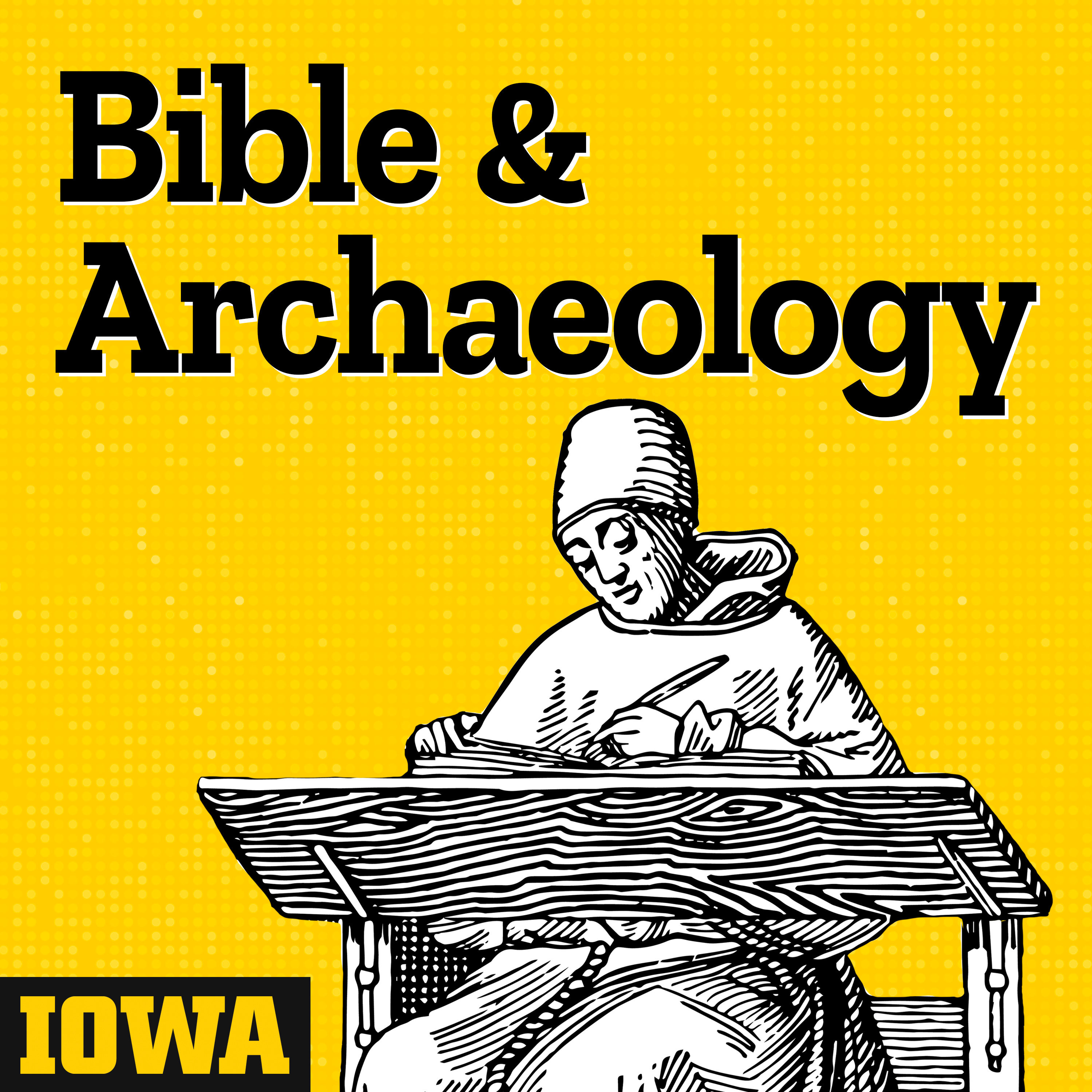
Bible and Archaeology
Bible and Archaeology
The place for anything and everything about the lands, civilizations, and archaeology of the Bible. Join Biblical scholar Dr. Jordan Jones and guests as they discuss the stories, people, and objects we all think we know. Have a question? You can send it to us at: bible-archaeology@uiowa.eduWhere to find us: https://linktr.ee/bibleandarchaeology
Be sure to visit the podcast's website and support the creator: uiowa.edu
Where to listen?
Podcasts in the app Replaio Radio Coming soonPodcasts are coming to the app soon. Install now and be the first to see a whole new take on podcasts
 Install for free
Android almost 10M downloads · 4.8 rating
iOS soon
Install for free
Android almost 10M downloads · 4.8 rating
iOS soon
Episodes
How Bad Did Ancient Rome Smell? 14.10.2026 45:47
How bad did Ancient Rome really smell? This week, historian Garrett Ryan of Toldinstone joins Bible & Archaeology to explore everyday life in the Roman Empire! From Roman sewers and sanitation, to free bread, retired gladiators, and the role rats and mosquitoes played in the fall of Rome, we'll explore how seemingly trivial questions reveal surprising connections between Roman history, cul...
The Flood Story Before Noah 07.10.2026 47:20
The story of Noah's Flood has striking parallels in ancient Mesopotamia, but some of those flood traditions are more than a thousand years older than the biblical text. This week, Joseph Lam joins Bible & Archaeology to explore the flood stories of Atrahasis, Gilgamesh, and ancient Mesopotamia. Why did the gods send the flood? What did an ancient ark supposedly look like? And does the evid...
Paul's Weirdest Promise: You'll Outrank the Angels 30.09.2026 1:06:32
Did Paul think his followers would become angels? Scholar David Burnett says no. He argues Paul thought they'd outrank them. In 1 Corinthians, Paul says his followers will judge the angels and describes resurrection bodies that shine like stars. David Burnett argues that this reflects an ancient cosmic hierarchy in which the stars were understood as celestial beings, and that Paul's vision...
The Dead Sea Scrolls Were Found. The Story Came Later. 23.09.2026 51:40
The Dead Sea Scrolls are famous for the story of how they were discovered, but how much of that story is really about the texts themselves? Eva Mroczek joins Bible & Archaeology to explore why we’re fascinated by lost and hidden texts, how discovery stories turn ancient sources into mysteries, and what these stories reveal about our hopes for recovering the past. From the Dead Sea Scrolls to a...
How Assyria Changed God 16.09.2026 1:06:00
The Assyrians built one of the ancient world’s most powerfulempires, but what drove the Assyrian Empire's dramatic rise? And why did it fall so quickly? This week, Eckart Frahm joins Bible & Archaeology to trace Assyria's history, from its emergence as a major power to its eventual collapse. Along the way, we explore the reigns of famous Assyrian kings likeTiglath-Pileser III and Ashur...
Samson's Story Isn't About His Hair. Judges 13–16 Explained 09.09.2026 47:48
What is the story of Samson really about? Samson is often remembered as the strong man whose power was tied to his hair, but the story in Judges 13–16 is far more complicated. This week, Bob Cargill joins the podcast to explore Samson’s story, from his unusual birth and Nazirite status to his conflicts with the Philistines and his eventual downfall. We look at Samson’s violence and his role as a j...
How the Israelite Priesthood Really Developed 02.09.2026 46:19
Who controlled religion in ancient Israel? The Israelite priesthood may look like a straightforward institution, but its history is anything but simple. This week, Nathan MacDonald joins the podcast to to trace the development of the ancient Israelite priesthood and present his reconstruction of how the Israelite priesthood developed, drawing on the Hebrew Bible and the broader history of ancient...
Why Biblical Books Didn't Have Titles 26.08.2026 46:59
Why is Genesis called Genesis when ancient Israelites didn’t call it that? And why didn't books in the Hebrew Bible have titles? This week, Seth Sanders joins the podcast to discuss how writers organized, referenced, and transmitted these titleless biblical texts, and what the absence of titles reveals about the Bible's origins and implications. ✨ Support what we do and help make videos like this...
How Satan Became God’s Greatest Enemy 19.08.2026 1:07:01
Satan wasn't always God's greatest enemy. In the Hebrew Bible, “the satan” appears as an agent in God's heavenly court. But by the New Testament, Satan has become the Devil, God's cosmic opponent, and in Revelation, he is a terrifying dragon. This week, Peter Miller returns to Bible & Archaeology to trace the surprising development of Satan across the New Testament. How did thi...
The Philistines Stole the Ark of the Covenant. Then People Started Dying. 12.08.2026 45:20
What happened when the Philistines captured the Ark of the Covenant? In 1 Samuel, the Ark brings plague, mice, death, and toppled idols to the Philistines, forcing them to return it to Israel. But the strange events don’t end there because more Israelites die on its return. But why? This week, Bob Cargill is back to explore one of the Bible’s strangest stories. Join us as we examine what this stor...
Why Did Hezekiah and Josiah Really Change Israel’s Religion? 05.08.2026 41:39
What happens when kings try to control how an entire kingdom worships? This week, Shane Thompson joins us to explore cult centralization in the ancient world through three famous rulers: Hezekiah, Josiah, and Akhenaten. What can archaeology, the Hebrew Bible, and ancient Near Eastern history tell us about these dramatic reforms? From religious reforms in Judah to Aten worship in ancient Egypt, we...
What the Bible Really Says About Sex Work 29.07.2026 37:38
This week, Leslie Virnelson joins us to explore how the Hebrew Bible's view of sex work differs dramatically from modern assumptions. From big-name characters like Ruth and Tamar to the concepts of prostitution and adultery, we'll challenge some of the most common misconceptions about sexuality, sex work, and law in the biblical world. ✨ Support what we do and help make videos like this p...
Why The Odyssey Was Never Historically Accurate 22.07.2026 33:57
Is The Odyssey historically accurate? This week, classicist Celsiana Warwick joins the podcast to explore some of the enduring questions behind Homer's Odyssey, from Odysseus' "heroism" and the real role of Penelope, to questions of historical accuracy in translation and adaptation. 📚 Reading Recommendations Wilson (accessible/contemporary) Fitzgerald (poetic) Lattimore (line by...
Did Archaeologists Find The Tabernacle? 15.07.2026 35:38
Did archaeologists really find the biblical Tabernacle at Shiloh? Every year, headlines claim a new "discovery" has uncovered the Ark of the Covenant or the Tabernacle, but what does the archaeology actually show? This week, Jordan and Mary Kate examine the latest excavations at Shiloh, the history of research at the site, the claims made by the Associates for Biblical Research, and what...
Is John's Gospel More Historical Than We Thought? 08.07.2026 39:12
Why do historical Jesus scholars skip the Gospel of John? This week, Dr. Paul Anderson joins the podcast to explore why John has often been dismissed as "too theological," what archaeology and topographical details reveal about the Gospel, and whether John preserves independent historical traditions alongside its theology. Can historians afford to ignore John, or is it time to rethink ou...
Why Does Jesus Keep His Identity Secret? 01.07.2026 39:41
Why does Jesus repeatedly tell people not to reveal who he is in Mark? For over a century scholars have explained this through the “Messianic Secret.” But what if we’re missing a key piece? This week Robyn Walsh joins the podcast to place Mark in the context of Greco-Roman literature. Comparing Mark to Homer’s Odyssey and other ancient texts, she argues Jesus’ hidden identity may reflect familiar...
Nicaea Didn't Decide the New Testament (So Who Did?) 17.06.2026 49:50
How did the New Testament become the New Testament? This week, we are exploring the long process of canon formation with Ian Mills. From the myth of a single moment at Nicaea, the impact of authority, popularity, councils, and empire, to the role of figures like Marcion and Jerome, we'll unpack the gradual standardization that shaped the New Testament canon (or as much as we can). 📚 Reading R...
The Empire That Invented Its Own History, and Made It Stick 10.06.2026 43:32
After the death of Alexander the Great, a new imperial power emerged across Western and Central Asia: the Seleucid Empire. But how did it actually hold such a vast territory together, and how much of its “history” was carefully constructed after the fact? This week, we explore how Seleucid rulers shaped memory, built cities, minted propaganda on coins, and even influenced dating systems to legitim...
The Moabite Stone Changes How We Read the Bible 03.06.2026 40:54
In 2 Kings 3, Israel appears to lose a battle after the king of Moab performs a child sacrifice on the city wall. Why would the Hebrew Bible preserve a story where a foreign god seems to defeat Israel’s armies? This week, Jordan and Mary Kate break down the Mesha Stele (Moabite Stone), ancient warfare, divine conflict, prophecy, propaganda, and the strange ending of one of the Bible’s most debated...
The Ancient Israelite Fear Worse Than Death 27.05.2026 58:37
What happened when you died in ancient Israel? The Hebrew Bible offers no clear picture of heaven or hell, but it does preserve a fascinating world of ancestors, burial rituals, Sheol, and the ongoing process of dying. This week, Dr. Matthew Suriano joins the podcast to talk about death and the afterlife in the Hebrew Bible, including the meaning of nefesh, the importance of burial, and why a “bad...
How Young Did Girls Marry in the Bible? 20.05.2026 1:05:17
In this episode, Susan Ackerman joins us to explore the life cycle of women in ancient Israel, from puberty and marriage to motherhood, ritual impurity, and death. We discuss why childbirth made women “unclean,” why women occupied a liminal role in ancient Israel, the story of Jephthah’s daughter, the concept of social menopause, and more. Along the way, we unpack what archaeology and biblical tex...
What “Passing Through the Fire” Really Meant 13.05.2026 50:03
Did ancient Israelites really sacrifice children? Dr. Kristine Garroway joins us to separate myth from archaeology. We dig into child burial practices, infant mortality, and what the archaeological record actually tells us. Spoiler: there are no mass burial pits of sacrificed children in ancient Israel, but what's really behind those "passed through fire" passages may surprise you. 📚 Reading Reco...
How Ancient Mesopotamia Invented School (And Why We've Misread the Evidence) 06.05.2026 1:18:26
What did it take to become a scribe in ancient Mesopotamia, and how do we actually know? This week, Dr. Joshua Bowen reveals how the physical shape of clay tablets unlocked the secrets of ancient education, and why the literary texts describing school life can't always be taken at face value. From vocabulary lists and memorization to indoctrination and local variation, the archaeology tells a very...
Acts Is Shockingly Accurate, And That's The Problem 29.04.2026 41:45
Was the author of Acts trying to preserve history, or persuade you of something deeper? For years, readers have pointed to Acts’ historical accuracy as proof of its reliability. But what if that accuracy is actually part of the literary strategy? In this conversation with CJ Cornthwaite, we explore why Acts may be more historically precise than expected, and why that actually raises bigger questio...
Is Everything You Know About Egyptian Mummies Wrong? 22.04.2026 44:57
What were Egyptian mummies really for? This week, Kara Cooney joins Bible & Archaeology to explore what mummification in ancient Egypt was really about, and who it was really for. From natural preservation in the desert to elite-controlled workshops and secret techniques, we unpack how mummification functioned as a display of power and how their afterlives reveal consequences the Egyptians the...
Similar podcasts






Listen to the Bible and Archaeology podcast in Replaio
Radio and podcasts in one app - free, with no sign-up. Install today and do not miss the launch
Replaio is not a podcast publisher; show names, artwork and audio belong to their authors and are distributed through public RSS feeds.