
Rob S
6 iron spikes
This is an actual play recording of Death on the Reik, a chapter in Games Workshop’s classic Warhammer Fantasy Roleplaying campaign: The Enemy Within.
Be sure to visit the podcast's website and support the creator: 6ironspikes.blogspot.com
Where to listen?
Podcasts in the app Replaio Radio Coming soonPodcasts are coming to the app soon. Install now and be the first to see a whole new take on podcasts
 Install for free
Android almost 10M downloads · 4.8 rating
iOS soon
Install for free
Android almost 10M downloads · 4.8 rating
iOS soon
Episodes
10.05.2025
Dogs of War ( White Dwarf #86 ) Chris Fenton’s overview of merc life splits them into two types: experienced vets and bravos. Most are bravos, opportunistic fighters prone to looting when work runs dry, fueling the profession’s bad reputation. Vets, with at least five years of service and their own gear, despise bravos, who in turn fear the vets. Most mercs are middle-class backgrounds, as poor fa...
Thieves’ Den 20.02.2025
( Imagine #24 ) Imagine magazine targeted young novice players, and its main legacy is the rich city setting, Pelinore . Venetia Lee’s take on Thieves Guilds stood out enough that I figured I would take a look. What’s it about? Lee presents a thieves' guild not as a centralized location—too vulnerable—but as a decentralized network of mutual aid and exploitation. A cell structure ensures survival...
Crude But Effective. Simple tactics for humanoids 17.02.2025
( Dragon #199 ) Derek Jensen explores humanoid tactics with a side of fiction. I loved the Uruk Hai battle manual, so this kind of article is right up my alley. What’s it about? It opens with fiction—something I don’t like in my RPGs. Derek argues that most DMs treat humanoids as disposable, but since they live in a constant state of war, they should rely on patrols, ambushes, traps, and tricks wi...
A Guide to Dungeon Mastering. Part II: Monsters & Magic & Part III: Some conclusions 16.02.2025
( White Dwarf #35 & #36 ) I’m combining two articles to wrap up the Lew Pulsipher articles I picked out to read. High hopes! What’s it about? In Monsters & Magic, Lew advises against random monster and magic item placement. Avoid homogenous monster groups—balance encounters as you would a party. Consider how monsters interact—slaves, allies, enemies—and place them accordingly. Intelligent...
A Guide to Dungeon Mastering. Part I: Setting up Adventures 15.02.2025
( White Dwarf #34 ) Lew Pulsipher tends to repeat his advice, making it hard to track where certain tips originated. Hopefully, this Dungeon Mastering series offers some fresh insights. What’s it about? Lew suggests generating ideas by reading the rules and considering their implications—what would you do as a beholder? He recommends carrying a notebook to capture ideas immediately, even if they s...
That’s life in the big city 14.02.2025
( Dragon #99 ) The Town Planner series in White Dwarf has worn me down—hopefully, Dragon ’s take on cities is an easier read. What’s it about? The article emphasizes that fantasy cities shouldn't resemble modern ones but should still be grounded in historical reality. It provides population benchmarks: towns at 2,000 people, cities between 20,000 and 100,000. Russian villages and towns are occasio...
Banditry Inc - A Referee’s Guide to Thieves Guilds 12.02.2025
( White Dwarf #76 ) White Dwarf’s best era for AD&D-focused content spans issues 10–40, with later issues featuring broader system-agnostic material. Here, Olivier Legrand explores thieves guilds—an underdeveloped aspect of the core game. What’s it about? The article frames thieves guilds as medieval mafias. Not all thieves are members—muggers operate independently—but specialists like...
The 7-sentence NPC 11.02.2025
( Dragon #184 ) I’m wary - Dragon #184 is deep into 2e. C. M. Cline’s short article on creating gameable NPCs gets lots of love online. Is it deserved? What’s it about? We put effort into major antagonists and allies but neglect minor NPCs, defaulting to repetitive stereotypes. Guilty as charged—my town watch, innkeepers, and blacksmiths all blend together. Cline offers a fix that keeps the worklo...
Monsters Have Feelings Too 11.02.2025
( White Dwarf #38 ) Oliver opens with a story showing a contrast: a dull goblin ambush versus a well-planned evil party assaulting a merchant caravan. His point? There's no reason monsters shouldn’t be as tactical as players. What’s it about? Monsters—aside from the undead and constructs—value their lives and shouldn’t attack without reason, whether it's racial hatred or sadism. Oliver states 'If...
The Naked Orc - A Study in Orcish Society 10.02.2025
( White Dwarf #53 ) A short article on Orc’s with lots of evocative John Blanche artwork to fire the imagination. What’s it about? Art inspires the reader and elevates RPGs. Russ Nicholson and John Blanche make White Dwarf feel so much bigger. In this article Rufus Wedderburn looks to move orcs beyond their Monster Manual depiction towards Tolkien. The article introduces various orc types: cowardl...
Town Planner - Part II: Designing towns and cities 09.02.2025
( White Dwarf #32 ) Paul Vernon's 'Town Planner' series continues this time looking at the layout of towns and cities. What’s it about? Paul looks asks did the town grow from a village or is the town planned? If planned, it’s likely owned by a noble, church, or merchant group, often near a castle, abbey, or river crossing. Like villages, towns need an economic foundation—trade is their lifeblood....
Town Planner - Part I: Designing and running villages 08.02.2025
( White Dwarf #31 ) Paul Vernon kicks off this well-regarded series with a focus on authentic medieval village design. What’s it about? Villages need an economic base—usually agriculture, livestock, or resource extraction (mining, fishing, forestry). Strategic locations, like crossroads, a mountain pass or river crossings, may also provide the reason for the village existing. Fresh water is essent...
The Dungeon Architect Part III: The Populated Dungeon 06.02.2025
( White Dwarf #27 ) Last in the series. Roger Musson tackles the challenge of filling a dungeon with monsters and treasure. What’s it about? Roger sees dungeons as a fallback when inspiration runs dry, offering routine through reconnaissance, mapping, target identification and looting. At the same time dungeons feel productive—yielding XP, treasure, and items—the real work lies in populating rooms...
The Dungeon Architect Part II: The Constructed Dungeon 06.02.2025
( White Dwarf #26 ) Roger Musson discusses dungeon layout—rooms, corridors, and traps - with an emphasis on disorienting the party. What’s it about? Musson favors large dungeons, settling on 200 rooms a level (fewer below 4th level) to provide plenty of treasure for leveling before descending and opportunities to get lost. Verticality: With 40' between levels, he suggests pits, galleries, sloping...
The Dungeon Architect Part I: The Interesting Dungeon 05.02.2025
( White Dwarf #25 ) Roger Musson argues that NPCs and their plots are the key to creating an interesting and fun dungeon. What’s it about? Musson critiques the “randomly generated dungeon,” where encounters are assembled without thought or flavor, resulting in a dull, procedural experience. While this might seem like a straw-man argument, I’ve played in dungeons like this, so the criticism holds w...
Beyond the rule book: Procedure and style tips for good GMing 04.02.2025
( Dragon #75 ) How do you DM—not the mechanics, but the approach? Lew Pulsipher offers 20 tips in what may be his magnum opus for Dragon or White Dwarf. What’s it about? Lew stresses consistency, logical application of rules, and establishing clear boundaries - don’t let players push you around. Not all published rules are good, so apply them sensibly. Avoid mid-session rule changes, share house r...
Similar podcasts





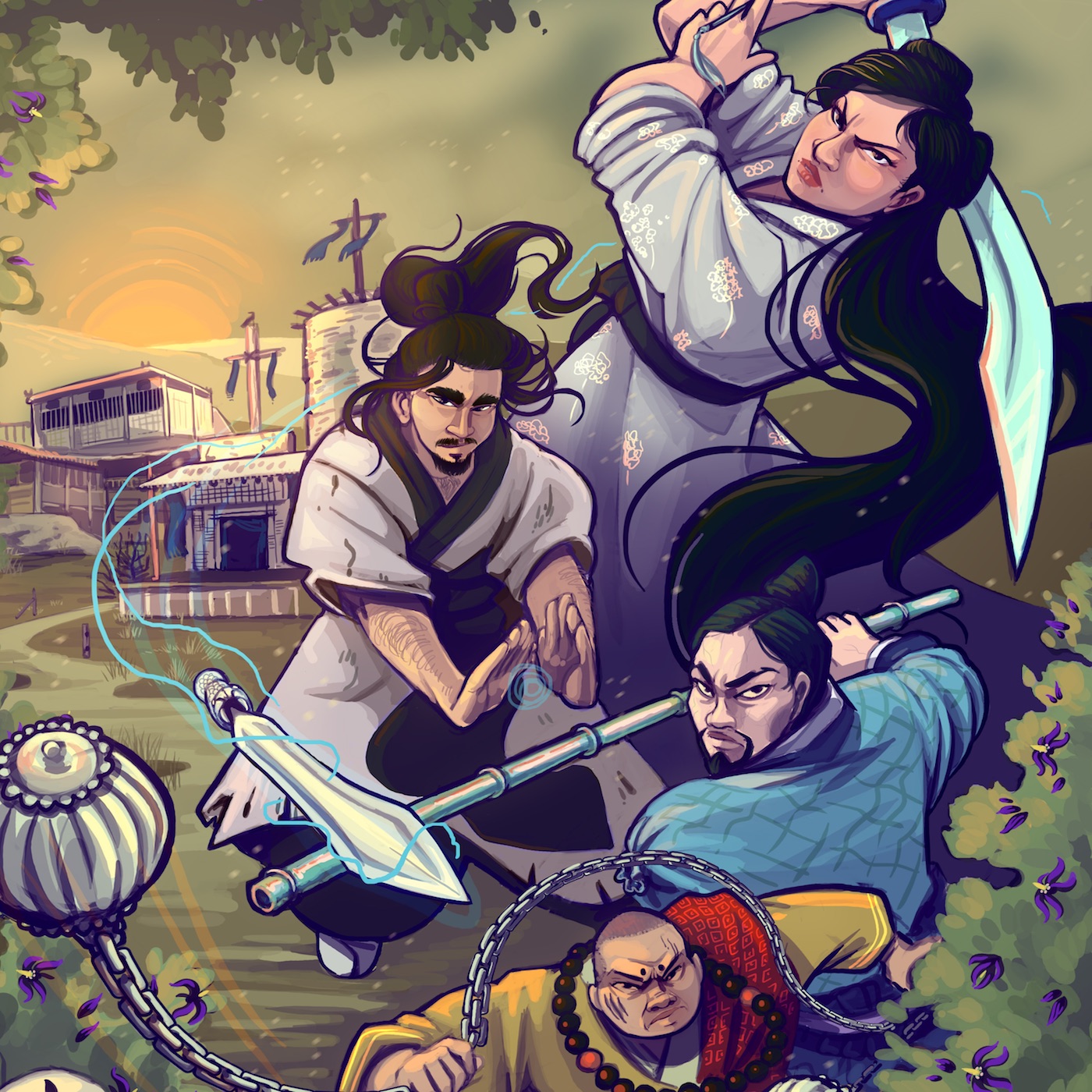

Listen to the 6 iron spikes podcast in Replaio
Radio and podcasts in one app - free, with no sign-up. Install today and do not miss the launch
Replaio is not a podcast publisher; show names, artwork and audio belong to their authors and are distributed through public RSS feeds.
