Nathan M. F. Charles — Former federal prosecutor and Navy SEAL officer; Managing Partner at Charles International Law.
The Rule of Law Brief
A principled defense of constitutional governance, civil liberties, and professional ethics in the face of rising authoritarianism—anchored in legal rigor, national security insight, and a commitment to nonviolent resistance. natecharles.substack.com
Visita il sito del podcast e sostieni chi lo crea: natecharles.substack.com
Autore
Nathan M. F. Charles — Former federal prosecutor and Navy SEAL officer; Managing Partner at Charles International Law.
Categoria
Sito del podcast
Ultimo episodio
22 nov 2026
Dove ascoltare?
I podcast nell'app Replaio Radio In arrivoI podcast stanno per arrivare nell'app. Installala ora e scopri per primo un modo tutto nuovo di vivere i podcast
 Installala gratis
Android 10 mln+ di download · valutazione 4,7+
iOS in arrivo
Episodi
The Real Problem with AI Might Be a Legal One 22.11.2026 4:25
I’m skeptical that AI will suddenly become conscious and take over the world. I’m more concerned about a problem that requires no consciousness at all. When organizations let one automated system act on the decisions of another, with no human reviewing the handoffs, it can become remarkably hard to reconstruct what happened when something goes wrong. Consider the Riemann hypothesis, a problem abou...
Equal Rights for Israeli Citizens. What About Palestinians? 19.11.2026 7:08
In my first Rule of Law Brief reaction video, I respond to Jacob Donnelly’s rebuttal of Abdul El-Sayed on equal rights in Israel. Donnelly keeps coming back to the rights of Israeli citizens. That leaves a question his argument never answers. What rights and protections should Palestinians in Gaza and the West Bank have when Israel exercises power over their lives? I also push back when Donnelly a...
Defending Western Culture? Start by Understanding It. 12.11.2026 3:09
“Immigration threatens Western culture” gets repeated as though its meaning—and its truth—were obvious. Which culture? Which values? And what evidence shows that immigrants are destroying them? In this episode, I examine that talking point through the classical tradition its proponents invoke: Socratic self-examination, Epictetus’s world citizenship, Plato’s obligations toward strangers, and Cicer...
The Legal Case for Impeaching Pete Hegseth 11.11.2026 9:35
Impeachment does not require a criminal conviction. It requires Congress to determine whether an official’s conduct amounts to a grave abuse of office and a betrayal of public trust. In this episode of The Rule of Law Brief , I examine all eight articles of impeachment introduced by Representative Thomas Massie against Defense Secretary Pete Hegseth. I explain which allegations I find compelling,...
Soapbox 2026: Free Speech Shouldn’t Depend on Your Passport 09.11.2026 5:24
I left FIRE’s Soapbox 2026 conference encouraged—and thinking about where Charles International Law can do more to defend freedom of expression. Immigration and First Amendment litigation increasingly overlap, especially when international students face visa revocation, detention, or removal after expressing political views. In this episode * My Soapbox experience: exceptional speakers, facilities...
The Republic Is Worth Defending. Get Out and Vote. 03.11.2026 2:15
Today is Election Day, and the message is simple: Get out and vote. After a brief hiatus from the Rule of Law Brief —thanks to a welcome period of growth and activity at Charles International Law—Nathan Charles returns with an urgent reminder that voting is more than a constitutional right. It is a civic responsibility essential to the survival of the American republic. In this brief episode, Nath...
There Are Leaders Walking Among You 26.10.2026 13:39
After a quarter century marked by war, economic upheaval, a pandemic, and repeated uncertainty, the U.S. Naval Academy Class of 2001 has become very comfortable operating in crisis mode. Advance planning remains a work in progress—as our class president, Jen, can probably attest. But returning to Annapolis for our 25-year reunion gave me something I badly needed: renewed resilience. My classmates...
Lebanon County Mail-In Ballots Are Here — Don’t Forget the Stamp 02.10.2026 0:59
Mail-in ballots for Lebanon County, Pennsylvania, are arriving in voters’ mailboxes. I received mine today, October 2, and if you requested a mail-in ballot, yours may be waiting for you as well. When you complete it, follow the enclosed instructions carefully: completely fill in the ovals for your chosen candidates, place the ballot inside the yellow security envelope, seal it, and place that env...
When Military Expertise Becomes an Illegal Export 01.10.2026 4:45
Recent reports have raised questions about whether Western military veterans—including potentially former U.S. Navy SEALs—provided military training to Russian nationals who later fought in Ukraine. The underlying allegations remain disputed, and I have no inside information about whether they are true. But the reports highlight a serious legal issue that every veteran working in overseas defense,...
Cash in Hand, But Still Locked Out: Being Unbanked in America 30.09.2026 3:58
Imagine having enough money to hire a lawyer but no practical way to pay. For people who rely on cash, an online checkout screen can become a barrier to essential services. In this episode of the Rule of Law Brief , Nathan M. F. Charles examines the challenges facing unbanked individuals, particularly newly arrived immigrants and people seeking refuge in the United States. He explains why financia...
Prior Restraint: When Can the Government Stop You From Speaking? 26.09.2026 6:15
What exactly is a “prior restraint,” and why does the First Amendment treat it differently from punishment imposed after someone speaks? In this Rule of Law Brief, attorney Nate Charles explains one of the most important—and frequently misunderstood—doctrines in First Amendment law. Drawing on Supreme Court decisions including Alexander v. United States , Organization for a Better Austin v. Keefe...
Trump TV and the Line We Once Drew 23.09.2026 2:52
In this Rule of Law Brief, I discuss the White House’s new “Trump TV” stream through the lens of my work as a military war planner. Our plans accounted for how agencies such as the State Department would support a broader strategy, including the legal limits on public diplomacy aimed at foreign audiences. The Smith–Mundt Act of 1948 authorized the United States to explain its policies abroad. Amen...
Learn When to Take “No” for an Answer 18.09.2026 2:38
Today’s Rule of Law Brief is a little different from my usual political and legal commentary. Sometimes a legal lesson simply walks up to your front door. While I was at my wife’s house outside Nashville, a door-to-door roofing solicitor stopped by offering a free inspection for storm damage. There is nothing inherently wrong with that. Small businesses need customers, salespeople need leads, and...
The President Cannot Cut You a $5,000 Check 11.09.2026 1:56
President Trump has promised Americans a $5,000 “tariff dividend” if Republicans win the midterm elections. Commentators are debating whether the promise is realistic—or whether conditioning it on an electoral victory resembles bribery. But those questions overlook the central constitutional problem: the President cannot unilaterally withdraw money from the Treasury. Article I gives Congress the p...
The Victory al Qaeda Wanted 08.09.2026 4:22
September 11th defined my early adulthood. I was training to become a Navy SEAL when the planes struck the towers, and I later completed multiple combat deployments to Afghanistan because of those attacks. That experience taught me that terrorism is not merely violence. It is violence calculated to provoke a political and psychological reaction. Terrorist movements attack civilians hoping that gov...
Why Charles International Law Is Going (Back) to Sea 04.09.2026 3:11
Charles International Law is expanding its practice into maritime law and personal injury on the high seas. In this episode, Nathan M. F. Charles explains why maritime law—one of the oldest and most distinctly international bodies of law—is a natural extension of the firm’s existing work at the intersection of people, governments, commerce, and legal systems across borders. The expansion also draw...
Flock Cameras and the End of Practical Privacy 29.08.2026 5:15
Imagine the government could enter your license plate into a computer and, within seconds, learn where you work, where you worship, which doctors you visit, whose homes you frequent, and whether you have attended a political protest. Flock cameras are often presented as ordinary crime-fighting tools. They photograph vehicles traveling on public roads and help police locate stolen cars, missing chi...
McCarthyism with Better Graphics: The State Department’s Cuba Report 28.08.2026 7:37
Cuba has conducted genuine—and sometimes devastating—espionage operations against the United States. Ana Belén Montes penetrated the Defense Intelligence Agency. Walter and Gwendolyn Myers spied for Cuba for nearly three decades. Victor Manuel Rocha secretly served Havana while rising through the State Department and serving on the National Security Council. Those cases deserve serious counterinte...
Temporary Protection, Unchecked Power 07.08.2026 6:24
Temporary Protected Status—better known as TPS—is one of the clearest examples of America using immigration policy to advance both humanitarian values and foreign-policy interests. Congress created TPS through the Immigration Act of 1990, but the underlying principle dates back decades: the United States should not force people to return to countries devastated by war, natural disaster, political...
The Biggest Mistake Asylum Seekers Make: Filing Too Soon 04.08.2026 7:19
Every year, asylum seekers arrive in the United States hoping for safety and a chance to rebuild their lives. Yet many make one critical mistake—not because they’re dishonest, but because our immigration system unintentionally pressures them into it. In this episode of The Rule of Law Brief , immigration attorney Nate Charles explains why filing an asylum application before you’re truly prepared c...
Foreign Agents, Political Violence, and the Rule of Law: Show Us the Evidence 16.07.2026 5:13
Foreign influence operations are real. As a former federal prosecutor in the National Security Division of the U.S. Department of Justice, I spent part of my career enforcing the statutes designed to combat them. In this episode, I explain what an agent provocateur is, why Congress enacted multiple overlapping statutes to address foreign influence, and why those laws already provide prosecutors wi...
Why the Trump Administration Wants to Destroy the International Criminal Court 14.07.2026 3:42
For decades, the United States has maintained a complicated relationship with the International Criminal Court. Although the United States has never fully accepted ICC jurisdiction over American nationals, it has generally tolerated the Court’s existence because it serves broader U.S. interests in promoting international law and accountability. That approach appears to be changing. In this episode...
Textualism Defends Birthright Citizenship 08.07.2026 6:19
The debate over birthright citizenship has produced no shortage of historical quotations—but are those quotations being interpreted correctly? In this episode of The Rule of Law Brief , attorney Nate Charles examines one of the most frequently cited statements from Senator Jacob Howard, the principal Senate sponsor of the Fourteenth Amendment. Rather than arguing politics, he applies traditional c...
Survive: The Most Important Lesson Before America's 250th 29.06.2026 5:55
This episode concludes my four-part Run-up to the 250th series with what I believe is the most important lesson of all: survive. The challenges facing the United States were decades in the making. Rebuilding trust, restoring constitutional norms, and strengthening our institutions will take decades as well. That means thinking beyond election cycles, avoiding burnout, making strategic decisions, a...
What the Third Amendment Reveals About NATO 28.06.2026 6:38
For years, the debate over NATO has been framed almost entirely around one question: Are America’s allies spending enough on defense? That question misses one of the alliance’s greatest strategic assets. In this episode, I argue that the Third Amendment—although not directly applicable to NATO—captures an enduring principle about sovereignty: the presence of foreign troops on a nation’s territory...
Podcast simili





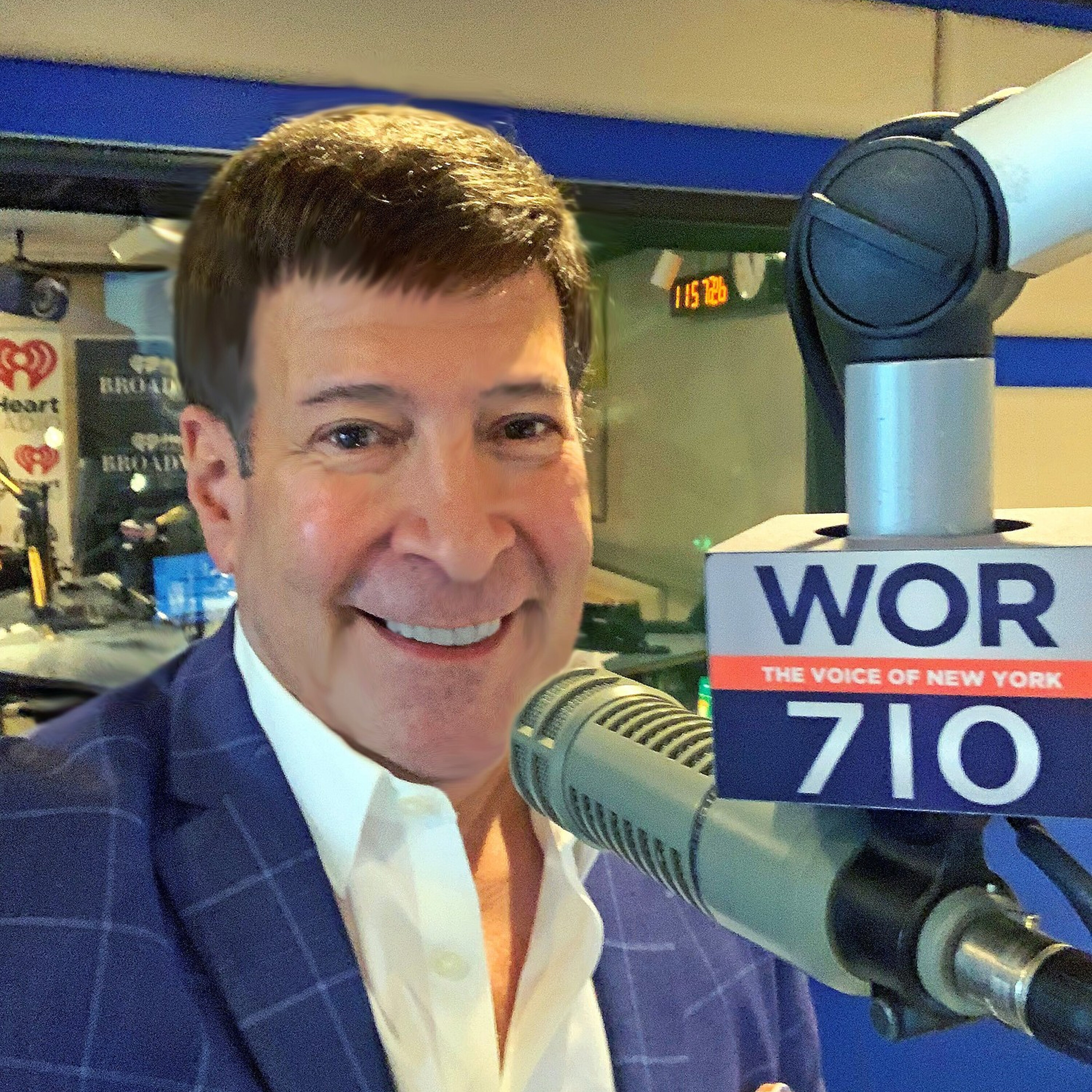


Ascolta il podcast The Rule of Law Brief su Replaio
Radio e podcast in un'unica app - gratis e senza registrazione. Installala oggi e non perderti il lancio
Replaio non è un editore di podcast; i nomi dei programmi, le copertine e l'audio appartengono ai rispettivi autori e vengono distribuiti tramite feed RSS pubblici