Andy
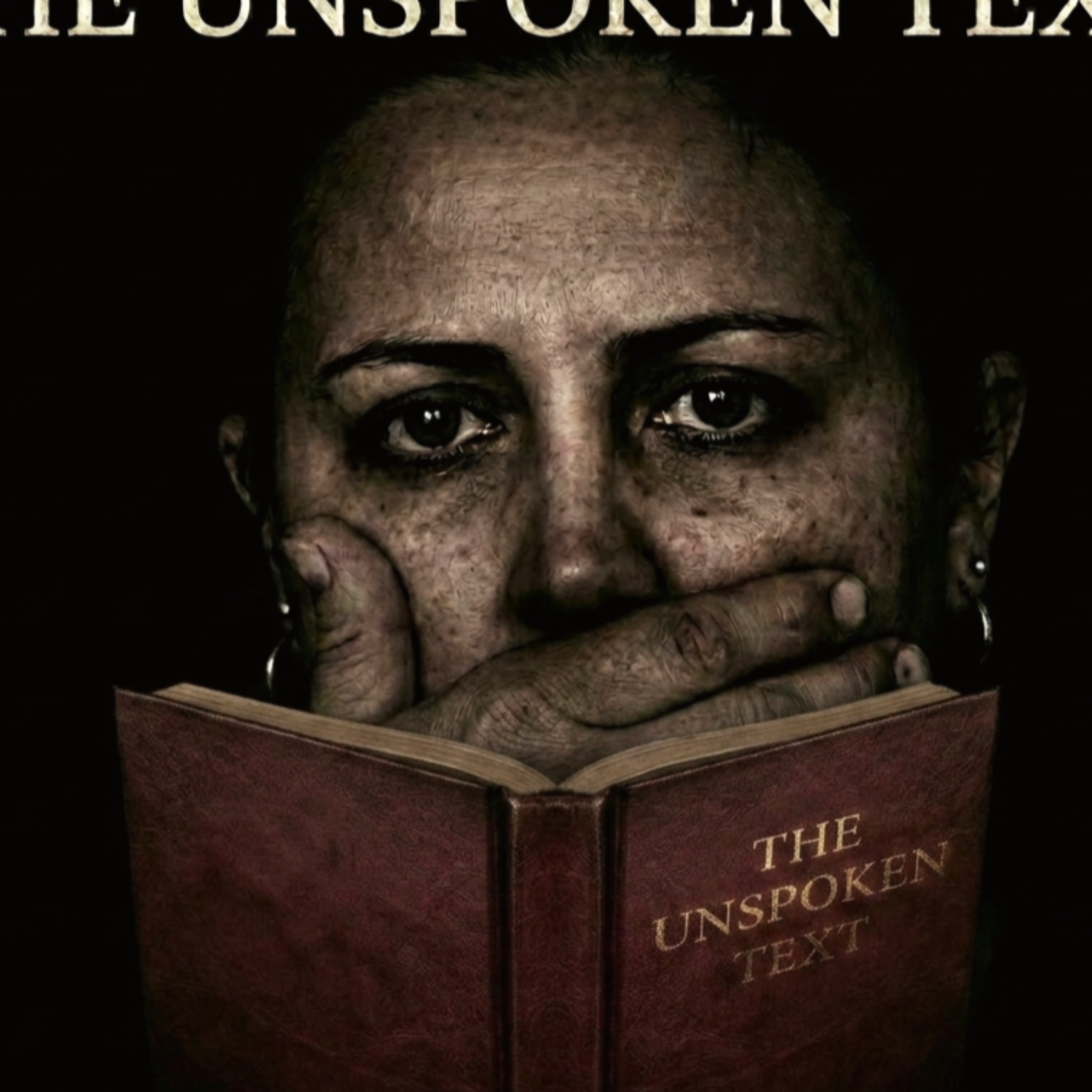
The Unspoken Text
The Unspoken Texts is a podcast built from books—not trends. It uncovers powerful, often overlooked works across finance, history, politics, and beyond. Created by a young mind questioning the noise, each episode breaks down complex ideas into clarity for those who seek depth over popularity—and truth beyond what’s easily seen.
N'hésitez pas à visiter le site du podcast et à soutenir son créateur : podcasters.spotify.com
Où écouter ?
Les podcasts dans l'appli Replaio Radio Bientôt disponibleLes podcasts arrivent très bientôt dans l'appli. Installe-la dès maintenant et découvre en avant-première une toute nouvelle façon de vivre les podcasts
 Installe-la gratuitement
Android près de 10 M de téléchargements · note de 4,8
iOS bientôt
Installe-la gratuitement
Android près de 10 M de téléchargements · note de 4,8
iOS bientôt
Épisodes
Episode 3.9 —The tragedy — why ordinary people always lose 21.08.2026 48:48
Quigley's most pessimistic argument: the system is designed to stay the sameCarroll Quigley's most uncomfortable argument is not about wars or banking dynasties or secret networks. It is about elections. He argues that in Western civilization, it does not matter which political party wins — because the real structure of power sits above electoral politics entirely, and it is designed to ab...
Episode3.8 —Money, debt, and who controls the system 14.08.2026 37:01
Quigley's theory of how financial power really worksGovernments have armies. Corporations have lobbyists. But Carroll Quigley argues that the most powerful force in modern civilization is something far less visible — the ability to create credit and control the flow of money. In this episode we go deep into Quigley's analysis of how the international financial system actually works, the ro...
Episode 3.7 —The Cold War as a managed conflict 07.08.2026 47:29
Was the USSR a genuine threat — or a useful one? The Cold War was the defining conflict of the second half of the twentieth century — a forty-year standoff between freedom and communism that shaped everything from military spending to foreign intervention to domestic politics across the Western world. Carroll Quigley suggests a different reading: that the Cold War was not simply a genuine ideologi...
Episode 3.6 —WWII — the version history classes don't teach 31.07.2026 44:49
Quigley's account of the political and financial decisions behind the warThe version of World War II most people know is a story of good versus evil, of democracies rising to defeat fascism. Carroll Quigley's version is more complicated and far more disturbing. In this episode we examine what Tragedy and Hope documents about the behind-the-scenes decisions that made WWII possible — who fin...
Episode 3.5 —Who actually controls foreign policy? 24.07.2026 40:59
The Council on Foreign Relations, the Royal Institute, and the men behind the curtainMost people believe foreign policy is made by elected governments. Carroll Quigley argues it was not — at least not in Britain or the United States during the 20th century. In this episode we examine his documented claim that a private network operating through organizations like the Council on Foreign Relations a...
Episode 3.4 —The Great Depression was not an accident 17.07.2026 1:10:30
Quigley's argument that economic collapse was preventable — or engineeredThe standard history of the Great Depression is a story of unfortunate mistakes — bad policy decisions made by well-meaning people who simply did not understand what was happening. Carroll Quigley tells a different story. In this episode we examine his argument that the collapse of 1929 was not inevitable, that it was the...
Episode 3.3 —How WWI was really financed — and who benefited 10.07.2026 34:55
War, banking, and the men who got rich from the killingWorld War I killed seventeen million people. It also made certain banking families extraordinarily wealthy. In this episode we go into what Quigley documents about the financial mechanics behind WWI — which institutions financed both sides of the conflict, what the war debt structure actually meant for ordinary people, and whether the prolongi...
Episode 3.2—The network that ran the world 03.07.2026 41:22
Quigley's "Establishment" — secret society or just old boys' club? Carroll Quigley names names. In Tragedy and Hope he documents a real Anglo-American network built around Cecil Rhodes, Alfred Milner and the Round Table groups — a coordinated structure that, according to Quigley, controlled foreign policy, finance, universities and the media across Britain and the United States. In this episode we...
Episode 3.1—The book they didn't want you to read 26.06.2026 45:37
Why Tragedy and Hope was suppressed — and what it actually saysIn 1966, a Georgetown professor named Carroll Quigley published a 1,400-page book that documented the real structure of power behind Western civilization — using private records no other historian had ever been granted access to. Then the book quietly disappeared. In this first episode of The Unspoken Text's Tragedy and Hope series, we...
Episode 2.6—What the Great Depression tells us about today 19.06.2026 49:18
Lessons from the 1930s for modern finance The gold standard is gone. The four central bankers are long dead. But the questions raised by Lords of Finance have never been more relevant. In this final episode of the series, we cover how the world rebuilt its financial system after the Depression — the abandonment of gold, the New Deal, and the Bretton Woods conference that created the IMF and the Wo...
Episode 2.5— The crash — how four bankers let the world collapse 13.06.2026 43:49
1929 and the descent into the Great Depression. October 1929. The New York stock market collapsed, and within months the crisis had spread to every corner of the global economy. Banks failed. Trade collapsed. Unemployment exploded. And the four central bankers — the men who had more power than anyone to respond — made it worse. In this episode we go through the Great Depression year by year, cover...
Episode 2.4—The crash — how four bankers let the world collapse 05.06.2026 43:07
The false boom before the 1929 crash The 1920s looked like prosperity. Stock markets were surging, capital was flowing freely across borders, and the four central bankers congratulated themselves on having rebuilt the global financial system from the wreckage of WWI. But beneath the surface, the foundations were rotting. In this episode, we cover the secret 1927 meeting in New York where the four...
Episode 2.3—The gold standard — the rule that broke the world 29.05.2026 49:13
Why central bankers worshipped gold and why it failed them. The gold standard was supposed to be the foundation of a stable, prosperous global economy. Instead it became a trap — one that the world's most powerful central bankers built themselves and then could not escape. In this episode, we explain exactly how the gold standard worked, why it was considered sacred by nearly every serious economi...
Episode 2.2 —WWI broke the financial world — here's how 22.05.2026 49:07
War debts, reparations, and the collapse of the old order World War I did not just kill millions of people — it destroyed the financial architecture that had held the global economy together for decades. When the war ended, Britain and France owed enormous debts to the United States. Germany was handed a reparations bill it could never realistically pay. And the gold standard, which had kept curre...
Episode 2.1 — The four men who controlled the world's money 15.05.2026 49:34
Who were the central bankers behind the Great Depression? In the 1920s, four men held more power over the global economy than any politician, general, or president. They were the heads of the world's four most powerful central banks — Benjamin Strong of the US Federal Reserve, Montagu Norman of the Bank of England, Émile Moreau of the Banque de France, and Hjalmar Schacht of the Reichsbank. None o...
Episode 1.5 —The BIS today — digital currencies and the future of financial control 08.05.2026 52:02
The Bank for International Settlements is no longer just a relic of the past — it is actively shaping the future of money right now. In this episode, we cover the BIS's central role in developing Central Bank Digital Currencies, or CBDCs, and what that means for every person who uses money. A CBDC is a digital version of a national currency issued directly by a central bank — programmable, traceab...
Episode 1.4 —The Basel Accords — how one bank sets the rules for all banks 01.05.2026 47:18
Every bank in the world — from the largest investment bank on Wall Street to your local credit union — operates under rules created by a committee inside the BIS. Those rules are called the Basel Accords. In this episode, we break down what Basel I, Basel II, and Basel III actually require banks to do, why each one was created in response to a different financial crisis, and what changed each time...
Episode 1.3 —After the war — how the BIS rebuilt its power 24.04.2026 45:45
At the end of World War II, the United States pushed to have the Bank for International Settlements shut down permanently. It failed. Not only did the BIS survive — it came back stronger. In this episode, we trace how the BIS quietly rebuilt its influence during the Cold War by positioning itself as the one place where central bankers from rival nations could meet privately, away from their govern...
Episode 1.2 —The secret bank that did business with the Nazis 17.04.2026 44:37
While millions were dying across Europe, the Bank for International Settlements stayed open — and kept doing business with Nazi Germany. In this episode, we go into one of the darkest and least-discussed chapters in financial history: how the BIS accepted looted Nazi gold, processed transactions for the Reichsbank, and served as a back-channel between Allied and Axis powers throughout the war. Thi...
Episode 1.1 — The Bank Governments Can’t Touch 10.04.2026 39:59
Episode 1 — The Bank Governments Can’t Touch What if there exists a bank that governments don’t control—but quietly rely on? In this first episode of The Unspoken Texts , we begin our deep dive into The Tower of Basel, a book that uncovers one of the most powerful yet least understood institutions in global finance: the Bank for International Settlements. This episode focuses on the introduction a...
Podcasts similaires






Écoute le podcast The Unspoken Text sur Replaio
La radio et les podcasts dans une seule appli - gratuite, sans inscription. Installe-la dès aujourd'hui et ne rate pas le lancement
Replaio n'est pas éditeur de podcasts ; les noms des émissions, les visuels et l'audio appartiennent à leurs auteurs et sont diffusés via des flux RSS publics