Yizhou Wang
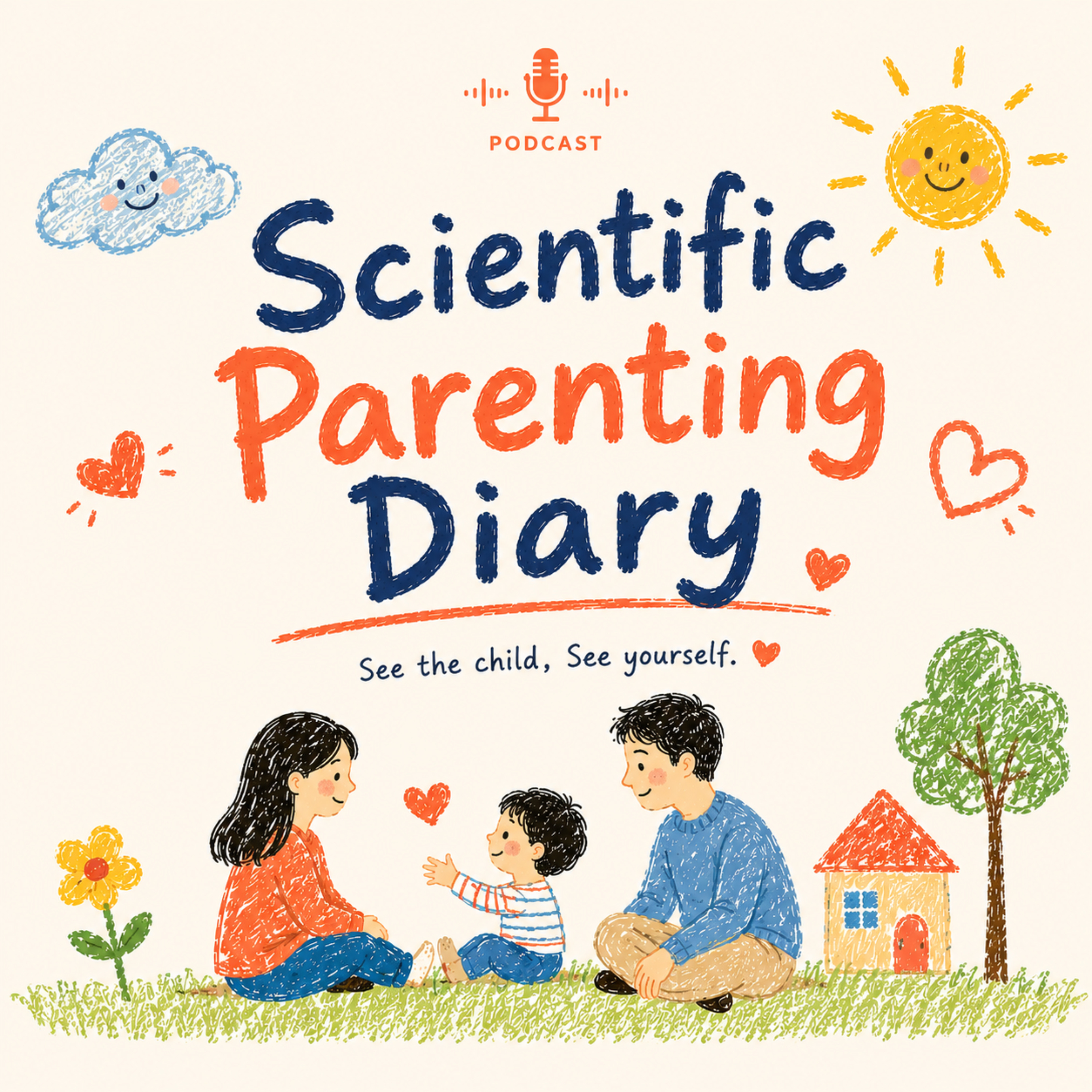
Scientific Parenting Diary
Scientific Parenting Diary is a podcast for curious, thoughtful parents who want to raise children with clarity, confidence, and compassion. Blending science, everyday experience, and practical insights, this show explores how evidence-based parenting can guide the way we nurture, teach, and grow with our kids.
N'hésitez pas à visiter le site du podcast et à soutenir son créateur : podcasters.spotify.com
Auteur
Yizhou Wang
Catégorie
Site du podcast
Dernier épisode
25 oct. 2026
Où écouter ?
Les podcasts dans l'appli Replaio Radio Bientôt disponibleLes podcasts arrivent très bientôt dans l'appli. Installe-la dès maintenant et découvre en avant-première une toute nouvelle façon de vivre les podcasts
 Installe-la gratuitement
Android près de 10 M de téléchargements · note de 4,8
iOS bientôt
Épisodes
44.Halloween Candy: Healthy Teeth, Smart Choices 25.10.2026 24:19
Halloween is here! Your child comes home with a bucket overflowing with candy—chocolates, gummies, lollipops, sour treats, and more. For kids, it's pure excitement. For parents, the questions are just beginning. How much candy is too much? Are some treats worse for teeth than others? Is it better to enjoy candy at once or spread it out over several days? What if your child insists on one more...
43.Kids’ Dental Care-Cavities, Brushing & Growing Independence 20.10.2026 50:22
Your child brushes twice a day—so why do cavities still happen? If baby teeth eventually fall out, do they really need treatment? And when children proudly announce, “I can brush my own teeth!”, is it finally time for parents to step back? The transition from baby teeth to permanent teeth is more than a dental milestone. It's also a time when children are learning to take responsibility for th...
42.From Losing Baby Teeth to New Teeth 12.10.2026 47:23
When children begin losing their baby teeth, parents often find themselves with a whole new set of questions. Why has one child already started losing teeth while another has not? How long should it take for a permanent tooth to appear? Why do the two sides of the mouth seem to change at different speeds? Why do new permanent teeth look so big, crooked, or crowded? And if a permanent tooth starts...
41.How Children Learn to Find Their Own Next Step — Developing Autonomy 05.10.2026 46:49
Your child has a room full of toys—so why do they still come over and ask: “What should I do now?” This does not necessarily mean they do not know how to play, lack imagination, or are not independent enough. When no one provides the next step, children have to do something surprisingly complex: come up with possible activities, choose among them, get started, and then stay engaged long enough for...
40.They Can Do It—Why Do They Still Need Reminders? | Self-Regulation 20.09.2026 39:12
Your child knows how to get dressed, clean up, and prepare to leave the house—so why do they still need so many reminders? It is easy to assume that once a child can complete a task, they already know how to manage it independently. But if we slow the process down, we may notice something different: the adult is often the one noticing what is unfinished, checking for mistakes, deciding what should...
39.They Remembered—So Why Did They Forget? — The Development of Prospective Memory 12.09.2026 37:41
When children sincerely agree to do something later, why does it sometimes seem to vanish from their minds when the moment actually arrives? And why can a simple reminder suddenly bring it all back? At the heart of this puzzle is prospective memory —our ability to remember to carry out an intention in the future. For preschool children, remembering what they are supposed to do and spontaneously r...
38.Beyond Following Directions: How Children Begin to Plan Ahead 07.09.2026 47:09
If a five-year-old can follow directions—put on their shoes, grab a water bottle, brush their teeth, and get ready for bed—does that mean they already know how to plan? Not quite. Following a plan and creating one are two very different things. For young children, planning doesn’t begin with calendars, schedules, or carefully organized to-do lists. It starts much smaller: understanding that events...
37."Fiver more minutes": why is it so hard for children to stop? 31.08.2026 47:50
Why do preschoolers keep asking for “five more minutes”—even when we have already warned them that it is time to stop? For young children, leaving the playground, putting away the blocks, ending a favorite activity, or settling down for bed is not simply a matter of listening or refusing to listen. A successful transition draws on developing skills such as attentional shifting, inhibitory control,...
36.Beyond Hurry: Helping Children Build a Sense of Time 07.06.2026 44:30
Why do preschool children seem to slow down exactly when it is time to leave the house? And why does saying “hurry up” often make the morning feel even harder? In this episode of The Scientific Parenting Diary, we explore how young children develop a sense of time, why clock-based phrases like “five more minutes” can feel abstract to them, and why everyday routines place a surprisingly heavy deman...
35.From Preschool to Kindergarten: What Should Parents Prepare? 18.05.2026 43:26
Around age five or six, many children move from preschool, daycare, or early childhood programs into a more formal school setting such as Kindergarten. To adults, this may look like simply changing schools. But for children, it can mean a major shift in daily rhythm, teachers, classmates, rules, routines, arrival time, and expectations for independence. In this episode of The Scientific Parenting...
34.Helping Kids Find Day and Night Again: Beat Jet Lag After Long-Haul Travel 11.05.2026 40:37
After a long-haul flight, why can a child feel exhausted during the day but suddenly become wide awake at night? Why might they struggle to sleep even when they are clearly overtired? Why do mealtimes feel off, and why might hunger show up in the middle of the night? In this episode of The Scientific Parenting Diary, we explore what happens inside a preschooler’s body after crossing a major time d...
33.Not Just a Mess: What Toy Cleanup Reveals About a Child’s Growing Mind 03.05.2026 38:58
Why can a child clean up toys at preschool, but leave toys everywhere at home? Is it a lack of discipline, or is something deeper happening in the preschool brain? In this episode of The Scientific Parenting Diary , we start with one ordinary family struggle: toy cleanup. From there, we explore how cleanup is connected to executive function, self-regulation, free play, creativity, and a child’s de...
32.Preschool Immunity Series (5): The Boundaries of Immunity 20.04.2026 52:47
In this final episode of our preschool immunity series, we are not adding more strategies or new information. Instead, we step back to examine a more fundamental question: where are the boundaries of what can actually be influenced in a child’s immune system? After understanding how immunity develops, why symptoms vary across seasons, and why children respond differently in the same environment, m...
31.Preschool Immunity Series (4): Common Dietary Misconceptions About Children’s Immunity 12.04.2026 40:56
Many parents put significant effort into “boosting” their children’s immunity — through vitamin C supplements, fruit, soups, and various health products. But an important question remains: Are these efforts actually helping? In this episode, we step away from simply askingwhat to feed, and instead take a closer look at some of the most common — and often overlooked — misconceptions in everyday nut...
30.Preschool Immunity Series(3):Why Children Respond Differently 29.03.2026 49:30
In the same season, the same classroom, and the same environment, why do some children seem relatively stable while others appear more reactive? We often describe this difference as “weaker immunity” or “poor constitution,” but that explanation is often too simplistic—and can easily lead to unnecessary worry. In this episode, we take a step back and look at the question from a deeper biological pe...
29.Preschool Immunity Series (2): Spring as a Challenge for the Body 22.03.2026 1:09:02
As spring arrives, many parents notice something subtle but unsettling—their child’s body seems to “change.” There are more fluctuations, more visible reactions, and sometimes it raises a natural concern: is something wrong with my child’s immunity? In this episode, we take a step back and look at the question from a different perspective. Is spring really a season when children are more vulnerabl...
28.Preschool Immunity Series (1): Understanding the Immune System of Preschool Children 16.03.2026 53:41
When parents hear the word “immunity,” they usually do not think of it as an abstract biological concept. Instead, they think of very specific moments in daily life: a child starting preschool and suddenly having more runny noses, coughs, or occasional fevers than before; or those times of year—especially in spring—when a child’s health seems to fluctuate just enough to make parents wonder whether...
27.How Parents Shape a Child’s Long-Term Win–Lose Mindset 01.03.2026 42:39
In a child’s world, winning and losing are never just about the outcome. What truly matters is the meaning they attach to losing. In this episode, we take a long-term developmental perspective on how parents shape a child’s win–lose mindset during the critical transition years of 4 to 7. We explore how children link outcomes to self-worth, how family climate influences mastery versus performance o...
26.Parenting in the Moment of Loss 23.02.2026 38:37
In this second episode of our series on preschool competitiveness, we shift from understanding to action. Last time, we explored why children around ages 4–6 suddenly care so deeply about winning and why losing can feel overwhelming. This episode brings us back to the game table—the moment when your child loses, says “It’s not fair,” questions the rules, or melts down. What is actually happening i...
25.How Children Experience Festivals 15.02.2026 32:19
For adults, Lunar New Year often represents culture, tradition, and heritage. For preschool children, however, it is experienced very differently. They may not grasp the historical meaning behind the holiday, but they deeply remember the atmosphere—the colors, the food, the sounds, and the emotional tone of the family gathering. In this episode of The Scientific Parenting Diary, we explore from a...
24.When Winning and Losing First Begin to Matter to Children 08.02.2026 36:48
Around ages four to six, many children suddenly seem to care deeply about winning and losing. A game that used to be fun can quickly turn into tears, frustration, or angry protests of “It’s not fair.” When adults see this, it’s easy to worry: Is my child becoming too competitive? Are they a sore loser? Did we do something wrong? In this episode of The Scientific Parenting Diary , we step away from...
23.Children Growing Up with Mandarin in an English World(2) 24.01.2026 39:20
For preschool children growing up in English-dominant environments, understanding Mandarin often comes much earlier than speaking it. In the previous episode, we explored why this is a normal and healthy stage of bilingual development—not a failure on the child’s or the parents’ part. In this episode, we take the next step and ask a more practical question: What kinds of Mandarin input are actuall...
22.Children Growing Up with Mandarin in an English World (1) 17.01.2026 27:35
Preschoolers growing up in an English-dominant environment often understand Mandarin far better than they speak it. Many parents wonder: If my child understands Chinese, why do they always answer in English? Are they really learning the language, or just passively hearing it? In this episode ofThe Scientific Parenting Diary, we look at how young children process two languages from a developmental...
21.How Children Experience Adult Anger and Reasoning 10.01.2026 33:05
Many parents have experienced this moment: you’re upset, trying to explain what went wrong, and speaking more firmly than usual—when suddenly your child goes quiet. They stop responding, stop moving, and seem to shut down completely. It’s easy to interpret this as defiance, avoidance, or refusal to listen. But for children between the ages of four and six, something very different is often happeni...
20.A Smarter Way to Use 529 Plans in California 13.12.2025 37:41
When it comes to education planning in the United States, the 529 plan is often presented as a universal solution. But for families living in California, the real question is rarely whether to use a 529—it’s how to use it without making costly mistakes. With no state tax deduction, a high number of private-school families, and widespread confusion about financial aid, many parents find themselves...
Podcasts similaires





Écoute le podcast Scientific Parenting Diary sur Replaio
La radio et les podcasts dans une seule appli - gratuite, sans inscription. Installe-la dès aujourd'hui et ne rate pas le lancement
Replaio n'est pas éditeur de podcasts ; les noms des émissions, les visuels et l'audio appartiennent à leurs auteurs et sont diffusés via des flux RSS publics