Muzeum Warszawy
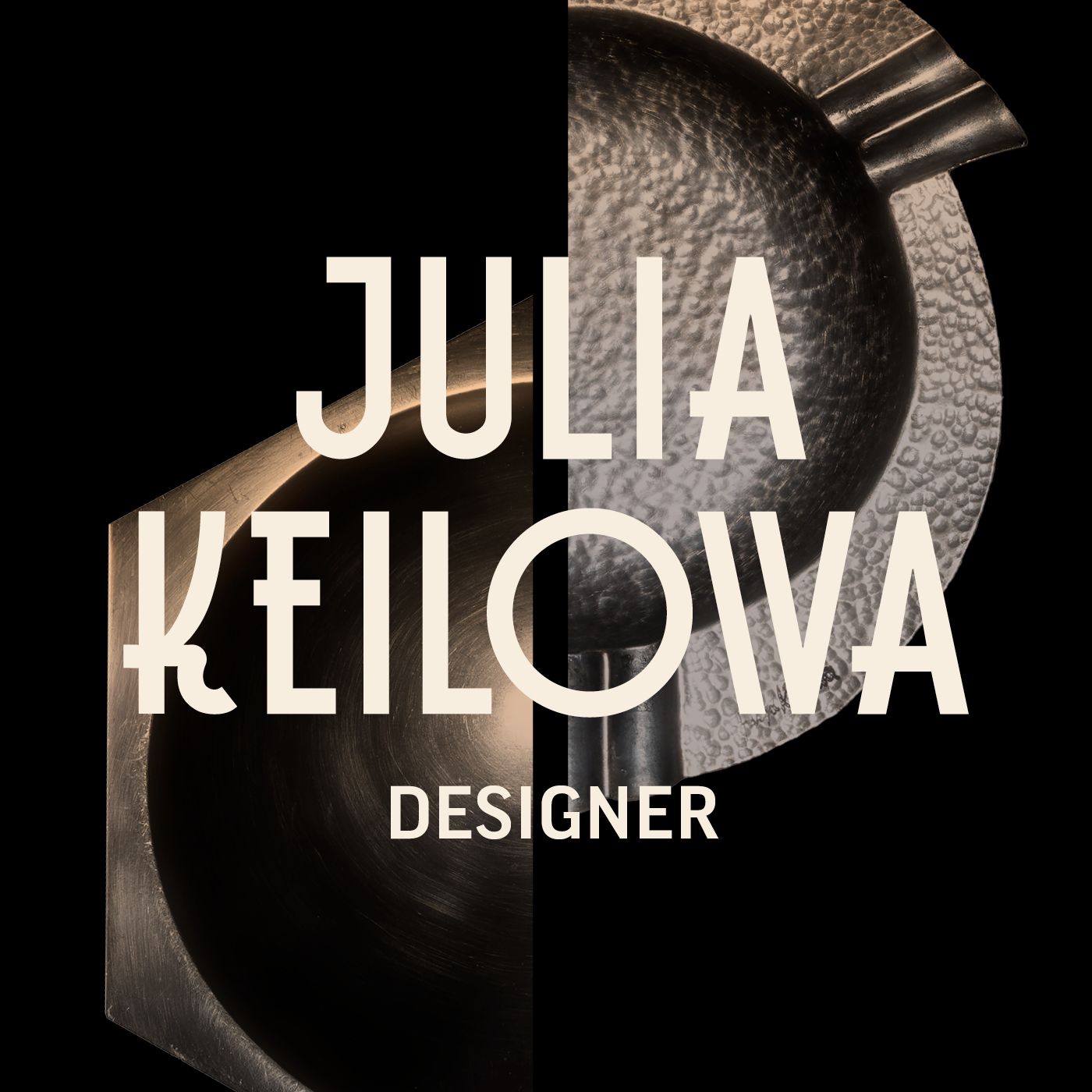
Julia Keilowa. Designer
An Icon of Polish Design. Julia Keilowa designed everyday objects in the Art Déco style. Her artistic education and sculptural experience allowed her to develop her own distinctive style. Thanks to the popularity of plating, a technique of covering non-precious metal products with a thin layer of silver or gold, her designs entered the salons of the Second Republic of Poland, earning Keilowa fame and recognition. Attempts to imitate her style were made as early as the 1930s, there were even forgeries of her products, which testifies to the significance of Keilowa’s design and to her status. To...
N'hésitez pas à visiter le site du podcast et à soutenir son créateur : www.spreaker.com
Où écouter ?
Les podcasts dans l'appli Replaio Radio Bientôt disponibleLes podcasts arrivent très bientôt dans l'appli. Installe-la dès maintenant et découvre en avant-première une toute nouvelle façon de vivre les podcasts
 Installe-la gratuitement
Android près de 10 M de téléchargements · note de 4,8
iOS bientôt
Installe-la gratuitement
Android près de 10 M de téléchargements · note de 4,8
iOS bientôt
Épisodes
9: Workshop room 23.05.2024 6:24
Richer in historical knowledge on design, we propose one checks how the creation of utalitarian art looks at present and how apprentices are prepared for work in this field. We invited students of Warsaw institutes of tertiary education to cooperate - The Watsaw Academy of Fine Arts (AFA) and the School of Form. We wished to know how they perceived design and how they viewed themselves performing...
8: Attribution 23.05.2024 1:58
In the 1930s, Julia Keilowa was not the only one to design for plating and metalwork companies. We know that there were other artists designing for them, but we don’t know their names, as they did not make as much effort as Keilowa to put their work on the market signed with their names. This is why at the exhibition we are displaying objects of very good quality, evidently designed in the 1930s,...
7: Fame and oblivion 23.05.2024 2:44
We perceive the life of Julia Keilowa from the present-day perspective of being an example of the professional emancipation of women and design. In the 1930s she was young artist, a professional realizing her ambitions in the field of industrial design. For the companies with which she cooperated her designs constituted a breath of modernity, elegance and artistic chic. For she was shown at presti...
6: Good design 23.05.2024 1:52
The objects designed by Julia Keilowa distinguish themselves through their: distinctive style, balanced composition based upon mathematical proportions, strive for harmony, rhytmicality and elegance. The artist keenly compiled basic geometric shapes with each other: cones, cylinders, spheres, prisms. Their layout was clear and precisely matched and balanced. Despite the marked submergence in geome...
5: Julia Keilowa 23.05.2024 4:18
Julia Keil, née Ringel (1902-1942) was a Polish sculptor and decorative metal designer. She was born in Stryj into a Jewish family. She attended secondary school in Lviv and Vienna. In 1922 she married Ignacy Keil. In 1924 the family settled in Warsaw. A year later Keilowa started her studies at the State School of Fine Arts at the Faculty of Sculpture. From 1932 she cooperated with the Warsaw sil...
4: The second wave of emancipation 23.05.2024 2:28
Following the First World War female designers increasingly moved away from those areas of artistic activity traditionally deemed female work. Activities considered to be unwomanly included goldsmithery and artistic working generally in metals. These occupations, and here as a result of guild practices and regulations, had for a long time been strictly male preserves. As a result of the changes in...
3: Emancipation 23.05.2024 1:48
In the first decades of the twentieth-century increasing numbers of women were profesionally involved in artistic production. It is here important to emphasize particulary their role in the process of the emancipation of design. Women actively engaged in the activities of the artistic circles and societies that set the tone for thr art of the day such as Parisian bohemianism, the Vienna Workshops...
2: Art Déco 23.05.2024 2:26
Art déco was a popular style in the Europe and America of the 1920s and 1930s. It could be seen in architecture, sculpture, painting and graphic art, as well as in utalitarian art. It made reference to the avant-garde artistic conceptions of the cubists, orfists, expressionists and futurists. It accentuated construction, expounded the values of creativity, perfection in realisation, and the functi...
1: Introduction 23.05.2024 1:27
Julia Keilowa designed everyday objects in the Art Déco style. Her artistic education and sculptural experience allowed her to develop her own distinctive style. Thanks to the popularity of plating, a technique of covering non-precious metal products with a thin layer of silver or gold, her designs entered the salons of the Second Republic of Poland, earning Keilowa fame and recognition. Attempts...
Podcasts similaires







Écoute le podcast Julia Keilowa. Designer sur Replaio
La radio et les podcasts dans une seule appli - gratuite, sans inscription. Installe-la dès aujourd'hui et ne rate pas le lancement
Replaio n'est pas éditeur de podcasts ; les noms des émissions, les visuels et l'audio appartiennent à leurs auteurs et sont diffusés via des flux RSS publics