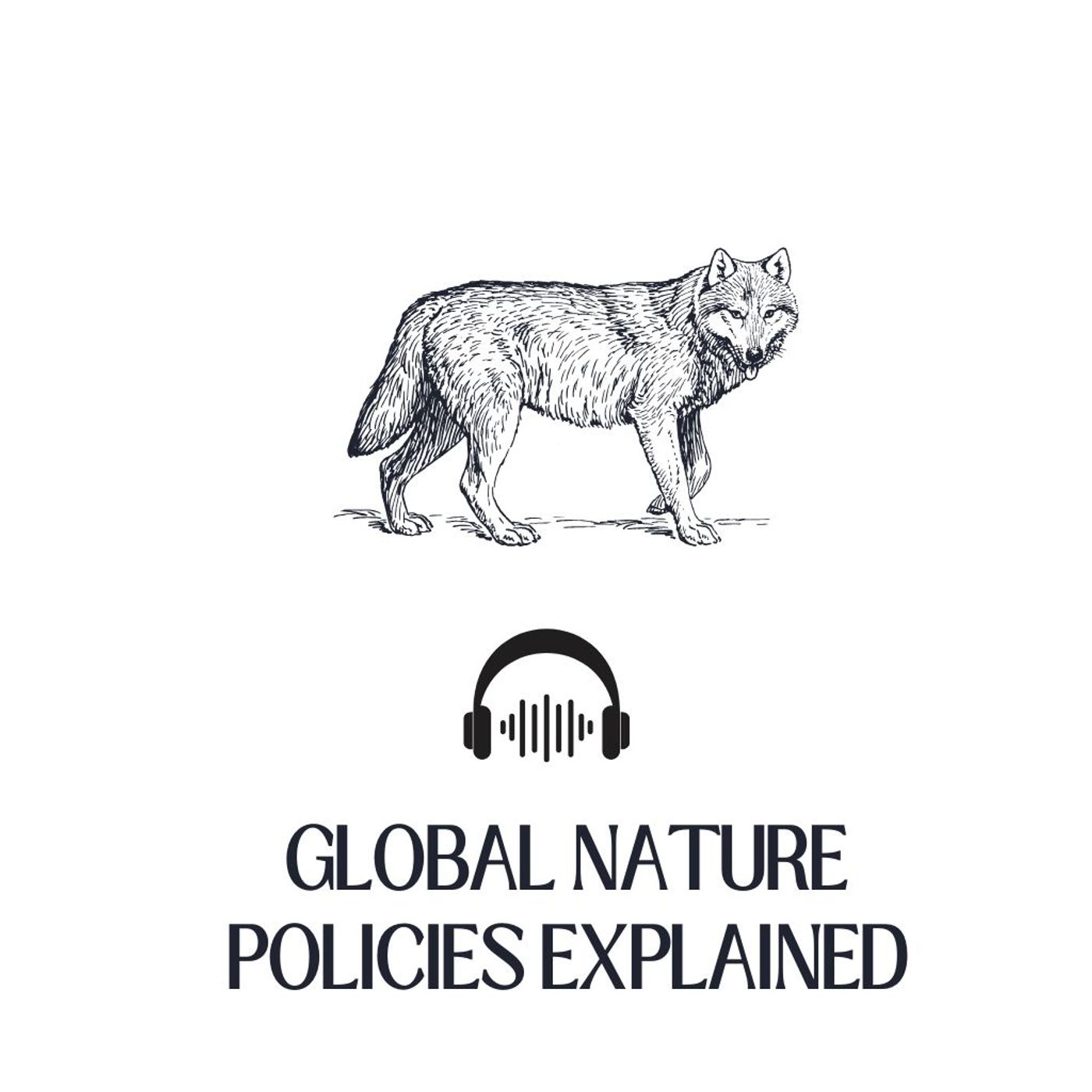
Richard Waja
Global Nature Policies Explained
We decode the newest international agreements, policies, and movements aimed at protecting biodiversity and combating climate change.
N'hésitez pas à visiter le site du podcast et à soutenir son créateur : www.spreaker.com
Auteur
Richard Waja
Catégorie
Site du podcast
Dernier épisode
21 juil. 2026
Où écouter ?
Les podcasts dans l'appli Replaio Radio Bientôt disponibleLes podcasts arrivent très bientôt dans l'appli. Installe-la dès maintenant et découvre en avant-première une toute nouvelle façon de vivre les podcasts
 Installe-la gratuitement
Android près de 10 M de téléchargements · note de 4,8
iOS bientôt
Épisodes
Octopuses: The Escape Artists of the Ocean 21.07.2026 2:49
With three hearts, blue blood, and a body that can squeeze through openings no larger than its beak, the octopus is unlike almost any other animal on Earth. This episode explores how octopuses solve puzzles, escape impossible situations, change color in an instant, and evolved remarkable intelligence without living in groups. Sometimes the greatest genius in the ocean prefers to live alone.
The Arctic Fox: Changing Coats With the Seasons 21.07.2026 3:00
The Arctic is one of the harshest environments on Earth, where winter temperatures can plunge below -50°C. Yet one small predator has mastered life on the frozen tundra. This episode explores how the Arctic fox changes its coat with the seasons, survives months of darkness, and follows one of nature's greatest predators to find its next meal. In the far north, survival belongs to those who adapt.
The Amazon Rainforest: A Living World That Makes Its Own Weather 21.07.2026 2:37
The Amazon is often called the lungs of the Earth, but its most remarkable ability may be something even more extraordinary. It helps create its own rain. This episode explores how billions of trees recycle water into the atmosphere, how this giant rainforest shapes weather across South America, and why protecting it matters far beyond its borders. A forest is more than a collection of trees. Some...
Bioluminescence: When the Ocean Turns on Its Lights 21.07.2026 2:43
On some nights, every wave seems to sparkle with blue light. Fish leave glowing trails, dolphins paint the sea with light, and the water appears almost magical. This episode explores the science of bioluminescence, why so many marine creatures evolved to produce their own light, and how one simple chemical reaction transformed life in the darkest places on Earth. The greatest light show on our pla...
Vultures: The Clean-Up Crew Nature Cannot Lose 21.07.2026 2:42
Few animals have a worse reputation than vultures. Yet these soaring birds quietly perform one of the most important jobs in nature. This episode explores how vultures prevent the spread of disease, why their stomachs can digest deadly bacteria, and what happened when their populations suddenly collapsed. Sometimes the most misunderstood animals are the ones holding an ecosystem together.
Sea Turtles: Born on Sand, Guided by the Moon 21.07.2026 3:01
Every sea turtle begins life with an impossible challenge. Minutes after hatching, it must race across an open beach filled with danger, guided only by instinct and the faint glow of the horizon. This episode follows the remarkable life of sea turtles, from their first desperate journey to the mystery of how adults return to the very beaches where they were born decades later. For some travelers,...
Wolves: How a Pack Changes a Landscape 21.07.2026 2:39
Wolves are often seen as powerful hunters. But their greatest influence isn't on a single prey animal. It reaches rivers, forests, birds, and even the shape of the land itself. This episode explores how wolves helped reshape Yellowstone National Park and what their story teaches us about the delicate balance of nature. Sometimes changing one species changes everything.
Vampire Squid: The Deep-Sea Creature With the Wrong Name 21.07.2026 2:43
With glowing eyes, dark webbed arms, and a name borrowed from horror stories, the vampire squid sounds like one of the ocean's deadliest predators. The truth is far more surprising. This episode explores how the vampire squid survives in one of the harshest environments on Earth without hunting large prey or attacking other animals. Sometimes nature's strangest creatures are nothing like their rep...
Coral Reefs: Cities Built by Tiny Animals 19.07.2026 2:50
Coral reefs look like underwater rocks, but they are living cities built by millions of tiny animals working together over centuries. This episode explores how corals build reefs, why these ecosystems support an incredible variety of marine life, and why warming oceans now threaten one of nature's greatest creations. The smallest architects have built some of the largest communities in the sea.
Mangroves: The Forests That Hold Back the Sea 19.07.2026 2:25
At first glance, mangrove forests can look tangled, muddy, and difficult to explore. But these remarkable coastal forests quietly protect shorelines, shelter young marine life, and store vast amounts of carbon. This episode explores how mangroves survive in salty water, why their unusual roots create entire ecosystems, and why losing them affects far more than the coastline. Some forests grow towa...
Crows: The Birds That Remember Human Faces 19.07.2026 2:32
You may think you're watching a crow. But the crow could be watching you just as carefully. This episode explores the remarkable intelligence of crows, how they recognize individual human faces, solve complex problems, and pass important information to other members of their group. Sometimes the smartest wild animal in your neighborhood is the one perched quietly on a telephone wire.
Humpback Whales: Songs That Travel Through the Ocean 17.07.2026 2:39
Every winter, male humpback whales fill the ocean with haunting songs that can travel for miles beneath the surface. This episode explores why humpback whales sing, how their songs evolve over time, and what these underwater performances reveal about one of the ocean's most remarkable giants. The sea is never truly silent. Sometimes, it is singing.
Deep Sea: The World That Glows Without Sunlight 17.07.2026 2:44
Far below the reach of sunlight lies the largest habitat on Earth, a place of crushing pressure, endless darkness, and extraordinary life. This episode explores how deep-sea animals survive without sunlight, why so many creatures produce their own light, and what this hidden world reveals about life on our planet. The ocean's greatest wilderness begins where daylight ends.
Monarch Butterflies: The Tiny Wings That Know the Way 17.07.2026 2:38
Every autumn, millions of delicate butterflies begin one of the longest migrations in the insect world. Somehow, they find forests they have never seen before. This episode explores the extraordinary journey of the monarch butterfly, the generations that work together to complete it, and the mystery of how such a fragile creature can travel across an entire continent. Their wings are paper-thin. T...
Elephants: The Memory Keepers of the Wild 14.07.2026 2:49
Elephants are famous for their memory, but remembering is only part of the story. Their greatest strength lies in how knowledge is shared across generations. This episode explores the remarkable family life of elephants, how experienced matriarchs guide entire herds, and why memory can mean the difference between life and death. Some maps are drawn on paper. The elephant carries its map in memory.
Orcas: The Ocean Hunters That Teach Each Other 14.07.2026 2:29
Orcas are among the ocean's most powerful predators, but their greatest strength is not speed or size. It is knowledge. This episode explores how different orca families develop unique hunting traditions, communicate through distinct calls, and pass survival skills from one generation to the next. Nature is full of instincts. Orcas show us that some animals also have culture.
Snow Leopard: The Ghost Hunter of the Himalayas 14.07.2026 2:27
High above the tree line, where winter seems to last forever, one of the world's most elusive predators moves almost unseen. This episode explores how snow leopards survive in freezing mountains, why they are so rarely photographed, and the remarkable adaptations that make them masters of the high Himalayas. Some animals rule by strength. The snow leopard rules by remaining almost invisible.
Octopus: The Escape Artist With Eight Thinking Arms 07.07.2026 3:05
The octopus does not look like an animal built for genius. It has no bones, no shell, and no face we easily understand. But beneath that soft body is one of the strangest nervous systems in the ocean. This episode explores how octopuses solve problems, escape tanks, change color, squeeze through tiny spaces, and use arms that can sense and act with surprising independence. It is not a monster from...
Bar-Tailed Godwit: The Bird That Crosses an Ocean Without Stopping 07.07.2026 2:35
Every year, a plain-looking shorebird leaves the far north and begins one of the most extreme journeys in the animal world. This episode follows the bar-tailed godwit, a bird capable of flying thousands of miles across the Pacific without stopping to eat, drink, or rest. From Alaska to New Zealand and Australia, its migration is a story of fat, instinct, weather, and astonishing endurance. It is n...
Podcasts similaires






Écoute le podcast Global Nature Policies Explained sur Replaio
La radio et les podcasts dans une seule appli - gratuite, sans inscription. Installe-la dès aujourd'hui et ne rate pas le lancement
Replaio n'est pas éditeur de podcasts ; les noms des émissions, les visuels et l'audio appartiennent à leurs auteurs et sont diffusés via des flux RSS publics