Gurbir Gill, MD
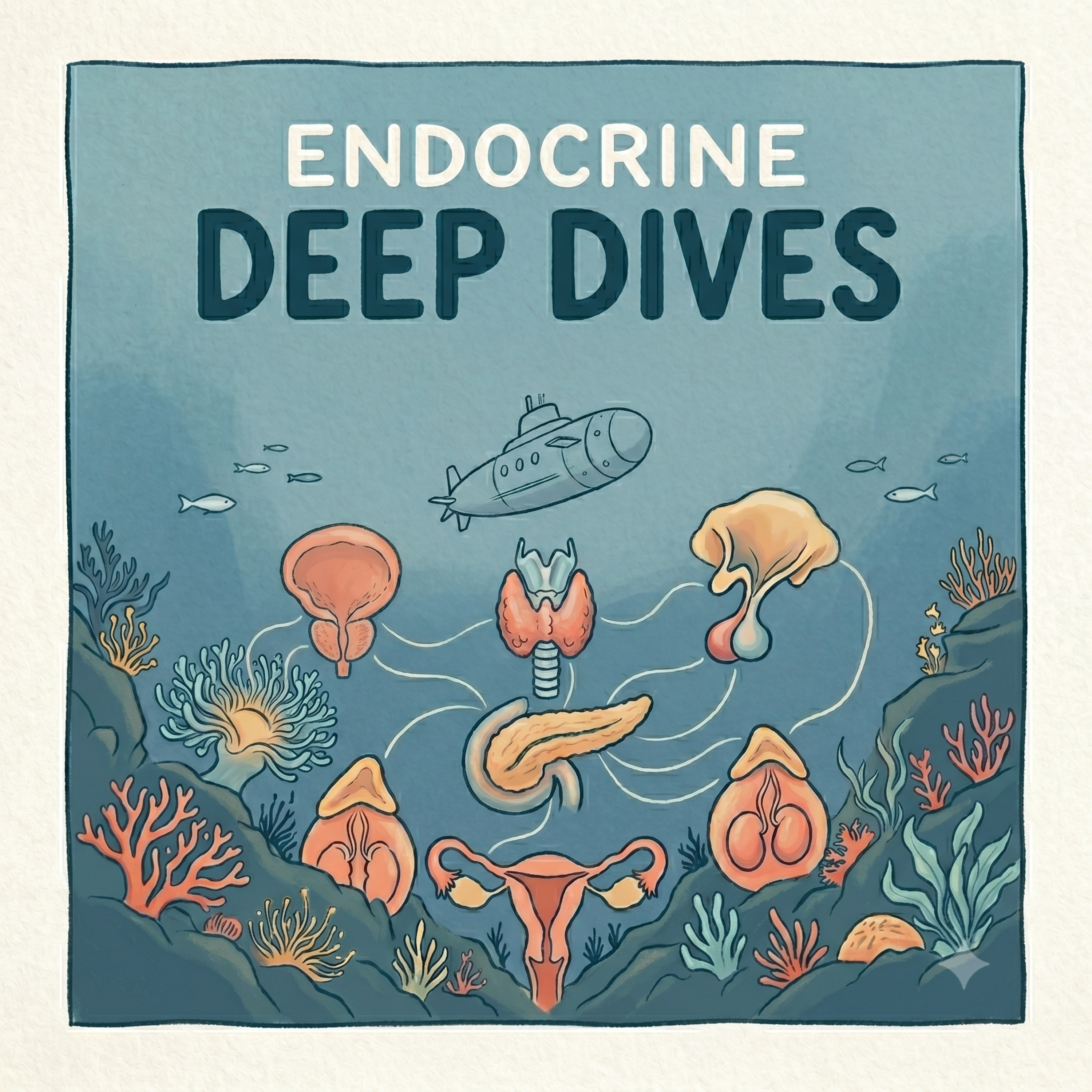
Endocrine Deep Dives
The Endocrine Deep Dive covers advanced topics in endocrinology. Utilizing AI-driven synthetic audio discussions from my own study notes, each episode breaks down complex endocrine concepts. This audio program is intended exclusively for healthcare providers and medical students as a supplement to their formal education. Content represents my own opinion and take on endocrine literature and does not constitute individualized medical advice. Listeners must consult qualified physicians or follow official guidelines for individual patient decisions.
N'hésitez pas à visiter le site du podcast et à soutenir son créateur : podcasters.spotify.com
Auteur
Gurbir Gill, MD
Catégorie
Site du podcast
Dernier épisode
6 nov. 2026
Où écouter ?
Les podcasts dans l'appli Replaio Radio Bientôt disponibleLes podcasts arrivent très bientôt dans l'appli. Installe-la dès maintenant et découvre en avant-première une toute nouvelle façon de vivre les podcasts
 Installe-la gratuitement
Android près de 10 M de téléchargements · note de 4,7+
iOS bientôt
Épisodes
Subclinical Hyperthyroidism 06.11.2026 22:44
This episode examines subclinical hyperthyroidism, characterized by suppressed serum TSH alongside normal free thyroxine and triiodothyronine. We analyze etiology differentiation between autonomous nodular disease and Graves disease, risk stratification for atrial fibrillation and accelerated bone loss, and guideline thresholds for initiating antithyroid pharmacotherapy or definitive ablation in o...
Elevated Cortisol: False Positive vs CS? 05.11.2026 22:49
Pretest probability dictates the entire diagnostic workflow for Cushing syndrome by guiding appropriate patient selection for screening and preventing false positives from incidentalomas or physiological hypercortisolism. Because diagnostic tests carry distinct false-positive rates when applied to low-risk populations, initial biochemical evaluation must be strictly reserved for patients with reco...
Primary Aldosteronism: Diagnostic Nuances 04.11.2026 25:25
Screening for primary aldosteronism requires measuring the aldosterone-to-renin ratio under standardized conditions, accounting for interfering antihypertensives and hypokalemia. Diagnosis hinges on non-suppressible autonomous aldosterone secretion via confirmatory suppression testing. Once confirmed, adrenal protocol cross-sectional imaging and adrenal vein sampling are essential to reliably diff...
Familial Partial Lipodystrophy 03.11.2026 19:09
Familial partial lipodystrophy mutations causing progressive subcutaneous fat loss from the extremities and trunk with paradoxical fat accumulation in the face and neck. This redistribution precipitates severe insulin resistance, hypertriglyceridemia, and premature cardiovascular disease. Diagnosis relies on physical examination recognizing characteristic fat loss patterns, genetic testing, and me...
Emil Theodor Kocher 02.11.2026 27:00
Emil Theodor Kocher revolutionized endocrine surgery by developing meticulous, sterile, and bloodless thyroidectomy techniques. His standardized operative methods reduced surgical mortality from nearly forty percent to under one percent. Kocher's precise documentation of cachexia strumipriva fundamentally delineated thyroid physiological function and postoperative myxedema, establishing the fo...
Calcitonin 30.10.2026 24:04
Calcitonin, secreted by thyroid parafollicular C cells, acts as a physiological antagonist to parathyroid hormone by suppressing osteoclastic bone resorption and renal tubular calcium reabsorption. While minor in routine adult calcium homeostasis, serum calcitonin serves as an indispensable diagnostic and post-thyroidectomy surveillance biomarker for medullary thyroid carcinoma, directly correlati...
Multiple Endocrine Neoplasia Type 1 29.10.2026 20:49
Multiple endocrine neoplasia type 1 arises from inactivating MEN1 tumor suppressor mutations, causing loss of menin function. Clinical manifestations classically feature primary hyperparathyroidism due to multiglandular hyperplasia, enteropancreatic neuroendocrine tumors, and anterior pituitary adenomas. Management prioritizes subtotal parathyroidectomy with transcervical thymectomy, specialized b...
Crinecerfont for Steroid Reduction in CAH 28.10.2026 21:07
This episode evaluates crinecerfont, an oral corticotropin-releasing factor type 1 receptor antagonist, for classic congenital adrenal hyperplasia. By blocking pituitary ACTH secretion independently of glucocorticoid feedback, crinecerfont reduces adrenal androgen excess, including androstenedione. This mechanism permits significant supraphysiologic glucocorticoid dose reduction toward physiologic...
XLH and Burosumab 27.10.2026 21:00
Adult presentations frequently masquerade as axial spondyloarthritis, early-onset osteoarthritis, or recurrent pseudofractures, evading diagnosis when chronic hypophosphatemia and renal phosphate wasting are overlooked. Transitioning from conventional therapy to the anti-FGF23 monoclonal antibody burosumab requires a mandatory washout of oral phosphate and active vitamin D to prevent hyperphosphat...
Billing Code CGM/95251 27.10.2026 17:23
Analysis and interpretation of continuous glucose monitoring data requiring at least seventy-two hours of sensor wear. This physician service focuses on evaluating glycemic variability, time in range, and nocturnal hypoglycemia to refine therapy. Documentation requires a dedicated written interpretation addressing glycemic trends and actionable management changes, distinct from sensor placement an...
Billing Code G2211 27.10.2026 16:41
Explore the clinical implementation of add-on code G2211 for longitudinal endocrinology outpatient care. We analyze Centers for Medicare and Medicaid Services documentation requirements, medical decision-making thresholds, and audit vulnerabilities when capturing complex chronic disease management. Key takeaways include differentiating routine evaluation and management encounters from sustained, c...
COCPs for PMOS 23.10.2026 24:08
Combined oral contraceptives serve as first-line pharmacotherapy for non-fertility management. They suppress pituitary luteinizing hormone secretion to arrest ovarian theca-cell androgen synthesis while stimulating hepatic sex hormone-binding globulin production, drastically reducing bioactive free testosterone. This concurrent action mitigates hirsutism, restores cyclic withdrawal bleeding, and p...
Mixed Meal Tolerance Test 22.10.2026 18:14
A physiological dynamic assessment evaluating beta-cell secretory capacity and postprandial glycemic regulation under mixed macronutrient stimulation. Crucial for assessing residual endogenous insulin production via C-peptide in type 1 diabetes intervention trials, evaluating post-bariatric hypoglycemia, and differentiating hyperinsulinemic hypoglycemia etiologies where standard oral glucose fails...
Denosumab risks in CKD 21.10.2026 22:47
Denosumab carries a marked risk of profound, refractory hypocalcemia in advanced chronic kidney disease, particularly stages 4 to 5D and comorbid CKD-mineral and bone disorder. In these patients, impaired calcitriol synthesis and secondary hyperparathyroidism render systemic calcium homeostasis acutely dependent on continuous skeletal resorption. Rapid RANK-ligand inhibition abruptly halts osteocl...
Outpatient management of DKA 20.10.2026 21:18
Outpatient management of diabetic ketoacidosis is inherently limited to early intervention during impending ketosis, as overt DKA with metabolic acidosis and volume depletion mandates emergency evaluation and inpatient intravenous resuscitation. In ambulatory patients with elevated capillary beta-hydroxybutyrate and hyperglycemia, home triage focuses on aggressive subcutaneous rapid-acting insulin...
MACS 19.10.2026 14:21
Mild autonomous cortisol secretion, or MACS, represents subtle hypothalamic-pituitary-adrenal axis dysregulation most frequently encountered during the workup of adrenal incidentalomas. Defined primarily by a post-one-milligram dexamethasone suppression test cortisol level exceeding 1.8 micrograms per deciliter in the absence of overt Cushingoid physical features, this biochemical state lacks clas...
Familial hyperaldosteronism type 2 16.10.2026 23:17
Familial hyperaldosteronism type 2 is an autosomal dominant form of primary aldosteronism caused predominantly by gain-of-function mutations in the CLCN2 gene, which encodes the ClC-2 voltage-gated chloride channel. These mutations lead to increased channel opening, resulting in membrane depolarization of adrenal zona glomerulosa cells, activation of calcium signaling, and autonomous overproductio...
Phosphopenic Osteomalacia 15.10.2026 21:07
Phosphopenic disorders encompass conditions characterized by systemic phosphate wasting or deficiency, driven primarily by renal tubular defects, fibroblast growth factor 23 excess, or impaired gastrointestinal absorption. Key clinical manifestations include osteomalacia, rickets, muscle weakness, and profound fatigue. Diagnostic evaluation requires rigorous assessment of serum phosphate, fraction...
Calcipenic Osteomalacia 14.10.2026 25:51
Calcipenic osteomalacia presents with low-to-normal calcium, elevated PTH, hypophosphatemia, elevated alkaline phosphatase, and low urinary calcium. Evaluation requires ruling out pseudohypocalcemia and hypomagnesemia, followed by renal function assessment to distinguish renal osteodystrophy from calcipenic etiology. Paired vitamin D metabolite testing is critical: 25-hydroxyvitamin D assesses sto...
Calcipenic and Phosphopenic Osteomalacia 13.10.2026 20:19
Calcipenic osteomalacia arises primarily from vitamin D deficiency or resistance, or severe calcium malabsorption, resulting in impaired mineralization due to defective intestinal calcium transport and secondary hyperparathyroidism that accelerates bone resorption and hypophosphatemia. Phosphopenic osteomalacia stems from renal phosphate wasting, frequently driven by excess fibroblast growth facto...
Vitamin D Formulations 12.10.2026 20:30
Clinical management of vitamin D deficiency requires distinguishing between native secosteroids and hydroxylated metabolites based on individual metabolic clearance and organ function. Cholecalciferol maintains superior pharmacokinetics over ergocalciferol due to higher hepatic CYP2R1 affinity, stronger vitamin D-binding protein avidity, and a longer half-life, resulting in more sustained serum 25...
Teprotumumab 08.10.2026 21:54
Teprotumumab is a fully human monoclonal antibody targeting the insulin-like growth factor 1 receptor, revolutionizing the medical management of active thyroid eye disease. By blocking receptor signaling on orbital fibroblasts, it reduces inflammation, halts tissue expansion, and drives significant proptosis reduction and soft tissue improvement. Infused every three weeks for eight infusions, it o...
Fragile X Premutation 07.10.2026 21:29
Fragile X premutation carriers harbor FMR1 allele expansions containing fifty-five to two hundred CGG repeats, predisposing them to distinct clinical syndromes driven by elevated toxic messenger ribonucleic acid levels. Adult carriers face risks of fragile X-associated tremor ataxia syndrome presenting with progressive cerebellar ataxia and intention tremor, alongside fragile X-associated primary...
Bone Turnover Markers 06.10.2026 22:56
PODCAST SUMMARY: Bone turnover markers provide dynamic, real-time biochemical assessment of skeletal metabolism by quantifying bone formation through serum osteocalcin and procollagen type 1 N-terminal propeptide alongside bone resorption via serum and urinary C-telopeptides. These analytes reflect rapid cellular activity months before dual-energy X-ray absorptiometry can detect significant minera...
Hyperparathyroidism: Surgery vs Bisphosphonates Timing 05.10.2026 23:11
Primary hyperparathyroidism management hinges on distinguishing symptomatic from asymptomatic disease and assessing surgical candidacy according to established biochemical and densitometric thresholds. Parathyroidectomy remains the only curative intervention, durably correcting hypercalcemia, halting bone mineral density loss, and reducing nephrolithiasis risk. Bisphosphonates offer a temporary me...
Podcasts similaires








Écoute le podcast Endocrine Deep Dives sur Replaio
La radio et les podcasts dans une seule appli - gratuite, sans inscription. Installe-la dès aujourd'hui et ne rate pas le lancement
Replaio n'est pas éditeur de podcasts ; les noms des émissions, les visuels et l'audio appartiennent à leurs auteurs et sont diffusés via des flux RSS publics