CERC Health Equity and Community Wellbeing
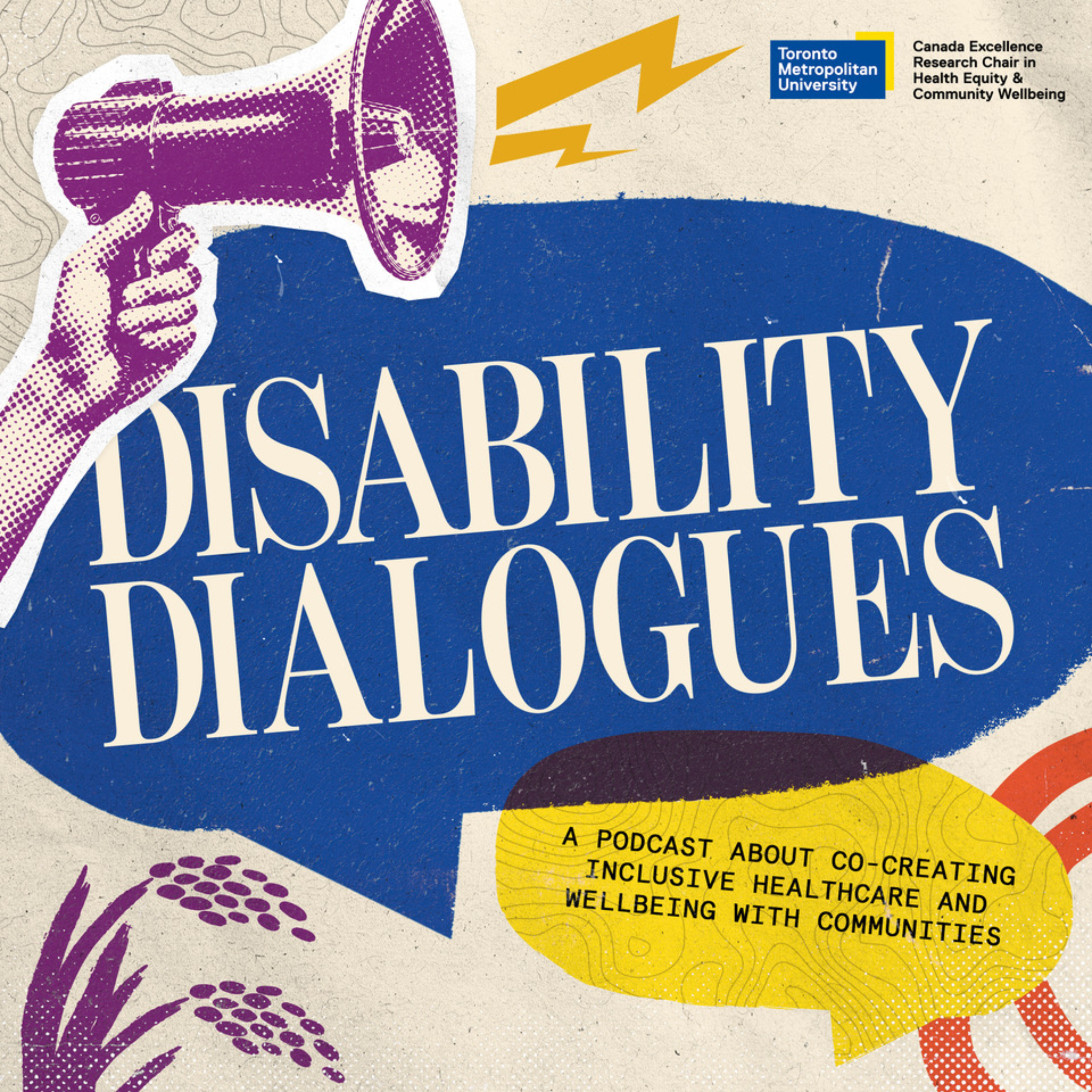
Disability Dialogues
From the Canada Excellence Research Chair in Health Equity and Community Wellbeing, Disability Dialogues is a podcast series on important topics in health and wellbeing of our communities. Stay tuned!
N'hésitez pas à visiter le site du podcast et à soutenir son créateur : www.torontomu.ca
Auteur
CERC Health Equity and Community Wellbeing
Catégorie
Site du podcast
Dernier épisode
23 sept. 2026
Où écouter ?
Les podcasts dans l'appli Replaio Radio Bientôt disponibleLes podcasts arrivent très bientôt dans l'appli. Installe-la dès maintenant et découvre en avant-première une toute nouvelle façon de vivre les podcasts
 Installe-la gratuitement
Android près de 10 M de téléchargements · note de 4,8
iOS bientôt
Épisodes
Casey House on Thriving HIV Care 23.09.2026 38:56
In the final episode of the second season of Disability Dialogues, we get to speak with one of our partners at Casey House, Yasser Ismail. We get to talk about the origins of Casey House as an HIV and HIV at risk hospital, the ongoing evolution of client-centered care and practices in how the organization is built and run, and Yasser’s own experiences co-designing clinical programs as the Chief St...
Centering Thriving in Crisis Response 09.09.2026 19:25
Today, Eunice shares about an ongoing collaboration between the Gerstein Crisis Centre and Toronto Metropolitan University, which looks at alternative forms of crisis response that center on health and wellbeing. Led by Professor Jessica Evans with the department of Criminology, this work takes a look at thriving from a totally different angle, focusing on what allows people to get closer to thriv...
Digitizing Thriving in Community and Care 26.08.2026 33:56
In episode 4 of Disability Dialogues Season 2, we open with a few technical difficulties… thankfully not for long, but digital spaces are sometimes pretty inaccessible! That’s the subject of today’s interview with Chris Sivarajan, who talks about what thriving looks like in digital health spaces as a woman living with multiple sclerosis, or MS. As a peer volunteer with MS Canada, Chris has both li...
Following Thriving Youth Pathways 12.08.2026 23:21
In Season 2 episode 3, Eunice is her own guest! We’re talking about how diverse youth navigate post-secondary pathways, and more specifically, Eunice discusses her own pathway through learning about her own mental health and disability status, and her successes and adversities after high school. Finally, we discuss the co-designed Tracking Pathways project, and the value of youth-led, intersection...
Mobility, Pain, and Possibility in Canadian Disability 29.07.2026 31:45
In Season 2 episode 2 of Disability Dialogues, we talk to Mary– a woman with a series of mobility and pain-related disabilities– about what it means to be thriving versus surviving with disability in Canada. Particularly, we got into the weeds of what it means to be disabled, and navigate the big barriers placed on disabled people to be able to find fulfillment, get around in a wheelchair, and be...
Rethinking Thriving in Primary Care 15.07.2026 28:47
Welcome back to Season 2 of Disability Dialogues with the Canada Excellence Research Chair in Health Equity and Community Wellbeing! In our first episode, we’ll be featuring a conversation with Shelley Petit, the chair of the New Brunswick Coalition of Persons with Disabilities (NBCPD), about her personal experience of invisible disability and navigating Canada’s healthcare system. This episode wi...
Disability Dialogues - Season 2 08.07.2026 2:06
Welcome back to Season 2 of Disability Dialogues! A podcast about co-creating inclusive healthcare and wellbeing with communities brought to you by the Canada Excellence Research Chair in Health Equity and Community Wellbeing at Toronto Metropolitan University. If this trailer sparked something in you, don’t let it stop here. Visit torontomu.ca/cerc-health-equity and check out our Knowledge M...
Rethinking Crisis Response: Building Community-Led Alternatives in Ontario 01.10.2025 23:56
Ontario’s crisis response system often relies on police as the first point of contact for people experiencing mental health or substance-related distress. This approach can criminalize individuals instead of addressing the deeper issues—such as poverty, housing insecurity, and discrimination—that shape many crises. Community-led crisis models offer a different path. By centering lived experience,...
Bridging the Gap: How Community-Driven AI Can Transform Online Safety for Disabled Individuals 24.09.2025 17:16
AI moderation often fails marginalized groups, especially disabled women and girls, because existing datasets ignore their lived experiences, leading to missed abuse, over-censorship, and reinforced bias. Researchers advocate for co-created, intersectional datasets and contextual AI that understands nuance, intent, and transparent explainable systems to build trust. Addressing data scarcity, bias,...
Tracking Pathways: Youth Shaping Healthcare Solutions 17.09.2025 16:08
The voices of Youth lend an important addition to community research, in every stage from design to dissemination. Centering co-design, training, accessibility, and lived experience ensures marginalized voices are included and systemic barriers are addressed. This approach builds confidence and trust while creating tangible impacts on policy, practice, and community wellbeing. In this episode of D...
Thriving, Not Just Surviving: Reimagining Disability Support Systems 10.09.2025 20:16
Current disability supports in Canada keep people surviving, not thriving. Thriving means more than financial security — it includes wellbeing, belonging, autonomy, and growth. Policies must shift from deficit-based to person-centered, expanding real financial supports, ensuring accessibility, and valuing all forms of participation, guided by the voices of people with disabilities. In this episode...
Can Safety and Digital Inclusion Coexist for Women and Girls with Disabilities? 03.09.2025 18:03
While digital technologies promise empowerment and inclusion, they also introduce new risks—especially for those at the intersection of gender and disability. Technology-Facilitated Gender-Based Violence (TFGBV) is abuse carried out through digital tools, disproportionately affecting women and girls with disabilities due to reliance on assistive tech, socioeconomic barriers, and caregiver or peer...
Dr. Karen Soldatic on Co-Designing Healthcare for Marginalized Communities 27.08.2025 18:13
What does it really take to make healthcare equitable for marginalized communities? For millions living with disabilities, racialized demographics and women, accessing healthcare can feel more like an obstacle rather than something helpful. It’s neither built for them nor with them in mind. Despite good intentions, many services remain inaccessible, unresponsive, and disconnected from the realitie...
Introducing Disability Dialogues - Season 1 20.08.2025 1:56
Welcome to Disability Dialogues , a podcast about co-creating inclusive healthcare and wellbeing with communities brought to you by the Canada Excellence Research Chair in Health Equity and Community Wellbeing at Toronto Metropolitan University. If this trailer sparked something in you, don’t let it stop here. Visit torontomu.ca/cerc-health-equity and check out our Knowledge Mobilization Hub to...
At What Cost: Special Release on MAiD 24.04.2025 37:27
Content note: This episode contains discussions of suicide and medical assistance in dying (MAiD) for mental illness. This special release explores the complexities and emotional terrain of MAiD through a personal and reflective lens, inviting listeners to consider what it means to navigate life, loss, and autonomy within academic and institutional spaces.
Podcasts similaires







Écoute le podcast Disability Dialogues sur Replaio
La radio et les podcasts dans une seule appli - gratuite, sans inscription. Installe-la dès aujourd'hui et ne rate pas le lancement
Replaio n'est pas éditeur de podcasts ; les noms des émissions, les visuels et l'audio appartiennent à leurs auteurs et sont diffusés via des flux RSS publics