Daniel Leech-Wilkinson
Challenging Performance: Classical Music Performance Norms and How to Escape Them
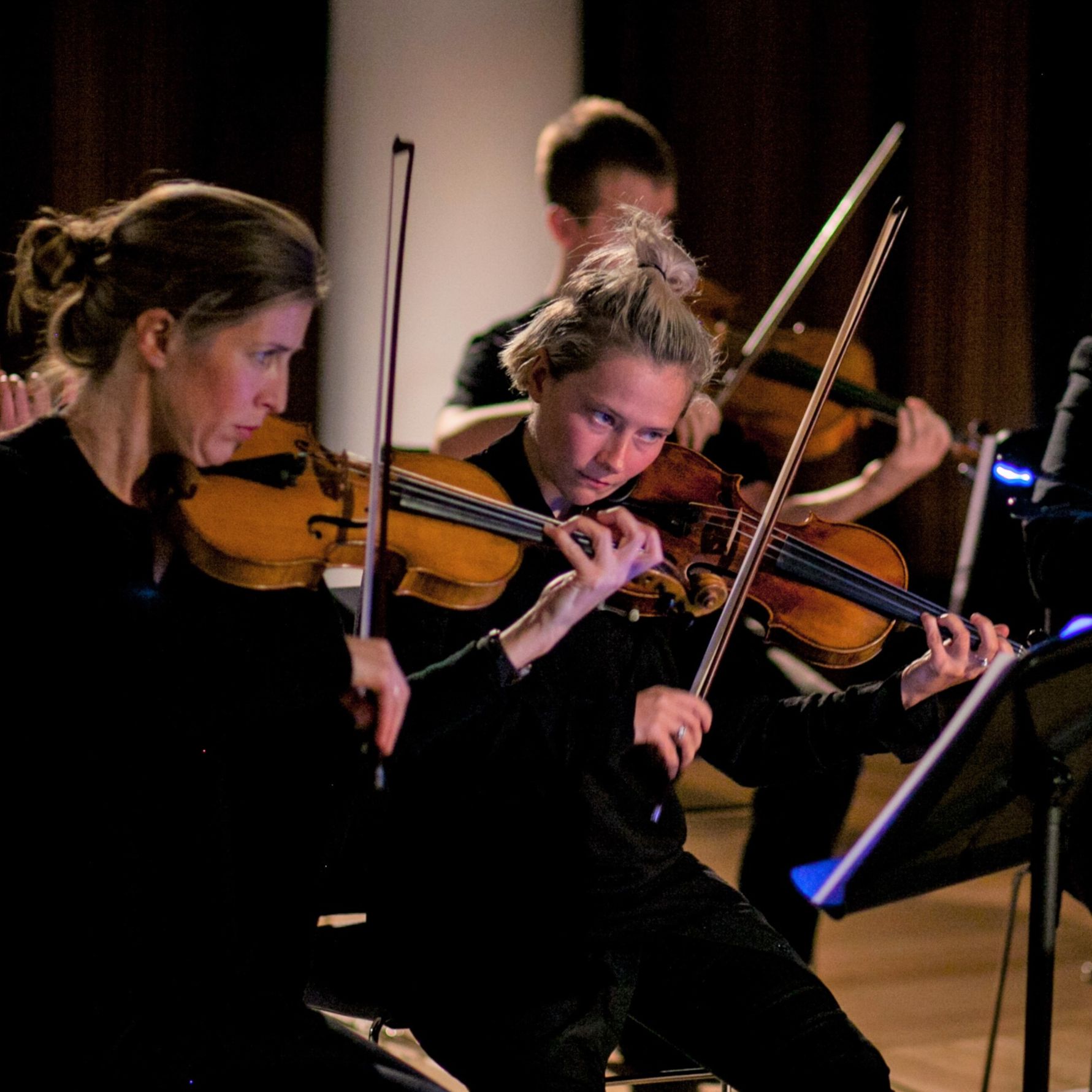
Challenging Performance offers a new approach to western classical music, encouraging and enabling performers to be more individual and creative. It shows how and why creativity is normally discouraged, why it should not be, and how it can become part of everyday performance. The linked website, challengingperformance.com, features podcasts, a free online book, and many new and highly imaginative performances. The project is aimed at young professional performers, musicians in the making, and open-minded lovers of classical music. We showcase recordings by contemporary performers who use a ran...
Auteur
Daniel Leech-Wilkinson
Catégorie
Site du podcast
Dernier épisode
31 déc. 2024
Où écouter ?
Les podcasts dans l'appli Replaio Radio Bientôt disponibleLes podcasts arrivent très bientôt dans l'appli. Installe-la dès maintenant et découvre en avant-première une toute nouvelle façon de vivre les podcasts
 Installe-la gratuitement
Android près de 10 M de téléchargements · note de 4,8
iOS bientôt
Installe-la gratuitement
Android près de 10 M de téléchargements · note de 4,8
iOS bientôt
Épisodes
Challenging Performance, Chapter 22.4 : Music as social action 31.12.2024 2:30
In performance one seeks to accomplish many things as well as moving and engaging listeners: these include creating benefits of various kinds, practical, social, financial, psychological, health-related, even in a broad sense political.
Challenging Performance, Chapter 22.5 : Assessing non-standard performances 31.12.2024 4:34
In the much more varied performance culture envisaged here, evaluation of performance need be no harder than it has always been: performances are made to engage, to stimulate, to excite, to fascinate, to challenge, to move, as ever.
Challenging Performance, Chapter 23.1 : Exchanging the Moonlight and Erlkönig 31.12.2024 10:41
Two striking examples of challenging performances that 'shouldn't' work but do.
Challenging Performance, Chapter 23.2 : How many Ave Marias? 31.12.2024 29:26
Wondering how many different performances a classical musician could give of the same score, I asked friends and colleagues what they thought might be possible...
Challenging Performance, Chapter 23.3 : Further transgressive performances 31.12.2024 8:03
An overview of the wide variety of creatively transgressive performances available on the Challenging Performance website, challengingperformance.com.
Challenging Performance, Chapter 24.1 : Reinterpreting opera 31.12.2024 5:08
In current opera productions the stage and music directors work alongside each other using completely different and incompatible belief systems. As we’ve seen, there is no good reason not to reread the score just as radically as the text, opening up the intriguing option of performing the score in such a way as to tell the same story as the staging...
Challenging Performance, Chapter 24.2 : How we made ‘Dido & Belinda’ 31.12.2024 4:09
Ella Marchment (Helios Collective, director), Leo Geyer (conductor, composer) and I (as dramaturg) developed a reading of Purcell's 'Dido & Aeneas' score which made new, coherent sense of the text and the music, addressing themes of our time. Watch THE VIDEO at https://www.youtube.com/watch?v=h38DMVBi9IM&t=475s
Challenging Performance, Chapter 24.3 : ‘Dido & Belinda’ -- what the performers thought 31.12.2024 11:17
The results of a questionnaire among the performers of 'Dido & Belinda' finds most happy with both the process and the outcome, some to their great surprise.
Challenging Performance, Chapter 24.4 : ‘Dido & Belinda’ -- what the audiences thought 31.12.2024 10:00
The 'Dido & Belinda' audiences' questionnaire suggests that the audiences we can already see emerging with new venues and new forms of presentation are likely to be sympathetic to much more creative interactions with texts from the past. There are real possibilities here for generating new work and new audiences for adventurous young musicians.
Challenging Performance, Chapter 25 : Speaking of contemporary concerns 31.12.2024 7:38
Why does classical music figure so infrequently in media that regularly discuss art and theatre at a sophisticated level? GIven a working environment supportive of creative, topical interpretation, performers can readily enable scores to speak of contemporary concerns, attracting more diverse audiences eager for insight.
Challenging Performance, Chapter 26 : Speaking of others 31.12.2024 2:26
Like all music, classical music creates virtual others, usually others with whom we are already quite familiar. With goodwill and a determination to be inclusive and welcoming of difference, non-normative performance could allow us to make many very different others from the scores we know and love
Challenging Performance, Chapter 27 : Finally, the right to be different 31.12.2024 5:52
The UN Human Rights Council advocates ‘the right ... to freely ... contribute to artistic expressions and creations'. This the classical music business does not currently permit. There’s no excuse for such a high-profile, high-status embodiment of Western cultural values not to be in conformity with its (now) foundational statement of ethical and political values. And no need either.
Challenging Performance, Chapter 13 : Musicians' lack of agency 23.12.2024 18:10
Accepting that, as a classical musician, one has little agency (freedom to choose and the authority to act) makes the job less dispiriting. But that lack of agency is still (and quite rightly) felt as oppressive by many musicians, including many of those quoted here.
Challenging Performance, Chapter 14 : The damage to musicians' health 23.12.2024 25:15
Empirical research shows, again and again, that damage to musicians' physical and mental health is integral to classical music ideology and practice, and appears to be considered by many as a necessary price for professional performance. No profession should do this to its workers; no society should be content with it or celebrate hearing its results.
Challenging Performance, Chapter 15 : The legal constraints on performers 23.12.2024 14:25
Despite it being evidently untrue, the law suppose that the composer is the only creator, the performer merely a reproducer. Consequently, performers receive no royalty for their creative part in music-making and can be sued for a performance that a composer or their heirs dislike. Why is this? What are the consequences?
Challenging Performance, Chapter 18.0 : Allowing creativity 23.12.2024 2:50
A brief introduction to Part 3 of Challenging Performance (chapters 18–27), which looks at how creative and transgressive performances can be made, and at how people respond to them.
Challenging Performance, Chapter 18.1 : Recap on creativity 23.12.2024 3:34
Most of the skills required for greater creativity in classical performance are in use already (albeit to a smaller degree) in normative performance. What creativity requires is simply that one takes, and—crucially—feels empowered to take them further.
Challenging Performance, Chapter 18.2 : Comparison with theatre practice 23.12.2024 12:01
We have only to imagine how dreary theatre would be if every performance of ‘Hamlet’ used the same gestures and the same intonations—all enforced by an ideologically-contrained community of actors and gatekeepers claiming to be faithful—to see how disastrously classical music has backed itself into a corner.
Challenging Performance, Chapter 19.1 : Ethical relationships 23.12.2024 5:50
Ignoring or transforming indications from the composer may allow us, ethically as well as practically, to learn much about how relationships can change, or be radically other, and still be profoundly satisfying.
Challenging Performance, Chapter 19.2 : Ethical coda 23.12.2024 10:13
As performers we have ethical responsibilities, not to ‘the music itself’, nor to the long-dead composer, but rather to others whom our performances may influence. We cannot allow listeners to feel entitled not to be challenged by a performance; but taking responsibility for it in ethical as well as artistic respects only accepts artistic agency restored to its rightful place, the performer.
Challenging Performance, Chapter 20 : Why and How to make creative performances 23.12.2024 12:05
A reminder of the overwhelming reasons to be innovative in classical music performance. Then, how are we to get these scores to work differently and variously? Ten approaches are suggested to get us started.
Challenging Performance, Chapter 21 : Historical examples on record 23.12.2024 14:14
Early recordings provide many revelatory examples of musicalities are quite unfamiliar to us now. They are excellent sources of models if we want to experiment with performing scores differently, for they present styles that we know were outstandingly successful in their time, however strange they may seem to us.
Challenging Performance, Chapter 22.1 : What makes a performance work? 23.12.2024 8:26
A performance that works dynamically (the essential requirement) is one in which the performer moves from note to note—modelling feeling-shapes we know or can imagine from life—in a way that carries us along, occupies our attention, fills us with desire to hear what happens next.
Challenging Performance, Chapter 22.2 : Musical dynamics and musical shape 23.12.2024 3:15
The sense that music moves, is lifelike, and is like other kinds of changing feeling states and other everyday experiences, may be rooted in more basic experiences and responses to the world around us.
Challenging Performance, Chapter 22.3 : Expression is dangerous 23.12.2024 3:47
If how music feels matters more to our biology and psychology than how obedient it is—to traditions, rules and norms—then this only adds to its danger for those who feel entitled to rule on how it should sound.
Podcasts similaires






Écoute le podcast Challenging Performance: Classical Music Performance Norms and How to Escape Them sur Replaio
La radio et les podcasts dans une seule appli - gratuite, sans inscription. Installe-la dès aujourd'hui et ne rate pas le lancement
Replaio n'est pas éditeur de podcasts ; les noms des émissions, les visuels et l'audio appartiennent à leurs auteurs et sont diffusés via des flux RSS publics