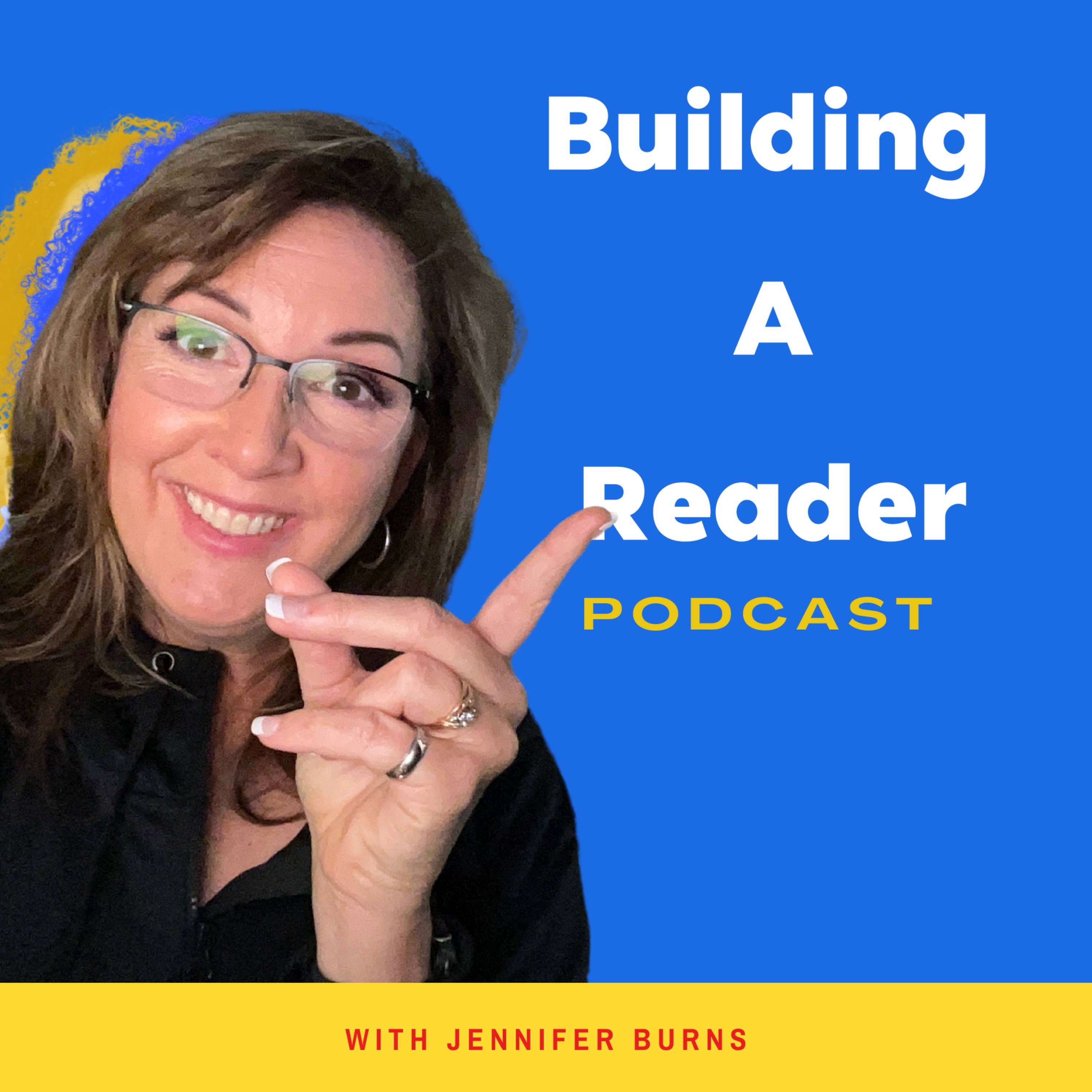
Jennifer Burns
Building a Reader
Welcome to the Building a Reader Podcast, your go-to for teaching the youngest learners the joy of reading. Designed for the kindergarten, first grade and homeschool teachers, this show focuses on how to help you say, "Let me show you how this works." So you can engage the youngest students in phonics, phonemic awareness and reading in a way that results in what I like to call, "No teacher needed." Join me as I dive into effective, research based, student focused teaching. You'll be looking at your student(s) and interacting with them more confidently. Your students will want to come to readin...
N'hésitez pas à visiter le site du podcast et à soutenir son créateur : www.buildingareader.com
Auteur
Jennifer Burns
Catégorie
Site du podcast
Dernier épisode
3 juil. 2025
Où écouter ?
Les podcasts dans l'appli Replaio Radio Bientôt disponibleLes podcasts arrivent très bientôt dans l'appli. Installe-la dès maintenant et découvre en avant-première une toute nouvelle façon de vivre les podcasts
 Installe-la gratuitement
Android près de 10 M de téléchargements · note de 4,7+
iOS bientôt
Épisodes
Beyond the Program: Using AI to Personalize Student Learning 03.07.2025 20:28
How AI Is Helping Us Teach Students to Read—A Conversation About Flexibility, Creativity, and Student-Centered Support I had the chance to sit down with my friend Jacklyn for a powerful conversation about how artificial intelligence (AI) is reshaping the way we support students—especially when it comes to reading instruction. From reluctant readers to collaborative lesson planning, AI is helping e...
Kids Are a Product of Their Opportunities 26.06.2025 11:13
Are your students stuck in a reading rut? In this episode, we explore how expanding text formats—not just genres—can unlock engagement, reduce boredom, and create richer reading opportunities for all learners. Use your summer freedom to rethink what counts as reading and prep for a year of curiosity, creativity, and real growth. Ideal for K–5 teachers seeking responsive, student-centered literacy...
What evidence do you have? The heart of responsive teaching! 12.06.2025 12:18
In this episode of Building a Reader, I'll share one powerful question every teacher should ask when making instructional decisions: “What evidence do you have?” Consider how your notes can help you to indicate one-off behaviors and patterns.
Get to the Root: Using 5 Why’s to Drive Reading Instruction 29.05.2025 8:19
When a student struggles to read a word, it’s easy to jump to conclusions or offer surface-level solutions. But what if we paused and asked why—not just once, but five times? In this episode of Building a Reader, we explore the 5 Why’s strategy, a simple yet powerful tool borrowed from problem-solving frameworks, and show how it can be used by teachers to uncover the root causes behind students' r...
What Basketball Can Teach Us About Reading Instruction 22.05.2025 9:20
What do learning to read and playing basketball have in common? In this episode of Building a Reader, we explore how reading involves much more than just phonics and sight words—just like basketball involves more than shooting hoops. Discover how cognitive skills, practice, and strategy apply to both literacy development and athletic training. This analogy will help you understand the full co...
Fluency and Long Words: Why Some Readers Slow Down and How to Help 15.05.2025 8:31
Are your students slowing down or stumbling when they encounter long, multisyllabic words? In this episode of Building a Reader, literacy consultant Jennifer unpacks what it really means when students struggle with reading fluency—especially with longer words. You'll learn how to recognize the signs that a student needs support. More importantly, you’ll walk away with a clear, step-by-step strateg...
Three Signs of a Growing Reader: Integration, Flexibility, Independence 08.05.2025 11:21
As the school year wraps up, it's time to go beyond reading levels and reflect on what really matters: how our young readers have grown. In this episode of Building a Reader , Jennifer guides you through the three essential behaviors— integration, flexibility, and independence —that reveal deep, meaningful progress. You’ll learn what each behavior looks like in practice, how to spot...
Three Steps to Creating the Kinds of Kids Who Can Figure It Out 01.05.2025 12:06
I love scaffolds. They send students into action taking mode. If taught intentionally, they send the message, "You are the kind of kid who can figure this out." Help students to become action-takers with... 1. Letters 2. Words 3. Science processes or more.. Grab a sheet of paper and I'll share with you three steps to take to transfer the action taking over to your students . Cheers to transf...
Kindergarteners Can Learn the Phonics Game Faster 24.04.2025 12:30
Teaching kindergarteners can be confusing and old techniques of drill and skill and flashcards can be minimally effective. When teachers, Megan and Danielle, joined the Building Kindergarten Readers training and started using authentic texts they started to see growth - in the phonics/reading game . Listen as they tell us about the progression of learning they took their students on and how their...
Four Kinds of Learners 17.04.2025 13:14
In this episode we'll consider the mindset of the learners that you teach. Some of them seem to approach learning with an open mind and others do not. Today we'll talk about the four categories that helped me to reconsider the students I was teaching and what I needed to do next. Join me as we consider 1. The knower 2. The NOT knower 3. The guesser 4. The believer, "I can figure it out." And...
The playground effect demonstrates why young readers need to train their eyes. 10.04.2025 5:08
I search for Where's Waldo by looking left to right, top to bottom - because I am a reader. I have reading eyes. Learning letters and words is hindered by the way a child looks and hears. If they look and hear randomly while doing phonics or learning a word they will not be taking in the information in a helpful way. In this episode I will share a new way to look at students - a playground way. I...
Podcasts similaires






Écoute le podcast Building a Reader sur Replaio
La radio et les podcasts dans une seule appli - gratuite, sans inscription. Installe-la dès aujourd'hui et ne rate pas le lancement
Replaio n'est pas éditeur de podcasts ; les noms des émissions, les visuels et l'audio appartiennent à leurs auteurs et sont diffusés via des flux RSS publics