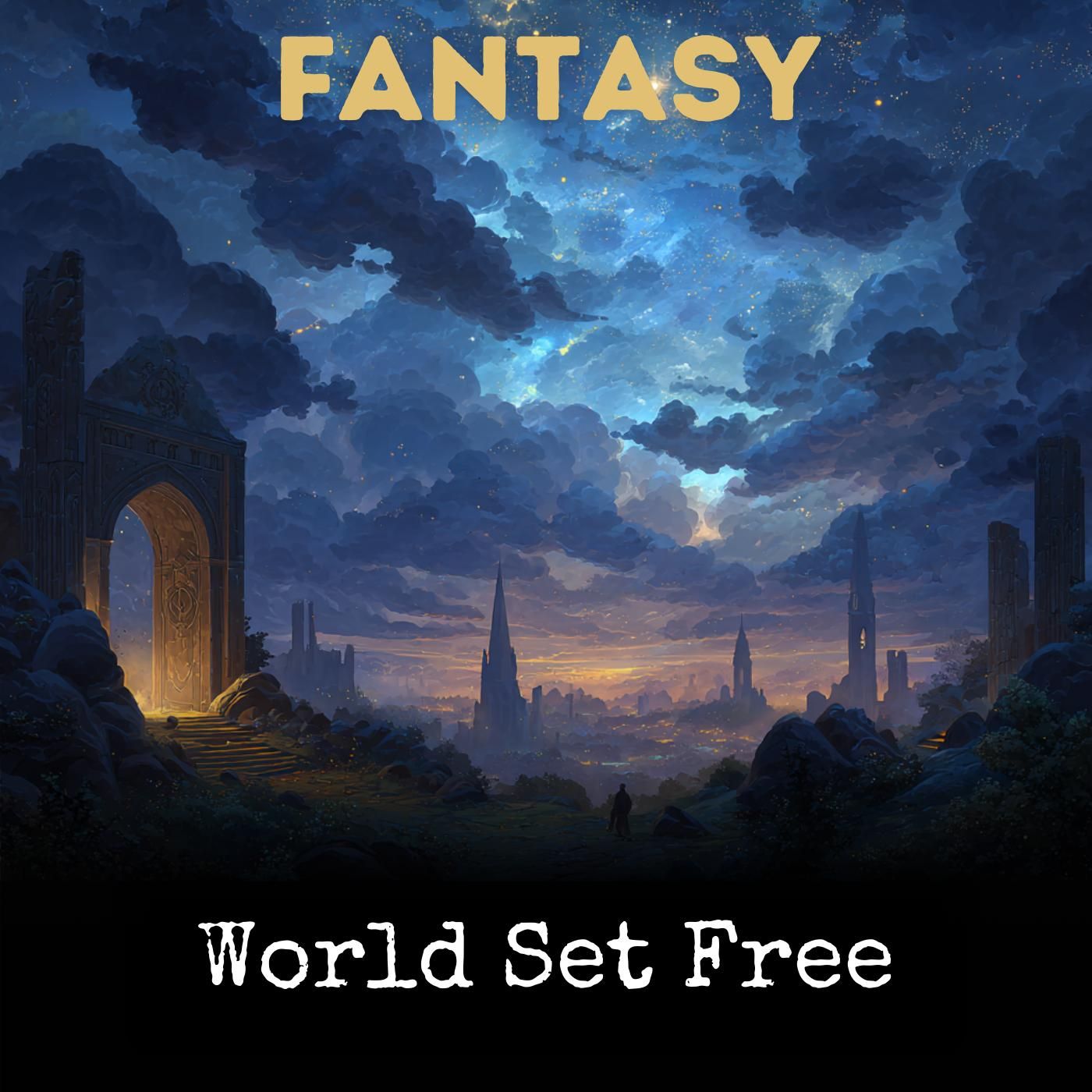
H. G. Wells
World Set Free
In H.G. Wells thought-provoking novel The World Set Free, originally published in 1914, the concept of radioactive decay takes center stage. Wells daringly imagines a world where the decay process could be accelerated, prompting scientists to delve into the theories of nuclear chain reactions. This groundbreaking work not only serves as a catalyst for scientific inquiry but also provides a platform for Wells to explore profound questions about humanitys survival. (Summary by Bill Boerst)
Wo hören?
Podcasts in der App Replaio Radio Bald verfügbarPodcasts kommen bald in die App. Installiere sie jetzt und erlebe als Erster einen ganz neuen Blick auf Podcasts
 Kostenlos installieren
Android 5 Mio.+ Downloads · Bewertung 4,8
iOS bald
Kostenlos installieren
Android 5 Mio.+ Downloads · Bewertung 4,8
iOS bald
Folgen
011 - Ch Fifth Sec 5-10 17.01.2026 43:17
In H.G. Wells thought-provoking novel The World Set Free, originally published in 1914, the concept of radioactive decay takes center stage. Wells daringly imagines a world where the decay process could be accelerated, prompting scientists to delve into the theories of nuclear chain reactions. This groundbreaking work not only serves as a catalyst for scientific inquiry but also provides a platfor...
010 - Ch Fourth Sec 12 Ch Fifth Sec 1-4 17.01.2026 39:32
In H.G. Wells thought-provoking novel The World Set Free, originally published in 1914, the concept of radioactive decay takes center stage. Wells daringly imagines a world where the decay process could be accelerated, prompting scientists to delve into the theories of nuclear chain reactions. This groundbreaking work not only serves as a catalyst for scientific inquiry but also provides a platfor...
009 - Ch Fourth Sec 7-11 17.01.2026 40:54
In H.G. Wells thought-provoking novel The World Set Free, originally published in 1914, the concept of radioactive decay takes center stage. Wells daringly imagines a world where the decay process could be accelerated, prompting scientists to delve into the theories of nuclear chain reactions. This groundbreaking work not only serves as a catalyst for scientific inquiry but also provides a platfor...
008 - Ch Third Sec 8 Ch Fourth Sec 1-6 17.01.2026 40:34
In H.G. Wells thought-provoking novel The World Set Free, originally published in 1914, the concept of radioactive decay takes center stage. Wells daringly imagines a world where the decay process could be accelerated, prompting scientists to delve into the theories of nuclear chain reactions. This groundbreaking work not only serves as a catalyst for scientific inquiry but also provides a platfor...
007 - Ch Third Sec 3-7 17.01.2026 51:12
In H.G. Wells thought-provoking novel The World Set Free, originally published in 1914, the concept of radioactive decay takes center stage. Wells daringly imagines a world where the decay process could be accelerated, prompting scientists to delve into the theories of nuclear chain reactions. This groundbreaking work not only serves as a catalyst for scientific inquiry but also provides a platfor...
006 - Ch Second Sec 9 10 Ch Third Sec 1 2 17.01.2026 41:03
In H.G. Wells thought-provoking novel The World Set Free, originally published in 1914, the concept of radioactive decay takes center stage. Wells daringly imagines a world where the decay process could be accelerated, prompting scientists to delve into the theories of nuclear chain reactions. This groundbreaking work not only serves as a catalyst for scientific inquiry but also provides a platfor...
005 - Ch Second Sec 4-8 17.01.2026 46:39
In H.G. Wells thought-provoking novel The World Set Free, originally published in 1914, the concept of radioactive decay takes center stage. Wells daringly imagines a world where the decay process could be accelerated, prompting scientists to delve into the theories of nuclear chain reactions. This groundbreaking work not only serves as a catalyst for scientific inquiry but also provides a platfor...
004 - Ch Second Sec 1-3 17.01.2026 41:57
In H.G. Wells thought-provoking novel The World Set Free, originally published in 1914, the concept of radioactive decay takes center stage. Wells daringly imagines a world where the decay process could be accelerated, prompting scientists to delve into the theories of nuclear chain reactions. This groundbreaking work not only serves as a catalyst for scientific inquiry but also provides a platfor...
003 - Ch First Sec 4-8 17.01.2026 43:32
In H.G. Wells thought-provoking novel The World Set Free, originally published in 1914, the concept of radioactive decay takes center stage. Wells daringly imagines a world where the decay process could be accelerated, prompting scientists to delve into the theories of nuclear chain reactions. This groundbreaking work not only serves as a catalyst for scientific inquiry but also provides a platfor...
002 - Prelude Sec 7 8 Ch First Sec 1-3 17.01.2026 55:06
In H.G. Wells thought-provoking novel The World Set Free, originally published in 1914, the concept of radioactive decay takes center stage. Wells daringly imagines a world where the decay process could be accelerated, prompting scientists to delve into the theories of nuclear chain reactions. This groundbreaking work not only serves as a catalyst for scientific inquiry but also provides a platfor...
001 - Preface Prelude Sec 1-6 17.01.2026 40:45
In H.G. Wells thought-provoking novel The World Set Free, originally published in 1914, the concept of radioactive decay takes center stage. Wells daringly imagines a world where the decay process could be accelerated, prompting scientists to delve into the theories of nuclear chain reactions. This groundbreaking work not only serves as a catalyst for scientific inquiry but also provides a platfor...
Ähnliche Podcasts






Höre den Podcast World Set Free in Replaio
Radio und Podcasts in einer App - kostenlos und ohne Anmeldung. Installiere sie noch heute und verpasse den Start nicht
Replaio ist kein Herausgeber von Podcasts; die Namen der Sendungen, Cover und Audioinhalte gehören ihren Autoren und werden über öffentliche RSS-Feeds verbreitet