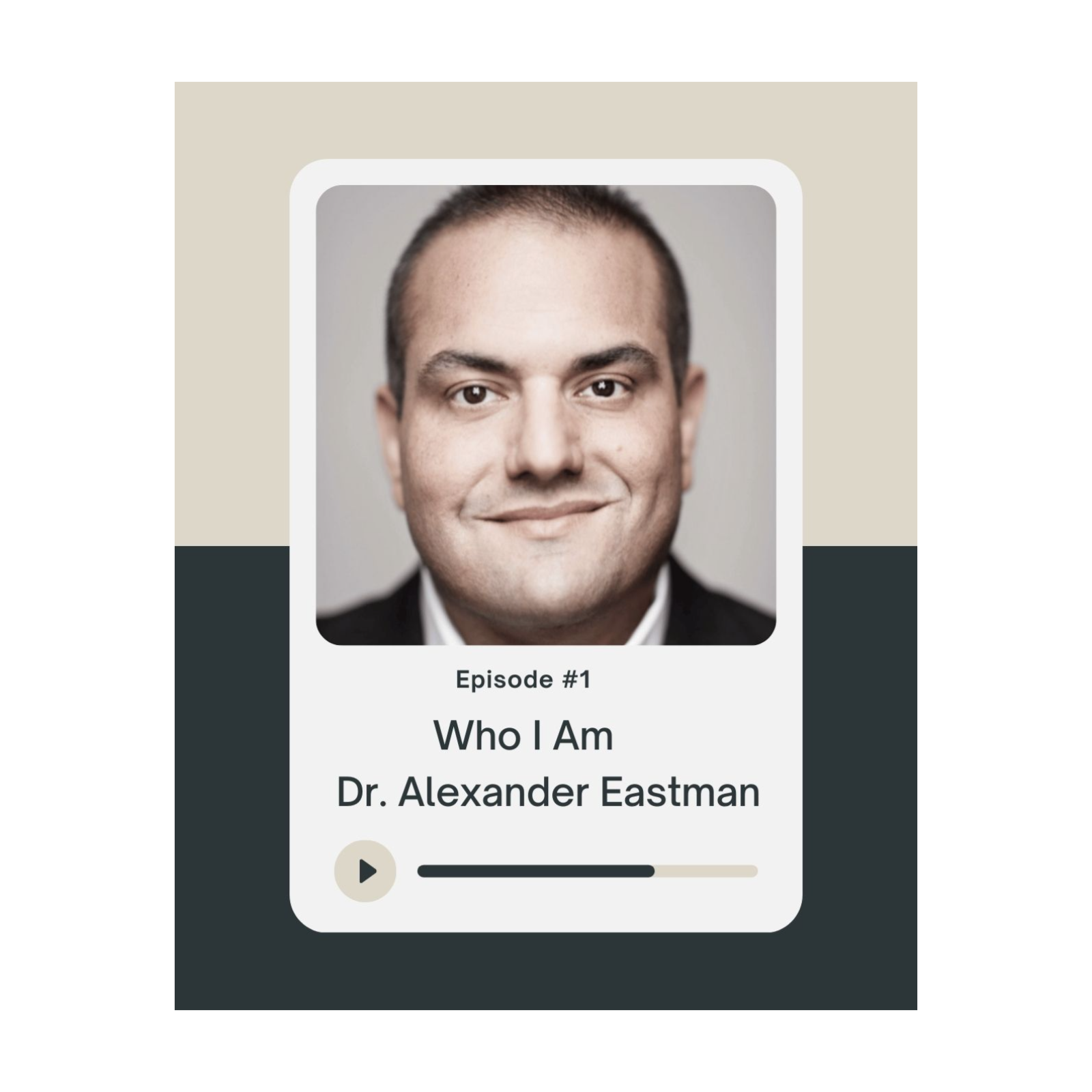
Dr. Alexander Eastman
First Five Minutes with Dr. Alexander Eastman
The Official Podcast of a Leading Trauma Surgeon and Tactical Physician In the first five minutes after a gunshot, stabbing, car crash, or active shooter, most people wait for help to arrive. Dr. Alexander Eastman has spent more than twenty years working to make sure people get the help they need in the moments that matter most. He is a former trauma surgeon at Parkland Memorial Hospital, a Dallas Police Lieutenant and Chief Medical Officer, and a Senior Medical Officer with the U.S. Department of Homeland Security. He also helped lead the Stop the Bleed movement, which has trained millions of...
Besuch unbedingt die Website des Podcasts und unterstütze die Macher: rss.com
Wo hören?
Podcasts in der App Replaio Radio Bald verfügbarPodcasts kommen bald in die App. Installiere sie jetzt und erlebe als Erster einen ganz neuen Blick auf Podcasts
 Kostenlos installieren
Android fast 10 Mio. Downloads · Bewertung 4,8
iOS bald
Kostenlos installieren
Android fast 10 Mio. Downloads · Bewertung 4,8
iOS bald
Folgen
When the Heart Stops 07.10.2026 4:33
Sudden cardiac arrest gives no warning, and the minutes before help arrives decide almost everything. This episode of First 5 Minutes breaks down the two things an ordinary bystander can do, hands-only CPR and the AED, and why neither requires training you don't already have. The show draws on the work of Dr. Alexander Eastman, a trauma surgeon and EMS physician who led the Rees-Jones Trauma Cente...
The Freeze 21.09.2026 3:51
Almost everyone believes they would step forward in an emergency. Again and again, people freeze instead. This episode of First 5 Minutes looks at why, and at the single decision that separates the people who act from the people who wait. The show draws on the work of Dr. Alexander Eastman, a trauma surgeon and EMS physician who led the Rees-Jones Trauma Center at Parkland Memorial Hospital in Dal...
After the Call 17.08.2026 3:20
After you dial 911 for a serious injury and hang up, something most people never see begins to move: a trauma system built to keep a badly injured person alive. This episode of First 5 Minutes is about that system, and why where a patient is taken can matter as much as how fast. The show draws on the work of Dr. Alexander Eastman, a trauma surgeon and EMS physician who led the Rees-Jones Trauma Ce...
The Bleeding You Can't See 10.08.2026 4:28
Most people picture bleeding as something you can see, blood on the ground, soaking through a shirt. But some of the most dangerous bleeding of all makes almost no mess. It happens inside the body, where no bandage can reach it and no tourniquet can stop it. This episode of First 5 Minutes takes on internal bleeding: the hidden injuries that follow serious car crashes, falls, and hard blows to the...
The Tourniquet: From Last Resort to Lifesaver 16.07.2026 4:13
Most people are more afraid of the tourniquet than of the bleeding it stops. That fear is understandable, and it can be deadly. This episode of First 5 Minutes takes on the myths that still keep people from using one of the simplest lifesaving tools there is. It traces how military trauma evidence from Iraq and Afghanistan overturned decades of caution, lays out what the research actually says abo...
Why the First Five Minutes Decide Everything 16.07.2026 4:04
Most people believe survival after a serious injury is decided in the operating room. It usually isn't. It's decided in the first five minutes, before the ambulance arrives, by whoever is standing closest. This opening episode of First 5 Minutes lays out the idea behind the whole series: what happens in those first minutes often matters more than anything that comes later. The show draws on the wo...
Fixing Officer Safety from Both Sides 19.05.2026 4:42
Trauma surgeon and Dallas Police Lieutenant Dr. Alexander Eastman has spent over 20 years treating critically injured officers in the hospital and standing beside them on the streets as a sworn officer and Chief Medical Officer. In this episode, he shares eye-opening research on rising trauma deaths among law enforcement, why we lack proper national injury tracking, the cultural barriers to office...
Bringing Trauma Care to the Scene 19.04.2026 5:23
Dr. Alex Eastman shares how Parkland and Dallas SWAT shaped his belief that trauma care must start at the scene, not after transport.
The Time Gap: Why I Took Trauma Care to the Streets with Dallas SWAT 07.03.2026 5:51
Early in my career at Parkland Hospital in Dallas, I kept seeing the same heartbreaking pattern: patients arrived too late. The surgery was perfect. The team was ready. But the damage from those lost minutes was already done. In this episode, I share the story of the moment I realized trauma care cannot wait for the hospital. In 2004 I made a simple but controversial suggestion — send trauma surge...
The Third Edition That Matches the Way Trauma Really Happens 17.02.2026 3:22
Dr. Alexander Eastman talks about what the Parkland Trauma Handbook (Third Edition) means to him beyond just being a book on a shelf in this short reflection. He remembers the training culture at Parkland Memorial Hospital that shaped his thinking and why a practical handbook is still useful in a world full of rules, apps, and constant updates. He also talks about the thought process behind the th...
The Golden Hour on the Front Line 16.02.2026 4:33
The "golden hour" had already changed trauma care across the country when Dr. Alex Eastman trained at Parkland Memorial Hospital. But experience taught him something that most people don't know. The golden hour doesn't start at the doors of the hospital. It starts at the scene, where people are often confused, long before the trauma team can get there. Dr. Eastman talks about how tactical emergenc...
Who I Am: Dr. Alexander Eastman 27.11.2025 2:51
Dr. Alexander Eastman shares his journey as a trauma surgeon, surgical intensivist, and EMS physician in Dallas, Texas. With over twenty years on the front lines of emergency medicine, he reflects on his experiences caring for critically injured patients and working closely with first responders and law enforcement.
Ähnliche Podcasts






Höre den Podcast First Five Minutes with Dr. Alexander Eastman in Replaio
Radio und Podcasts in einer App - kostenlos und ohne Anmeldung. Installiere sie noch heute und verpasse den Start nicht
Replaio ist kein Herausgeber von Podcasts; die Namen der Sendungen, Cover und Audioinhalte gehören ihren Autoren und werden über öffentliche RSS-Feeds verbreitet