Jacob McFarland
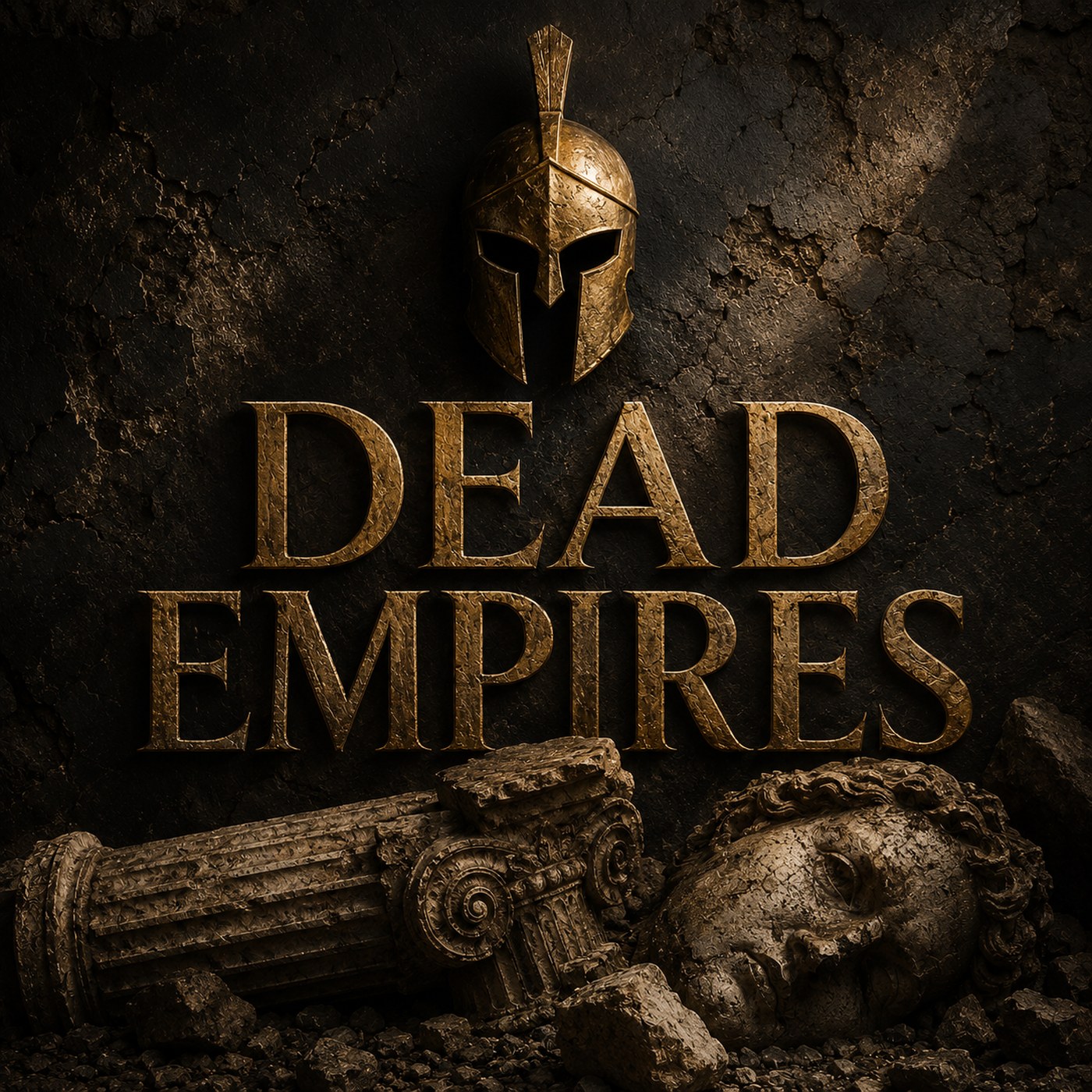
Dead Empires
Dead Empires is a narrative history podcast covering the rise and fall of collapsed civilizations. Long-form main series episodes deliver systems-driven, multi-sourced historical storytelling; what happened, how it happened, and why. Battle Room and Bio episodes drop listeners directly inside the decisive battles and lives of history's most consequential figures. Hosted by Jacob and produced by Bad Optics Media.
Autor
Jacob McFarland
Kategorie
Podcast-Website
Neueste Folge
20. Jun 2026
Wo hören?
Podcasts in der App Replaio Radio Bald verfügbarPodcasts kommen bald in die App. Installiere sie jetzt und erlebe als Erster einen ganz neuen Blick auf Podcasts
 Kostenlos installieren
Android fast 10 Mio. Downloads · Bewertung 4,8
iOS bald
Kostenlos installieren
Android fast 10 Mio. Downloads · Bewertung 4,8
iOS bald
Folgen
Carthage: Punic Apocalypse II 20.06.2026 3:57:37
In October of 218 BC a twenty-eight-year-old marched the last of his elephants over a 10,000-foot Alpine pass that no Mediterranean army had ever attempted. He came down into Italy with roughly 26,000 men, half of what he’d started with, and over the next eighteen months he handed the Roman Republic the three worst military disasters in its history. At Cannae alone, more Romans died in a single af...
Carthage: Punic Apocalypse I 06.06.2026 3:59:53
In the spring of 146 BC, Roman soldiers spent seventeen days burning the wealthiest city in the Western Mediterranean. When the fires went out, they plowed the ground and burned the libraries. Seven hundred years of accumulated knowledge: histories, philosophy, poetry, law, science, gone. Almost everything we know about Carthage today comes from the people who destroyed it. This is the story of ho...
Ähnliche Podcasts







Höre den Podcast Dead Empires in Replaio
Radio und Podcasts in einer App - kostenlos und ohne Anmeldung. Installiere sie noch heute und verpasse den Start nicht
Replaio ist kein Herausgeber von Podcasts; die Namen der Sendungen, Cover und Audioinhalte gehören ihren Autoren und werden über öffentliche RSS-Feeds verbreitet