Michael Repici
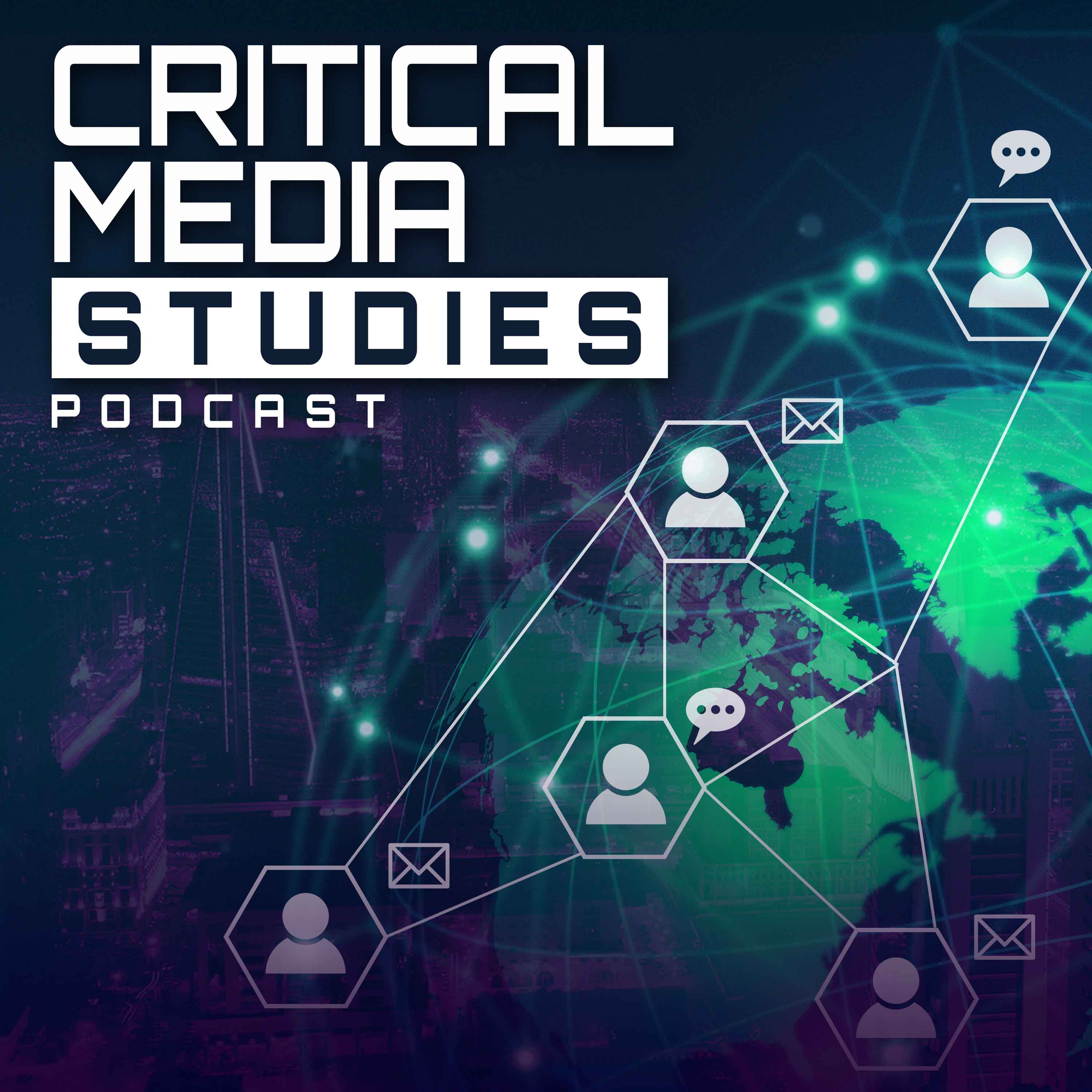
Critical Media Studies
The Critical Media Studies podcast discusses the interplay of technology and culture from an academic perspective. In each episode we consider the work of a prominent thinker in the field of critical media studies and discuss the implications of their work in relation to other thinkers and in light of current social contexts.
Autor
Michael Repici
Kategorie
Podcast-Website
Neueste Folge
3. Jul 2026
Wo hören?
Podcasts in der App Replaio Radio Bald verfügbarPodcasts kommen bald in die App. Installiere sie jetzt und erlebe als Erster einen ganz neuen Blick auf Podcasts
 Kostenlos installieren
Android 5 Mio.+ Downloads · Bewertung 4,8
iOS bald
Kostenlos installieren
Android 5 Mio.+ Downloads · Bewertung 4,8
iOS bald
Folgen
#123: Daniel Roher - The AI Doc: Or, How I Became An Apocaloptimist 03.07.2026 49:36
In this episode Barry and Mike discuss Daniel Roher’s 2026 documentary, The AI Doc: Or, How I Became An Apocaloptimist. They apply Bernard Stiegler’s concept of the pharmakon to understand the various positions on the development of artificial intelligence presented in the film. Link to Lawrence Lessig’s 3/29/26 Substack review
#122: Louis Theroux - Into the Manosphere 26.06.2026 53:14
In this episode Barry and Mike discuss Louis Theroux’s “Inside the Manosphere” (March, 2026) and address the question: What does the Manosphere tell us about our current media environment?
#121: A repost of episode #99: On Teenage Mutant Ninja Turtles and Artificial Intimacy 12.06.2026 48:20
In this episode Barry and Mike discuss the idea of “frictionless” relationships in the age of artificial intimacy. ErikaHayasaki – “What Would a Real Friendship With A.I. Look Like? Maybe Like Hers? The New York Times Magazine 7/20/2025 TED Radio Hour -- How our relationships are changing in the age of “artificial intimacy" Friday, August 2, 2024
#120: Mark Fisher - Exiting the Vampire's Castle, pt. 2 29.05.2026 54:17
In this episode Barry and Mike resume their discussion of Mark Fishers’s 2013 blog post, “Exiting the Vampire’s Castle”. They discuss the five laws that govern the castle and wonder if it is possible to exit the castle, as Fisher hoped.
#119: Mark Fisher - Exiting the Vampire Castle 15.05.2026 38:21
In this episode Barry and Mike discuss writer/music critic/cultural theorist Mark Fisher’s 2013 blog post, “Exiting the Vampire Castle”. They look at the essay, 13 years after its posting, and provide context as to what the Castle is, how it came to be, and how it functions. The next episode will focus on Fisher’s laws of the Vampire Castle.
#118: Althusser - Idelology and Ideological State Apparatuses 01.05.2026 51:27
In this episode Barry and Mike conclude their discussion of Althusser’s seminal essay, “Ideology and Ideological State Apparatuses”. They focus on Althusser’s concept of interpellation and discuss whether he believes it’s possible to get outside of ideology. The conclusion of the discussion asks how Simone Weil, who served as the genesis of this series, conceives of an outside to propaganda and po...
#117: Althusser - Ideology and Ideological State Apparatuses, pt. 1 17.04.2026 51:10
This is the first of a two part discussion. In this episode Barry and Mike discuss Louis Althusser’s Essay “Ideology and Ideological State Apparatuses” in relation to Simone Weil. Here, they discuss the state apparatuses and place them in dialogue with Weil’s discussion of party politics and attention. They close this episode by investigating the tension between the individual’s imagined and real...
#116: Weil - On The Abolition of all Political Parties, pt, 2 03.04.2026 51:18
In this episode Barry and Mike continue their discussion on Simone Weil’s essay, “On The Abolition of all Political Parties.” They discuss the opposition between the truth seeking individual and the party member, and then pivot to what this question looks like in the current day.
#115: Simone Weil - On The Abolition of All Political Parties 20.03.2026 48:14
This is the first of two episodes on Simone Weil’s 1943 essay, “On the Abolition of all Political Parties. In this episode Barry and Mike discuss the distinction Weil draws between “truth” and “ideology”.
Guy Debord - The Society of the Spectacle 06.03.2026 59:38
This is a repost of the Guy Debord episode that was originally posted on 3/15/23. In This episode of the Critical Media Studies podcast we discuss Guy Debord’s The Society of the Spectacle. As the book is aphoristic, rather than trying to address the work as a whole, Barry and Mike look at what Debord means by Spectacle and hone in on a few particular sections (24-28). The focus of this episode se...
#113: Merenda - Reading Arendt to Rethink Truth, Science, and Politics in the Era of Fake News 20.02.2026 57:45
In this episode Barry and Mike discuss Federica Merenda’s essay, “Reading Arendt to Rethink Truth, Science, and Politics in the Era of Fake News”. They discuss Arendt’s distinction between factual truths and rational truths and how they reveal of the interplay of truth and politics.
#112: Kracauer - Photography 06.02.2026 59:30
In this episode Barry and Mike discuss the uncanny ways that Sigfreid Kracauer’s 1927 essay, Photography, anticipates the modern media landscape.
#111: Siegfried Kracauer - Cult of Distraction: On Berlin's Picture Palaces 23.01.2026 47:22
Barry and Mike discuss Siegfried Kracauer's 1926 essay "Cult of Distraction: On Berlin's Picture Palaces." Written nearly 100 years ago, the essay is strangely relevant to our current political landscape. We pay special attention to Kracauer's unique notion of distraction, which contra Stiegler, Kracauer views as a stimulus to thought.
#110: Yudkowski and Soares - If Anyone Builds it, Everyone Dies: Why Superhuman AI Would Kill Us All 09.01.2026 43:51
In this episode Barry and Mike discuss “If Anyone Builds it, Everyone Dies: Why Superhuman AI Would Kill Us All” by Eliezer Yudkowsky and Nate Soares. They discuss the main arguments about the inevitability of our demise at the hands of superhuman intelligence and present a few alternatives to this doomsday scenario.
#109: Rachel Bitecofer -The Whole World Is Getting Dumber (And The Smartphone Did It.) 26.12.2025 44:36
In this episode Barry and Mike discuss Rachel Bitecofer’s substack article, “The Whole World is Getting Dumber (And the Smartphone Did It.)” We question whether her solution of banning smart phones from the classroom will make much of a difference or if we just have to go “scorched earth” on technology to regain our attention and focus.
#108: Alberto Romero - AI Video Should Be Illegal 12.12.2025 51:56
In this episode we discuss Alberto Romero’s Substack article on AI video . While Romero argues that perhaps we should seek legal remedies to the problems of deepfake video, Barry and Mike consider an alternative. They discuss the issues that deepfake video brings to the fore and wonder whether the problems caused by deepfake technologies can be resolved by law or if these technologies...
Alberto Romero - The Most Important Skill in the 21st Century 28.11.2025 45:42
In this episode Barry and Mike discuss “ The Most Important Skill in the 21st Century ,” Alberto Romero’s polemical defense of boredom in the media entertainment age. They discuss whether it’s possible to be bored today in the way that Romero seems to require.
#106: Bernard Steigler - Elements of Pharmacology, pt. 2 14.11.2025 32:35
This is part two of our discussion of Bernard Steigler's "Elements of Pharmacology". This time, Barry and Michael focus on Stiegler's discussion of the unique challenges posed by new digital 'pharmaka.'
#105: Bernard Steigler - Elements of Pharmacology 31.10.2025 31:33
This week on Critical Media Studies, Barry and Michael discuss Bernard Stiegler's "Elements of Pharmacology," a transcription of an interview with the French philosopher from June 2020, just two months prior to Stiegler's passing. This episode focuses on Stiegler's exposition of his key term "the pharmakon" and the defining role it plays in his media theory.
#104: Juan Fontcuberta and the “paper-hankie picture” 17.10.2025 52:16
In this episode Barry and Mike discuss “The Eye of God”, chapter 2 of Juan Fontcuberta’s book, Pandora’s Camera. They reflect upon the impacts that the shift from analogue to digital photography and consider whether the digital image “kills us just as much as it gives us life
#103: Fontcuberta - Pandora's Camera 03.10.2025 55:48
In this episode Barry and Mike discuss Juan Fontcuberta’s “Pandora’s Camera” (2014). They discuss his take on Barthes and Kracauer’s theories about the relations between photography, philosophy, modernity, and existence.
Andre Bazin - Ontology of the Photographic Image 19.09.2025 52:38
In the “Ontology of the Photographic Image,” Andre Bazin makes the provocative claim that the invention of photography is "clearly the most important event in the history of the plastic arts." At the same time, Bazin questions our naïve faith that the photographic image is just as real as the object that it depicts. He goes on to provide an alternative history of painting and photography, highligh...
#101: Heidegger - The Thing, pt. 2 05.09.2025 49:54
This is the second of two discussions of Martin Heideger’s essay “The Thing.” Please see episode #100 for the first installment, which set the table (jug joke) for this discussion. In this episode Barry and Mike focus on Heidegger’s notion of “nearness” and the “thingliness” of the jug/thing.
#100: Heidegger - The Thing, pt. 1 22.08.2025 37:54
In this episode Barry and Mike begin their two-part discussion of Martin Heidegger’s 1949 lecture, “The Thing.” They focus on his concept of distancenessless as a unique problem of modernity and discuss how what he calls nearness might serve as an antidote.
#99: On Teenage Mutant Ninja Turtles and Artificial Intimacy 08.08.2025 48:20
In this episode Barry and Mike discuss the idea of “frictionless” relationships in the age of artificial intimacy. ErikaHayasaki – “What Would a Real Friendship With A.I. Look Like? Maybe Like Hers? The New York Times Magazine 7/20/2025 TED Radio Hour -- How our relationships are changing in the age of “artificial intimacy" Friday, August 2, 2024
Ähnliche Podcasts




Höre den Podcast Critical Media Studies in Replaio
Radio und Podcasts in einer App - kostenlos und ohne Anmeldung. Installiere sie noch heute und verpasse den Start nicht
Replaio ist kein Herausgeber von Podcasts; die Namen der Sendungen, Cover und Audioinhalte gehören ihren Autoren und werden über öffentliche RSS-Feeds verbreitet