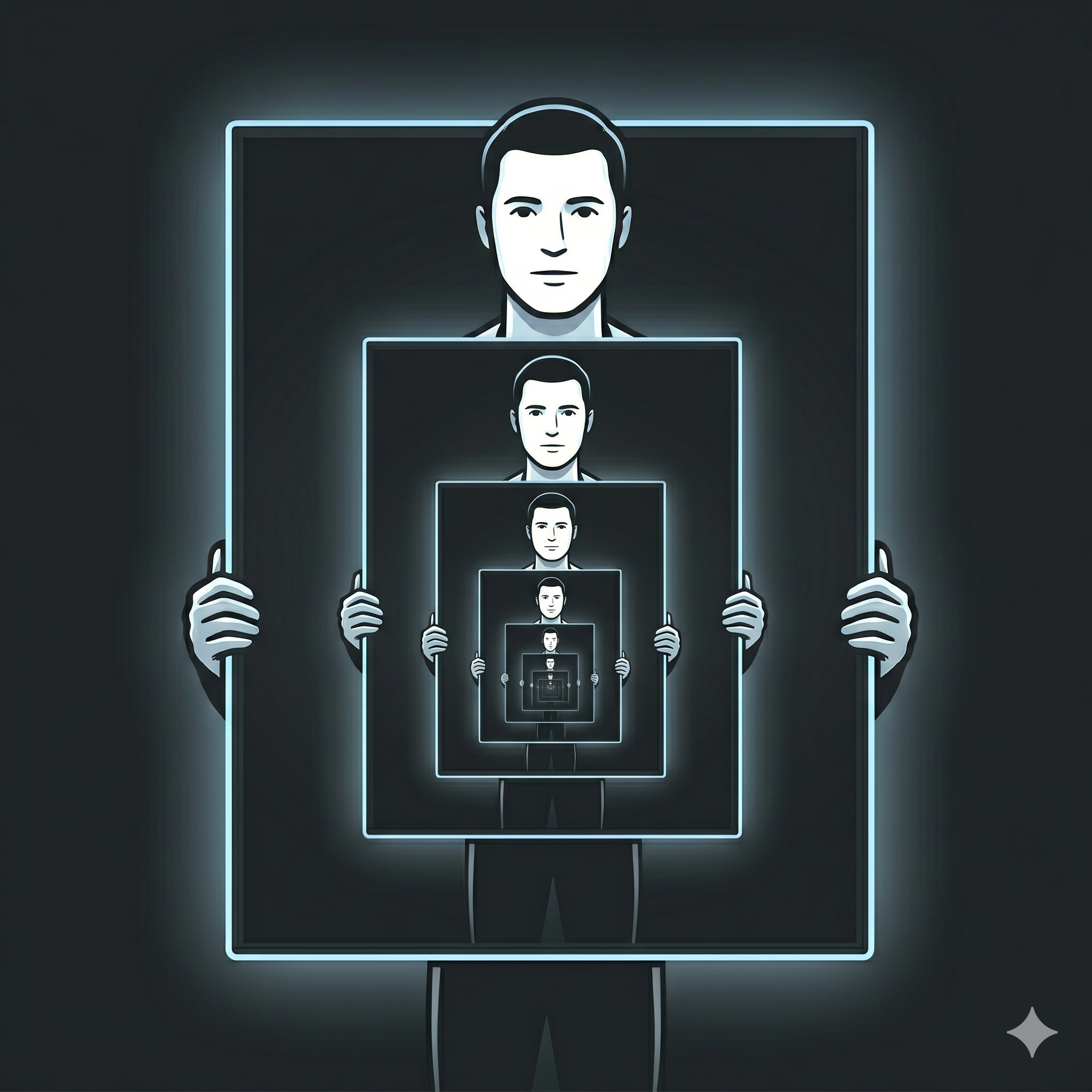
Ptim Callan
Postmodern Pfiction with Ptim Callan
A hardcore fan and sometime author of postmodern fiction dives deep into the world's greatest literary genre. Join me as I explore authors, books, structure, crossover with other media, influences, and more. The P is silent.
Husk at besøge podcastens hjemmeside og støtte skaberen: riverside.com
Forfatter
Ptim Callan
Kategori
Podcastens hjemmeside
Seneste episode
13. nov. 2026
Hvor kan du lytte?
Podcasts i appen Replaio Radio Kommer snartPodcasts kommer snart til appen. Installer nu, og vær den første til at se en helt ny tilgang til podcasts
 Installer gratis
Android 10 mio.+ downloads · 4,7+ i bedømmelse
iOS snart
Episoder
What Is a Skein? 13.11.2026 20:21
A skein is a massive, messy, unsolvable knot. This episode explores how postmodern authors might use a big, messy tangle in their fictional work. Robert Coover, Carlo Emilio Gadda, Donald Antrim, Samuel R. Delaney, David Foster Wallace, Infinite Jest, Gravity's Rainbow, Thomas Pynchon. Vladimir Nabokov, Ada. James Joyce. Ulysses.
Eight Great Books of Postmodern Short Fiction 22.10.2026 22:30
This channel so far has focused a lot on novels and other major works of fiction. But we must not ignore the short form, which has been a fecund source of expert and innovative postmodern fiction. In this episode I go through eight iconic and seminal collections of short postmodern fiction. Works include Cosmicomics by Italo Calvino, Labyrinths by Jorge Luis Borges, Lost in the Funhouse by John Ba...
How Postmodern Is It? 13.10.2026 21:20
In this episode I offer the suggestion that there can exist a "degree" of postmodernism in a work of fiction, with some works being more postmodern than others. I illustrate with four examples" A Canticle for Leibowitz by Walter Miller, The Universal Baseball Association, J. Henry Waigh Proprietor by Robert Coover, If on a winter's night a traveler by Italo Calvino, and Infinite Jest by David Fost...
A Garden of Forking Paths 28.09.2026 32:34
In this episode I describe the postmodern narrative structure called the Garden of Forking Paths and give examples from Jorge Luis Borges, John Fowles, Mark Danielewski, Robert Coover, Alan Lightman, Steven Milhauser, Thomas Pynchon, and film.
One Grand Conceit 21.09.2026 15:54
Sometimes a postmodernist will start with a completely mind-blowing premise for a work of fiction and then will diligently tell that story as if it were the plainest of ideas. This technique, when done well, can be surprising and delightful. I explain the concept and give you examples from Gogol (The Nose), Italo Calvino (Cosmicomics), Robert Coover (Whatever Happened to Gloomy Gus of the Chicago...
Self Awareness 12.09.2026 33:34
In this episode I discuss the most basic defining characteristic of postmodernism, which is acute self-awareness. I explain how postmodernism, as a response to modernism, is fundamentally about figuring out how we want to create literature in a world where all accepted prescriptive and proscriptive norms have been eliminated. I take a broad set of a dozen examples to show the many forms in which t...
Nested Frames 31.08.2026 23:33
I follow up my episode "What Is a Frame?" to discuss the concept of nested frames, or frames within frames. I discuss some of the possibilities for this structure and why it may be appealing to metafictionists and other postmodernists. I use examples from Stanislaw Lem, John Barth, David Mitchell, and Julia Donaldson.
Alphabetical Antics: Lipograms, Abecedaries, and More 24.08.2026 23:41
I describe how the very alphabet itself is a potential source of content, technique, and constraint for the postmodern writer. We discuss abecedaries, lipograms, and other alphabetical games. Authors include Georges Perec, Ernest Vincent Wright, Stanislaw Lem, Mark Dunn, Christian Bok, and Walter Abish.
Content Versus Technique 14.08.2026 17:07
I discuss subject matter and technique as two ways to address a school like postmodernism in literature. I describe the pitfalls of simply associating the postmodern movement with subject matter that is anchored to the postmodern era and how traditionalist writing can feature these same subjects. I discuss why we must deal with content as a topic in our study of postmodernism and how we can produc...
Six Postmodern Books on My Reading List 06.08.2026 12:03
I always have a long reading list, including works both postmodern and otherwise. I go over six books on my reading list, including The One Hundred Brothers by Donald Antrim, Numbers in the Dark by Italo Calvino, Voice of the Fire by Alan Moore, At Swim Two Birds by Flann O'Brien, Huck Out West by Robert Coover, and Bats of the Republic by Zachary Thomas Dodson.
What Is Concrete Prose? 30.07.2026 24:49
Concrete poetry or concrete prose is poetry or prose in which the arrangement of the printed words on the page adds to the meaning of the work in a meaningful way. I explain the form and give an overview of contributions from writings like e.e. cummings, Richard Kostelanetz, Mark Danielewski, William H. Gass, Ronald Sukenik, Harlan Ellison, Raymond Federman, and more.
Going Meta: Career as Postmodern Narrative 23.07.2026 22:47
Postmodernists pay great attention to the form of a literary work, be it a short story, a play, a novel, a film, a TV series, a book of short stories, or even a series of novels. But what happens when a postmodern storyteller starts to look at his own career like it's a single, literary work? In this episode I walk through three accomplished postmodernists (John Barth, Robert Coover, Quentin Taran...
Five Postmodernists I Don't Like 16.07.2026 24:40
I generally am a huge fan of hardcore postmodernism, but these five popular and highly postmodern authors simply don't resonate with me. Join me as I discuss Kathy Acker, William S. Burroughs, Thomas Pynchon, Chuck Palahnuik, and Umberto Eco.
What Is a Frame? 11.07.2026 17:14
The frame structure is very common in postmodernist writing. I define frames, explain why they are popular among postmodernists, and give examples going all the way back to medieval times. We look at The Canterbury Tales, Hyperion, Freddy's Book, and The Princess Bride. We end with a sneak peek at future episodes including nested frames and interesting examples of frames in postmodern fiction.
What Is Aleatory Fiction? 06.07.2026 19:19
Aleatory fiction is the technique whereby the narrative can be presented in a different order to different readers based on their choice or some randomizing element. This is as opposed to tabular fiction, where multiple, independent narrative lines are presented simultaneously to the reader, and a garden of forking paths, where the narrative splits and forces the reader to choose. We look at shuff...
What Is a Mega Novel? 29.06.2026 13:37
The biggest novels are getting bigger than ever before. I give you real examples of how the top end in novel size is growing and explore this trend and its significance in postmodern fiction. Works covered include Ulysses by James Joyce, Gravity's Rainbow by Thomas Pynchon, Darconville's Cat by Alexander Thereux, The Tunnel by William Gass, The Christine Brook-Rose Omnibus, Dune by Frank Herbert,...
Six Science Fiction Authors Who Go Postmodern 18.06.2026 18:09
I pick out six unambiguous science fiction authors with strong postmodern tendencies and explain what they are. My list includes Kurt Vonnegut, Philip K. Dick, Gene Wolfe, Stanislaw Lem, Harlan Ellison, and J.G. Ballard.
What Is Tabular Narrative? 15.06.2026 18:04
This episode explores the fascinating world of tabular narrative in fiction, examining how authors create parallel, simultaneous storylines that challenge and engage readers. Join me to explore examples from John Barth, Samuel R. Delaney, Steve Katz, Arno Schmidt, Vladimir Nabokov, Johan Harstad, and Mark Danielewski as we discover how these complex narrative structures reshape storytelling.
Is It a Novel? 11.06.2026 10:14
Traditional fiction defines specific forms it can take, such as short stories, plays, poetry, and novels. Postmodernism intentionally blurs these lines, challenging the traditional definitions of types of literature. In this episode I examine a handful of books and ask, is this a novel?
Form in Postmodernism 06.06.2026 28:27
I discuss the postmodern focus on the form our writing takes as an empowered response to the Literature of Exhaustion. Form can be structure, or types of documents, or genre and tropes and stock characters. I include plenty of real examples to show how this interest in form manifests itself to the betterment of postmodern literature.
The Literature of Exhaustion 02.06.2026 18:36
Thousands of years of previous writing captured in millions of books has seemed to many postmodernists to be a massive obstacle to their own original contribution to literature. I describe this sentiment and some of the responses we see to this predicament.
What Is Irrealism? 30.05.2026 12:07
I define irrealism, fabulism, and magic realism and discuss how delightful they can be. I explain the fundamental strategy behind irrealism and how it fits into literary postmodernism.
Real Imaginary Books 22.05.2026 11:40
Our books are full of fictional people, places, and events. But what if the books themselves could be fictional? Some clever postmodernists have done exactly that.
Ten Titans of Postmodern Fiction 18.05.2026 40:01
I share the first of what will be many lists, this one of ten undeniable titans of postmodern fiction. Plus, see who didn't make the list and why.
Recasting Famous Stories 13.05.2026 15:51
Beowulf, the Wizard of Oz, Jane Eyre, and Hamlet all have one thing in common: Postmodern authors have retold them from the perspective of characters other than the protagonists we imagine. In this episode I discuss this marvelous technique and some of the shining works it has produced.
Lignende podcasts





Lyt til podcasten Postmodern Pfiction with Ptim Callan i Replaio
Radio og podcasts i én app - gratis og uden tilmelding. Installer i dag, og gå ikke glip af lanceringen
Replaio er ikke podcastudgiver; programmernes navne, coverbilleder og lyd tilhører deres ophavsmænd og distribueres via offentlige RSS-feeds.