Circle Of Insight Productions
The Circle Of Insight
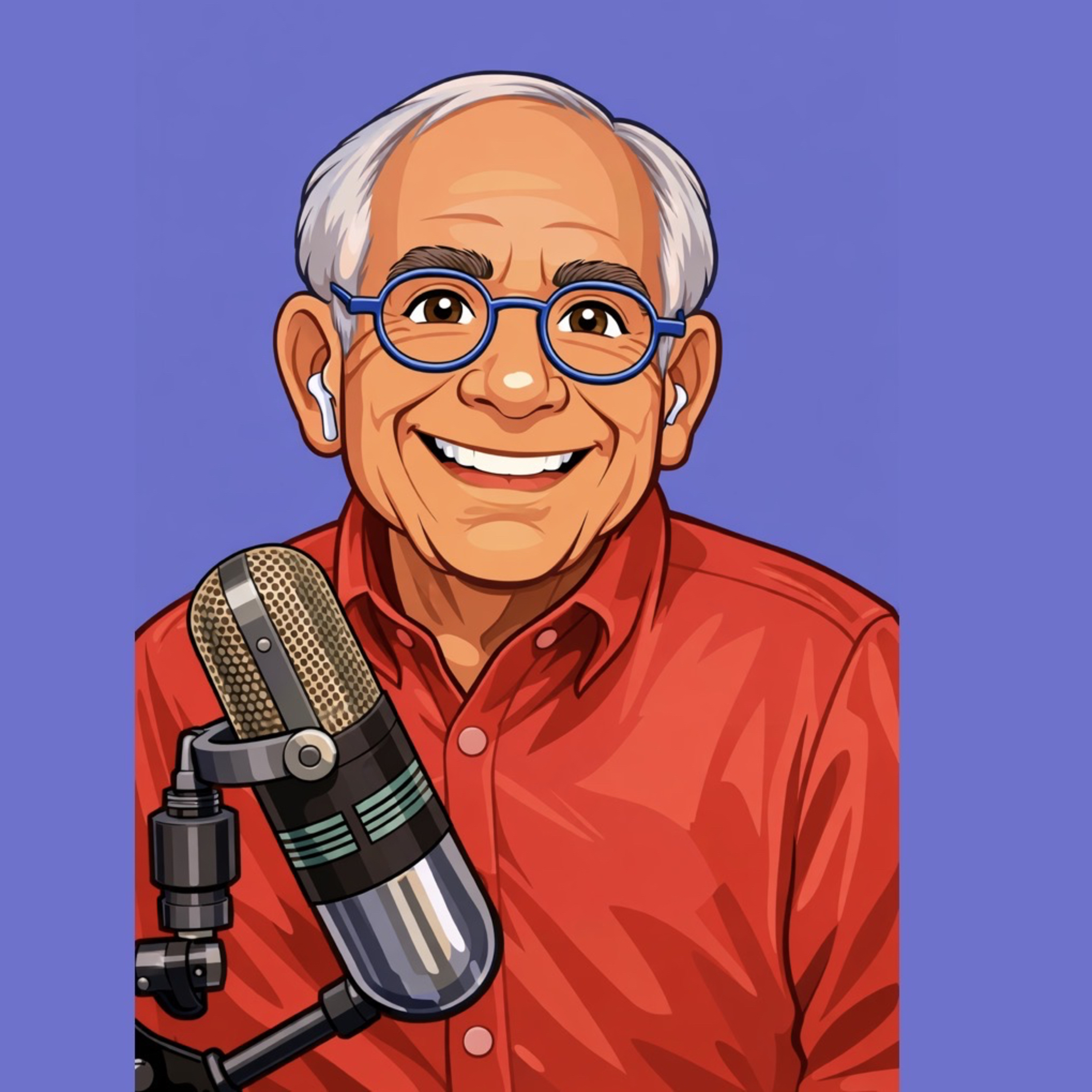
Join Dr. Carlos, a seasoned Psychology Professor, on “The Circle of Insight” as he unravels the complexities of the human mind. Through personal insights and expert analysis from specialists around the world, each episode delves into the fascinating world of psychology. Explore the latest research, compelling theories, and real-world applications that help us understand human behavior and mental processes. Tune in for an enlightening journey into the depths of the mind with expert perspectives and thoughtful discussion.
Určitě navštivte web podcastu a podpořte jeho tvůrce: www.thecircleofinsight.com
Autor
Circle Of Insight Productions
Kategorie
Web podcastu
Nejnovější epizoda
23. lis 2026
Kde poslouchat?
Podcasty v aplikaci Replaio Radio Už brzyPodcasty míří do aplikace už brzy. Nainstaluj si ji teď a jako první uvidíš úplně nový pohled na podcasty
 Nainstaluj zdarma
Android 10 mil.+ stažení · hodnocení 4,7+
iOS už brzy
Epizody
The Enemy Within: Fairbairn’s Internal Saboteur and the Roots of Self-Sabotage 23.11.2026 6:19
Ever feel like part of you is working against you, mocking your needs or crushing your hopes for closeness before they can grow? Fairbairn had a name for it: the internal saboteur. In this episode, we break down how this object relations concept grows out of early experiences with rejecting or unavailable caregivers, and why the mind would rather attack its own longings than risk being hurt again....
Lorelai on the Couch: Humor, Defense and the Fear of Getting Too Close 22.11.2026 5:27
Lorelai Gilmore can talk her way out of almost anything, including her own feelings. In this episode, we put Stars Hollow’s favorite fast-talker on the couch to explore how her wit and charm keep emotional vulnerability at a safe distance. We look at how growing up in a rigid, conditional family shaped her pull between wanting closeness and fiercely guarding her independence. Finally, we consider...
Caught in the Middle: When Choosing One Parent Feels Like Betraying the Other 18.11.2026 2:34
Whether your parents are divorced, feuding or just both expecting you at their table, deciding where to spend the holidays can leave you feeling like a traitor no matter what you choose. In this episode, we look at loyalty conflicts: the emotional bind of feeling that closeness with one parent means disloyalty to the other. We explore where that guilt comes from, how childhood roles can follow us...
All Good or All Bad: Why One Mistake Feels Like Total Failure 17.11.2026 2:41
Have you ever made one small slip at work or in a relationship and suddenly felt like a complete fraud? In this episode, we look at internal splitting, a psychodynamic concept about difficulty holding one’s strengths and flaws in mind at the same time. We explore how early emotional patterns, fragile self-esteem and unconscious defense mechanisms can turn everyday setbacks into crises of identity....
Home for the Holidays, Back to Age Twelve: Why We Regress at the Thanksgiving Table 11.11.2026 2:10
You’re a capable adult the rest of the year, so why does one dinner with family have you sulking, bickering with your siblings or waiting for your parents’ approval? In this episode, we look at the psychology of holiday regression: how going home can pull us back into the roles we played as kids, from the peacemaker to the black sheep to the golden child. We explore why old family dynamics come ba...
Why the People We Love Can Bring Out Our Worst Defenses 10.11.2026 2:58
Why do we sometimes become most defensive, critical, or emotionally distant with the people we love most? The closer a relationship becomes, the more likely it is to awaken earlier experiences of rejection, inadequacy, and unmet emotional needs. Through the psychodynamic concepts of projection, displacement, and regression, we explore why ordinary disagreements can become expressions of much older...
Where Consciousness Begins: Dr. Mark Solms on Emotion and the Feeling Brain 08.11.2026 46:32
For decades, science assumed the thinking cortex was the seat of consciousness. Neuropsychologist and psychoanalyst Mark Solms argues the opposite: consciousness starts in the ancient brainstem, a structure we share with fish, and its most basic form is raw feeling. In this episode, Dr. Solms explains why emotion, not thought or perception, sits at the center of the mind and how feelings help us s...
The Psychology of Cathy Ames: Psychopathy, Manipulation, and the Fear of Vulnerability in East of Eden 02.11.2026 2:57
What happens when someone understands other people's emotions but appears almost entirely indifferent to their suffering? In John Steinbeck's East of Eden, Cathy Ames presents a disturbing portrait of manipulation, cruelty, and emotional detachment that raises important questions about psychopathy and personality organization. This episode introduces a new psychodynamic case formulation examining...
Omnipotent Control: Why Some People Need You to Agree With Them 01.11.2026 2:29
Why do some people experience disagreement as a personal rejection rather than a difference of opinion? In psychodynamic psychology, omnipotent control describes a defense mechanism in which attempts to control others help manage underlying feelings of anxiety, helplessness, or insecurity. In this special episode, we explore how the need for agreement can undermine intimacy, create conflict, and m...
The Ghosts We Bring Into Love: How Childhood Relationships Haunt Our Adult Lives 28.10.2026 2:34
Some of the most influential people in our romantic relationships are people who are no longer part of our lives. This Halloween, we explore how childhood experiences, unconscious expectations, and unresolved emotional wounds can shape the way we love, argue, and respond to intimacy. Drawing from psychodynamic psychology, this episode introduces a special Halloween essay from Psychodynamic Observa...
Dating the Parent You Never Had: Why We Pursue Emotionally Unavailable Partners 26.10.2026 3:37
Why do some people repeatedly fall in love with partners who cannot meet their emotional needs? Through attachment theory, repetition compulsion, and Kohut's self psychology, we explore how romantic relationships can become unconscious attempts to obtain childhood recognition. We also examine how longing for an unavailable parent can influence attraction, rejection sensitivity, and intimacy.
When Love Becomes the Pursuit of Someone Who Cannot Love You Back 25.10.2026 3:57
Examine how early object relationships may influence the selection of emotionally unavailable romantic partners. Explore repetition compulsion, narcissistic vulnerability, idealization, and the unconscious wish to transform an emotionally withholding person into a loving figure. Consider how romantic rejection can reactivate earlier experiences of inadequacy or abandonment. Discuss how psychodynam...
Are Personality Disorders Real Categories or Dimensions of Personality? 20.10.2026 4:51
Explore categorical and dimensional theories of personality pathology through the work of contemporary personality researchers. Compare traditional DSM diagnostic categories with trait-based approaches and models emphasizing personality functioning. Examine how overlapping symptoms challenge the assumption that personality disorders represent distinct psychological conditions. Discuss the implicat...
When Someone We Love Suddenly Becomes Someone We Hate 19.10.2026 2:25
What happens to love when the person we trust most becomes the source of our deepest disappointment? In this episode of Circle of Insight, we explore the difficult emotional territory between affection and resentment, examining why people sometimes feel compelled to reject someone entirely rather than accept their imperfections. Through the lens of psychodynamic psychology, we consider how splitti...
The Inner Child That Still Controls Your Relationships 18.10.2026 3:48
Check out my new Substack psychodynamic observations Why do seemingly minor disagreements sometimes trigger emotional reactions that feel completely disproportionate to the situation? Psychodynamic theory suggests that unresolved childhood experiences may continue influencing how we interpret rejection, criticism, and intimacy in adulthood. Drawing on object relations theory, attachment, and the c...
When Criticism Feels Like Abandonment 15.10.2026 4:12
Why can a seemingly insignificant criticism provoke overwhelming shame, anger, or an intense fear of abandonment? From a psychodynamic perspective, reactions to perceived rejection may reflect narcissistic vulnerability, fragile self-esteem, and internalized relational experiences that give present-day disappointments a deeper emotional meaning. Drawing on object relations theory and self psycholo...
Are You Parenting Your Child or the Child You Once Were? 11.10.2026 4:01
Sometimes our strongest reactions to our children have surprisingly little to do with what they are actually experiencing. As children grow, their struggles can awaken old insecurities, disappointments, and expectations in their parents. This episode explores how recognizing those emotional patterns can create healthier relationships and allow children to develop identities separate from their par...
Attachment Theory in the Therapy Room: What Secure, Anxious, and Avoidant Attachment Actually Look Like 06.10.2026 3:47
Attachment theory tends to get flattened into dating-app shorthand, but its clinical roots run much deeper than that — secure, anxious, and avoidant patterns describe fundamentally different ways people organize themselves around closeness, separation, dependency, and the threat of rejection. This episode looks at how those patterns don't just surface in a patient's stories about relationships, bu...
Why Some People Constantly Need Validation 04.10.2026 3:28
Why can a compliment make someone feel wonderful for an hour, only for the insecurity to return almost immediately? The constant search for reassurance may look like vanity or attention-seeking, but self psychology suggests something deeper may be happening. Heinz Kohut’s work helps explain how validation from others can sometimes become psychological scaffolding for a fragile sense of self.
Why We Become Our Parents Without Realizing It 29.09.2026 3:22
You promised yourself you would never sound like your mother or father—until one day their words came out of your mouth. Psychology suggests that our earliest relationships create internal templates that can quietly influence how we love, argue, parent, and respond to rejection decades later. This episode explores how object relations, identification, and repetition can turn childhood experiences...
The Mirror We Never Outgrow: Kohut's Theory of the Self 23.09.2026 2:37
Heinz Kohut broke from classical psychoanalysis to argue that the self isn't shaped by drives and conflict alone, but by whether early relationships mirror, idealize, and validate who we are. This episode unpacks Kohut's self psychology — mirroring, idealizing, and twinship needs — and how empathic failures in those early bonds can leave the self fragile or defensively grandiose later in life. We...
The Omega-3 Autism Claim: Small Effects, Large Headlines, and the Persistent Gap Between Data and Desire 21.09.2026 4:28
This review looks at a recent summary of about a dozen clinical trials that claimed omega-3 supplements improve irritability and communication in autistic individuals. It compares the actual findings which showed small, often statistically meaningless results based on subjective questionnaires rather than real-world changes with the much bolder headlines seen by the public. While the idea makes se...
The Biomarker Dilemma: Promise, Pitfalls, and Why Skepticism Matters in Medicine and Psychology 13.09.2026 6:01
While biomarkers offer significant clinical promise by enabling earlier diagnoses, personalized therapies, and objective disease monitoring, they often fail to correlate with meaningful patient-centered outcomes such as quality of life and long-term survival. This disconnect is particularly stark in psychology and psychiatry, where complex conditions lack definitive biological signatures and risk...
Psychodynamic case conceptualization of George Costanza from Seinfeld 08.09.2026 4:39
And this episode will give you a brief look at a case conceptualization I did of George Costanza and we look at it through the lens of the psychodynamic diagnostic manual number three the PDM three so we’ll look at categories like reality, testing personality, organization, defense, mechanisms, organizing theme, relationships, developmental, formulation, and more
Nature, Nurture, and Everything In Between: Genetics vs. Epigenetics 07.09.2026 10:12
This episode breaks down the difference between genetics and epigenetics — the genes you're born with versus the environmental and experiential factors that switch those genes on or off. The conversation explores how stress, trauma, and lifestyle can alter gene expression without changing the underlying DNA sequence itself, and what that means for understanding mental health and behavior. It's a f...
Podobné podcasty






Poslouchej podcast The Circle Of Insight v Replaio
Rádio a podcasty v jedné aplikaci - zdarma a bez registrace. Nainstaluj si ji ještě dnes a nepropásni premiéru
Replaio není vydavatelem podcastů; názvy pořadů, obálky a audio patří jejich autorům a šíří se přes veřejné RSS kanály