The Quint
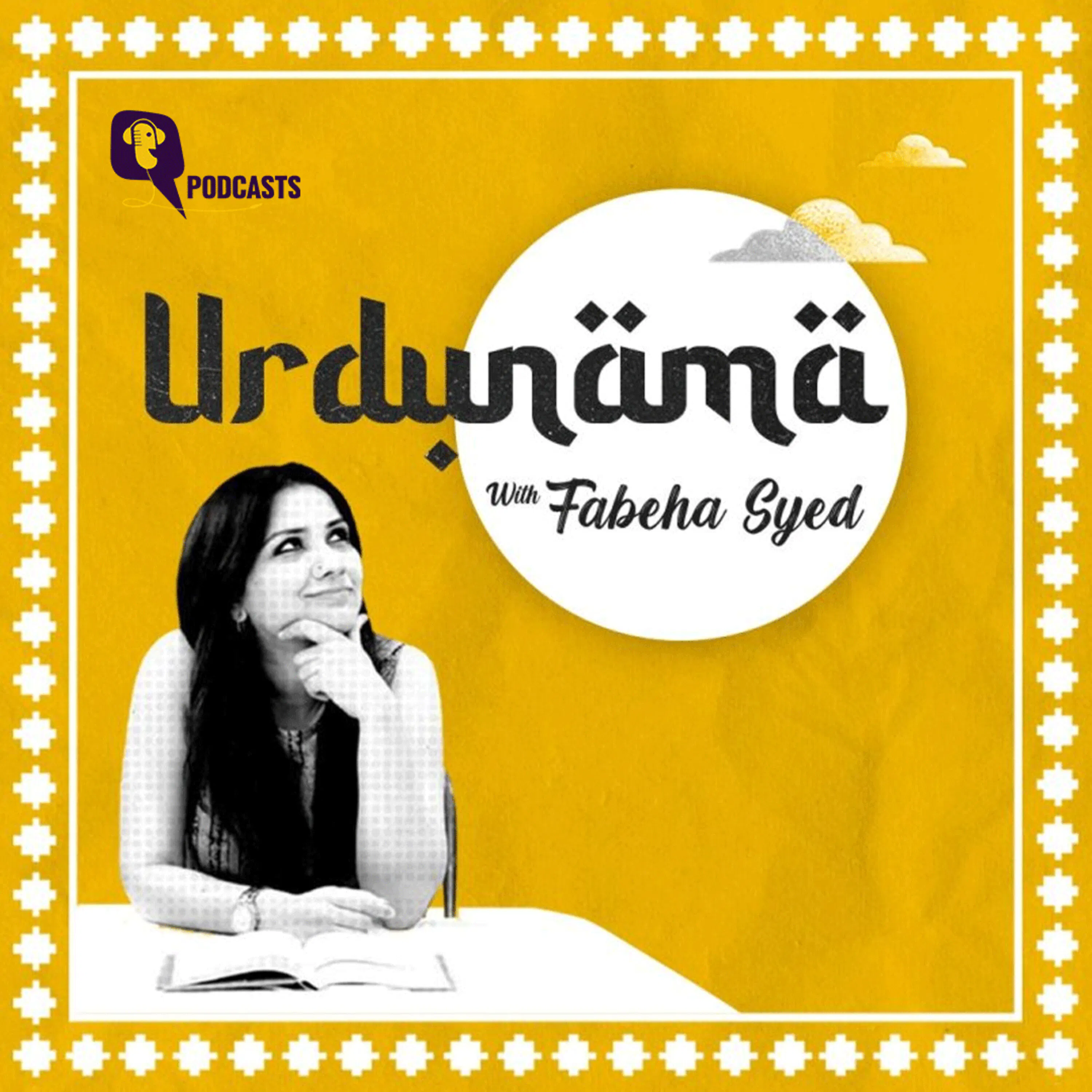
Urdunama
Bollywood songs turn us all into Grammy award-winning bathroom singers! But wait, do you know the meaning of every word you sing? Especially the ones in Urdu? On Urdunama, our host Fabeha Syed takes one word at a time and breaks it down for you. Be it the protest poetry of Faiz, or Sameer's 90s nostalgia, we have it all. If you like Urdu and poetry, this podcast is for you!
Nereden dinlenir?
Uygulamada podcast'ler Replaio Radio Çok yakındaPodcast'ler çok yakında uygulamaya geliyor. Şimdi yükle ve podcast'lere yepyeni bir bakışı ilk gören sen ol
 Ücretsiz yükle
Android 5 Mn+ indirme · 4,8 puan
iOS yakında
Ücretsiz yükle
Android 5 Mn+ indirme · 4,8 puan
iOS yakında
Bölümler
Fouzia Dastango on Guru Dutt: The Melancholy, the Masterpieces, and the Man 11.07.2026 20:01
Guru Dutt's films continue to resonate decades after they were made, but what was the man behind the camera really like? In this episode of Urdunama, we explore the life, cinema, and legacy of Guru Dutt through the unique lens of Dastan-e-Guru Dutt. Joining us is India's first female Dastango, Fouzia Dastango, who brings this celebrated performance to audiences across the country. ...
What Does 'Naseeb' Really Mean? Urdu Poetry on Fate, Destiny and the Things We Can't Explain 04.07.2026 11:44
Why do two equally qualified people end up with completely different careers? Why does one marriage survive while another falls apart? Why do some people seem to meet the right person at the right time, while others do everything "right" and still don't get the life they hoped for? When we run out of explanations, we often reach for one word: naseebIn this episode of Urdunama, Fabeha Syed explores...
Why We Fall for Fareb? Urdu Poetry on Deception, Trust and Hope 27.06.2026 11:14
A salesperson can sell you a dream. Social media can sell you a lifestyle. Sometimes, your own heart sells you hope. That's fareb. Often translated as deception, fareb isn't quite the same as dagha. A stranger can deceive you; only someone you trust can betray you. Through the poetry of Fana Nizami Kanpuri, Mirza Ghalib, Bahadur Shah Zafar and Momin Khan Momin, we explore false promises, self-dece...
From Monsoon Daghaa to Human Betrayal: The Many Meanings of Broken Trust in Shayari 20.06.2026 14:15
Mumbai is halfway through June and still waiting for the monsoon. Every few days the forecast promises rain, and every few days the clouds seem to change their mind. So, it feels like an act of 'daghaa'Often translated as betrayal, 'dagha' is more than just being deceived. It is the hurt that comes when trust is broken. Through the poetry of Shakeel Badayuni and Qateel Shifai, we explore friendshi...
From Fever to Fire: Exploring Haraarat in Urdu Poetry 13.06.2026 14:43
As another summer pushes temperatures to record highs, darja-e-haraarat , meaning 'degree of heat', has become part of our daily vocabulary. We hear it in weather reports, worry about it when a child feels warm, and increasingly experience it in a world shaped by climate change. On this week's Urdunama, we explore the Urdu word haraarat. While it literally means heat or temperature, poetry gives t...
The Poetry of Shajar: Trees, Shade, Roots and the Stories They Carry 06.06.2026 12:05
World Environment Day may come around once a year, , but the questions it raises remain. As temperatures rise and green spaces shrink, the humble shajar feels less like a poetic image and more like a reminder of what sustains us. On this week's Urdunama, we explore the Urdu word shajar, meaning tree. In poetry, a tree is never merely part of the landscape. It can offer shade to a weary traveller,...
How Bashir Badr Found Poetry in a ‘Zard Shaal’, a ‘Zafraani Pullover’ and Everyday Life 30.05.2026 21:01
“Ujaale apni yaadon ke hamare saath rehne do,na jaane kis gali mein zindagi ki shaam ho jaaye.” With Bashir Badr sahab’s passing on May 28, Urdu poetry lost one of its warmest and most humane voices. In this episode of Urdunama, we remember the poet who made shayari feel intimate, conversational and deeply personal. From love and loneliness to loss, memory, riots and modern city life, Bashir sahib...
Nadārad: When Something Missing Doesn’t Quite Leave 16.05.2026 10:31
In Urdu, 'nadarad' means 'ghayab', when something is absent, has disappeared or is missing. Until you see how it’s used in poetry. It’s usually not just about something being gone. It’s about something that should have been there but is not. A person who didn’t show up. A message that never came. A moment that didn’t happen the way you thought it would, and has left you with an overwhleming need...
The Beauty of the Pause: Understanding “Vaqfa” in Urdu Poetry 01.04.2026 12:19
After a short vaqfa, Urdunama returns with an episode on the very idea of pause. What does a simple break or interval mean in the language of Urdu verse? Through lines by Mir Taqi Mir, Ahmad Mushtaq, and Aziz Bano Darab Wafa, we explore how pauses, silences, and brief halts often carry as much meaning as the words themselves. In poetry, the space between two phrases can deepen emotion, shape rhyth...
What 'Sahra' Means in Urdu Poetry: Desert and the Lover’s Wilderness 14.03.2026 13:30
In the vocabulary of Urdu poetry, sahra, meaning the desert, is far more than a barren landscape. It is a metaphor for the inner wilderness of the heart: solitude, longing, and the untamed intensity of love. In this episode, we wander through verses by Mirza Ghalib, Daagh Dehlvi, and Jaun Elia to explore how poets transform the desert into a space of vahshat, searching, and emotional vastness. Tun...
Love With 'Ikhlas': Beyond the Valentine Glow | Urdunama Podcast 14.02.2026 10:37
In Valentine’s month, we are drawn to a picture-perfect version of love that is warm, dazzling, and effortless. Yet real love asks for more than beauty. It calls for ikhlaas meaning pure intention to be sincere and have honest devotion that persists even when the glow fades. True love thrives in patience, understanding, and care, beyond grand gestures and fleeting romance. In this episode, we draw...
Junoon in Urdu Poetry: Meaning, Madness, and Purpose 24.01.2026 15:29
Junoon is often translated as passion or madness, but in Urdu poetry it carries layered, sometimes conflicting meanings. For poets like Mirza Ghalib, junoon is dangerous if exposed or fully unpacked. It then becomes a force so raw that it can undo the self. If Ghalob's junoon is intense, self-aware, and often destructive, poets like Ahmad Faraz and Ameer Qazalbash later engage with the same intens...
When Hard Work Isn’t Enough: Mehnat in Everyday Life and Poetry 11.01.2026 13:50
In this episode, we sit with the Urdu word 'mehnat' which is usually translated as 'hard work', but carrying far more tiredness, repetition, and lived experience. Moving between everyday life and Urdu poetry, the episode pushes back against the idea that hard work always guarantees success. From the comforting language of motivational culture to the kind of labour that happens quietly, without vis...
Dua as Faith, Action and Inheritance: Reading Ghalib, Munawwar Rana and Kaifi Azmi 04.01.2026 13:44
In Urdu poetry, dua is never just prayer but it is a reflection of how a poet relates to hope, faith, and control. For Ghalib, dua is too uncertain. He chooses action over waiting, offering his entire self instead of trusting outcomes. For Munawwar Rana, dua is absolute assurance, a mother's prayer that walks beside him like protection, unquestioned and complete. And for Kaifi Azmi, dua becomes th...
Reading Ghalib's 'Koi Umeed Bar Nahin Aati': Ego and Self Awareness Without Apology 27.12.2025 15:45
Reading Ghalib's 'Koi Umeed Bar Nahin Aati': Ego and Self Awareness Without ApologyDescription: Mirza Asadullah Beg Khan, known to the world as Mirza Ghalib, remains a towering figure in Urdu poetry for his rare ability to capture complex emotions with striking simplicity. In this episode, we step into Ghalib’s world through one of his most well-known ghazals, 'Koi Umeed Bar Nahin Aati.' The readi...
Falsafa in Life: Understanding Iqbal’s Philosophy of Grief 20.12.2025 17:54
What is Falsafa? It’s the philosophy that pushes us to explore ideas with wisdom, and with a humility in which every certainty melts away. We explore this week's theme, 'falsafa' through Iqbal’s 'Falsafa-e-Gham'. He shows that grief isn’t just pain but it’s the light inside the heart, the silent music and the rouge for the soul that beautifies it. He goes on that loss and sorrow awaken us, polis...
Zehn and Jazbātiyat: Heart vs Mind in Urdu Poetry 13.12.2025 11:23
This week in UIrdunama, we explore poems that live inside our zehn, meaning our mind. But this internal world of the zehn keeps colliding with the one that belongs to the heart and its jazbātiyat (emotion driven clarity) that won’t be silenced. From Barelvi’s guiding light in confusion, to Jazib’s heart triumphing over intellect, to Javed Akhtar’s inner world in flames where only one surviving co...
Kya Sochte Ho? : Exploring 'Soch' Through Urdu Poetry 06.12.2025 18:21
In this week's Urdunama, we speak about 'Soch', meaning a personal lens through which we look at everything. With the intensity of Mohsin Naqvi, the softness of Bashir Badr, the sharp pain of heartbreak from rejectioon in Parveen Shakir's ghazal, and the mature understanding of boundaries in intimacy in Ahmad Faraz's nazm 'bhali si ek shakl thi', Fabeha Syed unpacks how thoughts shape love, loss,...
Dharmendra - Pur Kashish, Shaista Mizaaj Fankar 29.11.2025 12:16
In this week’s Urdunama, we remember Dharmendra not only as Bollywood's "Greek-God" hero but essentially as a man defined by two qualities - Pur-kashish (full of charm) and Shaista-mizaaj (gentle in nature). From humble beginnings in Punjab to a stunning, record 300 plus film-career, he was a man in love with Urdu zabaan. Join us for a brief tribute to a star whose charm and grace remain unforgett...
Tasalli: Where Grief Meets Gentle Healing 21.11.2025 16:49
Tasalli is a feeling of comfort, reassurance, and emotional support. It is what helps the heart feel calm when someone listens without judgment, shares your pain or simply lets you be with your emotions. Urdu poets like Aarzoo Lakhnavi write about tasalli as the space to process grief, letting tears flow and giving the heart time to settle. or, rather the lack of it when the poet is also expecting...
Sannata - The Sound Between Words 02.11.2025 14:07
In poetry, “Sannata” isn’t just silence but the stillness where everything stops. It is the absence of sound, of presence, of movement, yet it carries a strange weight. Poets like Gulzar, Ameer Qazalbash, Abbas Tabish and Manmohan Shukla ‘Talkh’ have turned this silence into a living emotion. For Gulzar, sannata comes sneakily, filled with the fear of losing someone. Ameer Qazalbash writes of a si...
Chain and Bechaini: The Space Between Rest and Restlessness 25.10.2025 13:27
In Urdu, chain means comfort, meaning when the heart finally feels at ease. Bechaini is the opposite. It is the restlessness that keeps you awake, searching for something more, something else. Poets like Faiz Ahmad Faiz, Shaikh Ibrahim Zauq, and Josh Malihabadi wrote from this space between calm and chaos. Maybe that’s what it is. Not choosing between comfort and restlessness, but learning to live...
In the Glow of ‘Roshni’, Every Poem Finds Clarity 18.10.2025 14:37
Roshni, meaning 'light', in Urdu poetry is never alone. It gains meaning only when contrasted with darkness, whether that’s doubt, loneliness, or the moments that challenge our hearts. Poets show us that hope isn’t about perfection; it’s about courage, resilience, and the quiet moments when even a small glimmer can guide us. From Shakeel Badayuni’s faith tested by doubt, to Bashir Badr’s morning b...
Ranj: The Quiet Ache Beneath Every Verse 12.10.2025 13:26
In this episode, we explore Urdu word Ranj, sorrow, grief, and the small heartbreaks that shape our lives. From Sahir to Dagh, Shakeel, and Irfan, each poet has experienced, expressed, and understood Ranj in their own way. Sometimes it becomes empathy, sometimes resilience, and sometimes a quiet irony. We unpack these layers through poetry and reflection, showing how Ranj is not just about pain bu...
‘Haazir’ - More Than Just Being Present 04.10.2025 10:59
In this episode, we explore the word Hazir — a simple word that means “present,” but in Urdu poetry it holds much deeper weight. With verses from Parveen Shakir and Ahmad Faraz, we look at how hazir shifts in its context and scope. the couplets curated in this episode reminds us that being hazir is never just about attendance. It’s about presence with all its complexity — love, loss, surrender, re...
Benzer podcast'ler







Urdunama podcast'ini Replaio'da dinle
Radyo ve podcast'ler tek uygulamada - ücretsiz, kayıt gerektirmez. Bugün yükle ve lansmanı kaçırma
Replaio bir podcast yayıncısı değildir; program adları, kapak görselleri ve ses içerikleri yazarlarına aittir ve herkese açık RSS beslemeleri aracılığıyla dağıtılır